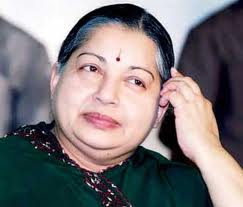
Jayalalithaa joins Mamata Banerjee over 'arbitrary' action in reducing Central Sales Tax

April 14, 2012

jaya

Chennai, April 14: Joining her West Bengal counterpart Mamata Banerjee, Tamil Nadu chief minister J Jayalalithaa today attacked the Centre for its "arbitrary" action in reducing Central Sales Tax (CST) compensation to states by linking it with VAT rate revision.

Though the Centre had agreed to compensate states for the revenue loss for 2010-11 also, the eligible compensation was "arbitrarily restricted" by deducting additional revenue realised through revision of VAT rate from four to five per cent, she said in a letter to Prime Minister Manmohan Singh.

"I would like to point out that the action of the Government of India in linking CST compensation with the additional revenue on account of VAT rate revision is unilateral, arbitrary and untenable. There is no link between CST rate reduction and VAT rate enhancement. It was never a part of the guidelines for CST compensation," she said.

Mamata had shot off a letter to Singh on Wednesday protesting the Centre's "unilateral decision" not to pay CST compensation to states for 2011-12.

The decision to stop CST compensation for 2011-12 "is equally objectionable", Jayalalithaa said, adding the CST rate was reduced only as a precursor to the introduction of Goods and Service Tax (GST).

"Since it is the government of India's responsibility to introduce GST by evolving a consensus and by putting in place appropriate mechanisms, the States cannot be expected to bear the loss on account of its failure to introduce GST. The Government of India has a moral responsibility to compensate the States till GST is introduced," she said.

Non-implementation of GST from April 1, 2010, should not be taken as ground to stop CST compensation and the Centre has to provide compensation till GST is introduced as revenue loss suffered by states is substantial and permanent, she said.

The chief minister said though the Centre had agreed to compensate states for revenue loss for 2010-11 also, the eligible compensation for 2010-11 was "arbitrarily" restricted by deducting additional revenue realised through revision of Value Added Tax rate from four per cent to five per cent.

" ... the action of the Government of India in linking CST compensation with the additional revenue on account of VAT rate revision is unilateral, arbitrary and untenable. There is no link between CST rate reduction and VAT rate enhancement. It was never a part of the guidelines for CST compensation," Jayalalithaa said.

Secondly, she said, the decision to stop CST compensation from 2011-12 is "equally objectionable".

Noting that states like Tamil Nadu suffer huge revenue loss on account of CST rate reduction, Jayalalithaa said Tamil Nadu could have realised an additional revenue of Rs 2,000 crore between 2007-08 and 2010-11, even after taking into account the Centre's compensation.

This tax loss pushed back the revenue base to a lower level and the state continues to suffer incremental revenue loss which is in the range of Rs 1,500 crore to Rs 2,000 crore per annum in the next three years, she said.

"I must also point out that such unilateral and unreasonable actions by the Government of India do not augur well for fostering a spirit of cooperative federalism especially at a time when the Government of India is trying to build a consensus among the states for GST," she said.

She said revision of VAT rate from four per cent to five per cent should not be linked to the CST compensation for 2010-11 as it was not part of the original compensation package and the VAT revision had nothing to do with the CST.

"If further delay is expected in implementing GST, then the CST rate must be restored immediately to the original four per cent," Jayalalithaa said.

Comments

Add new comment

  • Coastaldigest.com reserves the right to delete or block any comments.
  • Coastaldigset.com is not responsible for its readers’ comments.
  • Comments that are abusive, incendiary or irrelevant are strictly prohibited.
  • Please use a genuine email ID and provide your name to avoid reject.
Agencies
August 8,2020

Kozhikode, Aug 8: The death toll in Kozhikode air crash is likely to rise as the condition of 22 injured passengers is said to be extremely critical. A total of 149 injured passengers have been admitted to hospitals in Malappuram and Kozhikode districts. 22 others have been discharged after first aid, says K Gopalakrishnan, Malappuram Collector

Deceased passengers:
Mohammed Riyas VP, 24 years - Palakkad, 
Saheer Sayed, 38 years -Malappuram, 
Lailabi KV, 51 years -Malappuram, 
Rajeevan Cherikka Parambil, 61 years - Kozhikode, 
Manal Ahamed, 25 years - Kozhikode, 
Sharafudheen, 35 years - Kozhikode, 
Janaky Kunnoth, 55 years - Kozhikode, 
Azam Muhammed Chembayi ,1 year - Kozhikode, 
Santha Marakkat, 59 years - Malappuram, 
Sudheer Vaariyath, 45 years -Malappuram, 
Sheza Fathima, 2 years -Malappuram, 
Remya Muraleedharan, 32 years - Kozhikode
Aysha Dua, 2 years – Palakkad 
Shivathmika, 5 Years- Kozhikode
Zhenobia, 40 years – Kozhikode
Sahira Banu, 29 years - Kozhikode

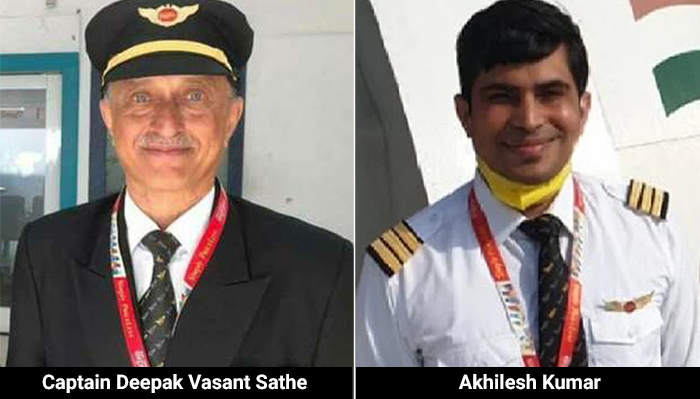
Deceased crew:
Deepak Sathe (Pilot)
Akhilesh Kumar (Copilot)

Comments

Add new comment

  • Coastaldigest.com reserves the right to delete or block any comments.
  • Coastaldigset.com is not responsible for its readers’ comments.
  • Comments that are abusive, incendiary or irrelevant are strictly prohibited.
  • Please use a genuine email ID and provide your name to avoid reject.
Agencies
July 29,2020

New Delhi, Jul 29: The new National Education Policy (NEP) approved by the Union Cabinet on Wednesday is set to usher in a slew of changes with the vision of creating an education system that contributes directly to transforming the country, providing high-quality education to all, and making India a global knowledge superpower.

The draft of the NEP by a panel headed by former Indian Space Research Organisation (ISRO) chief Kasturirangan and submitted to the Union Human Resource Development Minister Ramesh Pokhriyal when he took charge last year. The new NEP replaces the one formulated in 1986.

Some of the key highlights of the New Education Policy are:-

The policy aims to enable an individual to study one or more specialized areas of interest at a deep level, and also develop character, scientific temper, creativity, spirit of service, and 21st century capabilities across a range of disciplines including sciences, social sciences, arts, humanities, among others.

It identified the major problems facing the higher education system in the country and suggested changes such as moving towards multidisciplinary universities and colleges, with more institutions across India that offer medium of instruction in local/Indian languages, a more multidisciplinary undergraduate education, among others. 

The governance of such institutions by independent boards having academic and administrative autonomy has also been suggested.

Under the suggestions for institutional restructuring and consolidation, it has suggested that by 2040, all higher education institutions (HEIs) shall aim to become multidisciplinary institutions, each of which will aim to have 3,000 or more students, and by 2030 each or near every district in the country there will be at least one HEI.

The aim will be to increase the Gross Enrolment Ratio in HEIs including vocational education from 26.3 per cent (2018) to 50 per cent by 2035.

Single-stream HEIs will be phased out over time, and all will move towards becoming vibrant multidisciplinary institutions or parts of vibrant multidisciplinary HEI clusters.

It also pushes for more holistic and multidisciplinary education to be provided to the students.

Comments

Add new comment

  • Coastaldigest.com reserves the right to delete or block any comments.
  • Coastaldigset.com is not responsible for its readers’ comments.
  • Comments that are abusive, incendiary or irrelevant are strictly prohibited.
  • Please use a genuine email ID and provide your name to avoid reject.
News Network
June 25,2020

New Delhi, Jun 25: India registered its worst single-day increase in COVID-19 cases on Thursday, recording more than 16,000 coronavirus infections, to push the overall tally to 4.73 lakh as the number of fatalities also jumped by 418, the Union Health Ministry said.

This was the sixth consecutive day when coronavirus cases increased by more than 14,000. On June 20, the country registered an increase of 14,516 cases. On June 21, the increase was of 15,413 cases; 14,821 cases on June 22; 14,933 cases on June 23; and 15,968 cases on June 24.

Consequently, India added 92,573 cases since June 20, and over 2.82 lakh this month since June 1.

The health ministry data updated at 8am on Thursday showed the daily tally increased by the highest-ever 16,922 cases to reach 4,73,105, while the total deaths climbed to 14,894 with 418 new fatalities.

However, according to the data, the recovery rate has improved to 57.43 per cent. The number of active cases stands at 1,86,514 while 2,71,696 people have recovered; one patient has migrated.

The total number of confirmed cases included foreigners.

According to ICMR, a total of 75,60,782 samples have been tested up to June 24 with 2,07,871 samples being tested on Wednesday.

Of the 418 new deaths, 208 were in Maharashtra, 64 in Delhi, 33 in Tamil Nadu, 25 in Gujarat, 14 in Karnataka, 11 in West Bengal, 10 each in Rajasthan and Haryana, nine in Madhya Pradesh, eight each in Uttar Pradesh and Punjab, five each in Andhra Pradesh, Telangana and Uttarakhand.

Bihar, Goa and Jammu and Kashmir have reported one COVID-19 fatality each.

Of the total fatalities, Maharashtra tops the tally with 6,739 deaths followed by Delhi (2,365), Gujarat (1,735), Tamil Nadu (866), Uttar Pradesh (596), West Bengal (591), Madhya Pradesh (534), Rajasthan (375) and Telangana (225).

The COVID-19 death toll reached 188 in Haryana, 164 in Karnataka, 124 in Andhra Pradesh, 113 in Punjab, 88 in Jammu and Kashmir, 57 in Bihar, 35 in Uttarakhand, 22 in Kerala and 17 in Odisha.

Chhattisgarh has registered 12 deaths, Jharkhand 11, Assam and Puducherry nine each, Himachal Pradesh eight, Chandigarh six, Goa two and Meghalaya, Tripura and Ladakh have reported one fatality each.

More than 70 per cent deaths took place due to comorbidities, the health ministry said.

Maharashtra has reported the highest number of cases at 1,42,900 followed by Delhi at 70,390, Tamil Nadu at 67,468, Gujarat at 28,943, Uttar Pradesh at 19,557, Rajasthan at 16,009 and West Bengal at 15,173, according to ministry data.

The number of COVID-19 cases has gone up to 12,448 in Madhya Pradesh, 12,010 in Haryana, 10,444 in Telangana,10,331 in Andhra Pradesh and 10,118 in Karnataka.

It has risen to 8,209 in Bihar, 6,422 in Jammu and Kashmir, 6,198 in Assam and 5,752 in Odisha. Punjab has reported 4,627 novel coronavirus infections so far, while Kerala has 3,603 cases.

A total of 2,623 people have been infected by the virus in Uttarakhand, 2,419 in Chhattisgarh, 2,207 in Jharkhand, 1,259 in Tripura, 970 in Manipur, 951 in Goa, 941 in Ladakh and 806 in Himachal Pradesh.

Puducherry has recorded 461 COVID-19 cases, Chandigarh has 420, Nagaland has 347, Arunachal Pradesh has 158 and Mizoram has 142 cases.

Dadra and Nagar Haveli and Daman and Diu together have reported 120 COVID-19 cases.

Sikkim has 84, Andaman and Nicobar Islands has registered 56 infections so far while Meghalaya has recorded 46 cases.

"Our figures are being reconciled with the ICMR (Indian Council of Medical Research)," the ministry said, adding 8,493 cases are being reassigned to states.

State-wise distribution is subject to further verification and reconciliation, it added.

Comments

Add new comment

  • Coastaldigest.com reserves the right to delete or block any comments.
  • Coastaldigset.com is not responsible for its readers’ comments.
  • Comments that are abusive, incendiary or irrelevant are strictly prohibited.
  • Please use a genuine email ID and provide your name to avoid reject.