



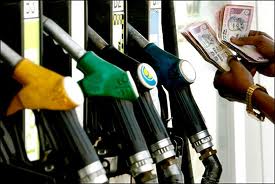
Petrol price hike can't wait any longer: OMCs

April 18, 2012

petrol

New Delhi, April 18: Fed up with the Centre's “indecision” on allowing an increase in fuel prices in the face of the rising international crude prices, the oil marketing companies on Tuesday virtually threatened to increase petrol prices by Rs. 8.04 a litre, asking the government to either cut excise duty on petrol and give them Rs. 49 crore a day in compensation.

In a joint representation, the oil marketing companies asked the government to bring petrol back under the regulated regime.

Petrol prices were deregulated in June 2010. With a 20 per cent value-added tax, the price of petrol, if an increase is effected, will go up by Rs. 9.60 in New Delhi.

“We have been very patient, not raising prices since December despite our cost of production spiralling. But there is a limit to which we can borrow money and produce fuel for the country,” Indian Oil Corporation (IOC) Chairman R. S. Butola said here. IOC issued a formal statement, pointing to the anomalies in the subsidy mechanism and highlighting related issues.

IOC, Hindustan Petroleum Corporation Limited and Bharat Petroleum Corporation Limited are losing Rs. 49 crore a day on petrol sales alone. They are losing another Rs. 573 crore a day on the sale below cost of diesel, domestic LPG and kerosene.

Mr. Butola said the oil marketing companies lost Rs. 745 crore in the first 15 days of April in revenue from petrol sale. “We have suggested that the government temporarily end deregulation and give subsidy to make up for the difference between the cost of production and the sale price. Alternatively, the government can cut the excise duty of Rs. 14.78 it collects when a consumer buys one litre of petrol.”

The States levied VAT or sales tax, ranging from 15 to 33 per cent (Rs. 10.30- Rs. 18.74 a litre), and this too could be cut to avoid a price increase. “If our suggestions are not accepted, we will have no option but to increase the price of petrol by Rs. 8.04 a litre (excluding the State levies) with immediate effect,” the IOC statement said. The last revision of petrol price was effected on December 1, 2011. Then, IOC cut the price by Rs. 0.65 a litre on top of an earlier reduction of Rs.1.85 on November 16 that year.

“The international petrol prices have since gone up progressively and stand at $132.45 a barrel in the current pricing period. This is much higher than the price of $109.03 a barrel at which IOC and other oil marketing companies are selling petrol,” the statement said. The company's inability to effect the hike between December 16, 2011 and March 31, 2012 resulted in Rs.1,036 crores of under-recoveries for IOC alone, and Rs. 2,287 crore for all companies.

The statement said IOC and other companies approached the government several times for revising petrol prices, suggesting that motor spirit be brought within the ambit of controlled products temporarily, or statutory levies on it lowered to the extent of loss being suffered by the companies owing to their inability to pass on the increase in prices to consumers.

“The current situation is not sustainable and therefore cannot continue. The continuation of such [a] pricing [formula] will only impede the ability of the company to import crude oil and may affect the supply-demand balance. The company is awaiting the government's response to its requests; should no relief come, it will have no option but to effect the aforesaid increase in motor spirit prices,” the statement said.

Comments

Add new comment

  • Coastaldigest.com reserves the right to delete or block any comments.
  • Coastaldigset.com is not responsible for its readers’ comments.
  • Comments that are abusive, incendiary or irrelevant are strictly prohibited.
  • Please use a genuine email ID and provide your name to avoid reject.
Agencies
August 6,2020

Mumbai, Aug 6: Former Reserve Bank of India governor Raghuram Rajan said on Thursday that overly focusing on what sovereign rating agencies think can take one's eyes off what needs to be done for the economy.

"It is also important to convince both domestic and international investors that after the crisis associated with the pandemic is over, we will return to fiscal responsibility over the medium term, and the government should do more to convince them of that," Rajan told the Global Markets Forum.

India was placed under one of the strictest lockdowns in the world in late March for more than two months to stem the spread of the coronavirus, but cases have continued to rise steadily since the government eased restrictions in June, stymieing hopes of an economic recovery.

The government has announced several initiatives to help the poor and small- and medium-size businesses, but actual cash outgo from the government's measures has been estimated at just about 1% of GDP.

Several attribute the fiscal prudence to fear of a downgrade after Moody's cut India's rating and outlook in early June followed closely by a change in outlook from Fitch.

The central bank on its part too has reduced the key lending rate by 115 basis points on top of the 135 bps last year and is widely expected to cut rates by another 25 bps later on Thursday.

"The RBI and government have certainly been cooperating, but it seems like it is elsewhere, the ball is in the government's court to do more," Rajan said.

He said the RBI needs to focus on whether credit is reaching the stressed areas of the economy and also if the viable firms were able to access credit and not the unviable ones.

"And I think that's where it has to focus its attentions, because resources, as you well know, are limited in India today."

Recently analysts, however, have cited the growing possibility the RBI may prefer to pause and cut rates only at its October meeting.

Government officials too have suggested the possibility of any more fiscal stimulus being announced, would only come in the second half of the fiscal year, once a recovery has taken root and coronavirus cases have peaked.

"What India should focus on at this point is protecting its economic capabilities, so that when it has dealt with the virus it can go resume activity in a reasonable way. That should be the focus," Rajan said.

"And if it does that, there is no reason why the rating agencies will not see that as an appropriate policy".

Comments

Add new comment

  • Coastaldigest.com reserves the right to delete or block any comments.
  • Coastaldigset.com is not responsible for its readers’ comments.
  • Comments that are abusive, incendiary or irrelevant are strictly prohibited.
  • Please use a genuine email ID and provide your name to avoid reject.
News Network
May 29,2020

New Delhi, May 29: With the highest spike of 7,466 more COVID-19 cases and 175 deaths reported in the past 24 hours, India's COVID-19 tally reached 1,65,799 on Friday, according to the Union Ministry of Health and Family Welfare.

The number of active coronavirus cases stands at 89,987 while 71,105 people have been cured or recovered and one patient has migrated, it said. The death toll due to the infection has reached 4,706 in the country.

Maharashtra is the worst affected state with 59,546 cases. Tamil Nadu has recorded as many as 19,372 cases while Gujarat and Delhi have recorded 15,562 and 16,281 coronavirus cases respectively.

Comments

Add new comment

  • Coastaldigest.com reserves the right to delete or block any comments.
  • Coastaldigset.com is not responsible for its readers’ comments.
  • Comments that are abusive, incendiary or irrelevant are strictly prohibited.
  • Please use a genuine email ID and provide your name to avoid reject.
News Network
April 3,2020

Washington, Apr 3: The World Bank has approved USD 1 billion emergency funding for India to help it tackle the coronavirus pandemic, which has claimed 76 lives and infected 2,500 people in the country.

The World Bank's first set of aid projects, amounting to USD 1.9 billion, will assist 25 countries, and new operations are moving forward in over 40 nations using the fast-track process, the bank said on Thursday.

The largest chunk of the emergency financial assistance has gone to India USD 1 billion.

"In India, USD 1 billion emergency financing will support better screening, contact tracing, and laboratory diagnostics; procure personal protective equipment; and set up new isolation wards," the World Bank said after its Board of Executive Directors approved the first set of emergency support operations for developing countries around the world, using a dedicated, fast-track facility for COVID-19 response.

In South Asia, the World Bank also approved USD 200 million for Pakistan, USD 100 million for Afghanistan, USD 7.3 million for the Maldives and USD 128.6 million for Sri Lanka.

The World Bank said it was now working to grant up to USD 160 billion over the next 15 months to support measures to tackle the pandemic which will focus on the immediate health consequences and bolster economic recovery.

The broader economic program will aim to shorten the time to recovery, create conditions for growth, support small and medium enterprises, and help protect the poor and vulnerable.

"The World Bank Group is taking broad, fast action to reduce the spread of COVID-19 and we already have health response operations moving forward in over 65 countries," said World Bank Group President David Malpass.

"We are working to strengthen (the) developing nations' ability to respond to the COVID-19 pandemic and shorten the time to economic and social recovery," Malpass said.

According to the bank, USD 100 million will support Afghanistan to slow and limit the spread of COVID-19 through enhanced detection, surveillance, and laboratory systems, as well as strengthen essential health care delivery and intensive care.

In Pakistan, USD 200 million will support preparedness and emergency response in the health sector and include social protection and education measures, the bank said.

A total of 1,002,159 COVID-19 cases have been reported across more than 175 countries and territories with 51,485 deaths reported so far, according to Johns Hopkins University data.

Comments

Add new comment

  • Coastaldigest.com reserves the right to delete or block any comments.
  • Coastaldigset.com is not responsible for its readers’ comments.
  • Comments that are abusive, incendiary or irrelevant are strictly prohibited.
  • Please use a genuine email ID and provide your name to avoid reject.