



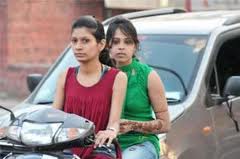
Punjab's Bijlipur best village for girls

April 23, 2012

Punjab

Bijlipur (Punjab), April 23: For some time now, the village of Bijlipur has been attracting a slew of local news TV crews and even reporters from Canadian radio stations. The village has something that most of Punjab can't boast of: a sex ratio in favour of women.

The state of Punjab, along with Haryana, is among the country's worst performers when it comes to sex ratio. Census 2011 figures record 893 females per 1000 males for Punjab. Between 2002 and 2008, the local administration of Bijlipur reported a sex ratio of 1,800 females to 1,000 males.

While the exactness of the figure may be contested, other indicators such as birth and death figures from the local aanganwadi confirm that girls enjoy a healthy sex ratio in the village compared to the rest of the state.

From 2005 to 2010, the village saw the birth of 22 girls against 13 boys. The year 2011 was the only year since 2002 that saw the birth of more boys (five) than girls (two).

In 2006-07, no boys were born while Bijlipur added seven baby girls to its tally. Meanwhile, Ludhiana, an hour's drive away from this village, recorded a child sex ratio of 869 girls per 1,000 boys in 2011.

Sociologist Dr H S Bhatti of Punjab University, Patiala, surveyed the village with a team of students in 2009. The survey results showed, among other things, that girls made up more than 50% of the student body in schools. The trend of having a string of girls until the birth of a baby boy, prevalent even in Indian cities, seems absent here.

In Bijlipur, it is common for families to have just two daughters. Jaspal Singh, 57, has four daughters. While two of them work in the city and live away from home, the other two are still in college.

He often includes a message about the girl child when reading outside Bijlipur. "I normally ask the hosts if they are okay with me putting in a bit about this issue. I have never been refused," says Singh. Surinder Kaur, 28, who runs the village aanganwadi, points to the factors that she feels have led to such encouraging figures. "People are better educated here, most have college degrees. There is a strict ban on tobacco and drugs. More importantly, killing girls is considered a sin," she says. Charanjeet Singh, the 55-year-old headman of the village remembers how when he was a child the village stood out in its treatment of women. "Educating women in the family was not common in neighbouring villages when I was young. But our village has been doing that ever since I can remember. All five of my sisters studied up to college and have retired from their jobs now," he says.

Jagjot Pal Kaur, a hotel management professional who travels to Ludhiana for work, says that lack of facilities has done little to deter women to go out and get what they want. However, it is not all about giving cushioned comforts to the females. It's a two-way street. "While they were in college, our older daughters would come back from their exams and help us in the fields too," says Singh.

That the current state of affairs is limited by geography is only too clear to Bijlipur girls.

Comments

Add new comment

  • Coastaldigest.com reserves the right to delete or block any comments.
  • Coastaldigset.com is not responsible for its readers’ comments.
  • Comments that are abusive, incendiary or irrelevant are strictly prohibited.
  • Please use a genuine email ID and provide your name to avoid reject.
News Network
May 27,2020

New Delhi, May 27: As per the prediction from the IMD, severe heatwave conditions continued in several parts of north India with Delhi recording the country’s second-highest temperature at 47.6 degrees Celsius. On the other hand, Churu in Rajasthan sizzled at 50 degrees Celsius, reporting the highest temperature in the country. Also Read - Delhi Temperature: Heatwave to Continue, IMD Issues Alert, Mercury Rises to 46 Degrees

In Delhi, the mercury soared to 47.6 degrees Celsius in Palam area and most places recorded their maximum temperatures six notches above normal. The Safdarjung Observatory, which provides representative figures for the city, recorded a maximum of 46 degrees Celsius.

The last time when the mercury at the Safdarjung weather station touched the 46-degrees-Celsius mark was on May 19, 2002.

The IMD said the weather stations at Lodhi Road and Aya Nagar recorded their respective maximum at 45.4 degrees and 46.8 degrees Celsius.

In its earlier forecast, the IMD has said that dust storm and thunderstorm with winds gusting up to 60 kilometres per hour is likely over the National Capital Region on Friday and Saturday.

On the other hand, severe heatwave conditions prevailed in several parts of Rajasthan on Tuesday, with the mercury touching 50 degrees Celsius in Churu district.

The IMD said this is the second-highest maximum temperature recorded in Churu district in the month of May in the last 10 years.

Other areas such as Bikaner, Gangangar, Kota and Jaipur recorded maximum temperatures of 47.4 degrees Celsius, 47 degrees Celsius, 46.5 degrees Celsius and 45 degrees Celsius, respectively.

In the adjoining areas of Chandigarh, the severe heatwave condition continued in Haryana, Punjab with Hisar being the hottest place in the region at 48 degrees Celsius.

Comments

Add new comment

  • Coastaldigest.com reserves the right to delete or block any comments.
  • Coastaldigset.com is not responsible for its readers’ comments.
  • Comments that are abusive, incendiary or irrelevant are strictly prohibited.
  • Please use a genuine email ID and provide your name to avoid reject.
News Network
February 9,2020

New Delhi, Feb 8: Arvind Kejriwal is set to return as Delhi chief minister and his Aam Aadmi Party (AAP) will virtually sweep the assembly elections, exit polls predicted Saturday.

As polling came to a close at 6 pm, with the Election Commission of India (ECI) projecting a voter turnout at 60.24% (as of 9:50 pm), a poll of polls covering 10 exit polls gave 52 seats to AAP, 17 to the Bharatiya Janata Party and one to the Indian National Congress.

The polls, which are sample surveys conducted among voters exiting polling booths, signalled that the Delhi voter responded to AAP’s campaign that focused on “kaam”, or getting work done.

Kejriwal, a former civil servant and activist who stormed into electoral politics with an anti-corruption campaign in 2013, led a campaign focusing on the development work his government did in Delhi, especially in education and healthcare, as well as sops such as lower electricity bills and free bus rides for women.

The exit polls gave AAP between 47 and 68 seats in the 70-member Assembly.

They predicted an absolute rout for Congress, which ruled Delhi for three terms between 1998 and 2013. The maximum seats to AAP were given by India Today TV-Axis exit poll, which predicted 59-68 seats for the party, while giving 2-11 for the BJP and none to the Congress.

If these figures hold, the results will come as a disappointment for the BJP, which had hoped its sweep in the Lok Sabha elections in 2019 would reflect in the assembly polls.

Delhi’s voter turnout saw a sharp fall over the 2015 elections. According to the Election Commission of India, voter turnout till 9 pm was projected at 60.24% — lower than 67.12% in 2015.

Traditionally, a lower voter turnout is read as a vote for the incumbent.

The voter turnout in Delhi has been similar during the Congress regime under Sheila Dikshit, when she won consecutive terms. In 2003, when Delhi voted a second time for the Dikshit government, the voter turnout was 53.42%, and a comparable 57.58% was the turnout in 2008.

Later, in two consecutive elections — 2013 and 2015 — voters turned out in big numbers to vote Dikshit out of power. In 2013, 65.63% of Delhi turned out and the percentage increased further to 67.12% in 2015.

Across constituencies, Matia Mahal in Central Delhi registered the highest voter turnout of 68.36%, whereas Bawana assembly constituency in North district saw the lowest turnout at 41.95%. Among districts, North East district registered the highest (62.75%) voter turnout, while the lowest turnout was recorded in South East district (54.15%), according to the ECI app.

Comments

Add new comment

  • Coastaldigest.com reserves the right to delete or block any comments.
  • Coastaldigset.com is not responsible for its readers’ comments.
  • Comments that are abusive, incendiary or irrelevant are strictly prohibited.
  • Please use a genuine email ID and provide your name to avoid reject.
Agencies
July 8,2020

The Jamaat-e-Islami Hind (JIH) has urged Muslims to take precautions during Eid ul-Adha (Bakrid), to be celebrated in the last week of July, and has issued guidelines on offering prayers and sacrifices.

"The namaz should be offered by adhering to the social distancing norms at eidgahs and mosques. Muslims should offer the Eid prayer at home in the same manner as they had done during Eid ul-Fitr in areas where restrictions have been imposed due to COVID-19," it said.

For the sacrifice of animals, a part of the festival, the JIH said "precautionary" measures should be taken due to the pandemic.

"Don't offer qurbani on roads, footpaths and pathways. Ensure the highest level of cleanliness and hygiene. Ensure that you bury the blood and entrails of the animal after qurbani or deliver it at the designated spot of garbage collection," the JIH said in a statement.

The JIH said it would be appropriate to form a committee few days before the Eid ul-Adha, which would keep an eye on the situation, remain in touch with the local administration and offer cooperation towards maintaining the law and order in the area.

Comments

Add new comment

  • Coastaldigest.com reserves the right to delete or block any comments.
  • Coastaldigset.com is not responsible for its readers’ comments.
  • Comments that are abusive, incendiary or irrelevant are strictly prohibited.
  • Please use a genuine email ID and provide your name to avoid reject.