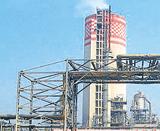
Fertiliser co-op in eye of scam storm

April 24, 2012

scam


New Delhi, April 24: The leading fertiliser producing cooperative in the country, Kribhco, is under a cloud following a controversial joint venture takeover of an ailing fertiliser plant at Shahjanpur in Uttar Pradesh at an inflated cost.

Kribhco, a multi state co-operative society under the administrative control of the Union Ministry of Chemical and Fertilisers, purchased the ailing Oswal Chemicals and Fertilizers Limited (OCFL) in 2005 in a joint venture with Shyam Basic Infrastructure Project at a cost of Rs 1,900 crore.

The purchase of the plant in joint venture, in which Kribhco currently has 85 per cent stake, has been taken to the Delhi High Court where several questions have been raised amid a gamut of transactions.

Several RTI replies, submitted to the court, imply that the valuation of assets of company was not only conducted in a hasty manner but also the consultant which did valuation did not have experience in valuing the fertiliser companies.

As per the documents obtained through RTI, the valuation of assets of Oswal Fertiliser Plant was conducted by Edelweiss Capital Limited which was engaged by Shyam Group of companies, promoter of Shyam Telecom, on November 3, 2005.

Within two days, on November 5, 2011, the valuation was completed, the deal was sealed and Kribhco agreed to pay Rs 1,900 crore.

In the RTI reply, Kribhco admitted that Edelweiss Capital had no previous experience of valuing a fertiliser plant. Shyam Group is active in telecom and related areas, and had no experience in fertiliser industry.

Moreover, Kribhco had stated that Edelweiss for its report relied on the information provided to them by OCFL.

Suspecting a scam, BJP MP and also former Union Minister Syed Shahnawaz Hussain wrote a letter to Prime Minister Manmohan Singh and brought the matter to his notice.

Comments

Add new comment

  • Coastaldigest.com reserves the right to delete or block any comments.
  • Coastaldigset.com is not responsible for its readers’ comments.
  • Comments that are abusive, incendiary or irrelevant are strictly prohibited.
  • Please use a genuine email ID and provide your name to avoid reject.
News Network
May 10,2020

New Delhi, May 10: India's COVID-19 count crossed 60 thousand on Sunday, with Maharashtra being the worst-affected due to the infection so far, according to the Union Ministry of Health and Family Welfare.

The number of total confirmed cases in the country rose to 62,939, including 19,358 patients who have been cured and discharged or migrated, according to the Ministry.

The total number of active cases in the country, therefore, stands at 41,472.

The number of deaths in the country due to the infection reached 2,109 on Sunday.

While Maharashtra, with 20,228 cases is the worst-affected state, it is followed by Gujarat with 7,796 and the national capital, Delhi, with 6,542 cases. Tamil Nadu, is marginally behind Delhi with 6,535 cases.

Comments

Add new comment

  • Coastaldigest.com reserves the right to delete or block any comments.
  • Coastaldigset.com is not responsible for its readers’ comments.
  • Comments that are abusive, incendiary or irrelevant are strictly prohibited.
  • Please use a genuine email ID and provide your name to avoid reject.
News Network
June 5,2020

New Delhi, Jun 5: India registered its highest spike in COVID-19 cases with 9,851 more cases and 273 deaths reported in the last 24 hours. The total number of cases in India reached 2,26,770 including 1,10,960 active cases, said the Union Ministry of Health and Family Welfare.

The Ministry informed that 1,09,462 persons have been cured/discharged/migrated while 6,348 people have succumbed to the disease so far.

Maharashtra has so far reported 77,793 cases, more than any other state in the country, while the total number of active cases in the state stands at 41,402.

In Tamil Nadu, 27,256 cases have been detected so far while Delhi has reported 25,004 coronavirus cases.

Comments

Add new comment

  • Coastaldigest.com reserves the right to delete or block any comments.
  • Coastaldigset.com is not responsible for its readers’ comments.
  • Comments that are abusive, incendiary or irrelevant are strictly prohibited.
  • Please use a genuine email ID and provide your name to avoid reject.
News Network
January 24,2020

Jan 24: India’s economy appears to be shaking off a slump, as activity in the services and manufacturing sectors expanded for a second straight month in December.

The needle on a gauge measuring so-called animal spirits signaled the economy may be taking a turn for the better, as five of the eight high-frequency indicators tracked by Bloomberg News came in stronger last month. The dial was last at the current position in August.

“Animal spirits” is a term coined by British economist John Maynard Keynes to refer to investors’ confidence in taking action, and the gauge uses the three-month weighted average to smooth out volatility in the single-month numbers.

The nascent recovery would need a helping hand, with expectations building that Finance Minister Nirmala Sitharaman will provide some stimulus when she presents the budget Feb. 1. Official forecasts show the economy is set to expand at 5% in the year ending March 2020 -- the weakest pace in more than a decade.

Here are the details of the dashboard:

Business Activity

The dominant services index rose to the highest level in five months in December as improving new work orders helped boost activity. The seasonally adjusted Markit India Services PMI index climbed to 53.3 from 52.7 in November, helping post a strong end to the calendar year.

India’s manufacturing PMI also rose -- to 52.7 from 51.2 a month ago -- boosted by the fastest increase in new orders since July. A reading above 50 means expansion while anything below that signals contraction.

The uptick in business confidence was accompanied by a rise in inflationary pressures, the survey showed. That trend may keep monetary policy makers from resuming interest-rate cuts anytime soon, leaving most of the heavy-lifting to boost growth with the government.

“The relative stability in macro indicators over the past two months suggests that the worst is behind, but the recovery is likely to be prolonged,” said Teresa John, an economist at Nirmal Bang Equities Pvt. in Mumbai. “Still, sluggish growth and rising inflation indicate that India may well remain in stagflation for most of 2020.”

Exports

Exports remained a laggard, falling 1.8% in December from a year ago. The drag was mainly because of a fall in export of engineering goods, which constitute a third of India’s non-oil exports.

Capital goods imports continued to contract and was lower by 16.5% year-on-year in December after a 22% drop in November. This was the seventh consecutive month of continuous decline, underscoring the weakness in the capex cycle, according to IDFC First Bank.

Consumer Activity

Weakness in demand for passenger vehicles persisted, with local sales falling 1.2% in December from a year ago, according to the Society of Indian Automobile Manufacturers. That capped the worst yearly passenger vehicle sales on record. A Nielsen study on demand for fast-moving consumer goods showed volume growth dropped to 3.5% in the last quarter of 2019 from 3.9% in the same period of 2018.

Funding conditions held out hope, showing considerable improvement in December, according to the Citi India Financial Conditions Index. Credit growth remained tardy though, with demand for loans rising at a slower 7.1% pace from a year ago compared with a nearly 8% growth in November.

Industrial Activity

Industrial output rose for the first time in four months in November. The pick up was broad-based, led by mining, manufacturing and electricity. Mining and manufacturing, in particular, posted a second month of sequential growth. Production of consumer goods also rose after a few months of contraction.

The index of eight core infrastructure industries, which feeds into the index of industrial production, however, declined 1.5% in November from a year ago -- the fourth straight month of contraction. That was on account of shrinking production of electricity, steel, coal, natural gas and crude oil. Both the core sector and industrial output numbers are reported with a one-month lag.


Comments

Add new comment

  • Coastaldigest.com reserves the right to delete or block any comments.
  • Coastaldigset.com is not responsible for its readers’ comments.
  • Comments that are abusive, incendiary or irrelevant are strictly prohibited.
  • Please use a genuine email ID and provide your name to avoid reject.