


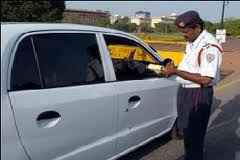
No illegal tinted glass in cars from May 4: Supreme Court

April 28, 2012

Tint_Out

New Delhi, April 28: From May 4, if your car has black film on the front and rear windscreens that blocks light by more than 30% and the tint on the side window panes is more than 50%, then you could be in contempt of court in addition to being prosecuted as per the rules provided under the Motor Vehicles Act.

A bench of Chief Justice S H Kapadia and Justices A K Patnaik and Swatanter Kumar went by the limits prescribed in the MV Act and said anything beyond the visual light transmission (VLT) limit of 70% for the front and rear windshields and 50% for the side windows would be punishable.

The decision came on a PIL filed by Avishek Goenka, who had complained that cars with black film on window panes were being increasingly used for crimes, including sexual assault of women. He said though there was no express restraint on use of black film under the MV Act, it prescribed VLT limits.

Writing the judgment for the bench, Justice Kumar said, "On the plain reading of the rule, it is clear that cars must have safety glass having VLT at the time of manufacturing... In other words, the rule not impliedly but specifically prohibits alteration of such VLT by any means."

It's illegal, but tinted glass windows in cars in the city are a common sight. However, after the Supreme Court banned use of tinted glass beyond the permissible limit, such defaulters are going to have a tough time. Traffic police now intends to intensify the drive against use of tinted glass in vehicles.

There has been a traffic police drive against tinted car windows since last year. However, there has been a lull in the prosecutions this year, with only 9,279 such prosecutions till April 15 this year. Last year, for the same period, there had been as many as 30,582 prosecutions. Cops claim that better compliance has resulted in lower prosecutions.At present, car owners who are found not following the permitted percentage set for tinted glass have to either hand in their registration certificate or their driving licence along with the usual Rs 100 challan slapped on defaulters. "A notice is also issued to them by traffic police and the defaulter has to report to the area traffic inspector where the violation was recorded within 72 hours for inspection of the vehicle.

If the directions are not followed, the matter will be forwarded to the court," said joint commissioner of police (traffic) Satyendra Garg. As per the permissible limit there should be at least 70% transparency in the film on the front and rear windows while 50% transparency is required on the side windows."Usually, since the fine is just a meagre Rs 100, which is nothing compared to the money spent on films (ranging from Rs 700 to Rs 14,000 for the more fancy ones that protect from UV rays), it is not much of a deterrent to defaulters who continue to travel in the tinted vehicles. We hope that the stricter action will make the defaulters mindful of the rules," said a senior traffic police officer.Last year, as many as 45,649 vehicles with tinted glass were booked. "Significantly, a majority of these were repeat offenders, showing that despite being caught, Delhiites are mostly unmindful of the rules," said a senior traffic officer. This year, in a drive started on March 27, about 2,064 offenders have been booked till April 26.

Of them, 999 vehicle owners were made to remove the tinted film on the spot.The "Rules of Road Regulations, 1989" framed by the central government under Section 118 of the Motor Vehicles Act state that, "A driver of a motor vehicle and every other person using the road shall obey every direction given, whether by signal or otherwise, by a police officer or any authorized person for the time being in charge of the regulation of traffic." Under the rule, even a traffic constable has the power to issue notice to the defaulter, said traffic police. Tinted glass in vehicles has been a major source of concern for women's security as well as criminal activities. Delhi Police had earlier sent a proposal to the Union home ministry to amend the Motor Vehicles Act to enhance fines on use of tinted glass. The amendment is expected to increase the fine to a minimum of Rs 500. Tinted car windows have helped criminals especially in cases of rape and murder.


Comments

Add new comment

  • Coastaldigest.com reserves the right to delete or block any comments.
  • Coastaldigset.com is not responsible for its readers’ comments.
  • Comments that are abusive, incendiary or irrelevant are strictly prohibited.
  • Please use a genuine email ID and provide your name to avoid reject.
Agencies
July 30,2020

Mumbai, Jul 30: Counterfeiting incidents have increased 24 per cent in the country in 2019 over the previous year, creating an over Rs 1 lakh crore hole in the economy, according to a report.

The report also said counterfeiters are having a free run due to the pandemic-driven disruptions to organised supply chains and the resultant spike in consumer demand.

According to the report by ASPA, a self-regulated industry body of anti-counterfeiting and traceability solutions providers, counterfeiting has risen steadily in the last few years, and exploiting the pandemic as a cover for their activities.

Between February and April 2020, over 150 incidents of counterfeiting cases were reported, mostly about fake PPE kits, sanitisers and masks taking advantage of the high demand for these products, it noted.

"There was a 24 per cent increase in counterfeiting in 2019 over 2018, leading to the loss of more than Rs 1 lakh crore to the overall economy," said Nakul Pasricha, president of Authentication Solution Providers Association.

The association works with global authorities like the International Hologram Manufacturers Association, Counterfeit Intelligence Bureau of the Interpol, and domestic industry lobbies like Ficci, he said.

Counterfeiting is a universal issue and is 3.3 per cent of global trade, according to the OECD data, impacting social and economic development across the world.

The report lists the currency, FMCG, alcohol, pharma, documents, agriculture, infrastructure, automotive, tobacco, lifestyle and apparel, as the 10 sectors impacted most by counterfeiting.

Among these, currency, alcohol and FMCG continue to be the top three sectors with the highest counterfeiting in the last two years. The FMCG sector is most vulnerable, as counterfeit incidents rose 63 per cent between 2018 (79) and 2019 when the reported cases jumped to 129.

Within the states, the fakers have a free run in Uttar Pradesh, Bihar, Rajasthan, Madhya Pradesh, Bengal, Punjab, Jharkhand, Delhi, Gujarat, and Uttarakhand, calling for urgent actions to frame anti-counterfeiting policy measures.

According to the report, UP continues to be on top followed by Bihar, Rajasthan, and together these three states represent almost 45 per cent of all counterfeiting reported in the last two years.

What is more alarming is that counterfeiting is not limited to high-end luxury items today, as common everyday items as fake cumin seeds, mustard cooking oil, ghee, hair oils, soaps, baby care vaccines and medicines are aplenty in the markets.

"There is an urgent need for building and nurturing authentication ecosystems in the country with the active involvement and active participation of all stakeholders," said Pasricha.

Comments

Add new comment

  • Coastaldigest.com reserves the right to delete or block any comments.
  • Coastaldigset.com is not responsible for its readers’ comments.
  • Comments that are abusive, incendiary or irrelevant are strictly prohibited.
  • Please use a genuine email ID and provide your name to avoid reject.
Agencies
March 12,2020

The Ministry of Health and Family Welfare has prepared a draft for guidelines for home quarantine, as well as for the use of masks by public, in view of coronavirus.

What to do in Home Quarantine?

The government says, for those taking refuge to home quarantine should stay in a well-ventilated single-room preferably with an attached or separate toilet. It adds that if another family member needs to stay in the same room, it's advisable to maintain a distance of at least 1 metre between the two.

The government advised, coronavirus patients to stay away from elderly people, pregnant women, children and persons with co-morbidities within the household as their immune system may be low. The health minister also suggested to restrict the patient's movement within the house. "Under no circumstances attend any social/religious gathering e.g. wedding, condolences, etc, said the guideline.

It also instructed the corona virus infected person to avoid sharing household items like dishes, drinking glasses, cups, eating utensils, towels, bedding, or other items with others at home. The guideline also demanded that even though home quarantine, the patient should wear a surgical mask at all times. "The mask should be changed every 6-8 hours and disposed off. Disposable masks are never to be reused, it added.

"Masks used by patients/ caregivers/ close contacts during home care should be disinfected using ordinary bleach solution (5 per cent) or sodium hypochlorite solution (1%) and then disposed of either by burning or deep burial," instructs the government.

Even for family members of a patient, the health ministry clearly instructs to use disposable gloves when cleaning the surfaces or handling soiled linen. No visitors, under any circumstances will be allowed, said the guideline.

"In case the person being quarantined becomes symptomatic, all his close contacts will be home quarantined (for 14 days) and followed up for an additional 14 days or till the report of such case turns out negative on lab testing," states the draft.

How to wear & dump masks?

There is a specific and elaborate do's and don'ts also released by the ministry. For those unsure in which mask to choose, it says, "Medical masks of different sizes and shapes are available in the market. The common ones are flat pleated masks of woven fabric which covers the nose and mouth and affixed behind the head with straps/ elastic fasteners. There are also conical or duck bill shaped masks with valves (or without valves) that fit in the contour of face over the nose and mouth, but are costlier."

However, the ministry warns, medical masks should not be used by healthy persons who are not having any symptoms "because it creates a false sense of security". Instead, it suggests to refrain from touching face, mouth, nose and eyes as well as washing hands regularly with soap for 20 seconds each time.

However, when a person develops a cough or fever, the suspected patient needs to switch to medical masks. "Use of medical three layer masks when ill, will prevent your infection from spreading to others. However you also need to wash your hands frequently to avoid spreading infection to others," read the guideline.

Even if one is not tested positive but showing symptoms, they are advised to wear masks while visiting a healthcare facility. "Close family contacts of such suspect/confirmed cases undergoing home care should also use Triple layer medical mask," it warns.

The ministry has also given point by point guideline on how to use a mask like to make sure that they are facing down while unfolding or for that matter to ensure there are no gaps on either side of the mask.

It even warns, "Fit flexible nose piece (a metallic strip that can easily be located) over nose-bridge" to ensure no one else are infected. The government also warns against simple dumping of the masks once used. Instead one should disinfect "using ordinary bleach solution (5 per cent) or sodium hypochlorite solution (1 per cent) and then disposed of either by burning or deep burial," says the Health Ministry.

COVID-19 emerged in early December 2019 in China's Wuhan province and has now spread to over 100 countries. As on March 9, 2020, India has reported 42 cases mostly among those who had travelled from affected countries.

However the government says, "It causes a minor illness in majority of patients with symptoms of fever and or cough. A small proportion of such persons may progress to severe disease with difficulty in breathing."

Comments

Add new comment

  • Coastaldigest.com reserves the right to delete or block any comments.
  • Coastaldigset.com is not responsible for its readers’ comments.
  • Comments that are abusive, incendiary or irrelevant are strictly prohibited.
  • Please use a genuine email ID and provide your name to avoid reject.
News Network
February 28,2020

Feb 28: For 30-year-old Shabana Parveen, it was nothing sort of a miracle — giving birth to a healthy baby boy after surviving a brutal attack by a mob who kicked and assaulted her and her husband in northeast Delhi's Karawal Nagar.

Their home set afire by the mob, Ms Parveen's family is now pinning their hopes on the newborn who they called a "miracle baby".

Ms Parveen, her husband, two kids and mother-in-law were sleeping inside the house on Monday night when a mob barged into their house.

Narrating their ordeal, Ms Parveen's mother-in-law Nashima told PTI, "They hurled religious slurs, beat up my son. Some of them even kicked my daughter-in-law in the abdomen...as I went to protect her they came charging at me... We thought we would not survive that night. But with God's grace we somehow managed to escape from the clutches of the rioters."

"We rushed Parveen to a nearby hospital but doctors there asked us to go to Al-hind Hospital where she delivered a baby boy on Wednesday," she added.

Despite having lost their home for over two decades and all belongings, her family has overcome the initial shock and are now overjoyed with the birth of the "miracle baby".

Ms Nashima said she had no clue where the family would go after Ms Parveen was discharged from the hospital.

"It's all gone there. Nothing left. Maybe, we will go to some relative's place and see how we can re-build our life," she said.

Ali, 6, who held his one-day-old brother, caressing his forehead, said, "I will take care of him forever and save him from every ill."

The violence over the amended citizenship law in northeast Delhi has claimed 38 lives so far and left over 200 people injured. Frenzied mobs torched houses, shops, vehicles, a petrol pump and pelted stones at locals and police personnel.

Jaffrabad, Maujpur, Babarpur, Yamuna Vihar, Bhajanpura, Chand Bagh and Shiv Vihar are among the areas mainly affected by the clashes.

Comments

Add new comment

  • Coastaldigest.com reserves the right to delete or block any comments.
  • Coastaldigset.com is not responsible for its readers’ comments.
  • Comments that are abusive, incendiary or irrelevant are strictly prohibited.
  • Please use a genuine email ID and provide your name to avoid reject.