



Bangaru Laxman sentenced to 4 years jail in fictitious arms deal case

April 28, 2012

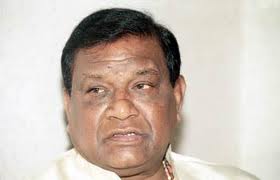
New Delhi, April 28: Former BJP president Bangaru Laxman was sentenced today to four years in jail by a Delhi court for taking a bribe of Rs one lakh in a fictitious arms deal case 11 years ago.

Additional Sessions Judge Kanwal Jeet Arora sentenced 72-year-old Bangaru, also a former Union minister, holding him guilty of taking the bribe from fake arms dealers to recommend to the defence ministry to award them a contract to supply thermal binoculars to the Army.

The court awarded him the prison term, rejecting his plea for leniency and ordered that he be taken in custody to serve the sentence.

The court also imposed a fine of Rs one lakh on Bangaru, who had been caught on camera accepting the money in his chamber in the party headquarters and had to quit as its president shortly after the sting expose which had created a huge political storm.

"Balancing the twin interest of society and that of the convict, I am of the opinion that interest of justice would be met, if the convict is sentenced to undergo rigorous imprisonment for a term of four years and to pay a fine of Rs one lakh for the offence under Section 9 of the Prevention of Corruption Act," the judge said.

"It is often said that the accomplice of the crime of corruption is generally our own indifference. 'Sab chalta hai' syndrome has led us to the present situation, where we are, where nothing moves without an illegal consideration. People are forced to pay for getting even the right things done at right time," he added.

The judge, in his 14-page order on quantum of the sentence, said it is time to "shun" the "sab chalta hai" (It's OK, whatsoever!) attitude and courts should deal strictly with persons found guilty of corruption.

"It is right time to shun this attitude. When Parliament, taking note of the grim situation, has taken first step to sternly deal with such persons by increasing the quantum of punishment which can be imposed, it is the turn of the court to follow suit, so as to implement the will and intention of the legislature by interpreting the provisions of the PC Act as per the dictates of the apex court," the judge said.

"The problem of large-scale and rampant corruption, more particularly, the political corruption is weakening the political body and damaging the supreme importance of the law, governing the society,"

"The wisdom in the saying 'crime never pays' is belied by the factual realities of the day. The crime scenario in our country is distressingly disturbing as it has shattered hopes of both the plebeian and intellectual society about a possible rejuvenation of a value-based society," the judge said.

The court had on Friday convicted Bangaru observing that the CBI had established the case of accepting Rs one lakh bribe against him.

"Accused Bangaru Laxman stands convicted for the offence under Section 9 (taking gratification for exercise of personal influence with public servant) of the Prevention of Corruption Act," the judge had said.
laxman


Earlier

Fake arms deal case: Bangaru Laxman seeks leniency, CBI for maximum jail term

New Delhi, April 28: Former BJP president Bangaru Laxman, convicted for accepting Rs 1 lakh bribe in a fictitious arms deal case, today sought leniency on the ground of poor health, while the CBI sought the maximum punishment of five years for him.

72-year-old Bangaru, who was on Friday held guilty in the case, was produced from Tihar Jail before Special CBI Judge Kanwal Jeet Arora.

The court after hearing arguments on quantum of sentence in the case reserved its judgement for 2.30 PM.

Bangaru was convicted for taking bribe from fake arms dealer to recommend to the defence ministry to award them a contract to supply thermal binoculars to the Army.

He is convicted under Section 9 of the Prevention of Corruption Act which relates to "taking gratification, for exercise of personal influence with public servant" and entails a maximum punishment of five years imprisonment and a minimum of six months.

On being asked by the judge as to why Bangaru should be given minimum punishment of six months, the politician said he was not keeping well and has undergone bypass surgery twice.

"I have health problems as I have undergone bypass surgery twice and suffering from diabetes. I have never been involved in any such case before. So, I should be given the minimum sentence," Bangaru pleaded.

Seeking maximum punishment for Bangaru, CBI prosecutor Padmini Singh said corruption is spreading like anything in the society so it has to be dealt accordingly.

Citing various Supreme Court judgements on corruption, the prosecutor said corruption is rampant and it has to be dealt severely.

"CBI has been able to prove the case against Bangaru so we want maximum punishment for him under Section 9 of the Prevention of Corruption Act," the prosecutor said.

Opposing CBI's plea for maximum punishment, senior advocate Sunil Kumar, appearing for Bangaru, said in 40 years of his political career, he was "never ever involved in any such case" and no civil or criminal case has been lodged against him.

"He was holding important portfolio in the ministry. Once the tape was aired in news channels, Bangaru stepped down as a minister," the counsel said while seeking minimum sentence.

Comments

Add new comment

  • Coastaldigest.com reserves the right to delete or block any comments.
  • Coastaldigset.com is not responsible for its readers’ comments.
  • Comments that are abusive, incendiary or irrelevant are strictly prohibited.
  • Please use a genuine email ID and provide your name to avoid reject.
News Network
March 21,2020

New Delhi, Mar 21: Novel coronavirus cases in India rose to 258 on Saturday after 35 fresh cases were reported in various parts of the country, according to the Health Ministry.

Among the 258 are 39 foreign nationals, including 17 from Italy, three from the Philippines, two from the UK, one each belonging to Canada, Indonesia and Singapore.

The total figure also includes four deaths reported from Delhi, Karnataka, Punjab and Maharashtra.

"The total number of active COVID-19 cases across India stands at 231 so far," the ministry said, adding that 23 others have been cured/discharged/migrated while four have died.

Delhi has, so far, reported 26 positive cases, which include one foreigner, while Uttar Pradesh has recorded 24 cases, including one foreigner.

Maharashtra has 52 cases, including three foreigners, while Kerala has recorded 40 cases, which include seven foreign nationals.

Karnataka has 15 coronavirus patients. The number of cases in Ladakh rose to 13 and Jammu & Kashmir four. Telangana has reported 19 cases, which include 11 foreigners.

Rajasthan has also reported 17 cases, including two foreigners. Gujarat has reported seven cases so far.

Tamil Nadu, Andhra Pradesh and Uttarakhand have reported three cases each.

West Bengal, Odisha and Punjab each reported two cases while Puducherry, Chhattisgarh and Chandigarh reported one case each.

In Haryana, there are 17 cases, which include 14 foreigners.

Comments

Add new comment

  • Coastaldigest.com reserves the right to delete or block any comments.
  • Coastaldigset.com is not responsible for its readers’ comments.
  • Comments that are abusive, incendiary or irrelevant are strictly prohibited.
  • Please use a genuine email ID and provide your name to avoid reject.
News Network
February 29,2020

New Delhi, Feb 29: India’s economy expanded at its slowest pace in more than six years in the last three months of 2019, with analysts predicting further deceleration as the global Covid 19 coronavirus outbreak stifles growth in Asia’s third-largest economy.

The gross domestic product (GDP) data released yesterday showed government spending, private investment and exports slowing down, while there is a slight upturn in consumer spending and improvement in rural demand lent support.

The quarterly figure of 4.7% growth matched the consensus in a Reuters poll of analysts but was below a revised - and greatly increased - 5.1% rate for the previous quarter.

The central bank has warned that downside risks to global growth have increased as a result of the coronavirus epidemic, the full effects of which are still unfolding.

Prime minister Narendra Modi’s government has taken several steps to bolster economic growth, including a privatisation push and increased state spending, after cutting corporate tax rates last September.

In its annual budget presented this month, the government estimated that annual economic growth in the financial year to March 31 would be 5%, its lowest for last 11 years.

Modi’s government is targeting a slight recovery in growth to 6% for 2020/21, still far below the level needed to generate jobs for millions of young Indians entering the labour market each month.

The annual GDP figure for the September quarter was ramped up from an earlier estimate of 4.5%, while the April-June reading was similarly lifted to 5.6% from 5%, data released by the Ministry of Statistics showed on Friday.

Capital Investment Drop

In the December quarter, private investment grew 5.9%, up from 5.6% in the previous quarter, while government spending rose by 11.8%, against 13.2% in the previous three months.

However, corporate capital investment contracted by 5.2% after a 4.1% decline in the previous quarter, indicating that interest rate cuts by the central bank have failed to encourage new investment. Manufacturing, meanwhile, contracted by 0.2%.

“It appears growth slowdown is not just cyclical but more entrenched with consumption secularly joining the slowdown bandwagon even as the investment story continues to languish,” said Madhavi Arora of Edelweiss Securities in Mumbai.

Many economists said that the government stimulus could take four to six quarters of time before lifting the economy and the impact of those efforts could be outweighed by the global fallout from the coronavirus epidemic that began in China.

“The coronavirus remains the critical risk as India depends on China for both demand and supply of inputs,” said Abheek Barua, chief economist at HDFC Bank.

Indian shares sank on Friday for a sixth session running, capping their worst week in more than a decade. The NSE Nifty 50 index shed 7.3% over the week, while the Sensex dropped 6.8%, the worst weekly declines since the 2008-09 financial crisis.

Separately, India’s infrastructure output rose 2.2% year on year in January, data showed on Friday.

A spike in inflation to a more than 5-1/2 year high of 7.59% in January is expected to make the RBI hold off from further cuts to interest rates for now, while keeping its monetary stance accommodative.

Comments

Add new comment

  • Coastaldigest.com reserves the right to delete or block any comments.
  • Coastaldigset.com is not responsible for its readers’ comments.
  • Comments that are abusive, incendiary or irrelevant are strictly prohibited.
  • Please use a genuine email ID and provide your name to avoid reject.
News Network
January 9,2020

Mumbai, Jan 9: India's weddings are famously lavish -- lasting days and with hundreds if not thousands of guests -- but this season many families are cutting costs even if it risks their social standing.

It is symptomatic of a sharp slowdown in the world's fifth-largest economy, with Indians spending less on everything from daily essentials to once-in-a-lifetime celebrations.

Growth has hit a six-year low and unemployment a four-decade high under Prime Minister Narendra Modi. Prices are rising too, squeezing spending on everything from shampoo to mobile data.

Chartered accountant Palak Panchamiya, for example, has already slashed the budget on her upcoming Mumbai nuptials by a third, trimming spending on clothing and the guest list.

"Initially I chose a dress that cost 73,000 rupees ($1,000)," Panchamiya told news agency as she picked through outfits at a recent marriage trade fair.

"But my partner felt it was too expensive, and so now I am here reworking my options and looking for something cheaper."

India's massive wedding industry is worth an estimated $40-50 billion a year, according to research firm KPMG.

The celebrations can last a week and involve several functions, a dazzling variety of cuisines, music and dance performances, and lots of gifts.

Foreigners can even buy tickets to some events.

But these days, except for the super-rich -- a recent Ambani family wedding reportedly cost $100 million -- extravagance is out and frugality is in as families prioritise saving.

"Earlier Indian weddings were like huge concerts, but now things have changed," said Maninder Sethi, founder of Wedding Asia, which organises marriage fairs around the country.

Cracks emerged in 2016 when the Indian wedding season, which runs from September to mid-January, was hit by the government's shock withdrawal of vast amounts of banknotes from circulation in a bid to crack down on undeclared earnings.

Mumbai-based trousseau maker Sapna Designs Studio shut for months as the economy was turned on its head by Modi's move.

"No exhibitions were happening and there were no avenues for us to sell either," said Vishal Hariyani, owner of the clothing studio.

Hopes for a recovery proved short-lived when the cash ban was followed by a botched rollout of a nationwide goods and services tax (GST) in 2017 that saw many small-scale businesses close.

Since then, keeping his studio afloat has been a challenge, with consumers increasingly reluctant to spend too much, says Hariyani.

"We customise our clothes as per their budgets, and now week-long weddings have been converted to just a 36-hour ceremony," he told news agency.

"We have to pay GST, pay workers and even offer discounts to customers," he added.

"The whole economy has slowed down and reduced spending on weddings is a by-product of that. Everyone except the super-rich are affected," Pradip Shah from IndAsia Fund Advisors told news agency.

"It is reflective of how sombre the mood is," he said.

In a country where families traditionally spend heavily on weddings -- including taking on debt in some cases -- the downturn is also a source of sadness and shame, with elaborate celebrations often seen as a measure of social status.

"We haven't even invited our neighbours. It is embarrassing but the current situation doesn't offer us much respite," 52-year-old Tara Shetty said ahead of her son's wedding.

"In my era, we always spent a lot and had thousands of people attending the weddings," she explained.

"My wedding was supremely grand, and now my son's is the polar opposite."

Comments

Add new comment

  • Coastaldigest.com reserves the right to delete or block any comments.
  • Coastaldigset.com is not responsible for its readers’ comments.
  • Comments that are abusive, incendiary or irrelevant are strictly prohibited.
  • Please use a genuine email ID and provide your name to avoid reject.