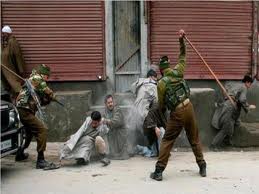
129 army personnel found guilty in human rights violation cases

May 7, 2012

Srinagara

Srinagar, May 7: As many as 129 army personnel, including three dozen officers, were found guilty of human rights violations mostly in Jammu and Kashmir and Northeast in the last two decades, defence sources have said.

Following the establishment of human rights cell in 1993, the army has received more than 1,500 allegations of rights violations against its men but most of these have been found false and baseless, they said.

"Of the 1,532 allegations of rights violations, investigations revealed that 1,508 were false. Out of the 995 complaints in Jammu and Kashmir, 961 were false while only 29 out of the 485 complaints from Northeast were found correct," the sources said.

The sources said 59 personnel, including some officers, were punished in Jammu and Kashmir in the nine cases of rights violations.

"Similarly, 70 personnel were punished in Northeast after their guilt was established," the sources said.

Army has awarded compensation in 34 cases in which the complaints were found to be genuine. While compensation was paid in 15 cases in Jammu and Kashmir, 19 victims of rights violations were compensated in Northeast, they said.

The sources said if the army decides to exercise the option of court martial against its accused personnel in the Pathribal encounter case, due course of law will be followed if they are found guilty.

"Anyone found guilty of rights abuses has been punished and it should be no different in this (Pathribal) case," they said.

Last week, the Supreme Court had directed the army to decide within eight weeks whether it would exercise the option of court martial or allow its personnel, accused of staging a fake encounter at Pathribal, to be tried by a civilian court.

Comments

Add new comment

  • Coastaldigest.com reserves the right to delete or block any comments.
  • Coastaldigset.com is not responsible for its readers’ comments.
  • Comments that are abusive, incendiary or irrelevant are strictly prohibited.
  • Please use a genuine email ID and provide your name to avoid reject.
News Network
June 23,2020

Jun 23: The U.S. government on Monday restricted charter flights from India, accusing the nation of "unfair and discriminatory practices" by violating a treaty governing aviation between the two countries.

Air India Ltd. has been making flights to repatriate its citizens during the travel disruptions caused by the Covid-19 outbreak, but also has been selling tickets to the public, the Transportation Department alleged.

At the same time, U.S. airlines have been prohibited from flying to India by aviation regulators there, the DOT said in its order. The situation "creates a competitive disadvantage for U.S. carriers," the agency said in a press release.

Air India is advertising a schedule that is more than half of pre-virus operations, the department said. "The charters go beyond true repatriations, and it appears that Air India may be using repatriation charters as a way of circumventing" that nation's flight restrictions, the U.S. agency said.

The order becomes effective in 30 days, the department said.

Indian airlines must apply to the DOT for authorization before conducting charter flights so that it can scrutinize them more closely, it said. The department will reconsider the restrictions once India lifts restrictions on U.S. carriers.

The action against India follows weeks of DOT restrictions against Chinese airlines after the U.S. agency accused that nation of unfairly banning American carriers in the wake of the virus. On June 15, the U.S. announced it would agree to allow four flights a week from China after it allowed the same number by U.S. carriers.

Attempts to reach Air India and the Indian embassy in Washington after business hours were unsuccessful.

Comments

Add new comment

  • Coastaldigest.com reserves the right to delete or block any comments.
  • Coastaldigset.com is not responsible for its readers’ comments.
  • Comments that are abusive, incendiary or irrelevant are strictly prohibited.
  • Please use a genuine email ID and provide your name to avoid reject.
News Network
May 25,2020

Domestic flights resumed operations on a truncated schedule on Monday with the first aircraft departing from the Delhi Airport for Pune, more than two months after a nationwide lockdown was announced to combat COVID-19.

The first flight to take off was an IndiGo aircraft to Pune, flying passengers stranded in the national capital since the lockdown was announced on March 24.

Passengers were screened at the airport with electronic thermometers, and revised protocol for air travel that included santisation of luggage through ultra-violent scanners, and maintaining physical distancing.

Only asymptomatic passengers were allowed to enter the airport.

Passengers were also seen wearing face masks and face shields given to them at the embarkation point by the airline to minimise the chances of infection while onboard.

The first flight arrived at Delhi Airport from Ahmedabad – a SpiceJet aircraft – at around 8:00 am.

BJD Lok Sabha member Anubhav Mohanty was among those who took the Air Vistara flight to Bhubaneshwar that departed Delhi airport at 6:50 am.

The first flight to take off from Mumbai was an IndiGo aircraft that departed for Patna at 6:45 am, while passengers from Lucknow were the first to reach the financial capital on an IndiGo aircraft that touched down at 8:20 am.

The food & beverage and retail outlets, which were closed for the past 63 days, opened at Terminal 3 of Delhi’s Indira Gandhi International (IGI) Airport.

The flight services resumed after a day of long and hard negotiations between the Centre and the states on Sunday.

All states finally agreed to accept at least some flights but announced different quarantine and self-isolation rules for arriving passengers to address apprehension about infections being brought in from other cities.

The Centre had issued guidelines for all modes of domestic travel that advised all asymptomatic passengers to self-monitor their health parameters for 14 days on completion of the journey and report to health authorities if they displayed any symptoms for COVID-19.

However, the Centre had allowed state governments to prescribe their own health protocols for disembarking passengers which led to differential guidelines across the country.

Comments

Add new comment

  • Coastaldigest.com reserves the right to delete or block any comments.
  • Coastaldigset.com is not responsible for its readers’ comments.
  • Comments that are abusive, incendiary or irrelevant are strictly prohibited.
  • Please use a genuine email ID and provide your name to avoid reject.
News Network
February 6,2020

Feb 6: India has been ranked 40th out of 53 countries on a global intellectual property index, even as the country has shown improvement in terms of scores when it comes to the protection of IP and copyright issues, a top American industry body said on Wednesday.

India was placed at 36th position among 50 countries in 2019.

India's score, however, increased from 36.04 per cent (16.22 out of 45) in 2019 to 38.46 per cent (19.23 out of 50) in 2020, a 2.42 per cent jump in an absolute score.

However, India's relative score increased by 6.71 per cent, according to the International IP Index released by Global Innovation Policy Center or GIPC of the US Chambers of Commerce.

This year, it finds itself on the 40th place among 53 countries. Two new Index economies (Greece and the Dominican Republic) scored ahead of India. The Philippines, and Ukraine leapfrogged India.

"Since the release of the 2016 National IPR Policy, the government of India has made a focused effort to support investments in innovation and creativity through increasingly robust IP protection and enforcement," the GIPC said.

Since 2016, India has improved the speed of processing for patent and trademark applications, increased awareness of IP rights among Indian innovators and creators, and facilitated the registration and enforcement of those rights, it added.

According to the eighth edition of the annual report, India's score on the Chamber's International IP Index demonstrates the country's growing investment in IP-driven innovation and creativity. The Index specifically highlights a number of reforms over the last year that strengthen India's overall IP ecosystem, it said.

"In 2019, the Delhi High Court used dynamic injunctions to disable access to copyright-infringing content online, resulting in an increase in India's score on two of the copyright-related indicators," it said.

"The use of these injunctions places India alongside global leaders in copyright enforcement, including Singapore and the UK. As a result, India scores ahead of 24 other economies in the copyright indicators," the report said.

The Delhi High Court also issued a series of judgements that provide clarity on existing statutes related to trademark protection online, resulting in a score increase on one of the trademark-related indicators, it added.

The courts issued two precedential rulings that raised the bar for the damages awarded in IP-infringement cases and may provide a deterrent for future infringement. This resulted in an increase in score on one of the trademark-related indicators, it said.

Global Innovation Policy Center or GIPC said India also continues to score well in the Systemic Efficiency indicator, scoring ahead of 28 other economies in these indicators.

"This is a result of a concerted effort by the Indian government to consult with stakeholders during IP policy formation and create greater awareness about the importance of IP protection,” it said adding that India also remains a leader in the use of targeted incentives and IP assets for small and medium-sized enterprises (SMEs).

“To continue this upward trajectory, much work remains to be done to introduce transformative changes to India’s overall IP framework and take serious steps to consistently implement strong IP standards," the report said.

GIPC has identified several challenges for India. Prominent among them being patentability requirements, patent enforcement, compulsory licensing, patent opposition, regulatory data protection, transparency in reporting seizures by customs, and Singapore Treaty of Law of TMs and Patent Law Treaty.

"We are encouraged that Indian policymakers seem to recognize this Index as a valuable resource in their efforts to strengthen the country’s promising innovation ecosystem and enhance its competitiveness in an increasingly knowledge-based global economy,” the report said.

Observing that no other economy stands to gain more from strong Indian IP than India itself, the report said for example, no industry has been hurt more by copyright violations in India than the country’s own Bollywood industry, which loses almost USD3 billion to piracy each year.

"The number one way the Modi administration can demonstrate its commitment to the success of the Atal Innovation Mission, Accelerating Growth for New India’s Innovations, Make in India, Digital India, and Startup India is to strengthen its IP framework in ways that promote the legal and regulatory certainty necessary for greater R&D investment, high-value jobs, and greater innovative and creative outputs,” it said.

"Strong IP standards can further solidify India's position as the world’s fastest-growing economy, bolstering its reputation as a destination for doing business, foreign businesses’ ability to invest and make in India, thereby supporting the growth of India’s own innovative and creative industries," the report said.


Comments

Add new comment

  • Coastaldigest.com reserves the right to delete or block any comments.
  • Coastaldigset.com is not responsible for its readers’ comments.
  • Comments that are abusive, incendiary or irrelevant are strictly prohibited.
  • Please use a genuine email ID and provide your name to avoid reject.