



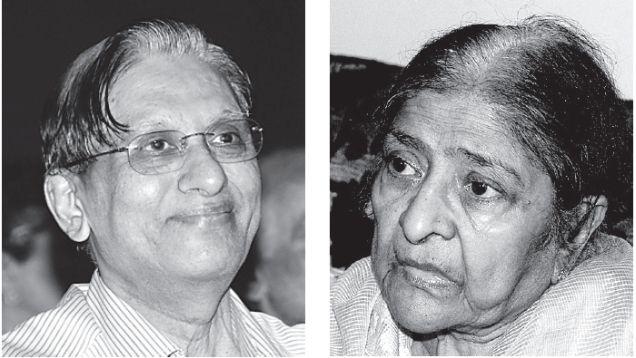
Ahmedabad, May 14: Chairman of the Supreme Court-appointed Special Investigation Team R.K. Raghavan, was highly critical of the petition filed in the Supreme Court by Zakia Jafri levelling sweeping charges against Gujarat Chief Minister Narendra Modi and 62 officials and leaders for their alleged involvement in the 2002 communal riots.
Agreeing with his inquiry officer, A. K. Malhotra, who found most of the allegations baseless and unsubstantiated and gave a clean chit to Mr. Modi and most of his senior police officers in handling the riots, Mr. Raghavan said Ms. Jafri's charges made Mr. Malhotra's task difficult, as the witnesses were not prepared to speak out before the SIT.
Pointing out that Mr. Malhotra had to handle the arduous task almost single-handedly because “associating any Gujarat police officer in such a sensitive inquiry would not have been desirable,” Mr. Raghavan said another factor that caused hurdles for the inquiry officer was the “reluctance of many crucial witnesses to depose frankly and without inhibition, because the complainants had ‘mindlessly and mechanically' referred to these witnesses as ‘accused,' a branding that caused a great offence to many of the witnesses.”
Mr. Raghavan lauded Mr. Malhotra for his “outstanding work,” completing the task of inquiring into 32 allegations levelled by Ms. Jafri against Mr. Modi and 62 others within a year, examining more than 160 witnesses and checking on a large number of documents. For reasons of confidentiality, even the secretarial assistance to him was “modest:” only one person did the “scriptory work.” Besides, most of the witnesses were “non-co-operative” and intentionally delayed appearing before him. The lapse of eight years before the investigation started also caused witnesses problems in recalling the facts correctly, he said.
Mr. Raghavan, a former CBI director, submitted his comments on the findings of the inquiry in the Supreme Court on May 14, 2010, and these have formed part of the closure report the SIT submitted in an Ahmedabad metropolitan court. A copy was given to Ms. Jafri, wife of the slain former Congress MP, Ehsan Jafri, who was among the 69 killed in the Gulberg Society massacre.
Mr. Raghavan agreed with Mr. Malhotra's conclusion that the allegation that Mr. Modi issued a “directive” to police officers to “allow Hindus to vent their anger” had “not been established,” as none of the officers “definitely present” at the crucial meeting held at his residence on the night of February 27, 2002, corroborated the claim made by suspended IPS officer Sanjiv Bhatt. Mr. Bhatt was an “unreliable witness.” There was no proof that the then Minister of State for Revenue, Haren Pandya, was present at the meeting, as he had claimed before the Citizens' Tribunal.
He also agreed with the finding that the decision to bring the bodies of the victims of the Godhra train carnage to Ahmedabad was taken unanimously by all police and administrative officers and the Ministers present in Godhra that day. The then Panchamahals Collector, Jayanti Ravi, also agreed to it.
He disagreed with the complainant that it was Mr. Modi's personal decision meant to inflame the situation by “parading the bodies,” pointing out that the bodies were brought in the dead of night and disposed of in the quickest possible time the next day.
And there was nothing to substantiate the charge that two senior Ministers were “instructed” by the Chief Minister to take charge of the State and city police control rooms on February 28, 2002, when ‘Gujarat Bandh' was observed. It was “conclusively established” that the late Ashok Bhatt, who was Health Minister, and I. K. Jadeja, the then Urban Development Minister, did visit the police control rooms, but there was no evidence that they ever “interfered” with the functioning of the police, or that they were told by Mr. Modi to sit in the control rooms. But as Mr. Modi himself held the Home portfolio, it did “heighten the suspicion that the decision had his blessings.”
Mr. Raghavan disagreed that there was undue delay in summoning and deploying the Army in the riot-hit areas, or Mr. Modi deliberately “ignored” Ehsan Jafri's plea for help when the riotous mob surrounded the Gulberg Society. No records were available to corroborate the allegations, he said, agreeing with the finding that the mobile call records did not show Mr. Modi having received any call from Ehsan Jafri or anyone else in the Gulberg Society, and accepting the Chief Minister's statement that he had never known Ehsan Jafri before the incident.
Mr. Raghavan did not agree that Mr. Modi was issuing “illegal instructions” orally, as alleged by the former Additional Director-General of Police, R. B. Sreekumar, in affidavits filed before the G.T. Nanavati-Akshay Mehta Judicial Inquiry Commission. Mr. Sreekumar's personal diary in which he made entries about such “illegal oral instructions” was an “unofficial document” he was not authorised to maintain, and had no “evidentiary value whatsoever.” Besides, some of the entries in the diary were found factually incorrect. It was significant that Mr. Sreekumar revealed the existence of such a diary three years after he had opened it and only after he was superseded in promotion; he produced only a copy of the diary before the SIT.
But Mr. Raghavan said the transfer of a few police officers amid the raging riots, especially those who were claimed to have done a good job in controlling the violence, were surprising, but none of the police officers was prepared to admit that they were victimised. The Chief Minister himself admitted that he did not visit the riot-hit areas so promptly as he visited Godhra on the day of the train carnage and could not cite any specific reason for the delay. Mr. Modi had not been able to totally deny his alleged statement that private firing by Ehsan Jafri had “provoked” the Gulberg Society massacre, or his reported theory of “action-reaction” to justify the riots, but Mr. Raghavan emphasised that the undertone of all his statements was an “earnest appeal” to the people for peace. He agreed that Mr. Modi failed to give any directive to Hindu organisations against the observance of the bandh in view of the charged atmosphere.
He found that the appointment of some of the special public prosecutors for the trial of the riot-related cases was politically motivated, but said a “transparent procedure” was in place for the appointment, and it was followed by the government.
Mr. Raghavan questioned Mr. Sreekumar's “intentions” in alleging that he was “tutored” by some officials of the Chief Minister's office to give guarded statements on the riots before various probe agencies to protect Mr. Modi and his government. Mr. Sreekumar levelled the allegations not while filling the affidavits before the Nanavati-Mehta Commission, but only when he was superseded, and his junior was promoted as DGP in 2005.

Comments
Add new comment