



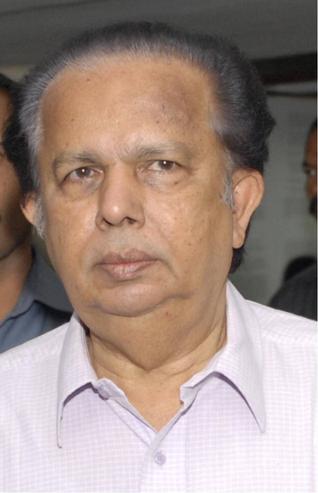
Nair concealed facts from Cabinet on Antrix deal: CAG

May 16, 2012

NairNew Delhi, May 16: Things have got tougher for the former Secretary of the Department of Space and former ISRO Chairman, G. Madhavan Nair, with the Comptroller and Auditor-General also finding fault with the way the Space Department, under his stewardship, went about the deal between ISRO's Antrix Corporation and the Bangalore-based private firm, Devas Multimedia.

Calling the Antrix-Devas agreement a “classic case of public investment for private profit,” the CAG, in a report tabled in Parliament on Tuesday, noted that Mr. Nair failed to convene meetings of the INSAT Coordination Committee as its Chairman and as a result, the concerns of key stakeholders, represented through the Secretaries of different Ministries and Departments, were “effectively blocked off” in the decision-making process.

“The Department of Space [under Mr. Nair], in its eagerness, went beyond its remit as laid down in the Allocation of Business Rules [of the government], concealed facts from the Union Cabinet and violated numerous rules, policies, and procedures.”

The department took upon itself the task of approving the new hybrid S-band DMB service, which, as in the case of DTH services, was the prerogative of the Union Cabinet. “Valuable spectrum frequencies, including 10 MHz, were to be reserved for strategic purposes, [but] were earmarked for Devas without obtaining approval of the Wireless Planning and Coordination [WPC] wing of the DoT [Department of Telecommunication].”

Likewise, the report noted, the Space Department had “suppressed” the crucial fact that it had already signed an agreement with Devas, while seeking Cabinet approval for the launch of the GSAT-6 satellite, and also failed to inform the Cabinet that GSAT-6 and 6 A satellites, proposed to be funded from the government budget, were to be used almost entirely by a private commercial entity.

“To avoid the obtaining of approval of the Cabinet, the DoS [Department of Space] estimated the cost of GSAT-6A, the subsequent satellite of a similar configuration after GSAT-6, at Rs. 147 crore so that it fell within the financial competence of the Space Commission [though] the first GSAT-6 satellite had been costed at Rs. 269 crore.”

It also complained that Devas was extended a host of benefits to promote the interests of the U.S.-based private consultancy firm, Forge Advisors, which had set up Devas, including earmarking for it 70 MHz of S-band spectrum for an indefinite period of time, ignoring its revenue potential to the government.

“Subsequent events like the auction of 3G in which the government received Rs. 67,719 crore and the auction of Broadband Wireless Access where the government received Rs. 38,543 crore revealed that the possibility of obtaining commensurate amounts for providing this commercial service was never explored.”

The Antrix-Devas pact also “cherry-picked” from two different models in a way that it extended maximum benefits to Devas, the report said and complained that the Space Department “further went on to revise the contract to ‘reassure the investors' so that even before engaging in any trading, manufacturing ground segment development activity and rolling out of any service, it could raise Rs. 575.6 crore from foreign investors.”

Noting that there was need for the government to ensure that there was no conflict of interest so that fundamental integrity of decisions, departments and the government was not undermined, the CAG said that in the case of the Space Department such an issue was evident in the multiple roles exercised by Mr. Nair.

“As Chairman, ISRO, he appointed the Shankara Committee to examine the proposals of Forge Advisors. As Secretary, Department of Space, he submitted a note to the Cabinet, in which critical facts were concealed. As Chairman, Space Commission, he chaired meetings where approval to GSAT-6 and 6A were accorded.”

The CAG noted “the public interest and those of the government were sacrificed to favour a private consultancy firm, which was promoted by Sh D. Venugopal and Sh. M.G. Chandrasekhar, retired employees of the ISRO.”

“The Antrix-Devas deal,” it said, “is a classic instance of failure of the governance structure in which selected individuals, some serving and some retired public servants, were able to successfully propel the agenda of a private entity by arrogating unto themselves powers which they were not legitimately authorised to exercise.”

It also pointed out that “in the parliamentary system of government, the Cabinet has a role of centrality in the exercise of executive power. The fact that a group of individuals was able to conceal facts and side-step the Cabinet is a testimony to the extent of abuse of the trust reposed in them. This needs to be addressed.”

Comments

Add new comment

  • Coastaldigest.com reserves the right to delete or block any comments.
  • Coastaldigset.com is not responsible for its readers’ comments.
  • Comments that are abusive, incendiary or irrelevant are strictly prohibited.
  • Please use a genuine email ID and provide your name to avoid reject.
News Network
May 18,2020

May 18: Goldman Sachs expects India will experience its deepest recession ever after a poor run of data underscored the damaging economic impact of lockdowns in the world’s second-most populous nation.

Gross domestic product will contract by an annualized 45% in the second quarter from the prior three months, compared with Goldman’s previous forecast of a 20% slump. A stronger rebound of 20% is now seen for the third quarter, while projections for the fourth quarter and first of next year are unchanged at 14% and 6.5%.

Those estimates imply that real GDP will fall by 5% in the 2021 fiscal year, which would be deeper than any other recession India has ever experienced, Goldman economists Prachi Mishra and Andrew Tilton wrote in a note dated May 17.

India’s government has extended its nationwide lockdown until May 31, while further easing restrictions in certain sectors to boost economic activity, as coronavirus cases escalate across the country. The announcement followed Finance Minister Nirmala Sitharaman’s fifth briefing in as many days, in which she outlined details of the country’s $265 billion virus rescue package, which is equivalent to 10% of India’s GDP.

 “There have been a series of structural reform announcements across several sectors over the past few days,” the Goldman economists wrote. “These reforms are more medium-term in nature, and we, therefore, do not expect these to have an immediate impact on reviving growth. We will continue to monitor their implementation to gauge their effect on the medium-term outlook.”

Infections are surging across the South Asian nation of 1.3 billion people, with more than 91,300 infections, including 2,897 deaths as of Sunday, according to data from Johns Hopkins University.

Comments

Add new comment

  • Coastaldigest.com reserves the right to delete or block any comments.
  • Coastaldigset.com is not responsible for its readers’ comments.
  • Comments that are abusive, incendiary or irrelevant are strictly prohibited.
  • Please use a genuine email ID and provide your name to avoid reject.
Agencies
July 7,2020

India's COVID-19 tally raced past the seven lakh-mark with 22,252 fresh infections on Tuesday, five days after crossing the six lakh post, while the death toll climbed to 20,160 as 467 more people succumbed to the disease, according to the Union health ministry.

With this, the country has recorded over 20,000 cases of the infection for the fifth consecutive day.

India's coronavirus infection caseload stands at 7,19,665, the ministry's data updated at 8 am showed.

With a steady rise, the number of recoveries stands at 4,39,947, while there are 2,59,557 active cases of coronavirus infection in the country.

"Thus, around 61.13 % of patients have recovered so far," an official said.

The total number of confirmed cases also includes foreigners.

Of the 467 deaths reported in the last 24 hours, 204 are from Maharashtra, 61 from Tamil Nadu, 48 from Delhi, 29 from Karnataka, 24 from Uttar Pradesh, 22 from West Bengal, 17 from Gujarat.

Telangana and Haryana reported 11 deaths each; Madhya Pradesh nine; Andhra Pradesh seven; Jammu and Kashmir six; Rajasthan and Punjab five each; Bihar, Kerala and Odisha two each; and Arunachal Pradesh and Jharkhand one each.

Comments

Add new comment

  • Coastaldigest.com reserves the right to delete or block any comments.
  • Coastaldigset.com is not responsible for its readers’ comments.
  • Comments that are abusive, incendiary or irrelevant are strictly prohibited.
  • Please use a genuine email ID and provide your name to avoid reject.
Agencies
May 17,2020

New Delhi, May 17: Following the COVID-19-induced economic disruptions, up to 135 million jobs could be lost and 120 million people might be pushed back into poverty in India, all of which will have a hit on consumer income, spending and savings, says a report.

According to a new report by international management consulting firm Arthur D Little, the worst of COVID-19's impact will be felt by India's most vulnerable in terms of job loss, poverty increase and reduced per-capita income, which in turn will result in a steep decline in the Gross Domestic Product (GDP).

"Given the continued rise of COVID-19 cases, we believe that a W-shaped recovery is the most likely scenario for India. This implies a GDP contraction of 10.8 per cent in FY 2020-21 and GDP growth of 0.8 per cent in FY 2021-22," the report said.

India's COVID-19 tally has crossed 90,000 and the nationwide death toll has touched nearly 2,800 so far.

The report titled "India: Surmounting the economic challenges posed by COVID-19: A 10-point programme to revive and power India's post-COVID economy" said the 'collateral damage' of the forecasted GDP slowdown, will be felt most acutely in employment, poverty alleviation, per-capita income and overall nominal GDP.

"Unemployment may rise to 35 per cent from 7.6 per cent resulting in 136 million jobs lost and a total of 174 million unemployed. Poverty alleviation will receive a set-back, significantly changing the fortunes of many, putting 120 million people into poverty and 40 million into abject poverty," the report said.

"India is headed towards a W-shaped economic recovery with a potential GDP contraction of 10.8 per cent in FY21. An opportunity loss of USD 1 trillion is staring India in its face," said Barnik Chitran Maitra, lead author of the report and Managing Partner & CEO of Arthur D Little, India and South Asia.

Maitra further said "for its USD 5 trillion vision, a radical economic approach is needed, centred on an immediate stimulus and structural reforms. The Prime Minister's visionary 'Atma Nirbhar Bharat Abhiyan' is a good start to this new approach."

The report lauded the steps taken by the government and the Reserve Bank of India, but said a far more assertive approach may be required given the magnitude of the adverse economic output.

The report suggested a 10-point programme to accelerate the recovery which include strengthening the 'safety net' significantly for the most vulnerable, enable survival of small and medium businesses, restarting the rural economy and providing targeted assistance to at-risk sectors.

It further said the government should launch "Make in India 2.0" to capture global opportunities, build 'Modern India', accelerate Digital India and Innovation, strengthen global investment corridors with the US, UAE, Saudi Arabia, Japan and the UK, debottleneck land and labour and transform banking and financial markets in a bid to secure a sustainable economic future for 1.3 billion Indians. 

Comments

Add new comment

  • Coastaldigest.com reserves the right to delete or block any comments.
  • Coastaldigset.com is not responsible for its readers’ comments.
  • Comments that are abusive, incendiary or irrelevant are strictly prohibited.
  • Please use a genuine email ID and provide your name to avoid reject.