Giving up nuclear power 'harmful', says PM

May 17, 2012
nuclear

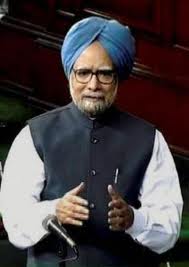
New Delhi, May 17: Prime Minister Manmohan Singh on Wednesday said that his government was committed to ensuring foolproof security of nuclear power plants but it would be harmful for the country to pass an ordinance against nuclear power.

"We must put everything to ensure foolproof safety of the nuclear plants and we will not compromise on it.

"But at the same time I would respectfully submit it would be harmful for the country's interest to pass an ordinance in the self-denial that we shall give up the option of having nuclear power," the Prime Minister said during Question Hour in the Lok Sabha.

He said there was no compromise when it came to the question of safety.

"We have 19 functional reactors and there has never been any accident. After Fukushima, I ordered a complete revisit to all the reactors and those reports are on the Nuclear Power Corporation of India Limited (NPCIL) website."

He said India must keep the option of nuclear power as an additional source of power.

"We are not in a situation like Japan, where large amount of power comes from nuclear plants... France also has large number of nuclear power plants. We must keep the nuclear power as an additional source," he added.

Comments

Add new comment

  • Coastaldigest.com reserves the right to delete or block any comments.
  • Coastaldigset.com is not responsible for its readers’ comments.
  • Comments that are abusive, incendiary or irrelevant are strictly prohibited.
  • Please use a genuine email ID and provide your name to avoid reject.
News Network
March 31,2020

Thiruvananthapuram, Mar 31: Kerala Chief

Minister Pinarayi Vijayan on Tuesday said the government has collected the details of those who took part from the state in recent religious congregations in Nizamuddin and Malaysia and it needs to be examined if they have any health issues.

"Police have already made detailed examination in this regard. Thelist of participants have been given through respectivedistrictcollectors. Necessary precautions will be made in the concerned districts in this regard," Vijayan told reporters here.

The government has the exact number of participants and thedetails of the districts they are hailing from, he said.

Meanwhile, Pathananthitta police said they have identified 6 persons in the district in connection with the Nizamuddin congregation.

"Three persons had taken part in the congregation, of them one hadalready died. One person is in quarantine in the district while theother is located now in Thiruvananrhapuram," a senior police officialtold PTI.

The others are not participants but had travelled to Delhi along with them, he said.

In the nearby Alappuzha district, three persons have been identified in connection with the congregation, police said.

"They have been in quarantine and under the surveillance of thehealth department since they have reached back the state from Delhi," another official said.

Several people, who had attended the religious congregation at Nizamuddin in the national capital are suspected to be having symptoms of Covid19, even as at least 24 have tested positive.

Comments

Add new comment

  • Coastaldigest.com reserves the right to delete or block any comments.
  • Coastaldigset.com is not responsible for its readers’ comments.
  • Comments that are abusive, incendiary or irrelevant are strictly prohibited.
  • Please use a genuine email ID and provide your name to avoid reject.
Agencies
February 17,2020

New Delhi, Feb 17: The Supreme Court said on Monday that people have a fundamental right to protest against a law but the blocking of public roads is a matter of concern and there has to be a balancing factor.

Hearing pleas over the road blocks due to the ongoing protests at Shaheen Bagh against the Citizenship Amendment Act (CAA), a bench comprising Justices S K Kaul and K M Joseph said its concern is about what will happen if people start protesting on roads.

Democracy works on expressing views but there are lines and boundaries for it, the bench said.

It asked senior advocate Sanjay Hegde and advocate Sadhana Ramachandran to talk to Shaheen Bagh protestors and persuade them to move to an alternative site where no public place is blocked.

The matter has been posted for next hearing on February 24.

People have a fundamental right to protest but the thing which is troubling us is the blocking of public roads, the bench said.

Solicitor General Tushar Mehta said Shaheen Bagh protestors should not be given a message that every institution is on its knees trying to persuade them on this issue.

The apex court said that if nothing works, we will leave it to the authorities to deal with the situation.

Protestors have made their made their point and the protests have gone on for quite some time, it said.

Restrictions have been imposed on the Kalindi Kunj-Shaheen Bagh stretch and the Okhla underpass, which were closed on December 15 last year due to the protests against CAA and Register of Citizens.

The top court had earlier said the anti-CAA protesters at Delhi's Shaheen Bagh cannot block public roads and create inconvenience for others.

The apex court was hearing an appeal filed by advocate Amit Sahni, who had approached the Delhi high court seeking directions to the Delhi Police to ensure smooth traffic flow on the Kalindi Kunj-Shaheen Bagh stretch, which was blocked by anti-CAA protesters on December 15.

While dealing with Sahni's plea, the high court had asked local authorities to deal with the situation keeping in mind law and order.

Separately, former BJP MLA Nand Kishore Garg has filed a petition in the apex court seeking directions to the authorities to remove the protestors from Shaheen Bagh.

One of the pleas has sought laying down of comprehensive and exhaustive guidelines relating to outright restrictions for holding protests or agitations leading to obstruction of public place.

In his plea, Garg has said that law enforcement machinery was being "held hostage to the whims and fancies of the protesters" who have blocked vehicular and pedestrian movement from the road connecting Delhi to Noida.

State has the duty to protect fundamental rights of citizen who were continuously being harassed by the blockage of arterial road, it said.

"It is disappointing that the state machinery is muted and a silent spectator to hooliganism and vandalism of the protesters who are threatening the existential efficacy of the democracy and the rule of law and had already taken the law and order situation in their own hand," the plea had said.

In his appeal, Sahni had sought supervision of the situation in Shaheen Bagh, where several women are sitting on protest, by a retired Supreme Court judge or a sitting judge of the Delhi High Court.

Sahni has said in his plea that protests in Shaheen Bagh has inspired similar demonstrations in other cities and to allow it to continue would set a wrong precedent.


Comments

Add new comment

  • Coastaldigest.com reserves the right to delete or block any comments.
  • Coastaldigset.com is not responsible for its readers’ comments.
  • Comments that are abusive, incendiary or irrelevant are strictly prohibited.
  • Please use a genuine email ID and provide your name to avoid reject.
Agencies
August 3,2020

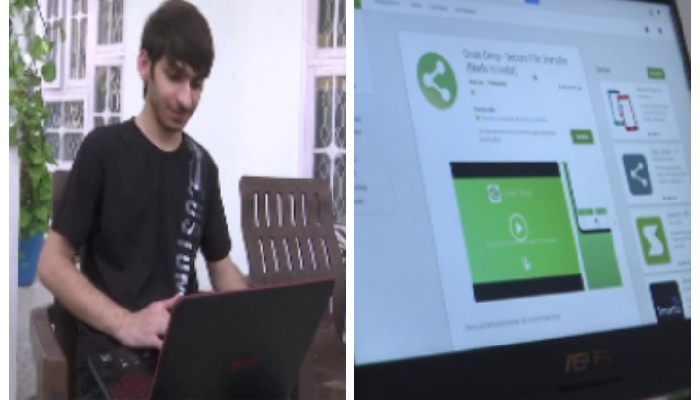
Rajouri, Aug 3: Ashfaq Mehmood Choudhary, a 17-year-old boy from Chattyear of Jammu and Kashmir's Rajouri district, has developed a file-sharing app 'Dodo Drop' which would enable users to share audios, videos, images, and texts between two devices without Internet access.

While speaking to media persons, Ashfaq Mehmood said that the 'Dodo Drop' application is an alternative to the Chinese 'SHAREit' app. "The Indian government has banned several Chinese apps due to data breaching, and among those apps was SHAREit which was used for sharing files.

Users faced a lot of problems due to the ban, and so I decided to make this file-sharing app. With 'Dodo Drop', users can share audios, videos, images, and even texts," he said.

Ashfaq said that it took him four weeks to develop the application, and it was launched on August 1 this year. The 'Dodo Drop' application has a transfer rate of up to 480 mbps, which is faster than the SHAREit app and is "quite easy" to use.

"Users can transfer data comprising photos, videos, audios, apps, texts, etc. between two devices with no Internet access. The transfers are fully encrypted and secure," he added.

"Our Prime Minister has always asserted the need for decreasing the dependency on foreign products and apps and to focus on the development of India-based apps. I tried to be part of the initiative of 'Aatmanirbhar Bharat' by developing an India-based file-sharing app. I want to develop global-standard apps for India," he added.

"We support and cooperate with him. He generates his own income by working on some projects and utilises it. We will continue to support him," said Parvez Ahmed Choudhary, Ashfaq's father.

In July, the Ministry of Electronics and Information Technology (MEITY) banned 47 apps, which were variants and cloned copies of the 59 apps banned earlier in June. These banned clones included SHAREit Lite, Tiktok Lite, Helo Lite, BIGO LIVE Lite, and VFY Lite.

The 59 apps had been banned by the Centre in June in view of the information available that they were engaged in activities which were "prejudicial to sovereignty and integrity and defence" of the country.

Almost all the apps banned had some preferential Chinese interest and the majority had parent Chinese companies.

The ban came amid border tensions with China in the Eastern Ladakh region.

Comments

Add new comment

  • Coastaldigest.com reserves the right to delete or block any comments.
  • Coastaldigset.com is not responsible for its readers’ comments.
  • Comments that are abusive, incendiary or irrelevant are strictly prohibited.
  • Please use a genuine email ID and provide your name to avoid reject.