Mullaperiyar: Chandy banks on Supreme Court

May 19, 2012

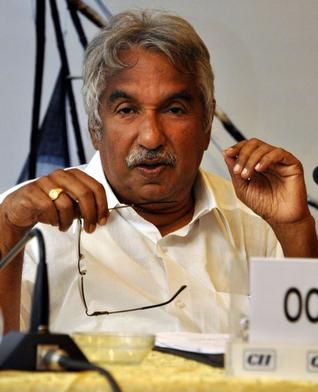
chandyThiruvananthapuram, May 19: Kerala Chief Minister Oommen Chandy hopes that the long-pending dispute between Kerala and Tamil Nadu over the Mullaperiyar Dam could be resolved through legal processes, as the neighbouring state has not come forward for talks.

“We are always ready for talks, either bilateral or through the Centre’s mediation. But Tamil Nadu has not agreed for that. In this situation, we expect a solution to the issue from the Supreme Court,” Mr. Chandy said.

Making the state’s position clear, he said Kerala wanted a new dam in place of the 116-year-old structure and also to maintain the water level at 136 feet.

The state was opposed to the proposal of the Supreme Court appointed Empowered Committee to raise the water level to 142 feet. Similarly, the proposal to construct a tunnel at 50 feet below the present dam to route water to Tamil Nadu was not acceptable to Kerala, Mr. Chandy said.

The construction of the tunnel will harm the state in many ways including disappearance of the reservoir itself, he said.

“While we hold on to this position, we are not asking for the scrapping of the agreement with Tamil Nadu.Nor do we want to curtail single drop of water flowing to Tamil Nadu. Our persistent stand has been water for Tamil Nadu and safety for Kerala, Mr. Chandy, who completed one year in office, told PTI.

On concerns voiced by some quarters over the panel report, he claimed that the empowered committee had in-principle accepted the demand for a new dam.

The Mullaperiyar Dam is located in Kerala’s Idduki district but managed by Tamil Nadu on a 999-year lease period. Tamil Nadu has been maintaining that the dam was safe and the water level can be raised to 142 ft.

On Tamil Nadu’s demand that the entire power to be produced from Kudankulam Nuclear Plant be allotted to it, he said Kerala was entitled to its share from the plant and it was the Centre’s responsibility to ensure that the state received it.

“It is the responsibility of the Centre to make due share available to the state,” said Mr. Chandy, who had earlier this month written to Prime Minister Manmohan Singh seeking 500 MW from the Kudankulam plant.

Comments

Add new comment

  • Coastaldigest.com reserves the right to delete or block any comments.
  • Coastaldigset.com is not responsible for its readers’ comments.
  • Comments that are abusive, incendiary or irrelevant are strictly prohibited.
  • Please use a genuine email ID and provide your name to avoid reject.
Agencies
June 6,2020

United Nations, Jun 6: The coronavirus disease has not "exploded" in India, but the risk of that happening remains as the country moves towards unlocking its nationwide lockdown that was imposed in March to contain the Covid-19, according to a top WHO expert.

WHO Health Emergencies Programme Executive Director Michael Ryan on Friday said the doubling time of the coronavirus cases in India is about three weeks at this stage.

“So the direction of travel of the epidemic is not exponential but it is still growing,” he said, adding that the impact of the pandemic is different in different parts of India and varies between urban and rural settings.

“In South Asia, not just in India but in Bangladesh and...in Pakistan, other countries in South Asia, with large dense populations, the disease has not exploded. But there is always the risk of that happening,” Ryan said in Geneva.

He stressed that as the disease generates and creates a foothold in communities, it can accelerate at any time as has been seen in a number of settings.

Ryan noted that measures taken in India such as the nationwide lockdown have had an impact in slowing transmission but the risk of an increase in cases looms as the country opens up.

“The measures taken in India certainly had an impact in dampening transmission and as India, as in other large countries, open up and as people begin to move again, there's always a risk of the disease bouncing back up,” he said.

He added that there are specific issues in India regarding the large amount of migration, the dense populations in the urban environment and the fact that many workers have no choice but to go to work every day.

India went past Italy to become the sixth worst-hit nation by the COVID-19 pandemic.

India saw a record single-day jump of 9,887 coronavirus cases and 294 deaths on Saturday, pushing the nationwide infection tally to 2,36,657 and the death toll to 6,642, according to the health ministry.

The lockdown in India, was first clamped on March 25 and spanned for 21 days, while the second phase of the curbs began on April 15 and stretched for 19 days till May 3. The third phase of the lockdown was in effect for 14 days and ended on May 17. The fourth phase ended on May 31.

The country had registered 512 coronavirus infection cases till March 24.

The nation-wide lockdown in containment zones will continue till June 30 in India but extensive relaxations in a phased manner from June 8 are listed in the Union home ministry's fresh guidelines on tackling the Covid-19 pandemic issued last week.

WHO Chief Scientist Soumya Swaminathan said the over 200,000 current coronavirus cases in India, a country of over 1.3 billion people, "look big but for a country of this size, it's still modest.”

She stressed that it is important for India to keep track of the growth rate, the doubling time of the virus and to make sure that that number doesn't get worse.

She said that India is a “heterogeneous and huge country” with very densely populated cities and much lower density in some rural areas and varying health systems in different states and these offer challenges to the control of Covid-19.

Swaminathan added that as the lockdown and restrictions are lifted, it must be ensured that all precautions are taken by people.

“We've been making this point repeatedly that really if you want behaviour change at a large level, people need to understand the rationale for asking them to do certain things (such as) wearing masks,” she said.

In many urban areas in India, it's impossible to maintain physical distancing, she said adding that it then becomes very important for people to wear appropriate face coverings when they are out, in office settings, in public transport and educational institutions.

“As some states are thinking about opening, every institution, organisation, industry and sector needs to think about what are the measures that need to be put in place before you can allow a functioning and it may never be back to normal.”

She said that in many professions working from home can be encouraged but in several jobs, people have to go to work and in such cases measures must be put in place that allow people to protect themselves and others.

“I think communication and behaviour change is a very large part of this whole exercise,” she added.


Comments

Add new comment

  • Coastaldigest.com reserves the right to delete or block any comments.
  • Coastaldigset.com is not responsible for its readers’ comments.
  • Comments that are abusive, incendiary or irrelevant are strictly prohibited.
  • Please use a genuine email ID and provide your name to avoid reject.
Agencies
January 25,2020

Jammu, Jan 25: People in Jammu and Kashmir expressed happiness over the restoration of mobile data services and internet access through fixed-line across the Union Territory on Saturday.

Speaking to ANI Jitendra Sharma, a resident of Jammu said, "The government has taken a good decision. People had been facing hardship for a long period and I think it will improve further."

"It is a big relief to people. People can finish their pending work. I hope that 4G services will also be resumed soon," said a resident of Kashmir.

The internet speed is restricted to 2G only.

"Access shall be limited only to whitelisted sites and not to any social media applications allowing peer to peer communication and virtual private network applications. Directions shall be effective from January 25 and will remain in force till January 31," the statement by the government read.

Earlier on January 15, 2G services were reinstated in Jammu, Samba, Kathua, and Udhampur for white-listed sites.

The Central government had suspended the internet in the region following the abrogation of Article 370 of the Constitution on August 5 last year, which conferred special status to the erstwhile state of Jammu and Kashmir, and its bifurcation into two Union Territories -- Ladakh, and Jammu and Kashmir.

Comments

Add new comment

  • Coastaldigest.com reserves the right to delete or block any comments.
  • Coastaldigset.com is not responsible for its readers’ comments.
  • Comments that are abusive, incendiary or irrelevant are strictly prohibited.
  • Please use a genuine email ID and provide your name to avoid reject.
coastaldigest.com web desk
June 9,2020

Bijnor: A 17-year-old Dalit youth was shot dead by four miscreants belonging to the upper caste of Hinduism after the former tried to enter a temple in Uttar Pradesh.

The deceased was identified as Vikas Jatav. The accused had tried to stop the deceased from entering into a temple. 

On being stopped from entering the temple located in Domkhera village, Jatav raised and objection and started arguing with the accused. 

The accused were identified as - Lala Chauhan, Horam Chauhan, Bhushan and Jasveer. The incident took place on May 31, according to the father of the deceased. 

How it happened 
On May 31, Jatav went to a temple in Domkhera to offer his prayers. The four accused, however, did not let him go inside. Following this, an argument broke out between the accused and the 17-year-old boy. 

On the same day, the victim approached the police and lodged a complaint in relation to the incident. The police, however, did not take any action against the accused men. 

Late night on Saturday, Jatav was sleeping inside his house when the four men barged in and opened fire at him. 

Hearing the gunshots, Jatav's family rushed to rescue him, following which, the accused escaped. Vikas was profusely bleeding after being shot and succumbed to the injuries before he could reach the hospital. 

Lala Chauhan and Horam were nabbed by the police while the other two are still at large. The four accused have been booked under section 302 (murder) of the Indian Penal Code (IPC) and the SC/ST Act.

Comments

Add new comment

  • Coastaldigest.com reserves the right to delete or block any comments.
  • Coastaldigset.com is not responsible for its readers’ comments.
  • Comments that are abusive, incendiary or irrelevant are strictly prohibited.
  • Please use a genuine email ID and provide your name to avoid reject.