



Charges against PM on Coalgate baseless, people around Anna anti-nationals: PMO

June 10, 2012

Anna_Anti_National

New Delhi/ Chennai, June 10: Setting the stage for fresh hostilities, the Prime Minister's office on Saturday aggressively dismissed corruption allegations levelled by Team Anna against Prime Minister Manmohan Singh over coal block allegations for being devoid of evidence.

Minister of state for PMO V Narayanasamy followed up a curt letter to Hazare with a fusillade against the Gandhian leader's associates Arvind Kejriwal and Kiran Bedi, calling them "anti-nationals" and alleging their financial dealings are not above board.

"As regards allegations made against the Prime Minister, they seem to be based on a leaked draft of the CAG on coal block allocations and on media stories. You have provided no evidence to back up these allegations," said Narayanasamy in his letter to Anna Hazare.

Speaking to the media in Chennai, Narayanasamy lashed out at Team Anna, saying Kejirwal needed to explain what had happened to large funds collected by the campaign for a Lokpal and said Bedi has also faced questions over the accounts relating to her travel bills.

Team Anna members Manish Sisodia and Bedi rejected the PMO letter, reiterating plans for a protest from July 25 for passage of the Lokpal Bill around the time Parliament is due to meet for its monsoon session. "Use of hollow words like progressive laws" are not convincing, said Sisodia. "Our protest from July 25 will go on as planned," said Sisodia while Bedi said the letter was 'wishy-washy'.

The sharp exchange is an indicator that the government, already under attack for corruption and glacial governance, is feeling the heat and is likely to increasingly lash out at the activists. The government's efforts to pass the Lokpal Bill have been stymied in the Rajya Sabha where it lacks a majority and where the opposition has supported clauses the Centre is loathe to concede.

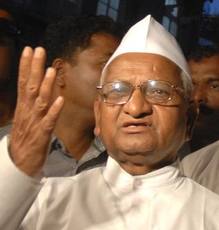
Caught between the political opposition in Parliament and Team Anna outside, the government is readying for renewed confrontation with the activists. After the PMO letter rejected the demand for a special investigation team to probe charges leveled by the Hazare group against the PM and 14 ministers, Narayanasamy said, "Anna is a simple man, but he is surrounded by anti-national elements and people who have been supported by foreign forces."

The letter and the remarks make it evident that the row can get uglier. "The government is also determined to ensure baseless and uninformed allegations made against public servants are not allowed to create fear that can lead to paralysis in decision-making and slow down growth and development," the letter said.

Comments

Add new comment

  • Coastaldigest.com reserves the right to delete or block any comments.
  • Coastaldigset.com is not responsible for its readers’ comments.
  • Comments that are abusive, incendiary or irrelevant are strictly prohibited.
  • Please use a genuine email ID and provide your name to avoid reject.
News Network
April 11,2020

New Delhi, Apr 11: Ahead of Prime Minister Narendra Modi's meeting with chief ministers, senior Congress leader P Chidambaram on Saturday urged CMs of states where the party is in power to unanimously demand for transfer of cash to every poor family.

He said the poor have lost their jobs and have exhausted their savings. They are now standing in lines to get free food, the former Union finance minister said.

Chidambaram said remonetising the poor would cost only Rs 65,000 crore, which is economically viable.

"Chief ministers Amarinder Singh, Ashok Gehlot, Bhupesh Baghel, V Narayanasami, Uddhav Thackeray and E Palaniswani should tell the prime minister today that just as LIVES are important LIVELIHOOD of the poor is important, he tweeted.

"The poor have lost their jobs or self-employment in the last 18 days. They have exhausted their meagre savings. Many are standing in line for food," Chidambaram said.

Can the state stand by and watch them go hungry," he asked, adding that chief ministers should demand that cash be transferred to every poor family immediately.

"Remonetise the poor should be their unanimous demand," Chidambaram said.

Comments

Add new comment

  • Coastaldigest.com reserves the right to delete or block any comments.
  • Coastaldigset.com is not responsible for its readers’ comments.
  • Comments that are abusive, incendiary or irrelevant are strictly prohibited.
  • Please use a genuine email ID and provide your name to avoid reject.
News Network
February 19,2020

New Delhi, Feb 19: India will switch to the world's cleanest petrol and diesel from April 1 as it leapfrogs straight to Euro-VI emission compliant fuels from Euro-IV grades now - a feat achieved in just three years and not seen in any of the large economies around the globe.

India will join the select league of nations using petrol and diesel containing just 10 parts per million of sulphur as it looks to cut vehicular emissions that are said to be one of the reasons for the choking pollution in major cities.

Sanjiv Singh, Chairman of Indian Oil Corp (IOC) - the firm that controls roughly half of the country's fuel market, said almost all refineries began producing ultra-low sulphur BS-VI (equivalent to Euro-VI grade) petrol and diesel by the end of 2019 and oil companies have now undertaken the tedious task of replacing every drop of fuel in the country with the new one.

"We are absolutely on track for supplying BS-VI fuel from April 1. Almost all refineries have begun supplying BS-VI fuel and the same has reached storage depots across the country," he said.

From storage depots, the fuel has started travelling to petrol pumps and in the next few weeks all of them will only have BS-VI grade petrol and diesel, he said. "We are 100 per cent confident that fuel that will flow from nozzles at all the petrol pumps in the country on April 1 will be BS-VI emission compliant fuel."

India adopted Euro-III equivalent (or Bharat Stage-III) fuel with a sulphur content of 350 ppm in 2010 and then took seven years to move to BS-IV that had a sulphur content of 50 ppm. From BS-IV to BS-VI it took just three years.

"It was a conscious decision to leapfrog to BS-VI as first upgrading to BS-V and then shifting to BS-VI would have prolonged the journey to 4 to 6 years. Besides, oil refineries, as well as automobile manufacturers, would have had to make investments twice - first to producing BS-V grade fuel and engines and then BS-VI ones," he said.

State-owned oil refineries spent about Rs 35,000 crore to upgrade plants that could produce ultra-low sulphur fuel. This investment is on top of Rs 60,000 crore they spent on refinery upgrades in the previous switchovers.

BS-VI has a sulphur content of just 10 ppm and emission standards are as good as CNG.

Originally, Delhi and its adjoining towns were to have BS-VI fuel supplies by April 2019 and the rest of the country was to get same supplies from April 2020.

But oil marketing companies switched over to supply of BS-VI grade fuels in the national capital territory of Delhi on April 1, 2018.

The supply of BS-VI fuels was further extended to four contiguous districts of Rajasthan and eight of Uttar Pradesh in the National Capital Region (NCR) on April 1, 2019, together with the city of Agra.

BS-VI grade fuels were made available in 7 districts of Haryana from October 1, 2019.

Singh said the new fuel will result in a reduction in NOx in BS-VI compliant vehicles by 25 per cent in petrol cars and by 70 per cent in diesel cars.

The switchover, he said, is a tedious task as every drop of old, higher-sulphur content fuel has to be flushed out in depots, pipelines and tanks before being replaced by BS-VI.

"We are confident of disruption-free switchover to BS-VI supplies across the country," he said. "What we will be supplying is the best quality available anywhere in the world. You don't have any better fuel that is supplied in any part of the world. Perhaps our BS-VI fuel will be better than equivalent fuel in some parts of the US and Europe."

India adopted a fuel upgradation programme in the early 1990s. Low lead gasoline (petrol) was introduced in 1994 in Delhi, Mumbai, Kolkata and Chennai. On February 1, 2000, unleaded gasoline was mandated nationwide.

Similarly, BS-2000 (Euro-I equivalent, BS-1) vehicle emission norms were introduced for new vehicles from April 2000. BS-II (Euro-II equivalent) emission norms for new cars were introduced in Delhi from 2000 and extended to the other metro cities in 2001.

Benzene limits have been reduced progressively from 5 per cent in 2000 to 1 per cent nationwide. Lead content in gasoline was removed in phases and only unleaded gasoline is being produced and sold from February 1, 2000.

The octane number of gasoline signifies the improved performance of the engine. Loss in octane number due to phasing out of lead was made up by installing new facilities in the refinery and changes in refinery operation. RON (Research Octane Number) of gasoline for BS-2000 spec was increased to 88. This has over time been increased to 91.

Singh said sulphur reduction will reduce Particulate Matter (PM) emissions even in the in-use older generation diesel vehicles.

Comments

Add new comment

  • Coastaldigest.com reserves the right to delete or block any comments.
  • Coastaldigset.com is not responsible for its readers’ comments.
  • Comments that are abusive, incendiary or irrelevant are strictly prohibited.
  • Please use a genuine email ID and provide your name to avoid reject.
Agencies
August 4,2020

New Delhi, Aug 4: Over 50 per cent of COVID-19 deaths in India have taken place among people aged 60 years and above and 37 per cent deaths have been reported among patients in the age group of 45 to 60 years, Health Ministry said on Tuesday.

Addressing a press conference, Rajesh Bhushan, Secretary, Health Ministry said that 11 per cent COVID-19 deaths took place in the age group of 26 to 44.

The 18 to 25 age group and those below 18 years reported one per cent deaths each.
"Currently, 5,86,298 active COVID-19 cases are in India and over 12 lakh people have recovered.

50 per cent deaths due to COVID19 have taken place among the age group of 60 years or above and 37 per cent deaths took place in the age group between 45 to 60 years," Bhushan said.

"A total of 11 per cent COVID-19 deaths took place in the age group of 26 to 44. Only 1 per cent in 18 to 25 age group and 1 per cent in below the age of 18 years," he added.

Bhushan said that 68 per cent of COVID-19 deaths have been reported among male patients and 32 per cent among female patients which is broadly in line with the global scenario.

The number of recovered COVID-19 patients in India is increasing daily and is now over double the number of active cases.

Bhushan said that the case fatality rate (CFR) is lowest since the first lockdown.

"More than 2 crore COVID-19 tests have been conducted, including more than 6.6 lakh tests in the last 24 hours. Recovered cases are now double of the active cases. 

The case fatality rate (CFR) is lowest since the first lockdown," he said
"This is the first time after the first lockdown that the fatality rate is at the lowest, at 2.10 per cent. The fatality rate has seen a progressive decline and it is continuing, which is a good sign," he added.

According to the World Health Organisation, CFR is a measure of the severity of a disease and is defined as the proportion of reported cases of a specified disease or condition which are fatal within a specified time.

Comments

Add new comment

  • Coastaldigest.com reserves the right to delete or block any comments.
  • Coastaldigset.com is not responsible for its readers’ comments.
  • Comments that are abusive, incendiary or irrelevant are strictly prohibited.
  • Please use a genuine email ID and provide your name to avoid reject.