


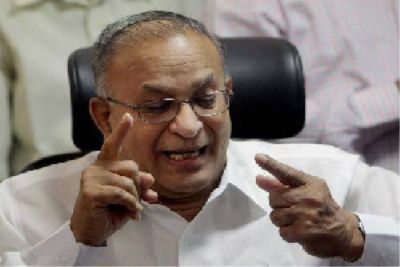
Increase duty on diesel cars up to Rs 2.5 lakh: Jaipal Reddy

June 13, 2012

Jaipal-Reddy

New Delhi, June 13: If the government accepts oil minister S Jaipal Reddy's proposal, the price of small diesel cars could soon rise by Rs 1.7 lakh while medium-to-large guzzlers could become costlier by Rs 2.55 lakh a piece.

The proposal to impose additional excise duty on diesel cars is bound to trigger protests from automakers, who have seen sales growing at the slowest pace in seven months in May. Domestic car sales declined 24% in May compared to the year-ago period due to high fuel prices and interest rates.

The proposal drew a thumbs down from analysts and private players, who described it as an excuse to avoid fuel pricing reforms. "From the RBI to C Rangarajan, head of the PM's Economic Advisory Council, everyone has recommended deregulation of fuel prices. If you can't do that for political reasons, at least fix subsidy on diesel and then let the market determine the pump price. Taxing vehicles would serve hardly any purpose," said an industry analyst requesting anonymity.

But Reddy has his arguments for seeking taxing diesel vehicles that are outpacing petrol car sales. In a June 7 letter to finance minister Pranab Mukherjee, the oil minister gave three key reasons for his proposal aimed at arresting a ballooning fuel subsidy bill.

Reddy pointed out that the proposed additional excise duties are equivalent to the minimum benefit that a diesel car owner derives from the fuel's price differential with petrol — at current prices — over a 10-year assumed life of a vehicle. Petrol in Delhi costs Rs 71.16 a litre against Rs 40.91 for diesel.

Reddy's arithmetic goes like this: he first calculates the total distance a vehicle is expected to clock in its 10-year life span, assuming an annual run of 18,000km. Then, he works out the fuel costs by taking a median mileage of 18km to a litre for small cars and 12km for medium/large vehicles. For good measure, he shaves off 10% of the total cost to level.

According to Reddy's calculation, the additional excise duty amounts to asking the diesel car buyer to pay upfront the price differential with petrol that he or she would enjoy later. A petrol car owner, in contrast, shells out every time at the pump.

Reddy also pointed out the adverse impact of increased diesel car sales on the government's earnings. Petrol attracts an excise duty of Rs 14.78 per litre against Rs 2.06 a litre for diesel. So each time a buyer opts for a diesel car instead of petrol and visits a petrol pump, the government loses Rs 12.72 in excise duty on litre of diesel. Together with the Rs 12.53 a litre subsidy on diesel, the actual price differential with petrol at Delhi works out to Rs 25.75 a litre.

To drive home the enormity of the situation arising out of this increasing dieselization, Reddy says diesel consumption rose by 7.6% in 2011-12 against 6.2% in 2010-11. In contrast, growth in petrol consumption fell from 10.7% in 2010-11 to 5.6% in 2011-12.

The Kirit Parikh Committee on fuel pricing reforms had recommended an additional excise duty of Rs 80,000 in February 2010 when duty difference on petrol and diesel was Rs 9.75 a litre and under-recovery on petrol was more at Rs 3.97 a litre than Rs 2 on diesel.

Comments

Add new comment

  • Coastaldigest.com reserves the right to delete or block any comments.
  • Coastaldigset.com is not responsible for its readers’ comments.
  • Comments that are abusive, incendiary or irrelevant are strictly prohibited.
  • Please use a genuine email ID and provide your name to avoid reject.
News Network
May 15,2020

Vishakhapatnam, May 15: LG Chem on Thursday said following the gas leak at its Visakhapatnam polymers plant, the company has started support measures and has begun the transportation of the Styrene Monomer inventory to South Korea to eliminate all risks factors.

The company would continue to work with government agencies to ensure all possible support for bereaved families and victims, LG Polymers, a step-down firm of LG Chem, said in a statement.

"We confirm the status-quo of the plant remains completely controlled by all measures. We have begun the transportation of the Styrene Monomer (SM) inventory within the plant as well as in the styrene tanks at the port by vessels to South Korea to prevent and eliminate all risks factors," the statement said.

The South Korean chemicals giant has sent an eight-member team from Seoul to investigate the Visakhapatnam gas leak incident and rehabilitate the victims of the tragedy that killed at least 11 people and forced the evacuation of thousands.

"The team of production, environment, and safety experts are currently investigating the cause of the incident and already supporting responsible rehabilitation which is their main objective," the statement said.

Furthermore, the team is working closely with related authorities to analyze the cause of the incident, prevent a recurrence, and support damage recovery in a prompt and expedient manner, it added.

On the support measures, the company said a special task force is currently supporting the bereaved victims and families and visiting them at the hospitals and their homes.

Besides, food and medical services have been organized for the returning residents. Various support activities such as supplying medical and household goods and sanitation of homes will be continued, it said.

"We assure everyone we will do our best to resolve the situation and prevent any incident in the future," the company said.

The company further said that "our teams will carry out mid-to-long-term Corporate Social Responsibility (CSR) projects that can contribute to the local community based on suggestions of the residents.

Comments

Add new comment

  • Coastaldigest.com reserves the right to delete or block any comments.
  • Coastaldigset.com is not responsible for its readers’ comments.
  • Comments that are abusive, incendiary or irrelevant are strictly prohibited.
  • Please use a genuine email ID and provide your name to avoid reject.
News Network
January 23,2020

Mumbai, Jan 23: Rashmi Sahijwala never expected to start working at the age of 59, let alone join India’s gig economy—now she is part of an army of housewives turning their homes into “cloud kitchens” to feed time-starved millennials.

Asia’s third-largest economy is battling a slowdown so sharp it is creating a drag on global growth, the International Monetary Fund said Monday, but there are some bright spots.

The gig economy, aided by cheap mobile data and abundant labour, has flourished in India, opening up new markets across the vast nation.

Although Indian women have long battled for access to education and employment opportunities, the biggest hurdle for many is convincing conservative families to let them leave home.

But new apps like Curryful, Homefoodi, and Nanighar are tapping the skills of housewives to slice, dice and prepare meals for hungry urbanites from the comfort of their homes.

The so-called cloud kitchens—restaurants that have no physical presence and a delivery-only model—are rising in popularity as there is a boom in food delivery apps such as Swiggy and Zomato.

“We want to be the Uber of home-cooked food,” said Ben Mathew, who launched Curryful in 2018, convinced that housewives were a huge untapped resource.

His company—which employs five people for the app’s daily operations—works with 52 women and three men, and the 31-year-old web entrepreneur hopes to get one million female chefs on-board by 2022.

“We usually train them in processes of sanitisation, cooking, prep time and packaging... and then launch them on the platform,” Mathew told news agency.

One of the first housewives to join Curryful in November 2018 shortly after its launch, Sahijwala was initially apprehensive, despite having four decades of experience in the kitchen.

But backed by her children, including her son who gave her regular feedback about her proposed dishes, she took the plunge.

Since then, she’s undergone a crash course in how to run a business, from creating weekly menus to buying supplies from wholesale markets to cut costs.

The learning curve was steep and Sahijwala switched from cooking everything from scratch to preparing curries and batters for breads in advance to save time and limit leftovers.

She even bought a massive freezer to store fruits and vegetables despite her husband’s reservations about the cost.

“I told him that I am a professional now,” she told news agency.

‘Internet restaurants’

Kallol Banerjee, co-founder of Rebel Foods which runs 301 cloud kitchens backing up 2,200 “internet restaurants”, was among the first entrepreneurs to embrace the concept in 2012.

“We could do more brands from one kitchen and cater to different customer requirements at multiple price points,” Banerjee told AFP.

The chefs buy the ingredients, supply the cookware and pay the utility bills.

The apps—which make their money through charging commission, such as more than 18 percent per order for Curryful—offer training and supply the chefs with containers and bags to pack the food in.

Curryful chef Chand Vyas, 55, spent years trying to set up a lunch delivery business but finally gave up after failing to compete with dabbawalas, Mumbai’s famously efficient food porters.

Today Vyas works seven hours a day, five days a week in her kitchen, serving up a bevy of Indian vegetarian staples, from street food favourites to lentils and rice according to the app’s weekly set menus.

“I don’t understand marketing or how to run a business but I know how to cook. So, the current partnership helps me focus on just that while Curryful takes care of the rest,” Vyas told AFP.

She pockets up to $150 (Rs 10,000 approx) a month after accounting for the commissions and costs, but hopes to earn more as the orders increase.

In contrast, a chef at a bricks-and-mortar restaurant takes home a monthly wage of between $300 (Rs 20,000 approx) and $1,000 (Rs 70,000) approx for working six days a week.

With India’s cloud kitchen sector expected to reach $1.05 billion by 2023, according to data platform Inc42, other companies are also keen to get a slice of the action.

Swiggy, for example, has invested 2.5 billion rupees ($35.3 million) in opening 1,000 cloud kitchens across the nation.

Back in her Mumbai kitchen, Sahijwala is elated to have embarked on a career at an age when her contemporaries are eyeing retirement.

Over the past year, she has seen her profit grow to $200 (Rs 15,000 approx) a month, but more importantly, she said, “My passion has finally found an outlet.

“I am just glad life has given me this chance.”

Comments

Add new comment

  • Coastaldigest.com reserves the right to delete or block any comments.
  • Coastaldigset.com is not responsible for its readers’ comments.
  • Comments that are abusive, incendiary or irrelevant are strictly prohibited.
  • Please use a genuine email ID and provide your name to avoid reject.
News Network
April 5,2020

Alappuzha, Apr 5: Coming to the rescue of a toddler in need of crucial treatment for cancer, the Kerala health department scrambled its resources for transporting a toddler from here to Hyderabad on Sunday.

In a co-ordinated action, the department arranged for an ambulance and necessary travel permits for the nearly 16-hour 1,100 km inter-state journey that started at 7.15 am from Cherthala in this district with the entire cost to be borne by the state government.

Health Minister K K Shailaja on Saturday said all steps have been taken to facilitate the travel of the toddler and her family members to Hyderabad after local media reports highlighted the plight of the child.

The state Chief Secretary had discussed the matter with his counterparts of other states en route to ensure a smooth journey,the Health Ministry said.

"The travel permit and directions to other states through which the ambulance has to pass were issued from the police headquarters. All district police chiefs were given instructions from the headquarters to arrange for passage of the ambulance," it said in a release.

The journey started at 7.15 am and they are expected to reach Hyderabad at 11 pm.

"The state government will bear the expenses incurred for the journey. The ambulance will remain in Hyderabad and will return with the family," it said.

The first phase of treatment was done at the L V Prasad Hospital in Hyderabad and the family was supposed to travel again within 21 days for the next phase of treatment.

As the family could not undertake the journey in view of the nation-wide lockdown to check coronavirus scare, the state government swung into action to help the child.

The number of confirmed novel coronavirus cases in the country climbed to 3,374 on Sunday while the death toll rose to 77, according to Union Health Ministry data.

Comments

Add new comment

  • Coastaldigest.com reserves the right to delete or block any comments.
  • Coastaldigset.com is not responsible for its readers’ comments.
  • Comments that are abusive, incendiary or irrelevant are strictly prohibited.
  • Please use a genuine email ID and provide your name to avoid reject.