


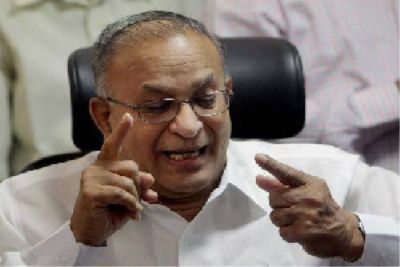
Increase duty on diesel cars up to Rs 2.5 lakh: Jaipal Reddy

June 13, 2012

Jaipal-Reddy

New Delhi, June 13: If the government accepts oil minister S Jaipal Reddy's proposal, the price of small diesel cars could soon rise by Rs 1.7 lakh while medium-to-large guzzlers could become costlier by Rs 2.55 lakh a piece.

The proposal to impose additional excise duty on diesel cars is bound to trigger protests from automakers, who have seen sales growing at the slowest pace in seven months in May. Domestic car sales declined 24% in May compared to the year-ago period due to high fuel prices and interest rates.

The proposal drew a thumbs down from analysts and private players, who described it as an excuse to avoid fuel pricing reforms. "From the RBI to C Rangarajan, head of the PM's Economic Advisory Council, everyone has recommended deregulation of fuel prices. If you can't do that for political reasons, at least fix subsidy on diesel and then let the market determine the pump price. Taxing vehicles would serve hardly any purpose," said an industry analyst requesting anonymity.

But Reddy has his arguments for seeking taxing diesel vehicles that are outpacing petrol car sales. In a June 7 letter to finance minister Pranab Mukherjee, the oil minister gave three key reasons for his proposal aimed at arresting a ballooning fuel subsidy bill.

Reddy pointed out that the proposed additional excise duties are equivalent to the minimum benefit that a diesel car owner derives from the fuel's price differential with petrol — at current prices — over a 10-year assumed life of a vehicle. Petrol in Delhi costs Rs 71.16 a litre against Rs 40.91 for diesel.

Reddy's arithmetic goes like this: he first calculates the total distance a vehicle is expected to clock in its 10-year life span, assuming an annual run of 18,000km. Then, he works out the fuel costs by taking a median mileage of 18km to a litre for small cars and 12km for medium/large vehicles. For good measure, he shaves off 10% of the total cost to level.

According to Reddy's calculation, the additional excise duty amounts to asking the diesel car buyer to pay upfront the price differential with petrol that he or she would enjoy later. A petrol car owner, in contrast, shells out every time at the pump.

Reddy also pointed out the adverse impact of increased diesel car sales on the government's earnings. Petrol attracts an excise duty of Rs 14.78 per litre against Rs 2.06 a litre for diesel. So each time a buyer opts for a diesel car instead of petrol and visits a petrol pump, the government loses Rs 12.72 in excise duty on litre of diesel. Together with the Rs 12.53 a litre subsidy on diesel, the actual price differential with petrol at Delhi works out to Rs 25.75 a litre.

To drive home the enormity of the situation arising out of this increasing dieselization, Reddy says diesel consumption rose by 7.6% in 2011-12 against 6.2% in 2010-11. In contrast, growth in petrol consumption fell from 10.7% in 2010-11 to 5.6% in 2011-12.

The Kirit Parikh Committee on fuel pricing reforms had recommended an additional excise duty of Rs 80,000 in February 2010 when duty difference on petrol and diesel was Rs 9.75 a litre and under-recovery on petrol was more at Rs 3.97 a litre than Rs 2 on diesel.

Comments

Add new comment

  • Coastaldigest.com reserves the right to delete or block any comments.
  • Coastaldigset.com is not responsible for its readers’ comments.
  • Comments that are abusive, incendiary or irrelevant are strictly prohibited.
  • Please use a genuine email ID and provide your name to avoid reject.
News Network
February 29,2020

New Delhi, Feb 29: The father of Intelligence Bureau staffer Ankit Sharma, whose body was pulled out of a drain in northeast Delhi's riot-hit Chand Bagh, complained to police that goons had assembled at the residence of former AAP counselor Tahir Hussain and were throwing petrol bombs from the rooftop.

According to the FIR which was registered on Thursday on the basis of the complaint lodged by Ankit's father Ravinder, the goons were also firing from the rooftop.

On Tuesday, Ankit returned from his office at 5 pm and then went outside to buy groceries. When he did not return, the family started looking for him and later filed a missing report, the FIR stated.

They got to know from their neighbours that a body has been recovered from a drain… later it was found to be that of Anikt, it said, adding the body had multiple stab injuries on the face, head, back, and chest.

The family has alleged in the FIR that it was Hussain and the goons at his residence who killed Ankit. In the FIR, Hussain has been accused of murder, destruction of evidence and abduction.

Soon after the FIR was registered on Thursday, the AAP suspended Tahir Hussain from the primary membership of the party till the police completed its probe.

The death toll in Delhi's communal violence rose to 42 on Friday as the situation showed some signs of returning to normalcy and clouds of smoke cleared to reveal the extent of the damage from the worst riots in the city in over three decades.

A total of 148 FIRs have been registered and 630 people have been either arrested or detained so far in connection with the communal violence, a Delhi Police spokesperson said.

Comments

Add new comment

  • Coastaldigest.com reserves the right to delete or block any comments.
  • Coastaldigset.com is not responsible for its readers’ comments.
  • Comments that are abusive, incendiary or irrelevant are strictly prohibited.
  • Please use a genuine email ID and provide your name to avoid reject.
News Network
April 11,2020

Malappuram, Apr 11: Farmers in Malappuram district are facing problems in selling cucumbers and watermelons due to the drop in demand and prices in the market amid the nationwide COVID-19 lockdown.

"We have cultivated cucumbers for our Vishu festival in Kerala. In recent conditions, we are facing issues in selling our crops. In comparison to the previous years, we have a huge production this time," said Saifu, a farmer in the Malappuram district.

"We have also cultivated different kinds of watermelons here. The major issues that we are facing are the low prices and the lockdown," he added.

The nationwide COVID-19 lockdown was imposed by Prime Minister Narendra Modi form March 25 for 21 days as a precautionary measure against the spread of the virus.

According to the Union Ministry of Health and Family Welfare, the total number of positive COVID-19 cases in Kerala is 364. Till now, 123 people have either been cured or discharged, while two deaths have been reported.

The total number of positive coronavirus cases across the country are 7,529 including 6,634 active cases. So far, 652 patients have either been cured or discharged while 242 deaths have been recorded in the country, as per data provided by the Ministry of Health on Saturday evening.

Comments

Add new comment

  • Coastaldigest.com reserves the right to delete or block any comments.
  • Coastaldigset.com is not responsible for its readers’ comments.
  • Comments that are abusive, incendiary or irrelevant are strictly prohibited.
  • Please use a genuine email ID and provide your name to avoid reject.
News Network
March 6,2020

New Delhi, Mar 6: Shares of YES Bank and State Bank of India came under huge selling pressure on Friday as developments unfolded regarding SBI picking stake in the private lender. Shares of the lender hit record low of Rs 5.55, plunging 85 per cent, and were trading below its previous low of Rs 8.16 hit on March 9, 2009.

SBI, on the other hand, slumped 11 per cent to Rs 257.35 on the BSE. The benchmark S&P BSE Sensex was trading with a cut of over 3 per cent at 37,251.37 level.

In the past three months, share price of the private lender has plunged 41 per cent, while the state-owned lender has slipped 14 per cent. In comparison, the S&P BSE Sensex has dipped 5.6 per cent till Thursday.

On Thursday, the Reserve Bank of India superseded the board of troubled private sector lender YES Bank and imposed a 30-day moratorium on it “in the absence of a credible revival plan” amid a “serious deterioration” in its financial health.

During the moratorium, which came into effect from 6 pm on Thursday, YES Bank will not be allowed to grant or renew any loans, and “incur any liability”, except for payment towards employees’ salaries, rent, taxes and legal expenses, among others.

This is the first time that a bank of this size will be put under a moratorium by the RBI.

“The financial position of YES Bank had undergone a steady decline “largely due to inability of the bank to raise capital to address potential loan losses and resultant downgrades, triggering invocation of bond covenants by investors, and withdrawal of deposits,” RBI said in a statement.

“After the moratorium, the next step will be to infuse to money and keep the bank afloat. So from shareholders’ point of view, the future is certainly hazy as the capital requirement is huge. The good part, however, is that the RBI has stepped in and depositors don't have to worry,” says Siddharth Purohit, a research analyst at SMC Securities.

Meanwhile, analysts at Nomura believe that placing the Bank under moratorium implies that equity value in the bank would be negligible, and that the chances of private capital participating in future capital raising plan are near zero.

"Any resolution for Yes Bank is more proposed from the perspective of deposit holders and systemic stability, and not from the perspective of Yes Bank equity investors or even perpetual bond holders," they wrote in a note dated March 6.

In another development, SBI’s Board Thursday gave in-principle approval to consider an “investment opportunity” in YES Bank, even as it said “no decision had yet been taken to pick up stake in the bank”.

According to a  report, highly-placed sources indicated a rescue plan involving SBI and Life Insurance Corporation of India (LIC) was being discussed and an announcement in this regard might be made soon.

“While the finer details of the deal are being worked out, it is anticipated that both SBI and LIC together will take a 51 per cent stake in the bank, with a one-year lock-in period,” the report said.

Most analysts believe it is a positive step for the Indian financial sector as the government has tried to avoid a repeat of IL&FS-like crisis.

“The move is a positive step for the financial sector as a whole. By this, the government has tried to avoid a repeat of IL&FS-like crisis and has saved the depositors,” said AK Prabhakar, Head of Research at IDBI Capital. While we know that YES Bank has a huge pile of bad loans, SBI is the only bank that has the capacity to absorb it, he added.

However, the valuation at which YES bank would be taken over remains a cause of concern.

Global brokerage firm JP Morgan Thursday cut its target price for YES Bank on Thursday to Rs 1 per share, taking into account the potential fall in the lender’s net worth due to stressed assets.

“We believe forced bailout investors will likely want the bank to be acquired at near-zero value to account for risks associated with the stress book and likely loss of deposits. We think the bank will need to be recapitalised at nominal equity value and could test dilution of additional tier 1 (AT1) capital. We remain underweight and cut our target price to Rs 1 as we believe net worth is largely impaired,” JP Morgan said in a note.

Global brokerage firm Nomura estimates a need of Rs 25,000-44,000 crore and adjusted for Rs 7,400 crore of current coverage, if the current stress of Rs 65,000-70,000 crore faces 70 per cent loss given default (LGD).

"It implies Rs 18,000-37,000 crore needed for provisioning against the current net worth of Rs 25,700 crore Also, to run as going concern, the bank would require over Rs 20,000 crore of CET-1 capital as well," the note said.

YES Bank has registered slippages of Rs 12,000 crore so far in FY20, while it has placed Rs 30,000 crore of loan assets under the watch list. Its deposits stood at Rs 2.09 trillion on September 30, 2019, while its advances totalled Rs 2.24 trillion. The bank has delayed publishing its December quarter results by a month to March 14.

Comments

Add new comment

  • Coastaldigest.com reserves the right to delete or block any comments.
  • Coastaldigset.com is not responsible for its readers’ comments.
  • Comments that are abusive, incendiary or irrelevant are strictly prohibited.
  • Please use a genuine email ID and provide your name to avoid reject.