


India worst, Canada best G20 country for a woman: Poll

June 13, 2012
woman-poll-630

London, June 13: Policies that promote gender equality, safeguards against violence and exploitation and access to healthcare make Canada the best place to be a woman among the world's biggest economies, a global poll of experts showed on Wednesday.

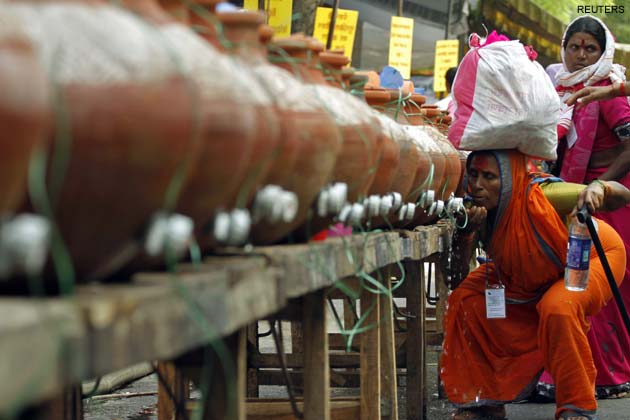
Infanticide, child marriage and slavery make India the worst, the same poll concluded.

Germany, Britain, Australia and France rounded out the top five countries out of the Group of 20 in a perceptions poll of 370 gender specialists conducted by TrustLaw, a legal news service run by Thomson Reuters Foundation.

The United States came in sixth but polarised opinion due to concerns about reproductive rights and affordable healthcare.

At the other end of the scale, Saudi Arabia - where women are well educated but are banned from driving and only won the right to vote in 2011 - polled second-worst after India, followed by Indonesia, South Africa and Mexico.

"India is incredibly poor, Saudi Arabia is very rich. But there is a commonality and that is that unless you have some special access to privilege, you have a very different future, depending on whether you have an extra X chromosome, or a Y chromosome," said Nicholas Kristof, journalist and co-author of "Half the Sky: Turning Oppression into Opportunity for Women Worldwide", commenting on the poll results.

The poll, released ahead of a summit of G20 heads of state to be held in Mexico June 18-19, showed the reality for many women in many countries remains grim despite the introduction of laws and treaties on women's rights, experts said.

"In India, women and girls continue to be sold as chattels, married off as young as 10, burned alive as a result of dowry-related disputes and young girls exploited and abused as domestic slave labour," said Gulshun Rehman, health programme development adviser at Save the Children UK, who was one of those polled.

"This is despite a groundbreakingly progressive Domestic Violence Act enacted in 2005 outlawing all forms of violence against women and girls."

TrustLaw asked aid professionals, academics, health workers, policymakers, journalists and development specialists with expertise in gender issues to rank the 19 countries of the G20 in terms of the overall best and worst to be a woman.

They also ranked countries in six categories: quality of health, freedom from violence, participation in politics, work place opportunities, access to resources such as education and property rights and freedom from trafficking and slavery.

Respondents came from 63 countries on five continents and included experts from United Nations Women, the International Rescue Committee, Plan International, Amnesty USA and Oxfam International, as well as prominent academic institutions and campaigning organisations. Representatives of faith-based organisations were also surveyed.

The EU, which is a member of the G20 as an economic grouping along with several of its constituent countries, was not included in the survey.

Canada was perceived to be getting most things right in protecting women's wellbeing and basic freedoms.

"While we have much more to do, women have access to healthcare, we place a premium on education, which is the first step toward economic independence and we have laws that protect girls and women and don't allow for child marriage," said Farah Mohamed, president and CEO of the Canada-based G(irls) 20 Summit, which organised a youth gathering that took place in Mexico in May, ahead of the G20 leaders' meeting.

Experts were divided on the situation in the United States.

Civil rights and domestic violence laws, access to education, workplace opportunities and freedom of movement and speech were positive. But access to contraception and abortion were being curtailed and women suffered disproportionately from a lack of access to affordable healthcare, some experts said.

"Many of the gains of the last 100 years are under attack and the most overt and vicious attack is on reproductive rights," said Marsha Freeman, director of International Women's Rights Action Watch.

Barriers of development

It is more vital than ever to protect women's freedoms at a time of political upheaval in several parts of the world, some experts said.

"Times of political transition, we've learned the hard way, can also be times of fragility, and when rights for women and girls can be rolled back instead of advanced," said Minky Worden, director of global initiatives at Human Rights Watch.

Women's rights are particularly under attack in G20 host country Mexico, which ranked 15th in the survey. Mexico has a culture of male chauvinism, high rates of physical and sexual violence and pockets of poverty where healthcare and other services are no better than in some of the most marginalised communities of Africa, experts said.

Women are also victims of drug-related crime. Some 300 women were killed in 2011 in the violent border town of Ciudad Juarez with almost total impunity, said Amnesty USA.

"The violence affects men and women but often women disproportionately," added Worden. "Mexico is a place where law enforcement remains a challenge, and the government has an obligation to protect women, but often fails in that obligation, as it does to protect men."

Putting women's rights on the global agenda is the key to progress and to effective development, said Kristof. Countries that restrict women's rights and freedoms or fail to protect them from injustices will suffer long-term, socially and economically, he added.

While the poll was based on perceptions and not statistics, U.N. data supports the experts' views.

The Gender Inequality Index (GII), which looks at reproductive health, the labour market and empowerment of women through education and politics, named the same three countries as the worst places for women, although Saudi Arabia ranked the absolute worst in the GII, followed by India.

The GII, however, does not include gender-based violence or other elements such as the fact that many women carry additional burdens of caregiving and housekeeping.

When it came to what country was best, the expert perception did not match U.N. data. The GII ranked Germany, France and South Korea as the top three countries, in that order. Canada came seventh and the United States was in tenth place.

Activists were not surprised by the experts' favourable view of Canada, however.

"Having an understanding of Canadian culture and tracking the work they're doing around violence against women and gender equality, I believe that Canada really has been emerging as a model for what most countries should aspire to for a long time," said Jimmie Briggs, journalist, author and founder of the Man Up Campaign that works to engage youth to stop violence against women and girls.

How they rank: 1. Canada 2. Germany 3. Britain 4. Australia 5. France 6. United States 7. Japan 8. Italy 9. Argentina 10. South Korea 11. Brazil 12. Turkey 13. Russia 14. China 15. Mexico 16. South Africa 17. Indonesia 18. Saudi Arabia 19. India

Comments

Add new comment

  • Coastaldigest.com reserves the right to delete or block any comments.
  • Coastaldigset.com is not responsible for its readers’ comments.
  • Comments that are abusive, incendiary or irrelevant are strictly prohibited.
  • Please use a genuine email ID and provide your name to avoid reject.
News Network
May 26,2020

Kasaragod, May 26: Amid relaxation of COVID-19 lockdown norms, Secondary School Leaving Certificate (SSLC) and vocational higher secondary education (VHSE) examinations resumed in Kerala on Tuesday.

Schools in the state maintained social distancing norms and other precautionary measures amid the examination. Hand sanitisers were also provided at the centres while wearing face masks was made mandatory for all students.

Students at VHSS Manacaud High School in Thiruvananthapuram were encouraged to follow social distancing norms while they also underwent thermal screening before entering the examination centre.

In Kerala, VHSE and SSLC exams began today. While VHSE is scheduled in the morning, the SSLC exam is held in the afternoon session.

Senior secondary exams are scheduled to begin in the state from May 27.

Comments

Add new comment

  • Coastaldigest.com reserves the right to delete or block any comments.
  • Coastaldigset.com is not responsible for its readers’ comments.
  • Comments that are abusive, incendiary or irrelevant are strictly prohibited.
  • Please use a genuine email ID and provide your name to avoid reject.
News Network
January 7,2020

Mumbai, Jan 7: Against the backdrop of the attack on JNU students, the Shiv Sena on Tuesday hit out at Prime Minister Narendra Modi and Union Home Minister Amit Shah, alleging that what they wanted was happening, and said such "brutal politics" was never seen before in the country.

An editorial in Shiv Sena mouthpiece 'Saamana' further alleged that the BJP wanted to see "Hindu-Muslim riots" over the Citizenship Amendment Act, but that did not happen.

Since the BJP has been cornered over the issue of CAA, several things are happening out of "revenge", it said.

Comparing the attack on Jawaharlal Nehru University (JNU) students to the 26/11 Mumbai terror strikes, the Shiv Sena said: "divisive politics" was dangerous for the country.

It said the Union Home Ministry's decision to file cases against "unknown" attackers at JNU was laughable. "Those who entered JNU with masks are not unknown," it claimed.

On Sunday, a mob of masked young people stormed the Jawaharlal Nehru University (JNU) campus in south Delhi and targeted students in three hostels, unleashing mayhem with sticks, stones and iron rods, hitting inmates and breaking windows, furniture and personal belongings.

Nearly 34 people were injured in the violence.

"The fallout of JNU attack is being seen elsewhere in the country...what Modi and Shah want is happening. The country is in danger. Divisive politics is dangerous for the country," the Uddhav Thackeray-led party said.

Terrorists who attacked Mumbai on November 26, 2008, were also masked and the same was seen at JNU. Such elements need to be exposed, it said.

"Allowing blood stains in universities, colleges and beating up of students and indulging in politics over the burning situation...such brutal politics was never seen before," the Marathi publication said while terming the attack on JNU students as a "blot" on the law and order situation.

Lashing out at Amit Shah, the Sena said he his in Delhi and busy distributing official pamphlets door-to-door to promote the Citizenship Amendment Act.

There is "confusion and unrest" in the country over the new citizenship law, it pointed out.

"The BJP wanted to see Hindu-Muslim riots over the issue, but that did not happen. The nationwide protests are not being done by Muslims alone. Hindus will also be affected due to the new Act," the Shiv Sena said.

It said the BJP has been cornered over the CAA issue.

Since the prevailing situation is "BJP versus the rest", hence "out of revenge", several things are happening, the Marathi daily said, adding that "there is room for doubt if the JNU attack was part of the revenge."

The BJP has condemned the violence and said universities should stay away from politics, it noted.

"Who brought violence and politics in universities in the last five years? Who is implementing the policy of destroying those who don't agree with your ideology by use of power?" it asked.

Without taking any name, the Sena said those who call students opposing the CAA as anti-nationals, are themselves anti-national.

"When Amit Shah accuses Congress leaders Rahul Gandhi and Priyanka Gandhi of inciting violence, he admits that the Gandhi siblings have that much power to create mass awareness against a law brought in by the Centre and bring people to streets," the Sena said.

One cannot say if the Gandhi siblings incited violence, but one thing is sure that the Union Home Minister and his party are forced to distribute pamphlets to "clarify" on the new citizenship law, it said in sarcastic comments.

Comments

Add new comment

  • Coastaldigest.com reserves the right to delete or block any comments.
  • Coastaldigset.com is not responsible for its readers’ comments.
  • Comments that are abusive, incendiary or irrelevant are strictly prohibited.
  • Please use a genuine email ID and provide your name to avoid reject.
Agencies
May 31,2020

New Delhi, May 31: A low pressure area formed over Arabian sea and Lakshadweep is likely to intensify further into a cyclonic storm and reach coastal states of Maharashtra and Gujarat next week, the Indian Meteorological Department (IMD) said on Sunday.

Sunitha Devi, in charge of cyclones at IMD, said, "A low pressure area has formed over southeast and adjoining east central Arabian sea and Lakshadweep area. It is very likely to concentrate into a depression during the next 24 hours and intensify further into a cyclonic storm during subsequent 24 hours."

She added, "It is likely to move nearly northwards and reach near north Maharashtra and Gujarat coasts by 3rd June."

A low pressure area and a depression are the first two levels on the IMD's eight-category scale used to classify cyclones based on their intensity.

The weather bureau said that the sea condition will be very rough and advised fishermen not to venture into the sea till June 4.

It has forecast heavy to very heavy rainfall over south coastal Maharashtra for June 2-4, on north coast on June 2-3 and in Gujarat, Daman and Diu and Dadar and Nagar Haveli on June 3-5.

IMD said that under the influence of likely formation of a low pressure system over Arabian Sea, conditions will become favourable from June 1 for onset of monsoon over Kerala.

The arrival date for monsoon in Kerala is around June 1 every year and in Maharashtra around June 10.

On Saturday, a private forecasting agency claimed that monsoon has already hit Kerala, but the assertions were quickly rebutted by the Ministry of Earth Sciences.

"The news about monsoon onset over Kerala in Social Media is not correct. Monsoon has not arrived over Kerala. The greatest enemy of knowledge is not ignorance, it is the illusion of knowledge a"Stephen Hawking," saidAMadhavan Rajeevan, Secretary, Ministry of Earth Sciences.

Kuldeep Srivastava, the head of IMD's Regional Weather Forecasting Centre said that the formation of a low pressure system in Arabian sea and its movement towards Gujarat coast will bring moisture to Delhi-NCR and North West India from June 3.

Two storms are forming over the Arabian Sea, one lies off the African coast and is likely to move over Oman and Yemen, while the other is placed close to India.

The development comes almost ten days after 'Amphan' pummeled four districts of Bengal in the fiercest cyclone in the region in a century, that left 86 people dead and rendered ten million people homeless.

Comments

kushal kumar
 - 
Monday, 1 Jun 2020

                      According  to  IMD  alert  appeared  in  some  newspapers  on  31  May  2020  ,  a  cyclonic  storm  is  brewing  in  the  Arabian  Sea  ,  which  is  likely  to  reach  coastal  districts  of  Gujarat  and  Maharashtra  by  3  June.  It  is  expected  that  the  these  States  would  take  more  care  and  appropriate  strategy  well  in  time  to  combat  the  likely  danger  to  the  coastal  districts  from  cyclonic  storm  designated  as   ‘Nisarga’.  In  this  context  ,  it  may  be  apt  to  refer  readers  to  this  Vedic  astrology  writer’s  predictive  alerts  in  article  -  “  Predictions  for  coming  year  2020  by  kushal  kumar”  -   published  last  year  2019   on  10 October   at   theindiapost.com/articles/predictions-for-coming-year-2020-by-kushal-kumar/.  The  related  text   of  the  predictive  alert   reads  as  follows  in  the  said  article  :-

“  The  next  three  months  from  April  to  June  2020  ,  appears  to  be  a  period  of  time  testing  ‘patience’   and  ‘ perseverance’   ,  introducing  several  parts  of  the  country  to  worrisome  concerns.  Coastal  States  of  India  ,  particularly  those  in  the  southern  part  ,  may  be  called  upon  to  take  more  care  and  appropriate  strategy  against  likely  cyclones  ,  storms  ,  floods  ,  coming  of  danger  via  sea  ,  landslide  and  damage  to  crops   during  April-June  in  2020.  Such  dates  of   month  of  May  as   6 , 7 ,  13 to 16  ,  25  and 26  may  be  watched  with  care.  Similarly  ,  the  dates  3 , 4 ,  11 to 13  ,  21 ,  22  and  26  in  June  2020  may  be  watched  with  care.  Coastal  States /UTs   such  as  Gujarat  ,  some  parts  of  Maharashtra  ……………………………………look  to  be  vulnerable.  It  may  be  apt  for  them  to  take  necessary  precautions  during  May-June ,  2020”. 

                    The  aforesaid  details  suggest  that  the  predictive  alert  of  this  writer   published  last  year  2019  on  10 October  ,  is  coinciding  with  the  alert  of  IMD  appeared  near  about  31 May  ,  2020. 

Kushal  kumar  ,

202- GH28 ,  Mansarovar  Apartments  ,

Sector 20  ,  Panchkula -134116  ,  Haryana.

1 June  ,  2020. 

Add new comment

  • Coastaldigest.com reserves the right to delete or block any comments.
  • Coastaldigset.com is not responsible for its readers’ comments.
  • Comments that are abusive, incendiary or irrelevant are strictly prohibited.
  • Please use a genuine email ID and provide your name to avoid reject.