



Free medicines for all from October

June 24, 2012

Manmohan_MedicineNew Delhi, June 24: India's ambitious policy to provide free medicines to all patients attending a government health facility across the country will be rolled out from October.

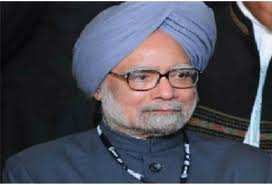
Strongly backed by Prime Minister Manmohan Singh himself, the free-medicines-for-all scheme — being referred to as the "real game changer" — has received its first financial allocation of Rs 100 crore from the Planning Commission for 2012-13.

The entire programme, however, is estimated to cost Rs 28,560 crore over the 12th five year plan.

At present, the public sector provides healthcare to 22% of the country's population.

The ministry estimates that this will increase to 52% by 2017 once medicines are provided for free from 1.6 lakh sub-centres, 23,000 primary health centres, 5,000 community health centres and 640 district hospitals.

The ministry has sent the National List of Essential Medicines, 2011, (348 drugs which includes anti-AIDS, analgesics, anti-ulcers, anti psychotic, sedatives, anesthetic agents, lipid lowering agents, steroids and anti platelet drugs) to all the states to use as reference.

The states, however, have been asked to create their own Essential Drugs List (EDL), keeping in mind the diseases that worst affect them. Around 75% of the funds under the scheme will be borne by the Centre, while the rest will be the state's responsibility.

Around 5% of the district funds will be allowed to be used to purchase drugs outside the EDL. The Cabinet has approved the setting up of a Central Procurement Agency (CPA) for bulk procurement of drugs.

The PMO has asked the ministry to set up the CPA as early as possible. At present, 78% of the entire health expenditure in India is from out of pocket (OOP). Purchasing drugs alone accounts for 72% of this OOP expenditure.

Additional secretary in the ministry L C Goyal said a scientific committee will have to draw up the EDL list for the states.

They have also been asked to devise standard treatment protocols in order to avoid unnecessary and irrational treatments.

Goyal said, "The states will procure drugs directly from manufacturer or importer through an open tender. Companies applying for the tenders will have to have GMP compliance certificate, a no conviction certificate and should have a specified annual turnover. The drugs must carry a not-for-sale label printed on the packaging."

He added, "We plan to roll out the game changing programme from October."

Goyal said a district-level state-of-the-art warehouse will have to be set up by states to store the drugs and a passport driven system will move the medicines to district hospitals, CHCs and PHCs will then send the drugs to the sub centres.

He added, "It is being made mandatory for all doctors in the public sector to prescribe generic drugs and salt names and not brands. Action will be taken against doctors found prescribing brands."

Tamil Nadu has been providing free medicines in its public health centres for the past 15 years, while Rajasthan introduced it last October. Both these states have a corporation that runs the show with complete functional autonomy.

A Planning Commission panel had said drug prices have shot up by 40% between 1996 and 2006. It said that during the same period the price of controlled drugs rose by 0.02%, while those in the EDL increased by 15%. The price of drugs that were neither under price control, nor under the EDL grew by 137%.

The Commission says 39 million Indians are pushed to poverty because of ill health every year. Around 30% in rural India didn't go for any treatment for financial constraints in 2004. In urban areas, 20% of ailments were untreated for financial problems the same year. About 47% and 31% of hospital admissions in rural and urban India, respectively, were financed by loans and sale of assets.

States have cut down on spending to purchase drugs, adding to aam aadmi's woes. A study by the Public Health Foundation of India recently found that while India's per capita OOP expenditure to pay for healthcare costs has gone up from Rs 41.83 in 2005 to Rs 68.63 in 2010, the per capita spending on drugs increased from 29.77% to 46.86% during the same period, while hospitalization costs went up from 11.20% to 22.47%.

Outpatient expenditure also increased from 30.63% to 46.16%. Catastrophic spending, or percentage of households spending more than 10% of their overall income on healthcare, is nearly 15% in states that have insurance in place as against 11% in states that lack such policies.

Comments

Add new comment

  • Coastaldigest.com reserves the right to delete or block any comments.
  • Coastaldigset.com is not responsible for its readers’ comments.
  • Comments that are abusive, incendiary or irrelevant are strictly prohibited.
  • Please use a genuine email ID and provide your name to avoid reject.
News Network
January 21,2020

Jan 21: Indian policymakers may make it easier for companies to tap foreign funding, as a prolonged cash squeeze makes it tough for firms to borrow at home.

Investors are speculating about potential steps Finance Minister Nirmala Sitharaman could unveil when she presents the nation’s budget on Feb. 1. These measures may include freeing up firms to borrow at higher rates and offering tax breaks to global funds.

“The government will need to relax local rules to make it easier for Indian companies to raise debt overseas and tide over the funding crunch in the onshore market,” said Raj Kothari, London-based head of trading at Jay Capital Ltd. “At the same time, they need to ensure that the borrowers tapping offshore markets abide with stricter corporate governance so as to avoid further defaults.”

A prolonged crisis in India’s shadow bank sector and a pile of bad loans at traditional lenders is making it expensive for Indian companies, other than the best-rated firms, to access funding. The government has tried a series of measures to spur domestic credit, including providing so-called credit enhancement and allowing tiny firms to restructure debt.

Here are some steps Sitharaman may consider to spur foreign borrowing:

• She could raise the cap of 450 basis points above Libor, which limits overall foreign debt costs for Indian companies

• This could help lower-rated firms sell bonds abroad. Indian companies rated BBB currently borrow at more than 10%, about 3.8 percentage points more than their top-rated peers;

• Sitharaman could waive the withholding tax foreign investors need to pay on holdings of rupee-denominated debt sold by Indian companies abroad

• The waiver was offered between September 2018 to March 2019, but wasn’t extended as the highest global interest rates since the financial crisis deterred Indian borrowers. Since then, the three-month Libor has dropped by about 1 percentage point

• She could permit Indian property developers and housing finance lenders to sell overseas bonds for reasons beyond affordable housing projects

• New funding lines to the real estate sector, arguably ground zero of India’s economic slowdown, could help kickstart consumption and investment as the industry is the nation’s biggest job-creator.

Comments

Add new comment

  • Coastaldigest.com reserves the right to delete or block any comments.
  • Coastaldigset.com is not responsible for its readers’ comments.
  • Comments that are abusive, incendiary or irrelevant are strictly prohibited.
  • Please use a genuine email ID and provide your name to avoid reject.
News Network
April 21,2020

New Delhi, Apr 21: The historic rout in oil markets that sent US crude prices plummeting to as much as minus USD 40 a barrel is unlikely to translate into any big reduction in petrol and diesel prices in India as domestic pricing is based on different benchmark, and refineries are already filled up to brim and cannot buy US crude just yet.

With storage capacity already overflowing amid coronavirus-induced demand collapse, traders rushed to to get rid of unwanted stocks triggering the collapse of US West Texas Intermediate (WTI) crude for May delivery.

Indian Oil Corp (IOC) Chairman Sanjiv Singh said the collapse was triggered by traders unable to take deliveries of crude they had previously booked because of a demand collapse. And so they paid the seller to keep oil in their storage.

"If you look at June futures, it is trading in positive territory... around USD 20 per barrel," he said.

Low oil prices may seem good in short-term but in the long run it will hurt the oil economy as producers will have no surplus to invest in exploration and production which will lead to a drop in production, he said.

He did not comment on retail fuel prices that have been static since March 16.

Oil companies have not changed rates despite a fall in international prices as they first adjusted them against the increase that was warranted from a Rs 3 per litre hike in excise duty and close to Re 1 per litre additional cost of switching over to cleaner BS-VI grade fuel from April 1.

Petrol in Delhi is priced at Rs 69.59 a litre and diesel comes for Rs 62.29 per litre.

"The negative price has no direct impact on India or Indian oil prices, as this has taken place due to crude oil produced and traded within the US. India's prices are driven partly by another benchmark, the Brent, which is still trading at USD 25/barrel. Therefore, the retail price of fuels in India are unlikely to fall," said Amit Bhandari, Fellow, Energy and Environment Studies, Gateway House.

Also, Indian refineries are already overflowing as fuel demand has evaporated due to the unprecedented nationwide lockdown imposed to curb spread of COVID-19. So, they can't rush to buy US crude.

The refineries have already cut operating rate to half because the fuel they produce has not been sold yet.

India imports 4 million barrels/day (1.4 billion barrels/year) of oil. The country has been benefitting from the falling prices of oil for the last five years, when oil dropped from a peak of USD 110/barrel to USD 50-60/barrel last year, enabling India to invest in public service programmes.

"However, the additional USD 30 fall of this week is good for India - but there is also a downside. If oil prices are too low, the economies of oil-rich gulf countries will be hurt, threatening the job prospects of the 8 million Indians working in the Gulf countries. India is the largest recipient of foreign remittances due to these workers – very low oil prices will hurt this cash stream," Bhandari said.

He said the negative price of oil shows how much oil oversupply exists in international markets today. "Global oil consumption has fallen due to the COVID-19 pandemic that traders are willing to pay customers to get rid of the barrels they can't store. The world does not have enough storage capacity, and dumping the oil is an environmental crime."

The first half of April saw Brent crude oil prices plummet 63.6 per cent to USD 26.9 per barrel. Prices of Western Texas Intermediate (WTI), the American oil, had also fallen similarly by 63.1 per cent.

But on April 20, WTI prices turned rapidly negative because traders on the Nymex exchange rushed to offload their May futures positions a day before expiry of contracts (on April 21).

Such WTI futures are traded on the Nymex exchange with contracts settled in physical crude oil. Problem is, those who had gone long are unable to find storage facilities for the oil and had to liquidate their contracts before expiry. This caused the plunge in WTI prices.

Contrast to this, June WTI Nymex futures prices is hovering around USD 21, while Brent for June delivery is at USD 25.

Miren Lodha, Director, CRISIL Research said the demand for crude oil was declining already because of economic slowdown when the COVID-19 pandemic-driven lockdowns crushed it further.

Consequently, oil demand is expected to contract by 8-10 million barrels per day (mbpd) in 2020 assuming demand recovery begins from the third quarter of the year, he said, adding if recovery doesn't happen by then, further demand destruction could occur.

On the supply side, producers reining in output following a strategic deal between OPEC members, Russia and the US.

Under this agreement, OPEC+ would reduce oil production by 9.7 mbpd for May and June, but gradually ease the curb to 7.7 mbpd between July and December 2020, and to 5.8 mbpd till April 2022 to stabilise prices.

"This is expected to reduce some surplus in the market by the end of 2020," Lodha said.

Crude oil demand is expected to decline by over 20 mbpd in April alone. Typically, monthly global demand is about 100 mbpd. Given this scenario, supply curbs would have limited influence.

Consequently, Brent oil prices is expected to be in the USD 25-30 range for the second quarter while increasing marginally in the last 2 quarters of 2020.

"The gigantic inventory build-ups and lack of storage facilities would also put pressure on prices," he said, adding overall Brent could average USD 30-35 in 2020, with a strong downward bias.

Comments

Add new comment

  • Coastaldigest.com reserves the right to delete or block any comments.
  • Coastaldigset.com is not responsible for its readers’ comments.
  • Comments that are abusive, incendiary or irrelevant are strictly prohibited.
  • Please use a genuine email ID and provide your name to avoid reject.
News Network
February 16,2020

Washington, Feb 16: India and the United States share "unshakeable" ties, said US Principal Deputy Assistant Secretary (PDAS), Alice Wells, on Sunday, adding that the upcoming visit of President Donald Trump will further strengthen the relationship between the two countries.

"The U.S. and #India enjoy a close partnership that grows stronger day by day. Together, we are breaking records. For example, we welcomed a record number of Indian exchange students to the US last year and hope to receive even more this year," said Bureau of South and Central Asian Affairs in a tweet attributed to Alice Wells.

"The ties between our countries are unshakeable, and we look forward to an even warmer relationship as @narendramodi hosts @POTUS later this month," it added.

Trump will pay a two-day state visit to India from February 24 at the invitation of Prime Minister Narendra Modi.

"India is at the heart of the Indo-Pacific region and plays an increasingly prominent role on the world's stage. The U.S. looks forward to partnering with #India at every step of the way, " Alice Wells further said.

According to the Ministry of External Affairs (MEA), Trump is expected to attend an event at the Motera Stadium in Ahmedabad on the lines of the ''Howdy Modi'' function that was addressed by the US President and PM Modi in Houston in September last year. Trump is slated to pay a two-day visit to India from February 24.

During the visit, Trump, who will be accompanied by First Lady Melania, will attend official engagements in New Delhi and Ahmedabad, and interact with a wide cross-section of the Indian society, the MEA said in a statement.

The announcement of Trump's first official visit to India was earlier made by the White House on Monday, which, in its statement, said that the US President and Modi had agreed during a recent phone conversation that the trip will "further strengthen the United States-India strategic partnership and highlight the strong and enduring bonds between the American and Indian people".

Comments

Add new comment

  • Coastaldigest.com reserves the right to delete or block any comments.
  • Coastaldigset.com is not responsible for its readers’ comments.
  • Comments that are abusive, incendiary or irrelevant are strictly prohibited.
  • Please use a genuine email ID and provide your name to avoid reject.