


TISS report points to anti-Muslim bias of police

June 26, 2012
prisoner

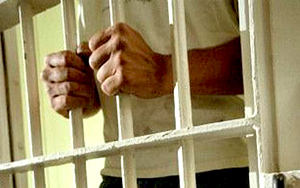
Mumbai, June 26: A report on Muslim prisoners in Maharashtra jails by the Tata Institute of Social Sciences (TISS) establishes that most of them do not have connections with criminal gangs, and points to an acute bias of the police for arresting them in some cases only because they belong to a particular community.

A Study of the Socio Economic Profile and Rehabilitation Needs of Muslim Community in Prisons in Maharashtra, 2011, by Dr. Vijay Raghavan and Roshni Nair from the Centre for Criminology and Justice School of Social Work, Tata Institute of Social Sciences (TISS), states that 96 per cent of the respondents have not been held under preventive detention charges, thus indicating that they are not viewed as a threat to law and order.

The study which surveyed 339 Muslims, mostly between 18 and 30 years of age, in 15 prisons says this implies that most respondents do not have connections with criminal gangs or have any record which may be a threat to law and order. About 25.4 per cent of those imprisoned don’t have lawyers to represent them in their cases.

The police’s bias against Muslims led to some of the arrests under the erstwhile Terrorist and Disruptive Activities (Prevention) Act (TADA), the Maharashtra Control of Organised Crimes Act (MCOCA) and even under the Official Secrets Act.

‘Two types of laws’

An agent in textile export, Murtuza, arrested under the Official Secrets Act on charges of spying, says in his interview to the research team: “There are two types of laws in this country. One is for Hindus and the other is for Muslims. The policeman is first a Hindu and then a policeman. The judge is first a Hindu and then a judge and the lawyer is first a Hindu then a lawyer. People who work against the State, indulge in rioting, kill thousands of innocent people, and harass women and children roam free in this country. They are not punished. I am suffering only because I am a Muslim.”

Murtuza strongly feels that the discriminatory attitude is one of the major reasons for his arrest. He says that the police do not have enough evidence against him and yet he remains in prison. Two years have passed and the case is dragging on in court. He misses his court dates because the escort to take him to court is often not available. He has applied for bail thrice, but it has been rejected each time. He also applied for transferring the case to a different judge, but nothing has happened yet.

Poor victimised

Another prisoner Moiz says that “every time he tries to start life afresh, the police arrest him in some false case. They also demand money from criminals and those who can pay are set free. The poor are victimised. The police are very powerful and can do anything.”

Some interviews reflect the deep despair and alienation of the people interviewed. Muneer feels that after the demolition of the Babri Masjid, the rift between Hindus and Muslims has widened. Due to the riots and bomb blasts in 1992-93, the police perception of Muslims has become negative. The police view them as criminal minded. Migrants from Uttar Pradesh and Bihar are viewed with prejudice by the police.

Shoaib expressed his fears about the breakdown of the social fabric if the bias against Muslims continues. “The police have a negative perception of the Muslim community and act with bias. Due to the actions of the police and fundamentalist politics, the perception of Muslims is negative in society. If the situation continues to be like this, the next generation may get into further crime and vested interests could use them. Society’s perception and the negative feelings of hatred have to be reduced. Only then there is hope for a better tomorrow. Otherwise the situation will get worse for individuals, their families and society.”

About 70 per cent of the 3,000 Muslims prisoners in 15 jails were under trials and 30 per cent were convicted prisoners. What is of concern is that 52.8 per cent are charged with violent crimes mainly murder, attempt to murder, rape, assault and kidnapping. Among the under trials interviewed charge sheets have only been filed in 47.4 per cent of the cases and a mere 3.8 per cent have reached judgement stage, indicating the slow pace of trials. Of those interviewed 75.5 per cent were arrested for the first time and 25.5 per cent are repeat offenders.

The percentage of Muslims in jails is also a high 36 per cent, says Dr. Raghavan, quoting recent official figures. Along with Gujarat and Kerala, Maharashtra is one of the States with the most disproportionate number of Muslims in prisons.

The Sachar Committee report says that in Maharashtra, Muslims account for 10.6 per cent of the general population; yet they comprise 32.4 per cent of the prison population. For those incarcerated on terms of less than a year, the figure rises: 42 per cent of prisoners on short-term sentences in the State are Muslims.

This study was done at the behest of the Maharashtra State Minorities Commission in response to the charge of a disproportionate number of Muslims in jail. It makes a slew of recommendations relating to rehabilitation and correctional programmes, and the need for steps to sensitise the police and prison administration.

Last month the findings were presented at a meeting with Arif Naseem Khan, State Minister for Minority Affairs.

The Minister accepted most of the recommendations, especially those relating to legal aid, adult education, vocational training, release on probation, and awareness and counselling centres in Muslim areas.

The Additional Chief Secretary of Minority Development will call a high-level inter-departmental meeting soon to work out ways to implement the recommendations.

Comments

Add new comment

  • Coastaldigest.com reserves the right to delete or block any comments.
  • Coastaldigset.com is not responsible for its readers’ comments.
  • Comments that are abusive, incendiary or irrelevant are strictly prohibited.
  • Please use a genuine email ID and provide your name to avoid reject.
News Network
January 30,2020

Wayanad, Jan 30: Congress leader Rahul Gandhi on Thursday compared Mahatma Gandhi assassin Nathuram Godse with Prime Minister Narendra Modi, saying both believed in the same ideology.

Gandhi, at an anti-CAA rally here, launched a scathing attack on Modi and said he was making Indians to prove that they are Indians.

Addressing participants at "Save the Constitution" march at Kalpetta in Wayanad, his Lok Sabha constituency on Martyr's Day, Gandhi said there was no difference between Godse and Modi.

"Today, an ignorant man is trying to challenge Gandhi's ideology. He is creating an atmosphere of hatred. The ideology is same. Nathuram Godse and Narendra Modi, they believe in the same ideology. There is no difference except that Modi does not have the guts to say he believes in the ideology of Godse," the Wayanad MP said.

Attacking the Prime Minister on the new Citizenship Law, Gandhi questioned Modi and asked who was he to ask Indians to prove that they were Indians.

"Indians are being made to prove that they are Indians. Who is Narendra Modi to decide who is an Indian. Who gave Modi the licence to ask for my Indianness? I know I am an Indian and I don't have to prove it to anyone. Likewise, 1.4 billion Indians do not have to prove that they are Indians," he said.

The Congress leader led the march here as part of efforts to intensify the party's protests against CAA in the state.

Comments

Add new comment

  • Coastaldigest.com reserves the right to delete or block any comments.
  • Coastaldigset.com is not responsible for its readers’ comments.
  • Comments that are abusive, incendiary or irrelevant are strictly prohibited.
  • Please use a genuine email ID and provide your name to avoid reject.
News Network
May 9,2020

New Delhi, May 9: Three promoters of Ram Dev International, recently booked by the CBI for allegedly cheating a consortium of six banks to the tune of Rs 411 crore, have already fled the country before the State Bank of India reached the agency with the complaint, officials said on Saturday.

The CBI had recently booked the company engaged in export of Basmati rice to the West Asian and European countries and its directors Naresh Kumar, Suresh Kumar and Sangita on the basis of complaint from the State Bank of India (SBI), which suffered the loss of more than Rs 173 crore, they said.

The company had three rice milling plants, besides eight sorting and grading units in Karnal district with offices in Saudi Arabia and Dubai for trading purposes, the SBI complaint said.

Besides SBI, other members of consortium are Canara Bank, Union Bank of India, IDBI, Central Bank of India and Corporation Bank, they said.

The Central Bureau of Investigation (CBI) did not carry out any searches in the matter because of the coronavirus-induced lockdown, the officials said.

The agency will start the process of summoning the accused, incase they do not join the investigation, appropriate legal action will be initiated, they said.

According to the complaint filed by SBI, the account had become non-performing asset (NPA) on January 27, 2016.

The banks conducted a joint inspection of properties in August and October, nearly 7-9 months later only to find Haryana Police security guards deployed there, they said.

"On inquiry, it has been come to notice that borrowers are absconding and have left the country," the complaint filed on February 25, 2020, after over a year of account becoming NPA, the officials said.

The complaint alleged that borrowers had removed entire machinery from old plant and fudged the balance sheets in order to unlawfully gain at the cost of banks'' funds, it said.

Comments

Add new comment

  • Coastaldigest.com reserves the right to delete or block any comments.
  • Coastaldigset.com is not responsible for its readers’ comments.
  • Comments that are abusive, incendiary or irrelevant are strictly prohibited.
  • Please use a genuine email ID and provide your name to avoid reject.
Agencies
July 13,2020

Kolkata, July 13: Debendra Nath Roy, a member of the West Bengal legislative assembly (MLA) from the Bharatiya Janata Party (BJP), was found dead near his house in north Bengal’s Uttar Dinajpur district on Monday morning.

BJP leaders and his family members have alleged that he was murdered. 

BJP president JP Nadda has expressed “shock” at Roy’s “deplorable and suspected heinous killing” and condemned the incident.

He questioned the rise of “gunda raj” in West Bengal under Chief Minister Mamata Banerjee’s watch amid the worsening law and order in the state, which is slated to hold assembly polls next year, where the BJP is seen to be the primary challenger to the CM’s citadel.

“The suspected heinous killing of Debendra Nath Ray, BJP MLA from Hemtabad in West Bengal, is extremely shocking and deplorable. This speaks volumes of the gunda raj and failure of law and order in the Mamata Banerjee-led government. People will not forgive such a government in the future. We strongly condemn the incident,” he tweeted.

The BJP has demanded a Central Bureau of Investigation (CBI) probe into the lawmaker’s unnatural death.

His body was found in the balcony of a shop near his house at Bondol in Hemtabad, Uttar Dinajpur district, on Monday morning.

“The body has been sent for autopsy. We are investigating the case. No one has been detained for questioning or arrested so far,” said a police official from Uttar Dinajpur district, requesting anonymity.

“Roy was murdered. The way his body was found suggests that it was a premeditated murder and the accused tried to pass it off as a suicide. The ruling TMC (Trinamool Congress) is involved in his murder,” alleged Rahul Sinha, national secretary, BJP.

The TMC, however, refuted the BJP’s allegations.

“I heard that he (Roy) died by suicide. Police are investigating the case. Let the truth come out. If he has been murdered, then the culprits should be identified and punished as per law,” said Kanhaiyalal Agarwal, a TMC leader from Uttar Dinajpur district.

BJP leaders said some people had called Roy around 1 am on Monday and he went out of his home. His body was found on Monday morning.

Roy had won the Bengal assembly elections from Hemtabad on a Communist Party of India (Marxist) ticket in 2016, but joined the BJP last year.

Comments

Add new comment

  • Coastaldigest.com reserves the right to delete or block any comments.
  • Coastaldigset.com is not responsible for its readers’ comments.
  • Comments that are abusive, incendiary or irrelevant are strictly prohibited.
  • Please use a genuine email ID and provide your name to avoid reject.