



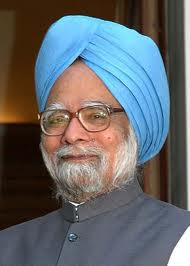
Manmohan to take charge of finance ministry

June 27, 2012

pm

New Delhi, June 27: Pranab Mukherjee resigned as Union finance minister on Tuesday, giving Prime Minister Manmohan Singh a free hand to reorient the key ministry during an economic slowdown while raising the possibility of a larger Cabinet reshuffle in about six weeks from now.

Mukherjee submitted his resignation to the prime minister to end his career as Congress leader ahead of filing the nomination for the presidential election for which he is a clear favourite. The PM is expected to retain the ministry in the coming days during which he is widely expected to tweak policies seen as contributing to negative sentiment.

Singh replied to Mukherjee's resignation by lavishing praise on the outgoing minister. "Our government owes a deep debt of gratitude to you for your invaluable contribution to its work over the last eight years," he wrote. "It is a testimony to your extraordinary abilities and your stature in public life that you have carried an onerous range of responsibilities with ease and accomplishment."

President Pratibha Patil accepted Mukherjee's resignation. The Prime Minister will look after the work of the finance ministry while power minister Sushilkumar Shinde is the likely replacement for Mukherjee's other key role as the leader of the Lok Sabha.

The Prime Minister is sure to look at fresh ideas to deal with the slowdown and low market sentiment under Mukherjee's watch. Sources in the government said the PM was not in sync with Mukherjee over how to deal with the sliding economy, but was hamstrung by Mukherjee's clout and seniority as party insider. In fact, the President-in-waiting was never the PM's first choice for the finance ministry but Mukherjee landed the job because of the leadership's preference for a politician.

His exit from the government now gives Singh an opportunity to carry out the changes he could not implement so far. However, there are indications that the exacting nature of the job, rendered tougher by the slowdown, may lead him to opt for a full-time finance minister of his choice before the beginning of the monsoon session of Parliament scheduled to begin in a month's time.

Many in the party view home minister P Chidambaram as the frontrunner for the vacancy in the finance ministry. But shifting Chidambaram to the finance ministry will create its own set of complications, leaving the leadership with the complicated task of finding a replacement in the politically crucial home ministry. The job, given the looming terror threat, cannot be juggled casually.

This can set the stage for a larger Cabinet rejig, a possibility necessitated as much by the likely need to find a fulltime replacement for Mukherjee as by the vacancy triggered by Virbhadra Singh's resignation as small, micro and small enterprises minister on Tuesday over graft charges. There is a view in the Congress that the PM needs to shuffle the pack to revive a business-like perception about his government after the impression of policy paralysis created by anti-corruption campaign of civil society and shocking defeats in assembly elections.

Comments

Add new comment

  • Coastaldigest.com reserves the right to delete or block any comments.
  • Coastaldigset.com is not responsible for its readers’ comments.
  • Comments that are abusive, incendiary or irrelevant are strictly prohibited.
  • Please use a genuine email ID and provide your name to avoid reject.
News Network
June 25,2020

India has jumped past 4.5 lakh coronavirus cases and 14,476 people have succumbed to the viral infection so far. In this backdrop, speaking to IANS in an exclusive interview, AIIMS Director Randeep Guleria said India is also vulnerable to second wave of coronavirus and people should continue to follow social distancing, wearing mask and other precautions, after cases begin to decline.

He added that in order to contain the outbreak of Covid-19, a limited lockdown in hotspots, where volume of cases is very high, may be considered along with a micro-plan to prevent leakage of cases from these areas to other non-containment areas. Excerpts of the interview are below:

Q: Reports say China and South Korea are witnessing a second wave of coronavirus infection, what is this second wave, is India also vulnerable to this?

A: When cases come down significantly, people tend to drop their guard against the viral infection, and this leads to the second wave (which means a sudden increase in the number of cases). After cases begin to decline, people should continue to follow the precautions -- continue to maintain social distancing and wear masks regularly. See what happened in Singapore, it was struck by a second wave of coronavirus. Look, what happened in the 1918 pandemic, people dropped their guard and the second wave of viral infection struck back. If people do not follow social distancing then the spike in cases is apparent. We need to take these precautions at least for one year. India is also vulnerable to this second wave.

Q: If Covid-19 cases continue to rise rapidly, do you think we need another lockdown in areas where volume of cases are very high?

A: A large volume of cases is concentrated in specific areas like hotspots, and in order to maintain things in order, we may need a limited lockdown in these areas. This should be followed by a micro-plan which entails extensive testing of people and also extensive contact tracing of people who have got in touch with positive people. Need to ensure there is no leakage of cases from these areas. People from these areas should not mix with others in non-containment areas. This will aid in containing the outbreak of the virus. People who have developed symptoms should get themselves tested, especially in the containment areas.

Q: With more than 4.5 lakh cases and close to 14,500 deaths, do you think India has reached its peak and a decline in cases is prominent?

A: The cases will continue to increase for some time. The doubling time of cases has also increased. But, the cases will also begin to flatten. Though, it is difficult to give an exact time period in this viral infection, it seems, the growth in cases will flatten in the end of July or beginning of August. A decline will come to this viral infection, but it does not mean that people should drop their guard. As a measure, we need to decrease community participation and citizens should continue to follow social distancing. People should get themselves tested. All these efforts will help in preventing people from contracting this virus. These precautions will also prevent us from the second wave, and we must continue to take precautions. The virus has not gone away, it is still lurking.

Q: India has crossed the 4.5 lakh coronavirus cases so far, although our recovery rate is good, but still 10,000 to 15,000 cases are reported daily. Why do cases continue to spiral, what is the reason?

A: We have to remember a few things -- the bulk of cases are in 10 cities, nearly 70 per cent, and if we take into account cases per million population, the number is not very high, as compared with countries including countries in Europe. Many European countries put together still do not add up to the Indian population. Do not compare India to countries like Italy, Spain etc. We need to focus on hotspots, which contribute to between 70 -80 per cent of cases, and we have to identify cases in these areas at an early stage. The population density is very high in these cities. People in lower socio-economic status are highly vulnerable to the viral infection, as many live together in small spaces and there is a lot of mixing of people happening there. Look at the market places, people are not following social distancing and not wearing masks. In fact, many are in close vicinity of each other.

Comments

Add new comment

  • Coastaldigest.com reserves the right to delete or block any comments.
  • Coastaldigset.com is not responsible for its readers’ comments.
  • Comments that are abusive, incendiary or irrelevant are strictly prohibited.
  • Please use a genuine email ID and provide your name to avoid reject.
News Network
March 31,2020

Thiruvananthapuram, Mar 31: Kerala Chief

Minister Pinarayi Vijayan on Tuesday said the government has collected the details of those who took part from the state in recent religious congregations in Nizamuddin and Malaysia and it needs to be examined if they have any health issues.

"Police have already made detailed examination in this regard. Thelist of participants have been given through respectivedistrictcollectors. Necessary precautions will be made in the concerned districts in this regard," Vijayan told reporters here.

The government has the exact number of participants and thedetails of the districts they are hailing from, he said.

Meanwhile, Pathananthitta police said they have identified 6 persons in the district in connection with the Nizamuddin congregation.

"Three persons had taken part in the congregation, of them one hadalready died. One person is in quarantine in the district while theother is located now in Thiruvananrhapuram," a senior police officialtold PTI.

The others are not participants but had travelled to Delhi along with them, he said.

In the nearby Alappuzha district, three persons have been identified in connection with the congregation, police said.

"They have been in quarantine and under the surveillance of thehealth department since they have reached back the state from Delhi," another official said.

Several people, who had attended the religious congregation at Nizamuddin in the national capital are suspected to be having symptoms of Covid19, even as at least 24 have tested positive.

Comments

Add new comment

  • Coastaldigest.com reserves the right to delete or block any comments.
  • Coastaldigset.com is not responsible for its readers’ comments.
  • Comments that are abusive, incendiary or irrelevant are strictly prohibited.
  • Please use a genuine email ID and provide your name to avoid reject.
News Network
March 4,2020

New Delhi, Mar 4: A court in Delhi on Wednesday convicted expelled BJP MLA Kuldeep Singh Sengar of culpable homicide not amounting to murder in the death of the Unnao rape victim's father.

District judge Dharmesh Sharma said Sengar had no intention of killing the victim's father. “He was beaten in a brutal manner that led to his death,” the judge said.

The court had sent Sengar to jail on December 20 for the “remainder of his natural biological life” for raping the woman in 2017, when she was a minor.

The Central Bureau of Investigation (CBI) had examined 55 witnesses in support of the case and the defence examined nine witnesses.

The court had recorded the statements of the rape survivor's uncle, mother, sister and one of her father's colleague who claimed to be an eyewitness to the incident.

Charges were framed against Sengar, his brother Atul, Bhadauria, sub-inspector Kamta Prasad, constable Amir Khan and six others in the case.

The case was transferred to Delhi from a trial court in Uttar Pradesh on the directions of the Supreme Court on August 1 last year.

In July, 2019 a truck rammed into the car the rape victim was travelling in with some family members and her lawyer.

Two of her aunts died in the incident. She was airlifted from a hospital in Lucknow and to AIIMS in Delhi.

The victim has been provided accommodation in Delhi and is under CRPF protection.

Comments

Add new comment

  • Coastaldigest.com reserves the right to delete or block any comments.
  • Coastaldigset.com is not responsible for its readers’ comments.
  • Comments that are abusive, incendiary or irrelevant are strictly prohibited.
  • Please use a genuine email ID and provide your name to avoid reject.