


Can’t afford a car? 67% of UP MLAs are crorepatis

July 5, 2012

MLAcrore

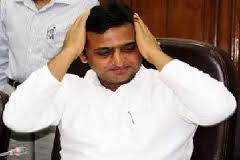
Lucknow, July 5: Having invited comparisons with Mayawati's profligate ways, a rattled UP chief minister Akhilesh Yadav on Wednesday reversed his decision to allow all legislators to purchase four-wheelers worth up to Rs 20 lakh by dipping into their local area development fund.

This is the second time in three weeks that Akhilesh has been forced to revoke his decision within 24 hours. Last month, he rescinded his order of shutting down malls and shops at 7pm to tackle the power crisis.

"I take back the decision. The reason for this is that most of the MLAs have decided not to take the offer after media criticism," a visibly upset Akhilesh said. "I felt that since MLAs have to move constantly, a vehicle will help them visit remote areas and monitor development effectively. But the media painted the decision as if it was against public interest," he said. The spirit of the decision, he added, was not understood.

An upset Akhilesh Yadav defended his "car fund" for legislators as meant only for those who could not afford one, but the chief minister's argument doesn't really wash.

According to analysis by an NGO, out of 403 MLAs in UP, 271 (67%) are crorepatis. There are only six MLAs who have declared assets less than Rs 5 lakh. Among the main parties, the average assets per candidate for SP is Rs 2.52 crore; for BSP it's Rs 4.44 crore; for BJP it's Rs 4.01 crore; and for Congress Rs 4.61 crore.

Akhilesh said many legislators had told him that they had vehicles that were seven to eight years old and were no longer suited to travelling large distances. It was after the media hype that MLAs refused to buy a car with the area development fund, he said.

But incongruously, after blaming the media, Akhilesh said the rollback should be seen as a sign of healthy democracy where due weightage is given to the "positive" suggestions by the opposition parties.

BSP's leader of opposition Swami Prasad Maurya welcomed the move but gave credit to the opposition for the rollback. He said the opposition pressure forced the government to revoke its decision to use MLA funds for buying personal cars.

"This and his earlier decision to shut malls at 7pm show that the CM is immature," he said, adding some ministers were the real force behind the decision.

BJP spokesman Vijay Bahadur Pathak said there was something wrong with Akhilesh's advisers. The Congress, however, was all praise.

Akhilesh Pratap Singh of Congress said, "By taking the decision back, the government has shown it has the courage to rectify a wrong as everyone said it would not send a good message."

Among main parties, the average assets per candidate for SP is Rs 2.52 crore; for BSP it's Rs 4.44 crore; for Congress Rs 4.61 crore, and for BJP it's Rs 4.01 crore.


Comments

Add new comment

  • Coastaldigest.com reserves the right to delete or block any comments.
  • Coastaldigset.com is not responsible for its readers’ comments.
  • Comments that are abusive, incendiary or irrelevant are strictly prohibited.
  • Please use a genuine email ID and provide your name to avoid reject.
News Network
February 6,2020

New Delhi, Feb 6: DMK Lok Sabha member M K Kanimozhi on Wednesday challenged popular actor Rajinikanth to raise his voice for Muslims, saying they have "already been affected" by the Citizenship (Amendment) Act and are protesting on streets against the law.

Reacting to his statements earlier in the day in Chennai that "CAA is no threat to Muslims" and "if they face trouble I will be the first person to raise voice for them," Kanimozhi, daughter of former Tamil Nadu Chief Minister M Karunanidhi, told news agency that "Muslims in India have already been affected due to CAA".

"Let him (Rajinikanth) come forward and raise his voice for the affected Muslims", she said.

She said the members of the community have been protesting as the law leaves out Muslims.,

Asked whether Rajinikanth, through this pro-CAA statement, was moving closer to the BJP, the MP from Tuticorin said, "What he has said is no different from the BJP's narrative which we have been listening in parliament for the last few days".

Under CAA, members of Hindu, Sikh, Buddhist, Jain, Parsi and Christian communities who came to India from Pakistan, Bangladesh and Afghanistan till December 31, 2014, to escape religious persecution there will not be treated as illegal immigrants, and be given Indian citizenship.

Rajinikanth had asserted that the legislation did not pose any threat to Muslims. He wondered as to how Muslims, who chose to stay back in India following Partition will be sent out of the country. Besides, the central government had assured that Indian people will have no issues in view of CAA, he noted.

He charged that some political parties were instigating people against the CAA for their selfish interests.

Comments

Add new comment

  • Coastaldigest.com reserves the right to delete or block any comments.
  • Coastaldigset.com is not responsible for its readers’ comments.
  • Comments that are abusive, incendiary or irrelevant are strictly prohibited.
  • Please use a genuine email ID and provide your name to avoid reject.
News Network
January 6,2020

Jan 6: India’s Finance Ministry has delivered a challenge to its revenue collectors: meet tax targets despite $20 billion of corporate tax cuts.

Through a video conference on Dec. 16, officials were exhorted to meet the direct tax mop-up target of 13.4 trillion rupees ($187 billion), a government official told reporters. Collection in the eight months to November grew at 5% from a year earlier, against the desired 17%.

The missive shows Prime Minister Narendra Modi’s urgent need to buoy public finances in a slowing economy where April-November tax collections were half the amount budgeted. Authorities withheld some payments to states and have capped ministries’ expenditure as the fiscal deficit ballooned beyond the target.

The government’s efforts to maintain its deficit goal goes against advice from some quarters, including central bank Governor Shaktikanta Das, who urged more spending to spur economic growth.

It’s uncertain though how much room Modi’s administration has to boost expenditure, given that it may already be borrowing as much as 540 billion rupees through state-run companies, a figure that isn’t reflected on the federal balance sheet. Uncertainty about public finances pushed up sovereign yields in November and December, compelling Das to announce unconventional policies to keep costs in check.

“This is not a time to conceal the fiscal deficit by off-budget borrowing or deferring payments,” said Indira Rajaraman, an economist and a former member of the Reserve Bank of India’s board. “If they were to stick to the target, that would be catastrophic because there is so much pump-priming that is needed right now.”

GDP grew 4.5% in the quarter ended September, the slowest pace in more than six years as both consumption and investments cooled in Asia’s third-largest economy. Only government spending supported the expansion, piling pressure on Modi to keep stimulating.

S&P Global Ratings warned in December it may downgrade India’s sovereign ratings if economic growth doesn’t recover. Government support seems to be waning now, with ministries asked to cap spending in the final quarter of the financial year at 25% of the amount budgeted rather than 33% allowed earlier. This new rule will hamstring sectors including agriculture, aviation and coal, where not even half of annual targets have been disbursed.

As the federal government runs short of money, it’s been delaying payouts to state administrations.

Private hospitals have threatened to suspend cash-less services to government employees over non-payment of dues, while a builder informed the stock exchange about delayed rental payments from no less than the tax office itself.

India is considering a litigation-settlement plan that will allow companies to exit lingering tax disputes by paying a portion of the money demanded by the government, the Economic Times newspaper reported Saturday.

The move will help improve the ease of doing business besides unlocking a part of the almost 8 trillion rupees ($111 billion) caught up in these disputes. The step, which is being considered as part of the annual budget, could also bridge India’s fiscal gap.

Finance Minister Nirmala Sitharaman has refused to comment on the deficit goal before the official budget presentation due Feb. 1.

A deviation from target, if any, “will need to be balanced with a credible consolidation plan further-out,” said Radhika Rao, an economist at DBS Group Holdings Ltd. in Singapore.

Comments

Add new comment

  • Coastaldigest.com reserves the right to delete or block any comments.
  • Coastaldigset.com is not responsible for its readers’ comments.
  • Comments that are abusive, incendiary or irrelevant are strictly prohibited.
  • Please use a genuine email ID and provide your name to avoid reject.
News Network
January 20,2020

New Delhi, Jan 20: Surging inflation and slowing growth are raising serious concerns about the future growth prospects of the economy and as a remedial measure the government should resolve supply-side hurdles and ensure more stringent governance norms, a report said on Monday.

According to the Dun and Bradstreet Economy forecast, even though the Index of Industrial Production (IIP) turned positive in November 2019, it is likely to remain subdued.

"Slowdown in consumption and investment along with high inflationary pressures, geopolitical issues and uncertainty over the recovery of the economic growth are likely to keep IIP subdued," the report noted.

Dun and Bradstreet expect IIP to remain around 1.5-2.0 percent during December 2019.

As per government data, industrial output grew 1.8 percent in November, turning positive after three months of contraction, on account of growth in the manufacturing sector.

On the price front, uneven rainfall along with floods in many states and geopolitical issues have led to a surge in headline inflation even as demand remains muted.

The Consumer Price Index (CPI) in December rose to about five-and-half year high of 7.35 percent from 5.54 percent in November, mainly driven by high vegetable prices.

"The sharp rise in inflation has constrained monetary policy stimulus while revenue shortfall has placed limits on the government expenditure," Dun & Bradstreet India Chief Economist Arun Singh said.

According to Singh, growth-supporting measures and deceleration in growth are likely to cause slippage in fiscal deficit target by a wider margin.

"The government should focus on taking small steps to address the slowdown; in particular, resolve the supply-side hurdles and ensure more stringent governance norms," Singh said.

Unless these concerns are addressed through a comprehensive policy framework, it will not be easy for India to clock a sustainable growth rate to become a USD 5 trillion economy, he added.

Comments

Add new comment

  • Coastaldigest.com reserves the right to delete or block any comments.
  • Coastaldigset.com is not responsible for its readers’ comments.
  • Comments that are abusive, incendiary or irrelevant are strictly prohibited.
  • Please use a genuine email ID and provide your name to avoid reject.