



India's street children bank on the future

July 6, 2012
street_child

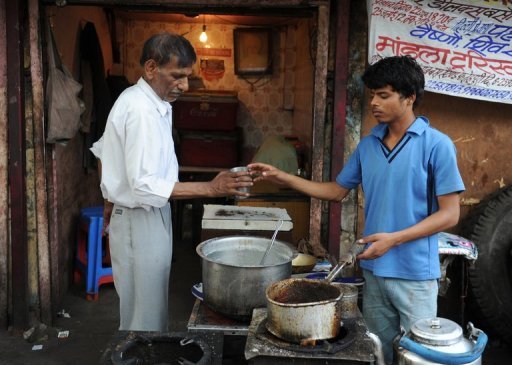
New Delhi, July 6: Ram Singh, 17, earns just one dollar from the 100 cups of tea he makes every day outside Delhi railway station, but each evening, after packing up, he goes to the bank and deposits nearly half of it.

Singh holds an account at a special bank, run for — and mostly by — Indian street children, that keeps what little money they have safe and seeks to instill the idea that savings, however meagre, are important.

Just one among millions of street children who rely on menial jobs for survival, Singh is determined to make his work pay some sort of future dividend.

“I’m smart, but that alone isn’t enough to start a business.

“I save money everyday, hoping to start something of my own. Someday soon,” he said as he served glasses of India’s ubiquitous, spicy milk tea in sweltering heat at a stall near the teeming train station.

The Children’s Development Khazana (treasure chest) opened its first office in New Delhi 2001 and has since spread across the country and overseas with 300 affiliated branches in India, Nepal, Bangladesh, Afghanistan, Sri Lanka and Kyrgyzstan.

Delhi counts 12 branches with around 1,000 child clients aged between nine and 17.

The brightly painted metal cubicles which serve as teller counters are located in shelters that provide children with free meals and sleeping mats, as well as school classes.

The branches are run almost entirely by and for the children, with account holders electing two volunteer managers from the group every six months.

“Children who make money by begging or selling drugs are not allowed to open an account. This bank is only for children who believe in hard work,” said Karan, a 14-year-old “manager”.

During the day, Karan earns a pittance washing up at wedding banquets or other events. In the evening, he sits at his desk to collect money from his friends, update their pass books and close the bank.

“Some account holders want to withdraw their money. I ask them why and give it to them if other children approve. Everyone earns five per cent interest on their savings.”

An adult staff member is always present to collect the takings at the end of each day, depositing the cash in a nationalised bank to earn the interest component.

Sharon Jacob, who works for the rights group Butterflies that set up the bank, said it aimed to give the children a genuine stake in their own future.

“They work in shops as hawkers or porters but they never had a safe place to keep their money. They were always cheated of it or somebody also stole their money,” Jacob said.

“So this is a place where they could keep their money safely and they are also taught life skills, how to manage their finances. They are taught budgeting, they are taught democratic participation,” Jacob said.

Child labour is officially illegal in India but millions of boys and girls have no choice but to earn a living to support themselves or help their families.

Many move to the cities from rural areas, seeking an escape from grinding poverty or abusive homes.

“I ran away from home at the age of 11 after my father beat me for stealing a kitchen appliance,” said Samir who works in a sweatshop.

“For days I slept on a railway platform. I was beaten by the police and even harassed by the drug peddlers. I wanted to go back home but was ashamed of myself.”

Now 14, Samir lives in the children’s shelter and holds an account in the bank.

“I have saved 4,000 rupees (Dh257) in the last seven months. It’s a good feeling to have some money. I will buy a shirt and a watch for my father and send it to him to seek his apology.”

“He might forgive me and ask me to be with him at home.”


Comments

Add new comment

  • Coastaldigest.com reserves the right to delete or block any comments.
  • Coastaldigset.com is not responsible for its readers’ comments.
  • Comments that are abusive, incendiary or irrelevant are strictly prohibited.
  • Please use a genuine email ID and provide your name to avoid reject.
News Network
May 9,2020

May 9: Two more companies are said to be eyeing stakes in Reliance Jio Platforms, the $65-billion digital unit of Mukesh Ambani-controlled Reliance Industries, suggests a Bloomberg report. If these deals materialise, they would add to a growing list of firms that have recently invested in the Indian company.

US private equity firm General Atlantic was considering investing about $850 million to $950 million in the Mumbai-based company, a Bloomberg report said, citing people with knowledge of the matter.

The deal could be completed as soon as this month, though no agreement had been finalised and plans may change, it added.

Saudi Arabia's Public Investment Fund (PIF) is also considering to buy a minority stake in Jio, Bloomberg said in a separate report.

General Atlantic declined to comment on the report, while Jio and PIF did not immediately respond to Reuters request for comment. Hours earlier on Friday, Reliance Industries announced a $1.5 billion stake sale in Jio to Vista Equity Partners, the third deal in just over two weeks.

The conglomerate cut a $5.7 billion deal with Facebook for a 9.99 per cent stake in Jio on April 22 and a few days later, it secured a $750 million investment from private equity firm Silver Lake.

Together the three deals will inject a combined $8 billion in the telecoms-to-energy group and help it pare its debt.

Vista's investment gave Jio an equity value of Rs 4.91 trillion ($65 billion) and an enterprise value of Rs 5.16 trillion, said Reliance, controlled by billionaire tycoon Mukesh Ambani.

The potential investments from New York-based General Atlantic and the Saudi sovereign wealth fund, which manages over $300 billion in assets, would inject money on top of the $8 billion which Jio has already raised.

Saudi's PIF has been buying minority stakes several companies. Last month, it disclosed an 8.2 per cent stake in coronavirus-hit Carnival Corp, sending the cruise operator's shares up nearly 30 per cent higher.

Comments

Add new comment

  • Coastaldigest.com reserves the right to delete or block any comments.
  • Coastaldigset.com is not responsible for its readers’ comments.
  • Comments that are abusive, incendiary or irrelevant are strictly prohibited.
  • Please use a genuine email ID and provide your name to avoid reject.
Agencies
May 1,2020

New Delhi, May 1: Amid the lockdown due to the COVID-19 pandemic, the University Grants Commission (UGC) and the Human Resource Development Ministry are planning to conduct the PhD and MPhil exams through online mediums in various universities across the country. The universities have been informed by the UGC and the MHRD about this.

Union Human Resource Development Minister Ramesh Pokhriyal 'Nishank' said, "Phd, MPhil exams, practicals, viva etc can be conducted through Skype or any other meeting apps."

When this system is implemented in colleges, students will not have to wait long for various types of examinations. Especially internal examinations can be taken online. Students' viva tests can also be conducted via Skype or any other similar meeting apps.

Regular classes in the universities will resume after the lockdown is removed. The classes for the first year will start from September 1 while for the second and third years the classes will start from August 1. However, students of various colleges will have to appear for basic exams in July.

A special committee constituted by the UGC has emphasized on conducting examinations online. The committee in its recommendation said that various colleges and universities should conduct online examinations including internal exams of colleges for 25 per cent marks.

The National Testing Agency (NTA), on the advice of the Ministry of Human Resource Development, has extended the date of filling the entrance examination forms for various universities.

According to the orders of the NTA, the date of filling the form for the entrance examinations of Jawaharlal Nehru University, National Council for Hotel Management 'G' and for Phd and MBA from IGNOU has been extended till May 15.

Comments

Add new comment

  • Coastaldigest.com reserves the right to delete or block any comments.
  • Coastaldigset.com is not responsible for its readers’ comments.
  • Comments that are abusive, incendiary or irrelevant are strictly prohibited.
  • Please use a genuine email ID and provide your name to avoid reject.
News Network
May 19,2020

New Delhi, May 19: Spitting at workplace will be punishable with fine, the Personnel Ministry has said, citing the national directives for COVID-19 management.

In an order issued to all central government departments, it has asked their heads to ensure strict compliance of this and other directives in this regard.

This order is likely to bring about changes in and around government and private work places, where one can easily spot stains of 'pan' and 'gutka' spitted at some of the corners of walls or areas not frequented by many employees/public.

"Spitting in public and work places shall be punishable with fine, as may be prescribed in accordance with its laws, rules and regulations by the state/union territory local authority," said the national directives issued by the Home Ministry and shared by the Personnel Ministry with all central government departments.

It said wearing 'face cover' is compulsory in all public and work places.

In additional directives for the work places, the ministry said as far as possible, the practice from work from home should be followed.

"Staggering of work/business hours shall be followed in offices, work places, shops, markets and industrial and commercial establishments. Provision for thermal scanning, hand wash and sanitiser will be made at all entry and exit points and common areas," the directives said.

Frequent sanitization of the entire workplace, common facilities and all points which come into human contact e.g. door handles etc., shall be ensured, including between shifts, it said.

"All persons in charge of work places shall ensure social distancing through adequate distance between workers, adequate gaps between shifts, staggering the lunch breaks of staff, etc," the directive said.

The Centre on Monday asked 50 per cent of its junior employees, below the level of deputy secretary, to join work in office.

Till now, only 33 per cent of such employees were asked to attend office due to the novel coronavirus lockdown.

Central government employees were asked to work from home due to the lockdown that came into force from March 25.

All officers of the level of deputy secretary and above have already been asked to attend office on all working days.

Comments

Add new comment

  • Coastaldigest.com reserves the right to delete or block any comments.
  • Coastaldigset.com is not responsible for its readers’ comments.
  • Comments that are abusive, incendiary or irrelevant are strictly prohibited.
  • Please use a genuine email ID and provide your name to avoid reject.