


NCTC 2.0: Big changes to anti-terror agency

July 13, 2012
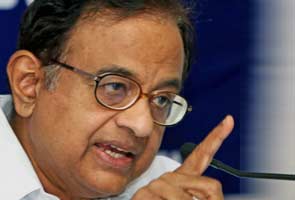
Chidambaram

New Delhi, July 13: Home Minister P Chidambaram's pet project, the National Counter Terrorism Centre (NCTC), is set to take-off again after being grounded and scuttled by as many as seven non-Congress chief ministers. Senior member of the Congress party and Assam Chief Minister Tarun Gogoi had also objected to the NCTC. The main opposition, the Bharatiya Janata Party (BJP) too had put up a stiff resistance and criticised the Home Minister over the proposed body.

The reworked NCTC proposal is now with the Cabinet Committee on Security (CCS) - the apex decision making body of the country on security issues, headed by the Prime Minister. The CCS is likely to consider the proposal in the last week of July after the Presidential election, scheduled for July 19, concludes.

The proposed anti-terror body had faced opposition on two counts. The primary objection was about it being placed under the Intelligence Bureau (IB). The IB is primarily designed and tasked to carry out covert executive action. It does not have powers to arrest and works through state police organisations, therefore, does not come directly under legal scrutiny. Placing the NCTC under the IB, it was argued, would jeopardise the IB as it would then be subject to legal scrutiny. Even senior intelligence officers found the prospect of the IB having to explain its actions before a court of law daunting and unwarranted.

Sources have told NDTV that in the fresh Ministry of Home Affairs (MHA) proposal, the NCTC is no longer under the IB. The NCTC will now be a separate organisation which will directly report to the Home Ministry. The Multi-Agency Centre (MAC) - a platform to share varied intelligence inputs coming from various agencies like the Directorate of Revenue Intelligence (DRI), Economic Intelligence Agency, Enforcement Directorate etc. - will be placed under the NCTC. As of now the MAC is within the IB.

In addition to this, the NCTC's ability to carry out counter-terror operations on its own, independent of State Police organisation, was also a major stumbling block. Although, the Union Home Ministry had argued that independent anti-terror operations would be limited and the apprehended suspected would be immediately handed over to the local police, the States, however, weren't convinced with this argument. Odisha Chief Minister Naveen Patnaik, Bihar Chief Minister Nitish Kumar and several others had refused to buy this argument. Instead they claimed that law and order was a state issue and independent anti-terror operations without involving the state police organization would violate the federal structure of the constitution. It is believed that the NCTC will now be able to carry out anti-terror operations only in the rarest of rare cases.


Comments

Add new comment

  • Coastaldigest.com reserves the right to delete or block any comments.
  • Coastaldigset.com is not responsible for its readers’ comments.
  • Comments that are abusive, incendiary or irrelevant are strictly prohibited.
  • Please use a genuine email ID and provide your name to avoid reject.
News Network
May 21,2020

Bengaluru, May 21: The COVID-19-induced lockdown saw a spurt in crybercrimes in India with Kerala recording the highest number during the period, according to an analysis of IT security solutions provider K7 Computing.

The report analyses various cyberattacks within India during the pandemic and reveals that threat actors targeted the States with COVID-19-themed attacks aimed at exploiting user trust.

The sudden surge in the frequency of attacks witnessed from February 2020 to mid-April 2020 indicates that scamsters across the world were exploiting the widespread panic around coronavirus at both the individual and corporate level, the company said in a statement.

These attacks aimed to compromise computers and mobile devices to gain access to users confidential data, banking details and cryptocurrency accounts.

The key threats seen during this period ranged from phishing attacks to rogue apps disguised as COVID-19 information apps that targeted users sensitive data.

Phishing attacks were noticed more in Tier-II and Tier-III cities while the metros fared better.

Smaller cities saw over 250 attacks being blocked per 10,000 users.

Users from Ghaziabad and Lucknow seem to have faced almost six and four times the number of attacks, respectively, as Bengaluru users.

In Kerala, regions like Kottayam, Kannur, Kollam, and Kochi saw the highest hits with 462, 374, 236, and 147 attacks respectively, while the state as a whole saw around 2,000 attacks during the period, the highest thus far in the country.

This was followed by Punjab with 207 attacks and Tamil Nadu at 184 attacks, the statement said.

A majority of the recorded attacks were phishing attacks with sophisticated campaigns that could easily snare even the most educated users, it said.

These attacks were aimed at heightening users fears and creating a sense of urgency to take action.

The report noted phishing attacks where scamsters posed as representatives of the United States Department of the Treasury, the World Health Organisation, and the Centres for Disease Control and Prevention.

Users were encouraged to visit links that would automatically download malware on the host computer such as the Agent Tesla keylogger or Lokibot information-stealing malware, infamous banking Trojans such as Trickbot or Zeus Sphinx, and even disastrous ransomware.

Other attacks included infected COVID-19 Android apps like CoronaSafetyMask that scam users with promises of masks for an upfront payment; the spyware app Project Spy; and seemingly genuine apps that are infected with dangerous malware like banking Trojans such as Ginp, Anubis and Cerberus, it was stated.

Comments

Add new comment

  • Coastaldigest.com reserves the right to delete or block any comments.
  • Coastaldigset.com is not responsible for its readers’ comments.
  • Comments that are abusive, incendiary or irrelevant are strictly prohibited.
  • Please use a genuine email ID and provide your name to avoid reject.
Agencies
January 4,2020

New Delhi, Jan 4: "Sovereign, socialist, secular, democratic republic" is how India is referred to in the preamble of the Constitution. However, J Nandakumar, a key RSS leader and All India Convenor Prajna Pravah, a Sangh offshoot, wants India to reconsider the inclusion of the word "secular", claiming secularism is a "western, Semitic concept".

In an exclusive interview to news agency, Nandakumar said: "Secularism is a western, Semitic concept. It came into existence in the West. It was actually against Papal dominance."

He argued that India does not need a secular ethos as the nation has moved "way beyond secularism" since it believes in universal acceptance as against the western concept of tolerance.

The RSS functionary on Thursday released a book here named "Hindutva in the changing times". The book launch event was also attended by senior RSS functionary Krishna Gopal.

Nandakumar, who has attacked the Mamata Banerjee government in his book for alleged "Islamisation of West Bengal", told IANS: "We have to see whether we need to put up a board of being secular, or that whether we should prove this through our behaviour, actions and roles."

It is for society to take a call on this, rather than by any political class, on whether the preamble to the Indian Constitution should continue to have the word "secular" in it or not, he added.

In between signing his books and obliging wannabe Hindutva cadres with selfies, Nandakumar said that the very existence of the word "secular" in the preamble was not necessary and how the constitution founders too were against it.

"Baba Saheb Ambedkar, Ladi Krishnaswamy Aiyaar -- all debated against it and said it (secular) wasn't necessary to be included in the preamble. That time it was demanded, discussed and decided not to include it," he said.

Ambedkar's opinion was, however, disregarded when Indira Gandhi "bulldozed" the word "secular", in 1976, said the head of the Prajna Pravah, an umbrella body of several right-wing think-tanks

As Nandakumar prepared to return to his base in Kerala, where, he emphasises, the RSS has its work cut out in the "fight against the Kunnor model", he said that the inclusion of "secular" was done with the intent to damage the concept of Hindutva.

"It was to demolish, destroy the overarching principle of Hindutva that binds us together", he said.

Asked whether the Sangh would pressurise the BJP, which has 303 seats in the Lok Sabha, to omit "secular" from the Constitution preamble, Nandakumar smilingly refused to reply.

Comments

Add new comment

  • Coastaldigest.com reserves the right to delete or block any comments.
  • Coastaldigset.com is not responsible for its readers’ comments.
  • Comments that are abusive, incendiary or irrelevant are strictly prohibited.
  • Please use a genuine email ID and provide your name to avoid reject.
News Network
May 15,2020

New Delhi, May 15: Union Health Minister Harsh Vardhan has appealed to all states and Union Territories to ban the sale of smokeless tobacco products and spitting in public places in line with the orders of the Rajasthan and Jharkhand governments to prevent the spread of coronavirus infection.

In a letter to all state health ministers, Vardhan said smokeless tobacco users have a tendency to spit in public places or otherwise and therefore, increase health risks especially those of spreading contagious diseases like COVID-19, tuberculosis, swine flu, encephalitis and others.

"Use of smokeless tobacco also creates an unhygienic environment which further spreads the diseases. The large gathering at the retail outlets where smokeless tobacco products are sold, also pose the risk of spread of COVID-19," he said.

In the letter dated May 11, the Union minister underlined that tobacco use is a major threat to public health globally. He also mentioned the Indian Council of Medical Research's (ICMR) appeal to the public not to consume and spit smokeless tobacco products in public places.

Chewing tobacco products and areca nut increases the production of saliva followed by a very strong urge to spit. Spitting in public places could enhance the spread of the COVID-19, Vardhan said.

"By banning spitting in public places, states and UTs can help in achieving not only Swachh Bharat but also Swasth Bharat (Clean India and Healthy India)," he said.

Vardhan also mentioned the May 1 guidelines issued by the Union Home Ministry under the National Disaster Management Act, 2005, which stipulate that "spitting in public places shall be punishable with fine as may be prescribed by the state/UT local authority and consumption of liquor, pan, gutkha, tobacco etc in public places is not allowed".

Appreciating the efforts of Rajasthan and Jharkhand in this direction, the Union Health Minister urged all states to take similar measures and create widespread awareness regarding the harm of spitting in public places.

The Rajasthan government had by an ordinance banned spinning in public places and sale of paan, gutka and tobacco in the wake of the coronavirus outbreak. The Jharkhand too has imposed a complete ban on all types of tobacco products to prevent spitting in public places that could increase the spread of coronavirus infection.

"I am happy to note that the governments of Jharkhand and Rajasthan have already completely banned the sale of tobacco products and spitting in public places. Therefore, I urge upon you to take similar measures and also create widespread awareness in your state/ UT regarding harms of spitting in public places.

"It is also requested that the directions of Ministry of Home Affairs in this regard may be implemented scrupulously and effectively," Vardhan said in the letter.

Tobacco smoking is a known risk factor for many respiratory infections and increases the severity of related diseases. A review of studies by public health experts convened by WHO on April 29 found that smokers are more likely to develop severe diseases, compared to non-smokers, said Binoy Mathew, senior programme officer of Voluntary Health Association of India.

It is one of the main risk factors for a number of chronic ailments, including cancer, lung and cardiovascular diseases, he said, adding that according to the Global Adult Tobacco Survey, with 268 million or 28.6 per cent of all adults in India, the country has the second largest number of tobacco users in the world.

At least 12 lakh die from tobacco-related diseases every year, Mathew said.

Those keen to quit smoking and smokeless products can avail of free of charge telephone-based services launched by the government. The Ministry of Health has set up a National Tobacco Quit Line Services to provide counselling services to help tobacco consumers quit the habit.

Comments

Add new comment

  • Coastaldigest.com reserves the right to delete or block any comments.
  • Coastaldigset.com is not responsible for its readers’ comments.
  • Comments that are abusive, incendiary or irrelevant are strictly prohibited.
  • Please use a genuine email ID and provide your name to avoid reject.