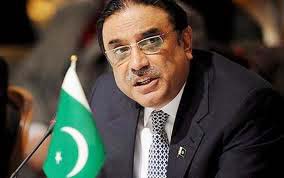
3 months on, Ajmer dargah awaits Zardari's promised donation

July 15, 2012

zardari

Jaipur, July 15: Three months after Pakistan President Asif Ali Zardari announced USD one million donation for Ajmer dargah during his visit to the country, the shrine authorities are still waiting for the release of the money.

Zardari visited the holy shrine of Khawaja Moinuddin Chisti in Ajmer on April 8 and a member of his delegation had on his behalf announced the donation for the welfare of the dargah.

"The donation has not been delivered so far," Syed Wahid Hussain Chisti, Secretary of Anjuman Committee, a representative body of Khadims (priests), told PTI. "Officials from the High Commission of Pakistan came to us after Zardari's visit and discussed with us our developmental plans.

"On their invitation, I went to the Pak High Commission last month where they again discussed the development plans," he said.

"I apprised them that we use the donation for welfare activities but did not submit specific plan for Zardari's donation because we did not go to Zardari to seek the donation," he said.

"We are not asking for the donation but when Zardari has made a promise, he should keep it," he said.

Along with the Khadim's body, the dargah committee has also staked claim on the donation for the development of the dargah, sources said. Pakistan High Commission sources said in Delhi that there has been a delay in release of money beacuse "we were waiting for the dargah committee to submit the plans on how they plan to use the money".

"The entire thing is on. A soon as we get the plans on how they plan to utilise the money, we will will release it," they said.

Comments

Add new comment

  • Coastaldigest.com reserves the right to delete or block any comments.
  • Coastaldigset.com is not responsible for its readers’ comments.
  • Comments that are abusive, incendiary or irrelevant are strictly prohibited.
  • Please use a genuine email ID and provide your name to avoid reject.
News Network
June 18,2020

New Delhi, Jun 18: Prime Minister Narendra Modi on Thursday launched the auction process for 41 coal blocks for commercial mining, a move that opens India’s coal sector for private players, and termed it a major step in the direction of India achieving self-reliance.

Launching the auction of mines for commercial mining, that is expected to garner ₹33,000 crore of capital investment in the country over next five to seven years, the Prime Minister said India will win the coronavirus war and turn this crisis into an opportunity, and the pandemic will make India self-reliant.

The launch of the auction process not only marks the beginning of unlocking of the country’s coal sector from the lockdown of decades , but aims at making India the largest exporter of coal, the Prime Minister said.

Presently, despite being the world’s fourth largest producer, he said India is the second largest importer of the dry-fuel.

“Allowing private sector in commercial coal mining is unlocking resources of a nation with the world’s fourth-largest reserves,” he pointed out.

Major scams had taken place in coal action earlier, but the system has been made “transparent” now, the Prime Minister said lambasting past policies of keeping the sector closed.

Mr. Modi said that this auction process will result in major revenues to states and create employment besides developing the far-flung areas.

The commencement of auction process of these blocks, part of the series of announcements made under ‘Atmanirbhar Bharat Abhiyan’, is likely to contribute ₹20,000 crore revenues annually to the state governments.

In line with the Prime Minister’s self-reliance call, the aim behind the auction process is to achieve self-sufficiency in meeting energy needs and boosting industrial development.

The government has taken an important decision to open up coal and mining sector to competition, capital and technology, he said.

Coal and Mines Minister Pralhad Joshi, who was also be present during the launch event, said ₹50,000 crore is being invested in the sector to jack up India’s coal output to 1 billion tonne.

With a view to achieve self-reliance in the coal sector, the Ministry of Coal in association with FICCI launched the process of auction of 41 coal mines under the provisions of Coal Mines (Special Provisions) Act and Mines and Minerals (Development and Regulation) Act.

Upon attainment of peak rated capacity of production of 225 million tonnes (MT), the government said, these mines will contribute about 15% of the country’s projected total coal production in 2025-26.

It will also lead to employment generation for more than 2.8 lakh people — direct employment to approximately 70,000 people and indirect employment to approximately 2,10,000 people, as per the government.

Comments

Add new comment

  • Coastaldigest.com reserves the right to delete or block any comments.
  • Coastaldigset.com is not responsible for its readers’ comments.
  • Comments that are abusive, incendiary or irrelevant are strictly prohibited.
  • Please use a genuine email ID and provide your name to avoid reject.
News Network
March 7,2020

Thiruvananthapuram, Mar 7: Kerala Chief Minister Pinarayi Vijayan on Saturday came down heavily on the BJP-led government at the Centre for imposing a ban on two Malayalam channels in connection with the Delhi violence reporting, saying an "undeclared emergency" was prevailing in the country.

Terming the ban as a "dangerous trend", the left leader said it was an indication of the coming dangers. "The Centre has made an infringement into the freedom of the press, crossing all limits. There is a threat that if anybody criticises RSS and Sangh Parivar, they will be taught a lesson," he said here in a statement.

The channels- Asianet News and MediaOne were suspended for 48 hours over their coverage of last month's riots in Delhi, with the official orders saying they covered events on February 25 in a manner that "highlighted the attack on places of worship and siding towards a particular community".

However, the ban was lifted on Saturday morning. Urging everyone to adopt a "democratic vigil" against such trends, the Chief Minister said the tactics of the Centre was to bring everyone under its control by instilling fear.

It was seen that such an approach had repeatedly been made on Parliament, constitutional bodies and judiciary in recent times, he said. Claiming that one of the reasons for the ban was criticism of RSS and the Delhi police by the channels, he said no one is beyond that. "How can it be illegal to criticise RSS? The Constitution guarantees the right of any citizen to express his opinion fearlessly," he said.

People have the right to know what is happening in the country and the media has the right and responsibility to report it, Vijayan said adding that the fourth estate should be allowed to act "freely and equitably". The ban on Asianet News was lifted at 1.30 am, while the ban on Media One was lifted at 9.30 am on Saturday, a source at the Ministry of Information and Broadcasting told PTI.

Sources said the two channels had written to the ministry seeking revocation of the bans, following which it was lifted. "Channel's reporting on Delhi violence seems to be biased as it is deliberately focusing on the vandalism of CAA supporters," the ministry order on Media One had said.

"It also questions RSS and alleges Delhi Police inaction. Channel seems to be critical towards Delhi Police and RSS." The ministry had ordered prohibition of transmission or re-transmission of Media One and Asianet News for 48 hours on any platform throughout India with effect from 7.30 pm on Friday to 7.30 pm on Sunday. The Congress and the CPI had flayed the government over the suspension of Media One and Asianet News, calling the clampdown as "stifling of media freedom".

Former chief minister Oommen Chandy said the ban on the two malayalam channels was an "affront" on the democratic rights of the media. The fourth estate is the pillar of democracy and attempts to suppress the media by the government is "extremely worrying", he said in a facebook post.

"I join all democratic minded citizens in strongly condemning such attempts to muzzle the media by the government," he said. Meanwhile, Press Club, Kerala Union of Working Jouranlists (KUWJ) and Kerala Newspaper Employees Federation (KNEF) took out a march to the General Post Office here against the Centre's action on the two channels.

Media personnel holding placards and raising slogans participated in the march against the centre's decision. Similar protests were held in various parts of the state.

Comments

Indian
 - 
Saturday, 7 Mar 2020

All these are happening in our nation only because of EVM tamper. Unless Ballot voting criminals will spoil our nations unity and image.


Jai Hind


Add new comment

  • Coastaldigest.com reserves the right to delete or block any comments.
  • Coastaldigset.com is not responsible for its readers’ comments.
  • Comments that are abusive, incendiary or irrelevant are strictly prohibited.
  • Please use a genuine email ID and provide your name to avoid reject.
Agencies
January 9,2020

The World Bank says that a lack of credit and drop in private consumption have led to a gloomy growth outlook for India with a steep cut in growth rate for the current fiscal year and only a modest gain projected for the next year.

India's growth rate is forecast to be only 5 per cent for the current fiscal year, weighed down by a growth of only 4.5 per cent in the July-September quarter, according to the 2020 Global Economic Prospects report released on Wednesday.

"In India, [economic] activity was constrained by insufficient credit availability, as well as by subdued private consumption," the Bank said.

The growth rate is forecast by the Bank to pick up to 5.8 per cent in the next fiscal year and to 6.1 per cent in 2021-22.

India's growth rate was 6.8 per cent in 2018-19.

The 5 per cent growth rate projection for the current financial year is a sharp cut of 2.5 per cent from the 7.5 per cent forecast made by the Bank in January last year, toppling it from the rank of the world's fastest growing economy.

India's performance follows a global trend of lowered growth weighed down by developed economies.

The report estimated world economic growth rate to be only 2.4 per cent last year and forecast it to edge up 0.1 per cent to 2.5 per cent in the current year.

Even with the lower growth rate of 5 per cent in the current fiscal year and 5.8 per cent forecast for the next, India holds the second rank among large economies, behind only China with an estimated growth rate of 6.1 per cent for 2019 and 5.9 per cent this year.

The report blamed "weak confidence, liquidity issues in the financial sector" and "weakness in credit from non-bank financial companies" for India's slowdown.

The Bank predicated India's recovery to 5.8 per cent in the coming financial year for India but "on the monetary policy stance remaining accommodative" and the assumption that "the stimulative fiscal and structural measures already taken will begin to pay off."

It also warned that sharper-than-expected slowdown in major external markets such as United States and Europe, would affect South Asia through trade, financial, and confidence channels, especially for countries with strong trade links to these economies."

The Bank said that the growth of advanced economies was 1.6 per cent last year and "is anticipated to slip to 1.4 per cent in 2020 in part due to continued softness in manufacturing."

In contrast the growth of emerging market and developing countries is expected to accelerate from 3.5 per cent last year to 4.1 per cent this year, the report said.

In South Asia, Bangladesh is estimated to have the highest growth rate of 7.2 per cent in the current fiscal year, although down from 8.1 per cent last fiscal year.

But its higher regional growth rates are coming off a lower base with a per capital gross domestic product of $1,698 compared to $2,010 for India.

Bangladesh is expected to grow by 7.3 per cent in the next financial year.

Pakistan's growth rate is estimated at only 2.4 per cent in the current fiscal year and is projected to rise to 3 per cent in the next, according to the Bank.

The Bank blamed monetary tightening in Pakistan for a sharp deceleration in fixed investment and a considerable softening in private consumption for the fall in growth rate from 3.3 per cent in the 2018-19 fiscal year.

Sri Lanka's growth rate was estimated to be 2.7 per cent last year and forecast to grow to 3.3 per cent this year.

Nepal grew by an estimated 6.4 per cent in the current fiscal year and will rise to 6.5 per cent in the next.


Comments

Add new comment

  • Coastaldigest.com reserves the right to delete or block any comments.
  • Coastaldigset.com is not responsible for its readers’ comments.
  • Comments that are abusive, incendiary or irrelevant are strictly prohibited.
  • Please use a genuine email ID and provide your name to avoid reject.