


India plans action over fisherman killing by US warship

July 17, 2012

uae

New Delhi, July 17: India Tuesday said it will initiate appropriate action in the killing of its fisherman by personnel on board a US naval vessel off Dubai Monday evening even as Washington conveyed its condolences over the death and ordered a probe.

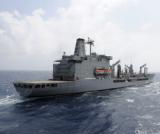
India is ascertaining facts into the shooting by personnel onboard USNS Rappahannock, a fuel re-supply ship, on a small motor vessel with the Indians near Jebel Ali port, an external affairs ministry spokesperson said here.

The incident also left three other Indians injured.

"We will stay in regular touch with US and UAE authorities to ascertain full facts and take appropriate further action in the matter," the spokesperson said.

"We are deeply saddened by the loss of life of the Indian fisherman and the injuries sustained by the others. Our thoughts are with their families," the spokesperson said.

Meanwhile, US ambassador to India Nancy Powell telephoned Foreign Secretary Ranjan Mathai Tuesday morning to convey her "regret" for the loss of life and assured that the US government would conduct full investigation into the shooting.

In a statement, the US embassy in New Delhi conveyed its "condolences to the families of the crew of the small motor vessel which came under fire from the USNS Rappahannock on July 16 after the vessel disregarded non lethal warnings and rapidly approached the US ship.

It also said that the incident is being probed.

The Indian embassy in Washington has been in touch with the US government since Monday, the spokesperson said.

The Indian embassy in Abu Dhabi too is working with local authorities to carry out "full investigation" into the circumstances leading to this "unfortunate and tragic" incident, he said.

India has also asked its acting consul general in Jebel Ali to provide all necessary assistance.

The US ship opened fire Monday evening on a fishing boat as the latter "ignored the warnings and came too close", Xinhua quoted sources as saying.

External affairs ministry spokesperson Syed Akbaruddin tweeted that the Indian embassy in the US is in touch with US agencies "regarding the incident in Gulf and is assured of full investigation into tragic incident".

He also tweeted that India's Acting Consul General in Dubai has rushed to Jebel Ali port "to provide necessary assistance to Indian nationals involved in Gulf incident" and that India's ambassador in Abu Dhabi has requested the UAE authorities to probe the incident.

Meanwhile, the United Arab Emirates (UAE) is also probing the incident. Tariq Ahmed Al Haidan, the assistant to the UAE foreign minister for political affairs, said: "The concerned UAE authorities are investigating the shooting incident."

India is already prosecuting two Italian marines in a Kochi court for killing two Indian fishermen off Kerala coast in the Arabian Sea in February.

Comments

Add new comment

  • Coastaldigest.com reserves the right to delete or block any comments.
  • Coastaldigset.com is not responsible for its readers’ comments.
  • Comments that are abusive, incendiary or irrelevant are strictly prohibited.
  • Please use a genuine email ID and provide your name to avoid reject.
Agencies
May 4,2020

Mumbai, May 4: Days after Facebook, private equity firm Silver Lake said it will invest 56.56 billion rupees ($746.74 million) in Reliance Industries's digital arm, giving it a valuation of 4.90 trillion rupees. Silver Lake on Monday agreed to pay Rs 5,655.75 crore to buy 1.15 per cent stake in the firm that houses billionaire Mukesh Ambani's telecom arm Jio.

The investment in Jio Platforms comes within days of Facebook investing USD 5.7 billion to buy a 9.99 per cent stake in Jio Platforms. The investment is at a premium of 12.5 per cent to the Facebook deal.

"This investment values Jio Platforms at an equity value of Rs 4.90 lakh crore and an enterprise value of Rs 5.15 lakh crore and represents a 12.5 per cent premium to the equity valuation of the Facebook investment announced on April 22, 2020," Reliance said in a statement.

Comments

Add new comment

  • Coastaldigest.com reserves the right to delete or block any comments.
  • Coastaldigset.com is not responsible for its readers’ comments.
  • Comments that are abusive, incendiary or irrelevant are strictly prohibited.
  • Please use a genuine email ID and provide your name to avoid reject.
Agencies
July 30,2020

Kochi, Jul 30: The Kerala High Court on Thursday refused to grant the extension for the stay of a 74-year-old US citizen, Johnny Paul Pierce, who had earlier said that he felt safer to remain in India than in the United States amid the COVID-19 pandemic.

The single-judge bench of Justice CS Dias, which considered the writ petition, observed that the grant or extension of visa to foreign nationals fall exclusively within the domain of the Government of India (GoI) and that judicial review in such matters is minimal.

The power of the GoI to expel foreigners is absolute and unlimited, the bench said.

"In view of the categoric declaration of law by the Supreme Court, the plea of the petitioner to permit him to stay back in India cannot be accepted, as it falls within the purview of the guidelines and the discretion of the Government of India," the order said.

"The petitioner cannot be heard that the guidelines/policies/regulations formulated by the Government of India, that an American national though has been granted a visa having validity of five years has to leave India within 180 days, is irrational or unreasonable," it added.

The High Court, which was hearing a plea to permit the US citizen to stay in India for a further period of six months, said that the petitioner does not have a case that there is an infraction of Article 21 of the Constitution of India.

"The petitioner was well aware of the visa conditions when he arrived in India, and it is too late in the day for him to raise a grievance on the visa conditions," the bench said noting that the petitioner's love for India was heartening.

The High Court also directed the Foreigners Registration Officer to consider the petitioner's representation within a period of two weeks in accordance with the applicable guidelines and policies.

Comments

Add new comment

  • Coastaldigest.com reserves the right to delete or block any comments.
  • Coastaldigset.com is not responsible for its readers’ comments.
  • Comments that are abusive, incendiary or irrelevant are strictly prohibited.
  • Please use a genuine email ID and provide your name to avoid reject.
coastaldigest.com web desk
June 16,2020

New Delhi, Jun 16: Despite Prime Minister Narendra Modi led government’s attempt to downplay the border dispute with China, matters have heated up unprecedentedly along the Line of Actual Control (LAC)- the effective Sino-India border in Eastern Ladakh. 

The country has lost three precious lives – an army officer and two soldiers. The last time blood was spilled on the LAC, before the latest episode, was 45 years ago when the Chinese ambushed an Assam Rifles patrol in Tulung La.

India had lost four soldiers on October 20, 1975 in Tulung La, the last time bullets were fired on the India-China border though both the countries witnessed bitter stand-offs later at Sumdorong Chu valley in 1987, Depsang in 2013, Chumar in 2014 and Doklam in 2017.

Between 1962 and 1975, the biggest clash between India and China took place in Nathu La pass in 1967 when reports suggest that around 80 Indian soldiers were killed and many more Chinese personnel.

While three soldiers, including a Commanding Officer, were killed in the latest episode in Galwan Valley, the government describes it as a "violent clash" and does not mention opening fire.

New Delhi described the locality where the 1975 incident took place as "well within" its territory only to be rebuffed by Beijing as "sheer reversal of black and white and confusion of right and wrong".

The Ministry of External Affairs had then said that the Chinese had crossed the LAC and ambushed the soldiers while Beijing claimed the Indians entered their territory and did not return despite warnings.

The Indian government maintained that the ambush on the Assam Rifles' patrol in 1975 took place "500 metres south of Tulung" on the border between India and Tibet and "therefore in Indian territory". It said Chinese soldiers "penetrating" Indian territory implied a "change in China's position" on the border question but the Chinese denied this and blamed India for the incident.

The US diplomatic cables quoted an Indian military intelligence officer saying that the Chinese had erected stone walls on the Indian side of Tulung La and from these positions fired several hundred rounds at the Indian patrol.

"Four of the Indians had gone into a leading position while two (the ones who escaped) remained behind. The senior military intelligence officer emphasised that the soldiers on the Indian patrol were from the area and had patrolled that same region many times before," the cable said.

One of the US cables showed that former US Secretary of State and National Security Adviser Henry Kissinger sought details of the October 1975 clash "without approaching the host governments on actual location of October 20 incident". He also wanted to know what ground rules were followed regarding the proximity of LAC by border patrols.

A cable sent from the US mission in India on November 4, 1975 appeared to have doubts about the Chinese account saying it was "highly defensive".

"Given the unsettled situation on the sub-continent, particularly in Bangladesh, both Chinese and Indian authorities have authorised stepped up patrols along the disputed border. The clash may well have ensued when two such patrols unexpectedly encountered each other," it said.

Another cable from China on the same day quoted another October 1974 cable, which spoke about Chinese officials being concerned for long that "some hotheaded person on the PRC (People's Republic of China) might provoke an incident that could lead to renewed Sino-Indian hostilities. It went on to say that this clash suggested that "such concerns and apprehensions are not unwarranted".

According to the United States diplomatic cables, Chinese Foreign Ministry on November 3, 1975 disputed the statement of the MEA spokesperson, who said the incident took place inside Indian territory.

The Chinese had said "sheer reversal of black and white and confusion of right and wrong". In its version of the 1975 incident, they said Indian troops crossed the LAC at 1:30 PM at Tulung Pass on the Eastern Sector and "intruded" into their territory when personnel at the Civilian Checkpost at Chuna in Tibet warned them to withdraw.

Ignoring this, they claimed, Indian soldiers made "continual provocation and even opened fire at the Chinese civilian checkpost personnel, posing a grave threat to the life of the latter. The Chinese civilian checkpost personnel were obliged to fire back in self defence."

The Chinese Foreign Ministry spokesperson had also said they told the Indian side that they could collect the bodies "anytime" and on October 28, collected the bodies, weapons and ammunition and "signed a receipt".

The US cables from the then USSR suggested that the official media carried reports from Delhi on the October 1975 incident and they cited only Indian accounts of the incident "ridiculing alleged Chinese claims that the Indians crossed the line and opened fire first".

Comments

Add new comment

  • Coastaldigest.com reserves the right to delete or block any comments.
  • Coastaldigset.com is not responsible for its readers’ comments.
  • Comments that are abusive, incendiary or irrelevant are strictly prohibited.
  • Please use a genuine email ID and provide your name to avoid reject.