


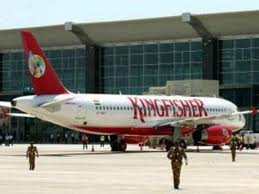
'Missing' DGCA note said safety a worry in Kingfisher Airlines

July 21, 2012

kingf

New Delhi, July 21: Bharat Bhushan's purported note on Kingfisher filed on July 9 — a day before he was summarily removed as director general of civil aviation — could have meant serious trouble for the beleaguered airline.

Accessed by TOI on Friday, the note reads: "The (airline's) financial condition continues to be precarious... In the course of its audit several engineering issues are emerging which have a direct bearing on safety... it is concluded that safety is likely to be compromised if the airline continues in its current functioning style."

The aviation ministry and the new director general, Prashant Sukul, vehemently deny that any such note exists, though Bhushan attached a copy of this purported note in his letter to the ministry and the Directorate General of Civil Aviation (DGCA) seeking a probe if the paper had indeed gone missing.

Indicating that action against the airline was being considered, the disputed note goes on to add, "a notice may be served on the airline... asking them to immediately arrange for payment of its employees and creditors... we may be constrained to suspend their operations if funds are not made available and liabilities reduced significantly within 15 days of the receipt of this notice."

DGCA: No records exist of Bhushan's Kingfisher note

Former DGCA Bharat Bhushan did not comment when asked to confirm the contents of the controversial note he had written on Kingfisher Airline's poor financial condition.

Late Friday night, new director general Prashant Sukul submitted a report to aviation secretary Nasim Zaidi after a search operation in the DGCA for the allegedly missing papers from the Kingfisher file.

"Bhushan's allegation seems to be an afterthought and no evidence has been found of the note ever having existed," a highly placed source who was privy to Sukul's report said.

"All sections of the DGCA were asked to conduct a search that did not yield anything. The report has concluded that there is no such paper and if there is one, it may only be in possession of the former DG as no records exist here."

With Sukul throwing his hands up, the ministry is set to ask Bhushan to hand over a copy of the file that he alleges has gone missing.

"A printout of a note - that could have been filed anytime - will not do. If there is an official file on which such noting was made, then the same should be given either in original or a photocopy.

An unsigned printout being shown as the note has no meaning as it could have been written anytime, anywhere, said the source. Questions on the alleged Kingfisher note arose as the timing of Bhushan's exit triggered suspicions.

The ministry maintains that Bhushan was removed in a hurry as the PM-headed appointments committee of the cabinet had given him extension till December while the ministry had sought senior IAS officer Arun Mishra to be made full-time director-general.

"The Cabinet secretariat goofed up big time. This entire issue has arisen because of their mishandling," said a source.

The ministry has steadfastly denied any link between Bhushan's removal and its stand on Kingfisher Airlines. Sources said aviation minister Ajit Singh had told Vijay Mallya clearly to shut Kingfisher if he couldn't raise funds to run the airline.

Excerpts from Bhushan's purported note

"We have been closely monitoring the operations of M/s. Kingfisher Airlines from November, 2011 onwards. During the period there has been significant reduction in fleet numbers as well as number of operational aircraft... Pilot strength has reduced to less than 50%... The financial condition continues to be precarious.. They (airline management) have promised a recovery plan every time they met us, but this has not happened even after passage of several months... In the course of its audit several engineering issues are emerging which have a direct bearing on safety... Under the circumstances, it is concluded that safety is likely to be compromised if the airline continues in its current functioning style. A notice may be served on the airline indicating the background and asking them to immediately arrange for payment of its employees and creditors, if not in full at least to a substantial part. It may be indicated that we may be constrained to suspend their operations if funds are not made available and liabilities reduced significantly within 15 days of the receipt of this notice."


Comments

Add new comment

  • Coastaldigest.com reserves the right to delete or block any comments.
  • Coastaldigset.com is not responsible for its readers’ comments.
  • Comments that are abusive, incendiary or irrelevant are strictly prohibited.
  • Please use a genuine email ID and provide your name to avoid reject.
News Network
January 13,2020

Jan 13: For the first time in years, the government of India’s Prime Minister Narendra Modi is playing defense. Protests have sprung up across the country against an amendment to India’s laws — which came into effect on Friday — that makes it easier for members of some religions to become citizens of India. The government claims this is simply an attempt to protect religious minorities in the Muslim-majority countries that border India; but protesters see it as the first step toward a formal repudiation of India’s constitutionally guaranteed secularism — and one that must be resisted.

Modi was re-elected prime minister last year with an enhanced majority; his hold over the country’s politics is absolute. The formal opposition is weak, discredited and disorganized. Yet, somehow, the anti-Citizenship Act protests have taken hold. No political party is behind them; they are generally arranged by student unions, neighborhood associations and the like.

Yet this aspect of their character is precisely what will worry Modi and his right-hand man, Home Minister Amit Shah. They know how to mock and delegitimize opposition parties with ruthless efficiency. Yet creating a narrative that paints large, flag-waving crowds as traitors is not quite that easy.

For that is how these protests look: large groups of young people, many carrying witty signs and the national flag. They meet and read the preamble to India’s Constitution, into which the promise of secularism was written in the 1970’s.

They carry photographs of the Constitution’s drafter, the Columbia University-trained economist and lawyer B. R. Ambedkar. These are not the mobs the government wanted. They hoped for angry Muslims rampaging through the streets of India’s cities, whom they could point to and say: “See? We must protect you from them.” But, in spite of sometimes brutal repression, the protests have largely been nonviolent.

One, in Shaheen Bagh in a Muslim-dominated sector of New Delhi, began simply as a set of local women in a square, armed with hot tea and blankets against the chill Delhi winter. It has now become the focal point of a very different sort of resistance than what the government expected. Nothing could cure the delusions of India’s Hindu middle class, trained to see India’s Muslims as dangerous threats, as effectively as a group of otherwise clearly apolitical women sipping sweet tea and sharing their fears and food with anyone who will listen.

Modi was re-elected less than a year ago; what could have changed in India since then? Not much, I suspect, in most places that voted for him and his party — particularly the vast rural hinterland of northern India. But urban India was also possibly never quite as content as electoral results suggested. India’s growth dipped below 5% in recent quarters; demand has crashed, and uncertainty about the future is widespread. Worse, the government’s response to the protests was clearly ill-judged. University campuses were attacked, in one case by the police and later by masked men almost certainly connected to the ruling party.

Protesters were harassed and detained with little cause. The courts seemed uninterested. And, slowly, anger began to grow on social media — not just on Twitter, but also on Instagram, previously the preserve of pretty bowls of salad. Instagram is the one social medium over which Modi’s party does not have a stranglehold; and it is where these protests, with their photogenic signs and flags, have found a natural home. As a result, people across urban India who would never previously have gone to a demonstration or a political rally have been slowly politicized.

India is, in fact, becoming more like a normal democracy. “Normal,” that is, for the 2020’s. Liberal democracies across the world are politically divided, often between more liberal urban centers and coasts, and angrier, “left-behind” hinterlands. Modi’s political secret was that he was that rare populist who could unite both the hopeful cities and the resentful countryside. Yet this once magic formula seems to have become ineffective. Five of India’s six largest cities are not ruled by Modi’s Bharatiya Janata Party in any case — the financial hub of Mumbai changed hands recently. The BJP has set its sights on winning state elections in Delhi in a few weeks. Which way the capital’s voters will go is uncertain. But that itself is revealing — last year, Modi swept all seven parliamentary seats in Delhi.

In the end, the Citizenship Amendment Act is now law, the BJP might manage to win Delhi, and the protests might die down as the days get unmanageably hot and state repression increases. But urban India has put Modi on notice. His days of being India’s unifier are over: From now on, like all the other populists, he will have to keep one eye on the streets of his country’s cities.

Comments

Add new comment

  • Coastaldigest.com reserves the right to delete or block any comments.
  • Coastaldigset.com is not responsible for its readers’ comments.
  • Comments that are abusive, incendiary or irrelevant are strictly prohibited.
  • Please use a genuine email ID and provide your name to avoid reject.
News Network
March 7,2020

Srinagar, Mar 7: Two more accused, including a man who allegedly bought chemicals online for making improvised explosive device (IED) to be used in an attack on a convoy of the Central Reserve Police Force (CRPF) in Jammu and Kashmir's Pulwama last year, were arrested by the National Investigation Agency (NIA) on Friday, an official said.

The terror attack left 40 CRPF personnel dead in south Kashmir's Pulwama last year.

Waiz-ul-Islam, 19, from Srinagar and Mohammad Abbass Rather, 32, from Pulwama were arrested by the NIA, taking the number of those arrested in the case in the past week to five.

"During initial interrogation, Islam disclosed that he used his Amazon online shopping account to procure chemicals for making IEDs, batteries and other accessories on the directions of Pakistani Jaish-e-Mohammed (JeM) terrorists," the official said.

He said Islam personally delivered the items to the JeM terrorists after buying them online as a part of the conspiracy to carry out the attack.

"Rather is an old overground worker of the JeM. He has disclosed that he gave shelter at his home to Jaish terrorist and IED expert Mohd Umar after he came to Kashmir in April-May 2018," the official said.

Rather also sheltered other JeM terrorists - suicide bomber Adil Ahmad Dar, Sameer Ahmed Dar and Kamran, a Pakistani -- at his house before the Pulwama attack, the official said.

"He also facilitated safe shelter for the JeM terrorists, including Adil, at the house of accused Tariq Ahmed Shah and his daughter Insha Jan of Hakripora, who were arrested on March 3," the official said.

He said Islam and Rather will be produced before the NIA special court in Jammu on Saturday, while further investigation in the case continues. The NIA took over the case to probe the conspiracy behind the February 14, 2019, attack in Pulwama.

The last video of Adil, which was released by the JeM from Pakistan after the terror attack, was filmed at the home of Tariq Ahmed Shah. On February 28, the NIA achieved a major breakthrough in the case when it arrested 22-year-old Shakir Bashir Magrey, a furniture shop owner and resident of Pulwama.

Magrey had given shelter and other logistical assistance to suicide bomber Adil. He was introduced to Adil in mid-2018 by Pakistani terrorist Mohammad Umar Farooq and he became a full-time OGW of the JeM.

The explosives used in the attack were determined through forensic probe to be ammonium nitrate, nitro-glycerin and RDX. During investigation into the attack, the identity of the suicide bomber to be Adil Ahmad Dar was confirmed through DNA matching with that of his father.

The other key terrorists involved in the attack have been found to be JeM's south Kashmir divisional head Muddasir Ahmad Khan, killed in an operation by the security forces on March 11 last year; Pakistani terrorists Muhammad Umar Farooq and IED expert Kamran, both killed on March 29 last year; the owner of the car Sajjad Ahmad Bhat, a resident of Anantnag who was killed on June 16 last year, and Qari Yassir, JeM's commander for Kashmir who was killed on January 25 this year.

Comments

Add new comment

  • Coastaldigest.com reserves the right to delete or block any comments.
  • Coastaldigset.com is not responsible for its readers’ comments.
  • Comments that are abusive, incendiary or irrelevant are strictly prohibited.
  • Please use a genuine email ID and provide your name to avoid reject.
News Network
March 29,2020

New Delhi, Mar 29: The total number of COVID-19 positive cases rose to 1024 in the country, said Ministry of Health and Family Welfare on Sunday.

"The total number of COVID-19 positive cases rise to 1024 in India including 901 active cases, 96 cured/discharged/migrated people and 27 deaths," Ministry of Health and Family Welfare said.
Prime Minister Narendra Modi had on Tuesday announced a 21-day lockdown to stem the spread of COVID-19, which has left thousands dead around the world.

Comments

Add new comment

  • Coastaldigest.com reserves the right to delete or block any comments.
  • Coastaldigset.com is not responsible for its readers’ comments.
  • Comments that are abusive, incendiary or irrelevant are strictly prohibited.
  • Please use a genuine email ID and provide your name to avoid reject.