NCP denies pressure tactics, to stay with UPA

July 21, 2012

NCP

Mumbai, July 21: The Nationalist Congress Party (NCP), which pulled out of the UPA government in protest against the way the party was treated by the Congress, on Saturday said it will remain an ally of the ruling coalition.

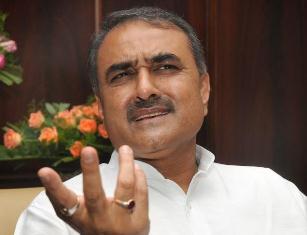
Talking to reporters at the Mumbai airport after his arrival from Delhi with NCP supremo Sharad Pawar, Praful Patel said, “NCP is part of the UPA and will remain so.”

NCP, a stable ally of Congress for the last eight years, created a crisis of sorts for the government when Mr. Pawar, Minister for Agriculture, sent a one line communication to the Prime Minister expressing his decision to quit along with Mr. Patel, Minister for Heavy Industry.

Mr. Patel dismissed suggestions that the NCP was resorting to pressure tactics.

“We have already spoken to UPA chairperson Sonia Gandhi and no top leader of the Congress has said we are pressurising the UPA,” he said.

“If any leader in the Congress says this is pressure tactics, it’s not right,” he said.

Mr. Pawar did not speak to the media.

State NCP chief Madhukar Pichad and other senior party ministers are expected to call on Mr. Pawar at his residence later in the day, where he will apprise them of the developments in Delhi and discuss the political situation in the state, NCP sources said.

Mr. Pawar had informed Ms. Gandhi that NCP, which has nine members in the Lok Sabha and seven in the Rajya Sabha, will stay part of UPA.

During his discussion with both the Prime Minister and the UPA chairperson, Mr. Pawar had raised issues of lack of coordination and consultation by Congress with allies and governance issues like excess food subsidy at the cost of funding for water projects.


Comments

Add new comment

  • Coastaldigest.com reserves the right to delete or block any comments.
  • Coastaldigset.com is not responsible for its readers’ comments.
  • Comments that are abusive, incendiary or irrelevant are strictly prohibited.
  • Please use a genuine email ID and provide your name to avoid reject.
Agencies
January 11,2020

Those owning a single house in joint names would continue to file their income tax returns (ITRs) in much simpler ITR-1 (Sahaj) and ITR-4 forms (Sugam) for assessment year 2020-21 with the government issuing a clarification in this regard.

The clarification has come days after the government modified the eligibility for filing the returns in ITR-1 and ITR-4, stating that those owning a property jointly, spending Rs 2 lakh on foreign travel and paying electricity bill of Rs 1 lakh in a year would not be able to file returns in the simpler forms.

They would have to file their returns with much more detailed information in other specified forms.

Following the changes in the eligibility for filing returns in the two forms, concerns were raised over it with taxpayers claiming that it will cause huge hardship for them.

"The matter has been examined and it has been decided to allow a person, who jointly owns a single house property, to file his/her return of income in ITR-1 or ITR-4 Form, as may be applicable, if he/she meets the other conditions," a Finance Ministry statement said.

"It has also been decided to allow a person, who is required to file return due to fulfilment of one or more conditions specified in the seventh proviso to section 139(1) of the Act, to file his/her return in ITR-1 Form," it added.

Tax practitioners welcomed the government’s move of going back to the previous position.

"This is a welcome clarification allowing middle class taxpayers owning a single house property to file simpler ITR forms, 1 and 4, and not the detailed ITR forms even if they own house property in joint names," said Shailesh Kumar, Director, Nangia Andersen Consulting.

It may be noted that taxpayers holding multiple house properties would have to file more detailed return forms.

In the major changes notified earlier this month by the Income-Tax department, individual taxpayers were disallowed to file return either in ITR-1 or ITR 4 if he or she was a joint-owner in house property.

In another change, those who deposited more than Rs 1 crore in bank account or spent Rs 2 lakh on foreign travel or paid Rs 1 lakh on electricity bill in a financial year were also barred from using the easy-to-fill return forms.

"By today's clarification, the government has maintained status quo. Now, the taxpayers can continue filing their returns in the same fashion in which they did last year," said Naveen Wadhwa, Deputy General Manager (DGM), Taxmann.

Comments

Add new comment

  • Coastaldigest.com reserves the right to delete or block any comments.
  • Coastaldigset.com is not responsible for its readers’ comments.
  • Comments that are abusive, incendiary or irrelevant are strictly prohibited.
  • Please use a genuine email ID and provide your name to avoid reject.
News Network
August 8,2020

The Kozhikode International Airport located at Karipur is not safe for the landing of flights in rainy season, according to an air-safety expert, who had warned the aviation ministry and the civil aviation regulator about this in 2011. 

The warning was particularly about the dangers of permitting passenger aircraft to land on runway 10 of the airport during rains and unfavourable wind conditions. 

Nine years later, on August 7, 2020, the warning became a reality when an Air India Express pilots landed in tailwind conditions and the aircraft overshot the tabletop runway to drop off the end and crash.

 “An aircraft landing on runway 10 in tailwind will experience poor braking action due to heavy rubber deposits … All such flights … are endangering the lives of all on board,’’ said Capt Mohan Ranganathan, in a letter sent on June 17, 2011 to then director general of civil aviation Bharat Bhushan and Nasim Zaidi, chairman of a civil aviation safety advisory committee, which was formed after the May 2010 Mangaluru air crash which killed 158 people.

“My warning issued after the Mangaluru crash was ignored. It is a table-top runway with a down slope. The buffer zone at the end of the runway is inadequate,” Capt Ranganathan said. Given the topography, he pointed out, the airport should have a buffer of 240m at the end of the runway, but it only has 90m (which the DGCA had approved). “Moreover, the space on either side of the runway is only 75m instead of the mandatory 100m,” he added.

Capt Ranganathan said there is no guideline for operations on a table-top runway when it is raining. “Runway 10 approach should not be permitted in view of the lack of runway end safety area (RESA) and the terrain beyond the end of the runway. RESA of 240m should be immediately introduced and runway length has to be reduced to make the operations safe,” his letter said.

If an aircraft is unable to stop within the runway, there is no RESA beyond the end. The ILS localiser antenna is housed on a concrete structure and the area beyond is a steep slope. “The Air India Express accident in Mangalore should have alerted AAI to make the runway conditions safe. We have brought up the issue of RESA during the initial Casac-sub group meetings. We had specifically mentioned that the declared distances for both runways have to be reduced in order to comply with ICAO Annex 14 requirement,” Capt Ranganathan said.

He said the condition of the runway strip was known to DGCA teams that have been conducting inspection and safety assessments. “Have they considered the danger involved? Did the DGCA or the airlines lay down any operational restrictions or special procedures?”

The letter also refers to Approach and Landing Accident Reduction (ALAR) training, which is supposed to be mandatory before every monsoon, but airlines don’t follow it, he said. “70% of accidents take place during approach and landing and that is why this training is essential,” he added.

stm88 info live rtp slot

slot auto scatter hitam

Comments

Add new comment

  • Coastaldigest.com reserves the right to delete or block any comments.
  • Coastaldigset.com is not responsible for its readers’ comments.
  • Comments that are abusive, incendiary or irrelevant are strictly prohibited.
  • Please use a genuine email ID and provide your name to avoid reject.
News Network
May 26,2020

New Delhi, May 26: With India now in the bracket of top 10 nations worst hit by the novel coronavirus, experts have attributed the surge in cases to easing of travel restrictions and movement of migrants besides enhanced testing capacity.

According to AIIMS Director, Randeep Guleria, the present rise in cases has been reported predominantly from hotspot areas but there is a possibility of further rise in the number of COVID-19 cases in the coming few days due to increased travel.

"Those who are asymptomatic or are in presymptomatic stage will pass through screening mechanisms and may reach areas where there have been minimal or less cases," Guleria said.

He said there was a need for more intense surveillance and monitoring in areas where migrants have returned to contain the spread of the disease.

If proper social distancing and hand hygiene is not maintained at a time when people are out on roads, the coronavirus infection will transmit much faster, he said.

Guleria also noted that testing capacity has been significantly ramped up which is reflecting in the increasing number of cases being detected.

Commenting on the partial resumption of rail and road transport services and migrants returning to their native places, Dr Chandrakant S Pandav, former president of the Indian Public Health Association and Indian Association of Preventive and social medicine, said the floodgates have been opened.

"This is a classic case of creating an enabling environment for coronavirus to spread like wildfire. In the coming few days, the number will rise dramatically. While it is true that lockdown cannot go on forever, the opening up should have been in a measured, calibrated and informed manner," he said.

"Travelling leads to spread of the infection. Now, the government will have to ensure even stronger surveillance to curb the infection but if that will be done is something to be observed," he said.

The death toll due to COVID-19 rose to 4,167 and the number of cases climbed to 1, 45,380 in the country, registering an increase of 146 deaths and 6,535 cases since Monday 8 am, according to the Union Health Ministry.

Dr K K Aggarwal, President of the Confederation of Medical Association of Asia and Oceania (CMAAO), and former IMA President, said there will be a further surge in cases in the coming days if migration continues without any proper social distancing.

"Within the next ten days, the cases will cross two lakh. The very fact that number of cases was rising before the end of the third lockdown and continuing during the fourth lockdown means that people are not following physical distancing as required," he said.

"Even in the last week of May when the temperature is very high, the rising number of cases would mean that human-to-human transmission is more important than surface-to-human transmission. Normally in heat the surface-to-human transmission should have reduced the new cases by half which has not happened," Aggarwal said.

However, Professor K Srinath Reddy, president of the Public Health Foundation of India, said an increase in the number of cases reflects both an increase in testing rates and an increase in spread.

"What we need to see is the number of new tests performed per day and the number of new cases that were identified from them. That gives a better idea of the rate of spread than the total number of new cases alone.

"We also have to see if the testing criteria has remained the same between the two periods of comparison.We may open up gradually but will have to continue case detection, contact tracing and follow personal protection measures as vigorously as possible," he added.

A total of 31,26,119 samples have been tested as on May 26, 9 am and 92,528 samples have been tested in the last 24 hours, ICMR officials said.

India is the tenth most affected nation by the pandemic after the US, Russia, UK, Spain, Italy, Brazil, Germany, Turkey and France, as per the John Hopkins University data.

The country has recorded 6,088, 6,654, 6,767 and 6977 cases on May 22, 23, 24 and 25 respectively. Also, the number of RT-PCR tests for detection of COVID-19 in the country crossed the 30-lakh mark on Monday.

The first two phases of the lockdown led to 14-29 lakh COVID-19 cases being averted, while the number of lives saved in that period was between 37,000 and 78,000, the government said last Friday, citing various studies, and asserted that the unprecedented shutdown has paid "rich dividends" in the fight against the pandemic.


Comments

Add new comment

  • Coastaldigest.com reserves the right to delete or block any comments.
  • Coastaldigset.com is not responsible for its readers’ comments.
  • Comments that are abusive, incendiary or irrelevant are strictly prohibited.
  • Please use a genuine email ID and provide your name to avoid reject.