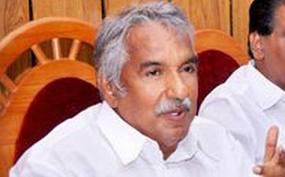
Right to Service becomes law in Kerala

July 25, 2012

right_to_service

Thiruvananthapuram, July 25: With the Kerala assembly on Wednesday passing the Right to Service Bill, 2012, Chief Minister Oommen Chandy has kept his promise of making available services to the people within a specified time.

Thirteen specified government services come under the ambit of the new law.

These are issue of certificates of birth and death; denomination of caste, income and domicile; electricity connection to households and commercial shops; domestic water connections and issue of ration cards.

The other services are receipts to complaints filed with the police; issue of a copy of the First Information Report; police intervention in grievous crimes; time-bound verification of passport and employment status; issue of copy of post-mortem report and releasing of vehicles under custody.

The law guarantees delivery of specified services within a stipulated time period and if this does not happen, a penalty will be imposed on the official concerned.

People can now avail these services at offices of concerned government departments, local self-government institutions besides public sector undertakings.

The assembly had taken up the Right to Service Bill for discussion on Tuesday. It was to be discussed on Wednesday too.

But with the opposition up in arms over another issue and the assembly facing chaos, Speaker G Karthikeyan quickly finished the listed business for the day.

The assembly session ended on Wednesday with Karthikeyan terming the session as a historic one.


Comments

Add new comment

  • Coastaldigest.com reserves the right to delete or block any comments.
  • Coastaldigset.com is not responsible for its readers’ comments.
  • Comments that are abusive, incendiary or irrelevant are strictly prohibited.
  • Please use a genuine email ID and provide your name to avoid reject.
News Network
February 19,2020

New Delhi, Feb 19: India will switch to the world's cleanest petrol and diesel from April 1 as it leapfrogs straight to Euro-VI emission compliant fuels from Euro-IV grades now - a feat achieved in just three years and not seen in any of the large economies around the globe.

India will join the select league of nations using petrol and diesel containing just 10 parts per million of sulphur as it looks to cut vehicular emissions that are said to be one of the reasons for the choking pollution in major cities.

Sanjiv Singh, Chairman of Indian Oil Corp (IOC) - the firm that controls roughly half of the country's fuel market, said almost all refineries began producing ultra-low sulphur BS-VI (equivalent to Euro-VI grade) petrol and diesel by the end of 2019 and oil companies have now undertaken the tedious task of replacing every drop of fuel in the country with the new one.

"We are absolutely on track for supplying BS-VI fuel from April 1. Almost all refineries have begun supplying BS-VI fuel and the same has reached storage depots across the country," he said.

From storage depots, the fuel has started travelling to petrol pumps and in the next few weeks all of them will only have BS-VI grade petrol and diesel, he said. "We are 100 per cent confident that fuel that will flow from nozzles at all the petrol pumps in the country on April 1 will be BS-VI emission compliant fuel."

India adopted Euro-III equivalent (or Bharat Stage-III) fuel with a sulphur content of 350 ppm in 2010 and then took seven years to move to BS-IV that had a sulphur content of 50 ppm. From BS-IV to BS-VI it took just three years.

"It was a conscious decision to leapfrog to BS-VI as first upgrading to BS-V and then shifting to BS-VI would have prolonged the journey to 4 to 6 years. Besides, oil refineries, as well as automobile manufacturers, would have had to make investments twice - first to producing BS-V grade fuel and engines and then BS-VI ones," he said.

State-owned oil refineries spent about Rs 35,000 crore to upgrade plants that could produce ultra-low sulphur fuel. This investment is on top of Rs 60,000 crore they spent on refinery upgrades in the previous switchovers.

BS-VI has a sulphur content of just 10 ppm and emission standards are as good as CNG.

Originally, Delhi and its adjoining towns were to have BS-VI fuel supplies by April 2019 and the rest of the country was to get same supplies from April 2020.

But oil marketing companies switched over to supply of BS-VI grade fuels in the national capital territory of Delhi on April 1, 2018.

The supply of BS-VI fuels was further extended to four contiguous districts of Rajasthan and eight of Uttar Pradesh in the National Capital Region (NCR) on April 1, 2019, together with the city of Agra.

BS-VI grade fuels were made available in 7 districts of Haryana from October 1, 2019.

Singh said the new fuel will result in a reduction in NOx in BS-VI compliant vehicles by 25 per cent in petrol cars and by 70 per cent in diesel cars.

The switchover, he said, is a tedious task as every drop of old, higher-sulphur content fuel has to be flushed out in depots, pipelines and tanks before being replaced by BS-VI.

"We are confident of disruption-free switchover to BS-VI supplies across the country," he said. "What we will be supplying is the best quality available anywhere in the world. You don't have any better fuel that is supplied in any part of the world. Perhaps our BS-VI fuel will be better than equivalent fuel in some parts of the US and Europe."

India adopted a fuel upgradation programme in the early 1990s. Low lead gasoline (petrol) was introduced in 1994 in Delhi, Mumbai, Kolkata and Chennai. On February 1, 2000, unleaded gasoline was mandated nationwide.

Similarly, BS-2000 (Euro-I equivalent, BS-1) vehicle emission norms were introduced for new vehicles from April 2000. BS-II (Euro-II equivalent) emission norms for new cars were introduced in Delhi from 2000 and extended to the other metro cities in 2001.

Benzene limits have been reduced progressively from 5 per cent in 2000 to 1 per cent nationwide. Lead content in gasoline was removed in phases and only unleaded gasoline is being produced and sold from February 1, 2000.

The octane number of gasoline signifies the improved performance of the engine. Loss in octane number due to phasing out of lead was made up by installing new facilities in the refinery and changes in refinery operation. RON (Research Octane Number) of gasoline for BS-2000 spec was increased to 88. This has over time been increased to 91.

Singh said sulphur reduction will reduce Particulate Matter (PM) emissions even in the in-use older generation diesel vehicles.


Comments

Add new comment

  • Coastaldigest.com reserves the right to delete or block any comments.
  • Coastaldigset.com is not responsible for its readers’ comments.
  • Comments that are abusive, incendiary or irrelevant are strictly prohibited.
  • Please use a genuine email ID and provide your name to avoid reject.
Agencies
January 4,2020

New Delhi, Jan 4: In more troubles for the former Finance Minister and senior Congress leader P Chidambaram, the Enforcement Directorate (ED) on Friday questioned him for over six hours in its probe into the Air India aircraft deal case, first time since his release from Tihar jail almost a month ago.

A senior ED official told IANS, "We questioned Chidambaram for over six hours today in the ongoing probe into the Air India deal with Airbus."

According to financial probe agency officials, Air India had planned to buy over 111 aircraft from Airbus and Boeing during the erstwhile United Progressive Alliance (UPA) government in 2009. This is the first time the ED has questioned the senior Congress leader in the Air India deal case.

The questioning of Chidambaram came for the first time since his release from the Tihar jail where he spent 106 days in connection with the INX Media money laundering case. He was released from Tihar on December 4 last year after he was granted bail by the Supreme Court. The former finance minister is also being investigated by the ED in a separate money-laundering cases of Aircel-Maxis deal.

An ED official said the contract to buy 43 aircraft from Airbus was finalised by a panel of ministers headed by Chidambaram in 2009. According to the ED, when the proposal to buy 43 aircraft from Airbus was sent to the Cabinet Committee on Security (CCS), there was a condition that the aircraft manufacturer would have to build training facilities and MRO (Maintenance, Repair and Overhaul) centres at a cost of Rs 70,000 crore. But later, when the purchase order was placed, the clause was removed.

The name of another UPA minister, Praful Patel, had also come up in the alleged scam in a charge sheet filed by the ED against corporate lobbyist Deepak Talwar on March 30 last year. Talwar was arrested last year by the ED after he was deported from the UAE.

The ED is probing the Air India-Indian Airlines merger; purchase of 111 aircraft from Boeing and Airbus at Rs 70,000 crore; ceding profitable routes and schedules to private airlines, and opening of training institutes with foreign investment.

Comments

Add new comment

  • Coastaldigest.com reserves the right to delete or block any comments.
  • Coastaldigset.com is not responsible for its readers’ comments.
  • Comments that are abusive, incendiary or irrelevant are strictly prohibited.
  • Please use a genuine email ID and provide your name to avoid reject.
News Network
April 12,2020

New Delhi, Apr 12: With 34 deaths and 909 new positive COVID-19 cases in the last 24 hours, the total number of coronavirus cases in India on Sunday climbed to 8356, including 716 cured and discharged and 273 deaths, said the Ministry of Health and Family Welfare.

At present, there are 7367 active COVID-19 cases in the country.

"A total number of COVID-19 positive cases rises to 8356 in India, including 716 cured/discharged, 273 deaths and 1 migrated," said the Health Department.

The highest number of positive cases of coronavirus was reported from Maharashtra at 1761, including 127 deaths, followed by Delhi (1069 and 19 deaths), Tamil Nadu (969 and 10 deaths) and Rajasthan (700 and 3 deaths).

There are 452 coronavirus positive cases in Uttar Pradesh, including 45 cured and discharged and 5 deaths.

The states which have crossed 200-mark for COVID-19 positive cases also include Madhya Pradesh (532), Telangana (504), Gujarat (432), Andhra Pradesh (381) and Kerala (364).

While 19 people were detected positive for coronavirus in Chandigarh, 207 cases were confirmed from Jammu and Kashmir and 15 from Ladakh.

In North-East, Assam has confirmed the highest number of corona positive cases at 29, followed by Manipur and Tripur at two each and Mizoram, Arunachal Pradesh at one each.

Comments

Add new comment

  • Coastaldigest.com reserves the right to delete or block any comments.
  • Coastaldigset.com is not responsible for its readers’ comments.
  • Comments that are abusive, incendiary or irrelevant are strictly prohibited.
  • Please use a genuine email ID and provide your name to avoid reject.