


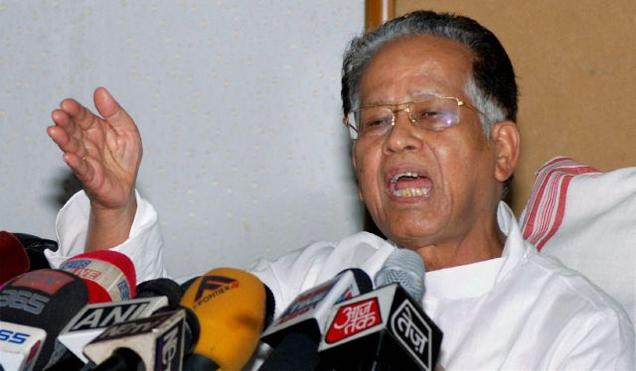
A WORST CRISIS, SAYS GOGOI

July 27, 2012

gogoi

Guwahati/Kokrajhar, July 27: As the situation in the riot-torn districts in lower Assam showed signs of improvement, Assam Chief Minister Tarun Gogoi on Friday said the situation would not have deteriorated had the Army been deployed from day one.

“We wanted the Army from day one of the crisis and now when it is there, the situation is gradually limping back to normal,” Mr Gogoi told reporters here.

Addressing a press conference here, he said 45 persons lost their lives in the worst crisis his government faced.

He said the government had taken all steps to maintain law and order and four ministers were camping in worst hit Kokrajjhar town.

A body was found floating on Friday in river Gouranga in Dhubri district while 11 people were reported missing, official sources said.

In Baksa district, where clashes between migrants and Bodos were reported only yesterday, three houses were set on fire at Simla in Daodhar village, they said. There was, however, no casualty or injury.

In the other three riot-torn BTAD districts of Kokrajhar, Chirang and Dhubri, stray attacks and counter-attacks by the two communities continued.

Curfew was relaxed on Friday in Kokrajhar district from 6 a.m to 6 p.m, while it was relaxed from 8 a.m to 10 p.m in the minority-dominated Dhubri district as the Army continued to stage flag marches in Kokrajhar district.

Night curfew will continue in Chirang, the sources said.
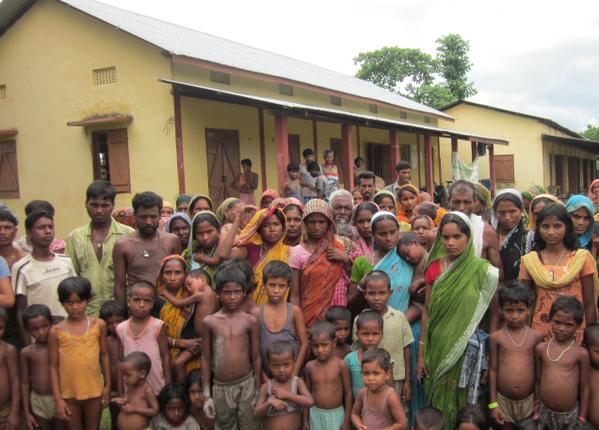
Kokrajhar

Muslim refugees at the Bagaon High School relief camp in Kokrajhar. Out of 4,000 refugees who had initially taken shelter here, only about 1,500 remain, the rest having fled to camps in Dhubri, outside the Bodoland Territorial Council-administered districts.
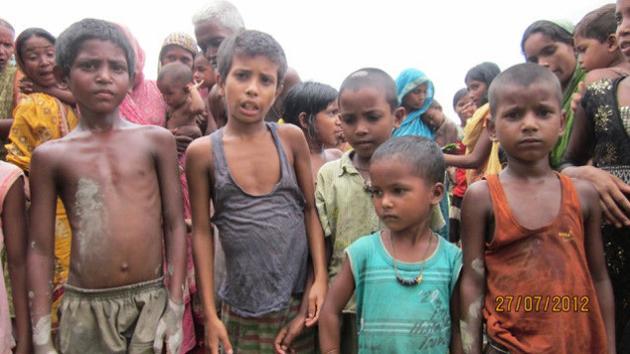

Kokrajhar1

The Bagaon High School camp was set up on July 19 but the government started providing food only on July 26. Medical facilities and basic necessities like baby food are yet to reach the shelter.
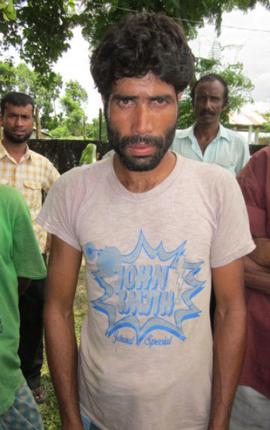
Kokrajhar2

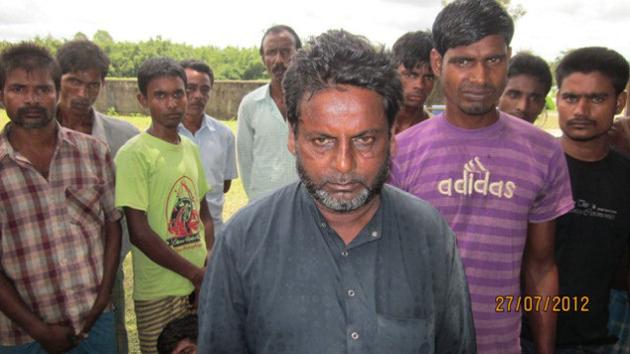
Mason Noimuddin of Hekaipara village has sent his mother, wife and three children to Bilashipara in Dhubri district. As security forces are yet to reach Badgaon, the inmates find their access to the main town cut off as they have to cross Bodo strongholds

kokrajhar3

Ahmed Fauziaur Rehman (centre), a farmer from the Parura Muslim Basti fled his village hearing gunshots on July 19, 2012.

Kokrajhar4

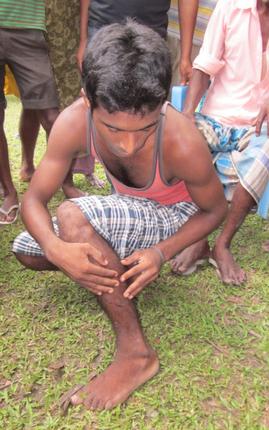
Mohammad Chinu Hussain of Boro Bhardanjugam shows the gunshot wound he recieved while fleeing his village.

Kokrajhar5

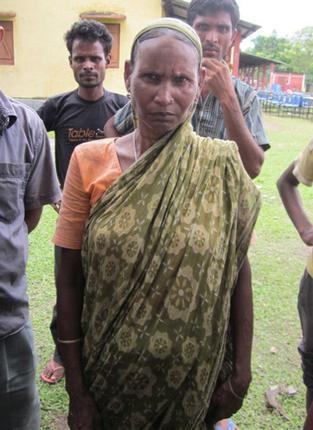
Samiran Bibi is worried as her son Sofizuddin, her family's sole bread-winner has been hit by a bullet and is still under treatment at the Government Medical College, Dhubri.
Kokhrajar6

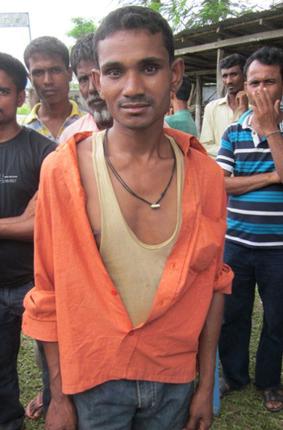
Mohammad Abu Bakr Siddiq of Gossaigaon Bhudaigur is a worried man as his one-year-old daughter Azima and mother-in-law Hasina Begum have been missing since their village was attacked on July 21, 2012. Mr. Siddiq's wife Khadiya Begum was injured by firing during the attack.



Comments

Add new comment

  • Coastaldigest.com reserves the right to delete or block any comments.
  • Coastaldigset.com is not responsible for its readers’ comments.
  • Comments that are abusive, incendiary or irrelevant are strictly prohibited.
  • Please use a genuine email ID and provide your name to avoid reject.
Agencies
January 4,2020

Kota, Jan 4: Following the death of an infant in the morning, the death toll in JK Lon Hospital here has risen to 107, officials said on Saturday.

A three-member state government committee of doctors, who was sent to investigate the matter on December 23 and 24, found that Kota's JK Lone Hospital is short of beds and it requires improvement.

However, the committee gave a clean chit to the doctors for any lapses over the recent death of infants admitted there.

A Central government team reached the hospital on Saturday to take stock of the situation.

As per the government report, at least 91 infants lost their lives at the government hospital in December last year.

Meanwhile, the National Human Rights Commission (NHRC) has issued a notice to Chief Secretary of Rajasthan to submit a detailed report within 4 weeks about the steps being taken to address the issue.

The Commission also asked the Chief Secretary to ensure that such deaths of the children do not recur in future due to lack of infrastructure and health facilities at the hospitals.

Comments

Add new comment

  • Coastaldigest.com reserves the right to delete or block any comments.
  • Coastaldigset.com is not responsible for its readers’ comments.
  • Comments that are abusive, incendiary or irrelevant are strictly prohibited.
  • Please use a genuine email ID and provide your name to avoid reject.
News Network
January 18,2020

New Delhi, Jan 18: Asha Devi, the mother of the 2012 Delhi gang-rape victim, on Saturday slammed senior lawyer Indira Jaising for her suggestion that she should forgive her daughter's rapists.

"Who is Indira Jaising to give me such a suggestion? The whole country wants the convicts to be executed. Just because of people like her, justice is not done with rape victims," Asha Devi said here.

"Cannot believe how Indira Jaising even dared to suggest this. I met her many times over the years in Supreme Court, not even once has she asked for my well being and today she is speaking for the convicts. Such people earn their livelihoods by supporting rapists, hence rape incidents do not stop," she added.

Asha Devi further accused Jaising of using "the garb of human rights" to make a living.

'People like her keep earning money under the garb of human rights. I do not need her suggestions... Just because of people who think like her incidents like rape keep happening, she is a disgrace to women," she said.

Earlier yesterday, Indira Jaising, through a tweet, had urged Asha Devi to forgive the perpetrators and had used the example of Congress interim president Sonia Gandhi, who had forgiven Nalini, one of the convicts who was given the death penalty by the courts.

"While I fully identify with the pain of Asha Devi I urge her to follow the example of Sonia Gandhi who forgave Nalini and said she did not want the death penalty for her. We are with you but against the death penalty," Jaising's tweet read.

Comments

Add new comment

  • Coastaldigest.com reserves the right to delete or block any comments.
  • Coastaldigset.com is not responsible for its readers’ comments.
  • Comments that are abusive, incendiary or irrelevant are strictly prohibited.
  • Please use a genuine email ID and provide your name to avoid reject.
News Network
January 24,2020

New Delhi, Jan 24: Although India's Ujjwala programme encouraged adoption of liquefied petroleum gas (LPG) for cooking among the poor, households availing the scheme have not shifted away from using highly polluting fuels like firewood, a study reveals.

The researchers, including those from the University of British Columbia (UBC) in Canada, found that additional incentives to encourage regular use of cooking gas are necessary for a complete transition to clean cooking fuel among poor rural households.

They noted that about 2.9 billion people across Asia, Africa, and Latin America burn solid fuels like firewood to meet their cooking energy needs.

This has significant negative implications for public health, the environment, and societal development, according to the researchers.

Through the Pradhan Mantri Ujjwala Yojana (PMUY), India has provided capital cost subsidies to poor women to adopt a clean-burning cooking fuel or LPG.

The researchers explained that within the first 40 months of the scheme, more than 80 million households obtained LPG stoves.

However, the full benefits of LPG adoption depend on near complete replacement of polluting fuels with LPG, according to a research-based policy brief published in the journal Nature Energy.

The scientists said this cannot be assumed solely on the basis of LPG presence in the household.

"Our research shows that Ujjwala was able to attract new consumers rapidly, but those consumers did not start using LPG on a regular basis," Abhishek Kar, a postdoc at Columbia University in the US, told PTI.

The study analysed LPG sales data for over 25,000 consumers, including PMUY beneficiaries, as well as general rural LPG consumers in Koppal district of Karnataka.

The scientists employed data covering all LPG purchases of PMUY beneficiaries through their first year in the programme.

They also assessed the general rural population's purchases during their first five years as consumers to assess the effect of experience on use.

The findings estimate that an average rural family needs to purchase five 14.2 kilogramme-cylinders annually to meet half of their cooking needs.

However, the study said just seven per cent of PMUY beneficiaries in Koppal purchased five or more cylinders annually, suggesting that the beneficiaries seldom use LPG.

The general (nonPMUY) consumers in this region use on average two times more LPG cylinders than PMUY beneficiaries, the researchers noted.

Yet, only 45 per cent of nonPMUY consumers use five or more cylinders per year -- even after several years of experience with LPG, they said.

The team assessed price and seasonal factors affecting LPG use among the general population over a three-year period.

It found that LPG consumers are sensitive to price and seasonality -- LPG cylinder refill rates are lower in the summer when agricultural activity is limited, and cash is scarce.

"There was no scheme incentives to promote use, except general LPG subsidies which is available to all, including the urban middle class," said Kar, who was a Ph.D. scholar at UBC when the research was published.

"If there is no additional income, what cost would a poor family on an already tight budget cut to pay for an extra expense on a regular basis.

"Ujjwala has started the scheme of 5 kg-cylinder in response, but the impact of that on LPG sales is still publicly unknown," he said.

These findings, the researchers noted, suggest the need for additional measures to promote regular LPG use for all rural populations.

Although the finding come from a single district in Southern India, it may also apply to other areas with similar socio-economic conditions, they said.

A more expansive evaluation of PMUY would help design targeted incentives to transform infrequent users to regular users, according to the researchers.

Comments

Add new comment

  • Coastaldigest.com reserves the right to delete or block any comments.
  • Coastaldigset.com is not responsible for its readers’ comments.
  • Comments that are abusive, incendiary or irrelevant are strictly prohibited.
  • Please use a genuine email ID and provide your name to avoid reject.