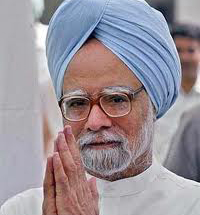
PM announces Rs.300 crore relief for Assam victims

July 28, 2012

singh1


Guwahati, July 28: Prime Minister Manmohan Singh has announced Rs. 300 crore assistance for relief and rehabilitation measures for the violence-affected areas of Assam.

Addressing a press conference at the Circuit House in Kokrajhar after visiting two relief camps located near the town on Saturday, the prime minister announced a special central assistance of Rs.100 crore as immediate relief and another Rs.100 crore under special plan assistance for development of the violence-affected areas.

Manmohan Singh also assured another additional amount of Rs.100 crore under the Indira Awas Yojana (IAY) scheme to the affected people.

He also announced an ex-gratia payment of Rs.2 lakh from the Prime Minister's National Relief Fund to the kin of those people who had lost their lives in the violence. The injured persons will also be paid Rs.50,000 to Rs.30,000 depending on the nature of their injury.

The week-long communal violence in the Bodo areas of the state has till now claimed the lives of 45 people and a estimated 2.5 lakh people have been rendered homeless.

Comments

Add new comment

  • Coastaldigest.com reserves the right to delete or block any comments.
  • Coastaldigset.com is not responsible for its readers’ comments.
  • Comments that are abusive, incendiary or irrelevant are strictly prohibited.
  • Please use a genuine email ID and provide your name to avoid reject.
Agencies
February 26,2020

New Delhi, Feb 26: The death toll in northeast Delhi communal violence over the amended citizenship law rose to 20 on Wednesday, according to GTB Hospital authorities.

On Tuesday, the death toll was 13.

"The death toll has risen to 20 today," Medical Superintendent of GTB Hospital, Sunil Kumar, told PTI.

Earlier, at least four bodies were brought to the Guru Teg Bahadur Hospital from the Lok Nayak Jai Prakash Narayan Hospital, a senior official said.

Comments

Add new comment

  • Coastaldigest.com reserves the right to delete or block any comments.
  • Coastaldigset.com is not responsible for its readers’ comments.
  • Comments that are abusive, incendiary or irrelevant are strictly prohibited.
  • Please use a genuine email ID and provide your name to avoid reject.
News Network
June 29,2020

New Delhi, Jun 29: A disturbing video of a Covid-19 patient, speaking his last words, after his oxygen supply was allegedly cut off, has surfaced on social media. The patient reportedly died after indicating that the oxygen supply to him was cut off despite his requests.

The video has a 35-year-old Covid-19 patient bidding good-bye to his family, from a government hospital bed in Hyderabad. The patient Ravi Kumar can be seen speaking out against the negligence of of the medical staff in providing ventilator support to him when he needed it the most.

The video has led to social media outrage as it attracted public attention towards plight of patients in government hospitals

"I am not able to breathe, I pleaded but they did not continue oxygen for the last three hours. I am not able to breathe anymore daddy, it's like my heart has stopped, Bye daddy. Bye to all, daddy," these were apparently the final words of the man, who spoke in his local dialect, and shared on social media.

Several reports have claimed that the man had been admitted to government Chest hospital, after several private hospitals refused to admit him. His ventilator support was allegedly taken off in the hospital, after which he recorded the video message.

The victim’s family shared the video message for the public to know of the negligence.

Reports have it that Ravi’s covid-19 report, which testes positive, was given to family a day after his death, when 30 of his family members performed the final rites, thus making all of them vulnerable to the virus. Ravi’s father has alleged that the test was done on June 24 and Ravi died on June 26, while the report was given to them on June 27.

Comments

Add new comment

  • Coastaldigest.com reserves the right to delete or block any comments.
  • Coastaldigset.com is not responsible for its readers’ comments.
  • Comments that are abusive, incendiary or irrelevant are strictly prohibited.
  • Please use a genuine email ID and provide your name to avoid reject.
News Network
February 2,2020

Feb 2: Prime Minister Narendra Modi’s second budget in seven months disappointed investors who were hoping for big-bang stimulus to revive growth in Asia’s third-largest economy.

The fiscal plan -- delivered by Finance Minister Nirmala Sitharaman on Saturday -- proposed tax cuts for individuals and wider deficit targets but failed to provide specific steps to fix a struggling financial sector, improve infrastructure and create jobs. Stocks slumped as a proposal to scrap the dividend distribution tax for companies failed to impress investors.

"Far from being a game changer, the budget provides little in terms of short-term growth stimulus,” said Priyanka Kishore, head of India and South East Asia economics at Oxford Economics Ltd. in Singapore. “While income tax cuts will provide some relief on the consumption front, the multiplier effect is low and the overall stance of the budget is not expansionary."

India has gone from being the world’s fastest-growing major economy three years ago, expanding at 8%, to posting its weakest performance in more than a decade this fiscal year, estimated at 5%.

While the government has taken a number of steps in recent months to spur growth, they’ve fallen short of spurring demand in the consumption-driven economy. Saturday’s budget just added to the glum sentiment.

Okay Budget

“It’s an okay budget but not firing on all cylinders that the market was hoping for,” said Andrew Holland, chief executive officer at Avendus Capital Alternate Strategies in Mumbai.

The government had limited scope for a large stimulus given a huge shortfall in revenues in the current year. The slippage induced Sitharaman to invoke a never-used provision in fiscal laws, allowing the government to exceed the budget gap by 0.5 percentage points. The result: the deficit for the year ending March was widened to 3.8% of gross domestic product from a planned 3.3%.

On Friday, India’s chief economic adviser Krishnamurthy Subramanian said reviving economic growth was an “urgent priority” and deficit goals could be relaxed to achieve that. The adviser’s Economic Survey estimated growth will rebound to 6%-6.5% in the year starting April.

The fiscal gap will narrow to 3.5% next year, as the government budgeted for gross market borrowing to rise marginally to 7.8 trillion rupees from 7.1 trillion rupees in the current year. A plan to earn 2.1 trillion rupees by selling state-owned assets in the year starting April will also help plug the deficit.

Total spending in the coming fiscal year will increase to 30.4 trillion rupees, representing a 13% increase from the current year’s budget, according to latest data.

Key highlights from the budget:

* Tax on annual income up to 1.25 million rupees pared, with riders

* Dividend distribution tax to be levied on investors, instead of companies

* Farm sector budget raised 28%, transport infrastructure gets 7% more

* Spending on education raised 5%

* Fertilizer subsidy cut 10%

Analysts said the muted spending plan to keep the deficit in check will lead to more downside risks to growth in the coming months.

“It is very doubtful that the increase in expenditure will push demand much,” Chakravarthy Rangarajan, former governor at the Reserve Bank of India told BloombergQuint, adding that achieving next year’s budget deficit goal of 3.5% of GDP was doubtful.

With the government sticking to a conservative fiscal path, the focus will now turn to central bank, which is set to review monetary policy on Feb. 6. Given inflation has surged to a five-year high of 7.35%, the RBI is unlikely to lower interest rates.

What Bloomberg’s Economists Say:

The burden of recovery now falls solely on the Reserve Bank of India. With inflation breaching RBI’s target at present, any rate cuts by the central bank are likely to be delayed and contingent upon inflation falling below the upper end of its 2%-6% target range.

-- Abhishek Gupta, India economist

Governor Shaktikanta Das may instead focus on unconventional policy tools such as the Federal Reserve-style Operation Twist -- buying long-end debt while selling short-tenor bonds -- to keep borrowing costs down.


Comments

Add new comment

  • Coastaldigest.com reserves the right to delete or block any comments.
  • Coastaldigset.com is not responsible for its readers’ comments.
  • Comments that are abusive, incendiary or irrelevant are strictly prohibited.
  • Please use a genuine email ID and provide your name to avoid reject.