


Northern India hit by one of the worst power breakdowns

July 30, 2012

power

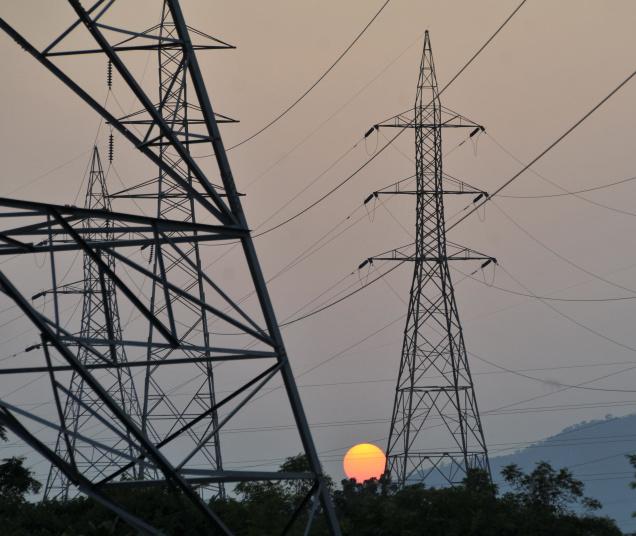
New Delhi, July 30: In what was one of the worst power breakdowns in the country, the Northern Grid crashed early Monday morning plunging eight states into complete darkness, disrupting inter-state train services, adversely hitting health services and impacting millions of lives.

The tripping of the 400 KV Bina-Gwalior line, which flows into Agra-Bareilly at 2.35 a.m. wreaked havoc on the power generation and transmission systems leading to shut down of all major power plants including hydro power stations in the States of Punjab, Haryana, Rajasthan, Delhi, Uttrakhand, Himachal Pradesh, Jammu and Kashmir and the Union Territory of Chandigarh, which are all a part of the Northern Grid.

The immediate impact of the grid collapse was the shortage of around 32,000 MW of power. The last such collapse of the Northern Grid, which caters to around 28 per cent of the country’s population, took place in 2001. India currently faces around 8 to 12 per cent peak power deficit, according to the Central Electricity Authority (CEA).

The massive shutdown had a crippling effect on inter-state passenger and goods trains that came to a screeching halt. Early morning office goers and school children had a harrowing time as traffic signals went on the blink leading to traffic chaos in the affected States including the Capital Delhi.

Hospitals too had to scurry around for alternatives and back up supply. A majority of the hospitals claimed to have alternate supply arrangements, yet reports of services being disrupted trickled in from several places.

Operations at the major oil refineries in Panipat, Mathura and Bhatinda remained unaffected as these facilities have their own captive power plants and do not rely on the grid for supply.

While Power Minister, Sushil Kumar Shinde said he could not pin point the exact reason for the collapse, PGCIL and Northern Region Load Despatch Centre officials said that it was rampant overdrawal by Uttar Pradesh, Punjab and Haryana that led to the collapse that in turn paralysed services.

The last time the grid collapse occurred was in 2001, it has happened now after 10 years. At that time, the power breakdown took place at midnight and normalcy was restored by 4.30 pm.

PGCIL chairman and managing director, R.N. Nayak said the situation had been restored to normal by 4 pm. The Northern grid was generating around 29000 MW of power by late evening, which was about 2000 MW of the peak demand.

Hit by the sudden collapse of the grid system, the Power Grid Corporation of India Limited (PGCIL) officials swung into action with Mr. Nayak and his team of officials reaching their monitoring centre at 3 a.m. to assess the situation and work on a rescue package. By 8 a.m., PGCIL officials claimed to have restored around 40 per cent of power.

To run essential services, supply was diverted from the Western and Eastern Grids to the Northern region. Hydro power was also imported from the mountain kingdom of Bhutan to meet the deficit.

While he could not offer an explanation on what caused the collapse, Mr. Nayak said the agencies involved were at least “quick at restoring normalcy in a record time”.

Comments

Add new comment

  • Coastaldigest.com reserves the right to delete or block any comments.
  • Coastaldigset.com is not responsible for its readers’ comments.
  • Comments that are abusive, incendiary or irrelevant are strictly prohibited.
  • Please use a genuine email ID and provide your name to avoid reject.
News Network
June 25,2020

India has jumped past 4.5 lakh coronavirus cases and 14,476 people have succumbed to the viral infection so far. In this backdrop, speaking to IANS in an exclusive interview, AIIMS Director Randeep Guleria said India is also vulnerable to second wave of coronavirus and people should continue to follow social distancing, wearing mask and other precautions, after cases begin to decline.

He added that in order to contain the outbreak of Covid-19, a limited lockdown in hotspots, where volume of cases is very high, may be considered along with a micro-plan to prevent leakage of cases from these areas to other non-containment areas. Excerpts of the interview are below:

Q: Reports say China and South Korea are witnessing a second wave of coronavirus infection, what is this second wave, is India also vulnerable to this?

A: When cases come down significantly, people tend to drop their guard against the viral infection, and this leads to the second wave (which means a sudden increase in the number of cases). After cases begin to decline, people should continue to follow the precautions -- continue to maintain social distancing and wear masks regularly. See what happened in Singapore, it was struck by a second wave of coronavirus. Look, what happened in the 1918 pandemic, people dropped their guard and the second wave of viral infection struck back. If people do not follow social distancing then the spike in cases is apparent. We need to take these precautions at least for one year. India is also vulnerable to this second wave.

Q: If Covid-19 cases continue to rise rapidly, do you think we need another lockdown in areas where volume of cases are very high?

A: A large volume of cases is concentrated in specific areas like hotspots, and in order to maintain things in order, we may need a limited lockdown in these areas. This should be followed by a micro-plan which entails extensive testing of people and also extensive contact tracing of people who have got in touch with positive people. Need to ensure there is no leakage of cases from these areas. People from these areas should not mix with others in non-containment areas. This will aid in containing the outbreak of the virus. People who have developed symptoms should get themselves tested, especially in the containment areas.

Q: With more than 4.5 lakh cases and close to 14,500 deaths, do you think India has reached its peak and a decline in cases is prominent?

A: The cases will continue to increase for some time. The doubling time of cases has also increased. But, the cases will also begin to flatten. Though, it is difficult to give an exact time period in this viral infection, it seems, the growth in cases will flatten in the end of July or beginning of August. A decline will come to this viral infection, but it does not mean that people should drop their guard. As a measure, we need to decrease community participation and citizens should continue to follow social distancing. People should get themselves tested. All these efforts will help in preventing people from contracting this virus. These precautions will also prevent us from the second wave, and we must continue to take precautions. The virus has not gone away, it is still lurking.

Q: India has crossed the 4.5 lakh coronavirus cases so far, although our recovery rate is good, but still 10,000 to 15,000 cases are reported daily. Why do cases continue to spiral, what is the reason?

A: We have to remember a few things -- the bulk of cases are in 10 cities, nearly 70 per cent, and if we take into account cases per million population, the number is not very high, as compared with countries including countries in Europe. Many European countries put together still do not add up to the Indian population. Do not compare India to countries like Italy, Spain etc. We need to focus on hotspots, which contribute to between 70 -80 per cent of cases, and we have to identify cases in these areas at an early stage. The population density is very high in these cities. People in lower socio-economic status are highly vulnerable to the viral infection, as many live together in small spaces and there is a lot of mixing of people happening there. Look at the market places, people are not following social distancing and not wearing masks. In fact, many are in close vicinity of each other.

Comments

Add new comment

  • Coastaldigest.com reserves the right to delete or block any comments.
  • Coastaldigset.com is not responsible for its readers’ comments.
  • Comments that are abusive, incendiary or irrelevant are strictly prohibited.
  • Please use a genuine email ID and provide your name to avoid reject.
News Network
July 4,2020

New Delhi, July 4: India on Friday reported its highest single-day spike of COVID-19 cases with 22,771 cases reported in the last 24 hours, said the Union Ministry of Health and Family Welfare.

With these new cases, India's coronavirus cases tally has gone up to 6,48,315, out of which there are 2,35,433 active cases in the country and 3,94,227 cases have been cured/discharged or migrated.

As many as 442 deaths due to COVID-19 have been reported in the last 24 hours taking the number of patients succumbing to the deadly virus across the country to 18,655.

As per the Union Health Ministry, Maharashtra -- the worst affected state due to COVID-19 -- has a total of 1,92,990 cases which is inclusive of 8,376 deaths. Meanwhile, Tamil Nadu, the second worst-affected state, has a total of 1,02,721 cases and 1,385 fatalities. Delhi's tally of coronavirus cases stands at 94,695 which is inclusive of 2923 deaths due to the virus.

The Centre said that the recovery rate has further improved to 60.80 per cent. The recoveries/deaths ratio is 95.48 per cent : 4.52 per cent.

The Indian Council of Medical Research, earlier on Saturday, said that the total number of samples tested up to July 3 is 95,40,132, out of which 2,42,383 samples were tested yesterday.

Comments

Add new comment

  • Coastaldigest.com reserves the right to delete or block any comments.
  • Coastaldigset.com is not responsible for its readers’ comments.
  • Comments that are abusive, incendiary or irrelevant are strictly prohibited.
  • Please use a genuine email ID and provide your name to avoid reject.
News Network
February 28,2020

Feb 28: The best economic tonic for the coronavirus shock is to contain its spread and worry about stimulus later, said Raghuram Rajan, former head of the Reserve Bank of India.

There’s little central banks can do, and while more government spending would help, the priority should be on convincing companies and households that the virus is under control, he said.

“People want to have a sense that there is a limit to the spread of this virus perhaps because of containment measures or because there is hope that some kind of viral solution can be found,” Rajan told Bloomberg Television’s Haidi Stroud Watts and Shery Ahn.

“At this point I would say the best thing that governments can do is to really fight the epidemic rather than worry about stimulus measures that comes later,” said Rajan, who is currently a professor at the Chicago Booth School of Business.

The spread of coronavirus is pushing the world economy toward its worst performance since the financial crisis more than a decade ago.

Bank of America Corp. economists warned clients Thursday that they now expect 2.8% global growth this year, the weakest since 2009.

“We have moved from extreme confidence in markets to extreme panic, all in the space of one week,” said Rajan, who previously was chief economist at the International Monetary Fund.

The virus outbreak will force companies to rethink supply chains and overseas production facilities, he said.

“I think we will see a lot of rethinking on this, coming on the back of the trade disruption, now we have this,” Rajan said. “Globalization in production is going to be hit quite badly.”

Comments

Add new comment

  • Coastaldigest.com reserves the right to delete or block any comments.
  • Coastaldigset.com is not responsible for its readers’ comments.
  • Comments that are abusive, incendiary or irrelevant are strictly prohibited.
  • Please use a genuine email ID and provide your name to avoid reject.