Over 20 states in power crisis as 3 grids collapse

July 31, 2012

delhimetro

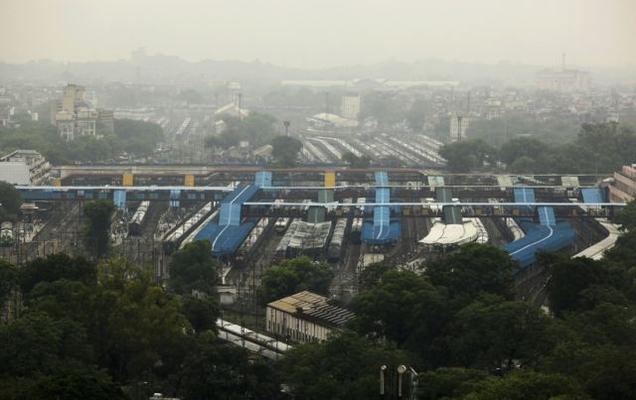
New Delhi, July 31: Triggering a major power crisis, three electricity grids connecting more than 20 states and the national capital collapsed today.

While the northern grid failed for the second straight day, the eastern and north-eastern grids too collapsed. These three grids carry about 50,000 MW of electricity. The collapse has left more than half of the country powerless. Essential services and public transport systems, including Railways and the Delhi Metro were also hit.

"Grid incident occurred at 1300 hrs affecting the northern grid, eastern grid and north-eastern grid -- System Under Restoration," National Load Despatch Centre (NLDC), under the Power Ministry, said in an update.

About 22 states and union territories have been impacted by the failure of the three grids. The northern grid covers nine regions -- Punjab, Haryana, Rajasthan, Delhi, Uttar Pradesh, Uttarakhand, Himachal Pradesh, J&K and Chandigarh.

At least six states are covered by the eastern grid. They are West Bengal, Chattisgarh, Bihar, Jharkhand, Orissa and Sikkim. Meanwhile, the north eastern grid connects Arunachal Pradesh, Nagaland, Assam, Meghalaya, Manipur, Mizoram and Tripura.

India has five electricity grids -- Northern, Eastern, North Eastern, Southern and Western. All of them are inter- connected, except the Southern grid. All the grids are being run by the state-owned Power Grid Corporation, which operates more than 95,000 circuit km of transmission lines.

One circuit km refers to one kilometre of electrical transmission line.

Comments

Add new comment

  • Coastaldigest.com reserves the right to delete or block any comments.
  • Coastaldigset.com is not responsible for its readers’ comments.
  • Comments that are abusive, incendiary or irrelevant are strictly prohibited.
  • Please use a genuine email ID and provide your name to avoid reject.
News Network
July 12,2020

New Delhi, Jul 12: With the highest single-day spike of 28,637 new cases and 551 deaths being reported in the last 24 hours, India's COVID-19 count reached 8,49,553 on Sunday.

According to the Union Health and Family Welfare Ministry, this includes 2,92,258 active cases, and 5,34,621 cured and discharged or migrated patients. The toll due to the disease has reached 22,674 in the country.

Maharashtra with 2,46,600 cases continues to be the worst affected state by COVID-19 in the country. The state has 99,499 active cases while 1,36,985 patients have been cured and discharged so far. The death toll due to the disease now stands at 10,116.

Tamil Nadu with 1,34,226 cases, including 46,413 active ones, is the next worst affected in the country. While the number of cured and discharged patients is at 85,915 in the state, the toll due to the disease is at 1,898.

The national capital has recorded 1,10,921 confirmed cases so far. However, the number of active cases in Delhi is at 19,895 and 87,692 patients have been cured and discharged so far. With 3,334 deaths being reported due to COVID-19 in the city. 

Comments

Add new comment

  • Coastaldigest.com reserves the right to delete or block any comments.
  • Coastaldigset.com is not responsible for its readers’ comments.
  • Comments that are abusive, incendiary or irrelevant are strictly prohibited.
  • Please use a genuine email ID and provide your name to avoid reject.
News Network
January 30,2020

Jan 30: BJP leader and West Bengal party head, Dilip Ghosh has yet again made a controversial statement. He said that one has to go to jail in order to gain respect or become a political leader.

"You will not be a leader if you don't go to jail, if Police don't take you, then you must go there yourself. If they don't give you any scope, you do something to go to jail, only then will people respect you. There is no place for soft people in politics," ANI quoted Ghosh as saying.

Earlier, Ghosh had triggered a controversy by saying that anti-CAA protestors in Assam and Uttar Pradesh were shot dead "like dogs", and similar punishment should be given to protestors in Bengal.

Comments

Add new comment

  • Coastaldigest.com reserves the right to delete or block any comments.
  • Coastaldigset.com is not responsible for its readers’ comments.
  • Comments that are abusive, incendiary or irrelevant are strictly prohibited.
  • Please use a genuine email ID and provide your name to avoid reject.
Agencies
June 8,2020

New Delhi, Jun 8: Abortion access to around 1.85 million women was compromised across the country due to the nationwide restrictions imposed in response to the COVID-19 outbreak, a study conducted by Ipas Development Foundation (IDF) revealed.

These abortions were compromised at all points of care, including public and private sector facilities and chemist outlets during 68-day lockdown and the first week of Unlock 0.1 period. The study assesses the near-term impact of COVID-19 on abortion access in India since March 25 when the lockdown was imposed across the country with the announcement of Prime Minister Narendra Modi to contain the spread of novel coronavirus of COVID-19 pandemic.

It also highlights the need for a specially designed and integrated recovery plan for improving abortion services at facilities. The study estimates that access to abortion was highly compromised during lockdown 1 and 2 ( between March 25 and May 3) in which around 59 per cent of women seeking an abortion could not access the services.

However, with the Unlock phase or the recovery period as mentioned in the study starting on June 1, the situation is expected to improve - with 33 per cent abortions being compromised in 24 days. A huge number of women could not access safe abortion services during the lockdown, therefore it is extremely important that the healthcare system, public and private, is prepared to meet the needs of these women, the Ipas foundation says.

The model of the study strives to quantify the reduced access to abortions across three different points of care -public health facilities, private health facilities, and chemist outlets, said Vinoj Manning, CEO, Ipas Development Foundation in a statement.

"Majority of public health facilities and their staff are now focused on COVID-19 treatments and closures of private health facilities have compromised the access to safe abortions, which is a time-sensitive procedure."

He said that the study conducted by his foundation was to get a clearer picture of how COVID-19 restrictions have affected women seeking safe abortion services and what are the areas that would need focused efforts in the days to come.

Speaking on the methodology, Dr Sushanta Kumar Banerjee from Ipas Development Foundation said: "We conducted telephonic surveys and consulted with several experts from FOGSI leadership and social marketing organizations like PSI India Private Limited."

"After careful analysis of the data received from them, we have concluded that of the 3.9 million abortions that would have taken place in 3 months, access to around 1.85 million was compromised due to COVID-19 restrictions."

To facilitate the process Ipas Development Foundation has issued some initial recommendations which include: rapid mapping of facilities for first and second trimester abortions, assessing facilities' preparedness especially for second-trimester abortions, improving referral linkage and spread the word about the availability of the service, streamlining the supply chain for medical abortion drugs, and lastly including mechanisms to offset additional travel and out of pocket expenditures.

Ipas Development Foundation will be holding consultations with other partners and key stakeholders to facilitate meaningful collaborations to ensure access to safe abortions and ensure that no woman suffers long-term harm to her health due to lack of services.


Comments

Add new comment

  • Coastaldigest.com reserves the right to delete or block any comments.
  • Coastaldigset.com is not responsible for its readers’ comments.
  • Comments that are abusive, incendiary or irrelevant are strictly prohibited.
  • Please use a genuine email ID and provide your name to avoid reject.