



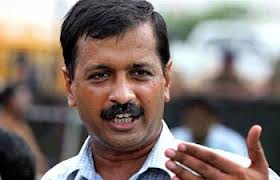
Sinking Kejriwal warns government not to use force

August 1, 2012

kejrival

New Delhi, August 1: After a week of fasting, the health of Team Anna members Arvind Kejriwal and Gopal Rai deteriorated on Tuesday. Despite doctors advising hospitalization, the two refused to end their fast and warned the government against any attempt to force-feed them.

Tests showed both activists had elevated ketone levels, indicating that the body was breaking down stored fat. Rai, whose ketone level was in the danger zone (four plus), has been vomiting frequently.

"I am warning the government to not try to arrest and hospitalize us. The consequences will be bad," said Kejriwal, questioning the grounds on which he could be arrested.

"My lawyers said I could be arrested for attempt to suicide. This law was made in 1860 and despite that Mahatma Gandhi use to hold fast. We never heard that he was forcefully arrested. Is this government worse than the British Raj?" asked Kejriwal.

A senior doctor who examined the two said they needed immediate medical attention. "Both of them need to be administered intravenous fluids because the rising ketone levels may affect organs like the heart and kidney," the doctor said.

With the government silent on the agitation and Team Anna refusing to budge on their demands, the stage seems set for a confrontation.

In his evening speech, Anna made a reference to the government's apathy, and said that their visit to the fasting venue would be a 'kalank' (shame). "The government said no minister will come here, or try to stop the movement. But there's no need for corrupt ministers to come here anyway," he said.

Addressing apprehensions that a Lokpal would not end corruption, he said, "At least bring the Jan Lokpal Bill and see what it does. It may not end corruption 100%, but will definitely bring it down by 60-65%." He added that ministers like P Chidambaram would be behind bars had there been a strong Lokpal.

The Gandhian also said when the time is right, he would return his Padma Bhushan. Anna remained on stage throughout the day, but both Kejriwal and Rai stayed in their enclosures off the dais.

Despite the declining health of the fasting activists, footfalls dwindled at the protest venue on Tuesday. Apart from the fact that it was a working day, rain and chaos resulting from the power grid failure also kept many away during the first half of the day. But by evening, the crowd had swelled to about 4000 protesters. Large groups of schoolchildren could be seen in their uniforms.

At around 6pm, actor Ranvir Shorey made his way to the protest, and was seated next to Kiran Bedi on the stage. During his speech, he urged Anna and his team to continue the campaign, but to leave the 'anshan'. He also motivated the people to step up and actively participate.

"This is about corruption, which has led to so many problems, whether it's bad roads, lack of education, barren land or malnourished children. We have truth on our side, and it is more powerful than corruption. It may take time and perseverance, but I'm willing to come even when I'm as old as Anna," he said.

Some protestors undertook drastic measure to show their support for the cause. Satyanarayan Sisodia, a farmer from Mathura, was lying half naked on the thorny branches of a babul tree. "If Anna Hazare and his team can undertake such troubles then so can I," said Satyanarayan. He claimed to be on fast since July 25. Some even cycled or walked for days from their homes to reach the venue.

Large groups of protesters also organized impromptu marches. One group walked from the venue to ITO, from where they marched back holding candles and torches. After the evening speeches, another group took out a rally to Connaught Place and back.

Comments

Add new comment

  • Coastaldigest.com reserves the right to delete or block any comments.
  • Coastaldigset.com is not responsible for its readers’ comments.
  • Comments that are abusive, incendiary or irrelevant are strictly prohibited.
  • Please use a genuine email ID and provide your name to avoid reject.
News Network
April 12,2020

Hyderabad, Apr 12: Indicating that prolonged lockdown to contain coronavirus spread may lead to job cuts in the Indian IT industry, NASSCOM former president R Chandrashekhar has said that the work-from-home culture may become a positive development in the long run as it opens up newer avenues and save investments by IT firms.

The former bureaucrat also said startups which are surviving on funds infused by venture capitalists may face tougher situations if the present scenario deteriorates.

"The larger companies may not be actually cutting jobs for two reasons. One is that they do not want to lose their employees and they have money to pay. Many of them ( big companies), even if they do shed some jobs it might be at the most people who are on temporary or intern type and all. But they would not want regular and permanent employees to go. So as long as they have sufficient flexibility in their books, they would continue," said NASSCOM former president.

"But beyond a point that it goes on, for let us say, two months or three months, then even for them, they will feel the pressure. They may not just keep on providing subsidies to the employees. So the key question will be how long that goes on," Chandrasekhar said.

He also said the work-from-home systems being adopted by several firms across the globe, including India, may have a negative impact on the industry in the short-term, but in the long run it would change the work culture which hitherto was not experienced by many of the IT firms in India.

 On impact of the prolonged lockdown on startups, he said it would be a big challenge for the budding enterprises as the investments they get are based on their ideas and future revenues and the present situation under which peoples movement is curbed may shackle their progress.

 "Where will they (startups) get money to pay salaries to their employees. Venture capital investors would not pay the money or invest their money to pay salaries because they are not in the charity business."

If the employees are not paid and if they leave and it is difficult for the startup againto come up. So the whole investment plan goes for a toss, he said.

Former chairman of NASSCOM, B V R Mohan Reddy said a clear picture as to what is going to happen has not yet emerged as the situation with all respects is still evolving. Reddy said there will be a demand shrinkage for the IT industry as the entire world is under stress. "There is no economy in this world that is going to do well in this situation.

So, therefore, there will be a demand shrinkage, he said, indicating tougher times of the industry ahead.

Comments

Add new comment

  • Coastaldigest.com reserves the right to delete or block any comments.
  • Coastaldigset.com is not responsible for its readers’ comments.
  • Comments that are abusive, incendiary or irrelevant are strictly prohibited.
  • Please use a genuine email ID and provide your name to avoid reject.
Agencies
June 19,2020

Srinagar, Jun 19: Suspended Jammu and Kashmir DSP Davinder Singh, arrested while ferrying two Hizb-ul-Mujahideen terrorists in a vehicle on the Srinagar-Jammu Highway earlier this year, was granted bail by a Delhi court on Friday, his lawyer said.

Singh and another accused in the case - Irfan Shafi Mir - were granted the relief by the court in a case filed by special cell of Delhi Police, noting that the probe agency failed to file charge sheet within 90 days from his arrest, as prescribed under law, their lawyer M S Khan said.

The bail was granted on a personal bond of Rs 1 lakh and two sureties of like amount.

Comments

Add new comment

  • Coastaldigest.com reserves the right to delete or block any comments.
  • Coastaldigset.com is not responsible for its readers’ comments.
  • Comments that are abusive, incendiary or irrelevant are strictly prohibited.
  • Please use a genuine email ID and provide your name to avoid reject.
Agencies
June 29,2020

From March through May, around 1 crore migrant workers fled India’s megacities, afraid to be unemployed, hungry and far from family during the world’s biggest anti-Covid-19 lockdown.

Now, as Asia’s third-largest economy slowly reopens, the effects of that massive relocation are rippling across the country. Urban industries don’t have enough workers to get back to capacity, and rural states worry that without the flow of remittances from the city, already poor families will be even worse off -- and a bigger strain on state coffers.

Meanwhile, migrant workers aren’t expected to return to the cities as long as the virus is spreading and work is uncertain. States are rolling out stimulus programs, but India’s economy is hurtling for its first contraction in more than 40 years, and without enough jobs, a volatile political climate gets more so.

“This will be a huge economic shock, especially for households of short-term, cyclical migrants, who tend to come from vulnerable, poor and low-caste and tribal backgrounds,” said Varun Aggarwal, a founder of India Migration Now, a research and advocacy group based in Mumbai.

In the first 15 days of India’s lockdown, domestic remittances dropped by 90%, according to Rishi Gupta, chief executive officer of Mumbai-based Fino Paytech Ltd., which operates the country’s biggest payments bank.

By the end of May, remittances were back to around 1750 rupees ($23), about half the pre-Covid average. Gupta’s not sure how soon it’ll fully recover. “Migrants are in no hurry to come back,” Gupta said. “They’re saying that they’re not thinking of going back at all.”

If workers stay in their home states long term, policymakers will have more than remittances to worry about. If consumption falls and the new surplus of labor drives wages down, Agarwal said, “there will also be a second-order shock to the local economy. Overall, not looking good.”

India announced a $277 billion stimulus package in May and followed it up with a $7 billion program aimed at creating jobs for 125 days for migrants in villages across 116 districts. Separately, local authorities are also looking for solutions.

Officials in Bihar have identified 2,500 acres of land that could be made available to investors, said Sushil Modi, deputy chief minister of Bihar, a state in east India. “We can use this crisis as an opportunity to speed up reforms,” he said.

The investors haven’t materialised yet, and in the meanwhile, state governments are relying on the national cash-for-work program that guarantees 100 days worth of wages per household.

Skilled workers don’t want to do manual labor offered through the program, and even if they did, says Amitabh Kundu of RIS, many think of it as beneath their station. “There will be an increase in social tensions,” he predicts. “Caste may again start playing a role. It’s absolute chaos.”

For skilled workers, initiatives vary:

* Uttar Pradesh, which received 3.2 million people, is compiling lists of skilled workers who need employment and trying to place them with local manufacturing and real estate industry associations. So far, the government says, it’s placed 300,000 people with construction and real estate firms.

* Bihar has placed returners in state-run infrastructure projects and hired others to stitch uniforms and make furniture for government-run schools, even as they waited in quarantine centres, said Pratyay Amrit, head of the state’s disaster management department.

* The eastern state of Odisha announced an urban wage employment program aimed at putting as many as 450,000 day labourers to work through September. Some 25,000 people have been employed, so far, under the scheme, G. Mathivathanan, principal secretary for housing and urban development said.

Attracting Investments

It’s not clear any of this will be enough to make a dent, says Ravi Srivastava, professor at New Delhi-based Institute of Human Development, adding that the states don’t have much of a track record on economic development.

“It was the failure of these states to improve governance and put development plans in place that led to the out-migration in the first place,” he said.

But officials and workers’ rights advocates see opportunity. Uttar Pradesh has established liaisons to encourage companies from the US, Japan and South Korea to establish manufacturing in the state. There and in Madhya Pradesh and Rajasthan, the government has made labour laws more friendly to employers, making it easier to hire and fire workers.

Modi, the minister from Bihar, said the migration may also give workers--historically a disenfranchised group--new power, particularly as urban centres struggle. “The way industries treated workers during the lockdown -- didn’t pay them, the living conditions were poor -- now these industries will realize the value of this force,” Modi said.

“In the days to come, labour will emerge as a force that can’t be ignored anymore,” he added. “That’s the new normal. We will work out how to ensure dignity, rights to our people who are going to work in other states.”

Bihar is due for elections by November, a vote that could be an early test of the mass migration’s political consequences. The state is currently governed by a coalition that includes Prime Minister Narendra Modi’s Bharatiya Janata Party. Amitabh Kundu, a fellow at the Research and Information System for Developing Countries, a New Delhi-based government think-tank, said migrant workers are likely to be angry voters.

“Chief ministers are telling these migrants that they will not have to go back for work,” he said. “But their capacity to do something miraculous in the next four to five months is doubtful. If they can retain even one-fourth of the migrants, I would call it a success.”

Comments

Add new comment

  • Coastaldigest.com reserves the right to delete or block any comments.
  • Coastaldigset.com is not responsible for its readers’ comments.
  • Comments that are abusive, incendiary or irrelevant are strictly prohibited.
  • Please use a genuine email ID and provide your name to avoid reject.