


Mumbai evidence not admissible in its court: Pak tells India

August 1, 2012

mumbai_copy


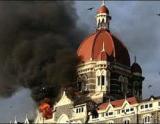
Islamabad, August 1: The Pakistan government has formally informed India that evidence provided by New Delhi in the 2008 Mumbai terror attacks case is not admissible in a Pakistani court as defence lawyers were not allowed to cross-examine Indian officials, a media report said today.

Pakistan's Interior Ministry has informed the Indian government that the evidence is not admissible in the trial of seven Pakistani suspects, including Lashkar-e-Taiba commander Zakiur Rehman Lakhvi, since defence lawyers were not allowed to cross-examine Indian officials when a Pakistani judicial commission visited Mumbai in March. In a letter sent to the Indian government yesterday, the Interior Ministry cited the ruling of a Rawalpindi-based anti-terrorism court and said cross-examination of key Indian officials is needed to make the evidence admissible in Pakistan, The Express Tribune reported.

During a hearing on July 28, the anti-terrorism court did not record the statement of two Pakistani investigators who were scheduled to testify about the evidence provided by India. The judge ruled that since the evidence gathered by the Pakistani judicial commission in India had not been made part of the case, the testimony regarding the Indian evidence too should not be recorded.

The evidence provided by the Indian authorities includes the confessional statement of Ajmal Kasab, the lone surviving terrorist, a CD with intercepts of conversations between the attackers in Mumbai and their handlers in Pakistan, autopsy and medical reports of the dead and injured and the statements of four Indian officials.

The Pakistani judicial commission had interviewed these four officials during the visit the Mumbai. However, no cross-examination was allowed under an agreement between India and Pakistan.

Sources privy to the investigations by the Federal Investigation Agency told The Express Tribune that the Interior Ministry had made it clear to India that the evidence would not have any legal value in Pakistan if the Indian officials could not be cross-examined by lawyers representing the seven accused facing trial in Pakistan.

On July 17, the judge of the anti-terrorism court accepted Lakhvi's plea and declared the findings of the judicial commission "null and void". The accused had challenged the legal value of the report of the judicial commission as their lawyers were not allowed to cross-examine Indian officials who provided evidence against them.

The seven suspects have been charged with planning, financing and executing the terror attacks in Mumbai that killed 166 people in November 2008.

Their trial has been hit by countless delays and the judge has been changed five times.

Comments

Add new comment

  • Coastaldigest.com reserves the right to delete or block any comments.
  • Coastaldigset.com is not responsible for its readers’ comments.
  • Comments that are abusive, incendiary or irrelevant are strictly prohibited.
  • Please use a genuine email ID and provide your name to avoid reject.
Agencies
June 29,2020

New Delhi, Jun 29: The Supreme Court on Monday asked the Central government to find out the facts related to blacklisting and canceling of visas of foreign nationals who attended the congregation of Tablighi Jamaat in Nizamuddin area here.

A three-judge bench headed by Justice AM Khanwilkar and also comprising Justices Dinesh Maheshwari and Sanjiv Khanna asked the Centre to find out the facts related to the matter and fixed it for further hearing on July 2.

The apex court asked Solicitor General Tushar Mehta "if visas of these foreigners are canceled, then why are they still in India?"

"You (Centre) can deport them. If visas are not canceled, then, it is a different situation," the court said. The top court was hearing a number of petitions challenging blacklisting and cancellation of visas filed by few foreigners.

Mehta sought more time to file a reply on the matter, after which the court posted the matter for further hearing on July 2.

The petitions, filed by the foreign nationals from 35 countries, have sought directions to the Ministry of Home Affairs (MHA) to remove their names from the blacklist, reinstate their visas and facilitate their return to their respective countries.

The petitions sought to declare the decision of the MHA of blacklisting the foreign nationals who attended the Tablighi Jamaat congregation as "arbitrary".

"Unilateral blacklisting of 960 foreigners by the Home Ministry vide press release dated April 2, 2020, and the subsequent blacklisting of around 2500 foreigners as reported on June 4, 2020, is in violation of Article 21. Therefore, it is void and unconstitutional as the petitioners have neither been provided any hearing nor notice or intimation in this regard," the plea said.

One of the petitioners named Fareedah Cheema, a Thai national in the seventh month of her pregnancy, said she was quarantined in March, like other foreign nationals but was released from quarantine only in late May and is still at a facility under restricted movements, without the avenue to go back to her home nation and experience the birth of her child with security and dignity, with her loved ones.

These foreign nationals presently in India were blacklisted for a period of 10 years from traveling to India for their alleged involvement in Tablighi Jamaat activities.

The Home Ministry had said that foreign Tablighi Jamaat members, who were staying in India in violation of visa rules during the nationwide lockdown implemented to combat the COVID-19 spread, have been blacklisted.
A large congregation organised by Tablighi Jamaat in the national capital in March had emerged as a major COVID-19 hotspot in the country.

The government had said the decision of banning the foreign Tablighi Jamaat members was taken after details of foreigners found illegally living in mosques and religious places emerged from various states across the country.

Comments

Add new comment

  • Coastaldigest.com reserves the right to delete or block any comments.
  • Coastaldigset.com is not responsible for its readers’ comments.
  • Comments that are abusive, incendiary or irrelevant are strictly prohibited.
  • Please use a genuine email ID and provide your name to avoid reject.
News Network
July 18,2020

New Delhi, Jul 18: The Covid-19 lockdown-led reduction in air pollution levels across five Indian cities, including Delhi and Mumbai, may have prevented about 630 premature deaths, and saved USD 690 million in health costs in the country, according to a new study.

Scientists, including those from the University of Surrey in the UK, assessed the levels of harmful fine particulate matter (PM2.5) from vehicles and other sources in five Indian cities -- Delhi, Mumbai, Kolkata, Chennai and Hyderabad -- since the beginning of the lockdown period.

The study, published in the journal Sustainable Cities and Society, compared these lockdown PM2.5 figures from 25 March up until 11 May, with those from similar periods of the preceding five years, and found that the measure reduced pollution levels in all these places.

According to the scientists, during this period, the levels of these harmful air pollutants reduced by 10 per cent in Mumbai, and by up to 54 per cent in Delhi.

"The percentage reduction for the other cities ranged from 24 to 32 per cent, which was slightly smaller than the measured values for Delhi and Mumbai," the scientists noted in the study.

"While the reduction in PM2.5 pollution may not be surprising, the size of the reduction should make us all take notice of the impact we have been having on the planet," said Prashant Kumar, a co-author of the study from the University of Surrey.

The scientists said these reductions in PM2.5 were comparable to those reported in other cities across the world, such as in Austria's capital Vienna (60 per cent), and Shanghai (42 per cent) in China.

They also calculated the monetary value of the reduced mortality due to air pollution and found that the lowered levels of PM2.5 may have saved 630 people from premature death, and USD 690 million in health costs in India.

Coronavirus India update: State-wise total number of confirmed cases, deaths on July 17

According to the researchers, the present lockdown situation offers observational opportunities regarding potential control systems and regulations for improved urban air quality.

They said an integrated approach might help in understanding the overall impacts of Covid-19 lockdown-style interventions and support the implementation of relevant policy frameworks.

"This is an opportunity for us all to discuss and debate what the 'new normal' should look like - particularly when it comes to the quality of the air we breathe," Kumar said.

Comments

Add new comment

  • Coastaldigest.com reserves the right to delete or block any comments.
  • Coastaldigset.com is not responsible for its readers’ comments.
  • Comments that are abusive, incendiary or irrelevant are strictly prohibited.
  • Please use a genuine email ID and provide your name to avoid reject.
News Network
June 16,2020

New Delhi, June 16: Tensions along the Line of Control border between India and China have spiked with an Indian army officer and two soldiers killed in the Galwan area of Ladakh, the Indian army said in a statement on Tuesday.

This is the first time in decades that a clash involving casualties has taken place on the 3,488 kilometre border between India and China.

"During the de-escalation process underway in the Galwan Valley, a violent face-off took place yesterday night with casualties. The loss of lives on the Indian side includes an officer and two soldiers. Senior military officials of the two sides are currently meeting at the venue to defuse the situation," said an official statement.

The two sides had made headway in talks last week with army chief General MM Naravane saying disengagement was in progress. The development had come after weeks of tension, including an incident in which patrolling soldiers from the two sides came to blows on the banks of Pangong Lake, resulting in injuries.

The two armies have since thinned out some forces in a positive signal but soldiers, tanks and other armoured carriers remained heavily deployed in the high-altitude region, an official had said.

India and China fought a brief border war in 1962 and have not been able to settle their border despite two decades of talks. Both claim thousands of kilometres of territory and patrols along the undemarcated Line of Actual Control - the de-facto border - often run into each other, leading to tensions. 

Comments

Angry Indian
 - 
Tuesday, 16 Jun 2020

where is our angry desh bakth RSS and sanghi...hiding in rat hole or @%#hole...now you can show your 56 inch chest to chinese...when pakistan destroyed our two fighter jet that time i relised we are making an monkey army not indian army...still time exist, still we have courage army...but we lack leader...we have maron PM...and some dog follower..they only know to bark in media and whatsapp...in reality they are just real na pustak...

Add new comment

  • Coastaldigest.com reserves the right to delete or block any comments.
  • Coastaldigset.com is not responsible for its readers’ comments.
  • Comments that are abusive, incendiary or irrelevant are strictly prohibited.
  • Please use a genuine email ID and provide your name to avoid reject.