Mumbai evidence not admissible in its court: Pak tells India

August 1, 2012

mumbai_copy


Islamabad, August 1: The Pakistan government has formally informed India that evidence provided by New Delhi in the 2008 Mumbai terror attacks case is not admissible in a Pakistani court as defence lawyers were not allowed to cross-examine Indian officials, a media report said today.

Pakistan's Interior Ministry has informed the Indian government that the evidence is not admissible in the trial of seven Pakistani suspects, including Lashkar-e-Taiba commander Zakiur Rehman Lakhvi, since defence lawyers were not allowed to cross-examine Indian officials when a Pakistani judicial commission visited Mumbai in March. In a letter sent to the Indian government yesterday, the Interior Ministry cited the ruling of a Rawalpindi-based anti-terrorism court and said cross-examination of key Indian officials is needed to make the evidence admissible in Pakistan, The Express Tribune reported.

During a hearing on July 28, the anti-terrorism court did not record the statement of two Pakistani investigators who were scheduled to testify about the evidence provided by India. The judge ruled that since the evidence gathered by the Pakistani judicial commission in India had not been made part of the case, the testimony regarding the Indian evidence too should not be recorded.

The evidence provided by the Indian authorities includes the confessional statement of Ajmal Kasab, the lone surviving terrorist, a CD with intercepts of conversations between the attackers in Mumbai and their handlers in Pakistan, autopsy and medical reports of the dead and injured and the statements of four Indian officials.

The Pakistani judicial commission had interviewed these four officials during the visit the Mumbai. However, no cross-examination was allowed under an agreement between India and Pakistan.

Sources privy to the investigations by the Federal Investigation Agency told The Express Tribune that the Interior Ministry had made it clear to India that the evidence would not have any legal value in Pakistan if the Indian officials could not be cross-examined by lawyers representing the seven accused facing trial in Pakistan.

On July 17, the judge of the anti-terrorism court accepted Lakhvi's plea and declared the findings of the judicial commission "null and void". The accused had challenged the legal value of the report of the judicial commission as their lawyers were not allowed to cross-examine Indian officials who provided evidence against them.

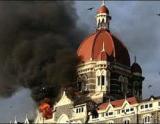
The seven suspects have been charged with planning, financing and executing the terror attacks in Mumbai that killed 166 people in November 2008.

Their trial has been hit by countless delays and the judge has been changed five times.

Comments

Add new comment

  • Coastaldigest.com reserves the right to delete or block any comments.
  • Coastaldigset.com is not responsible for its readers’ comments.
  • Comments that are abusive, incendiary or irrelevant are strictly prohibited.
  • Please use a genuine email ID and provide your name to avoid reject.
Agencies
July 30,2020

Mumbai, Jul 30: Counterfeiting incidents have increased 24 per cent in the country in 2019 over the previous year, creating an over Rs 1 lakh crore hole in the economy, according to a report.

The report also said counterfeiters are having a free run due to the pandemic-driven disruptions to organised supply chains and the resultant spike in consumer demand.

According to the report by ASPA, a self-regulated industry body of anti-counterfeiting and traceability solutions providers, counterfeiting has risen steadily in the last few years, and exploiting the pandemic as a cover for their activities.

Between February and April 2020, over 150 incidents of counterfeiting cases were reported, mostly about fake PPE kits, sanitisers and masks taking advantage of the high demand for these products, it noted.

"There was a 24 per cent increase in counterfeiting in 2019 over 2018, leading to the loss of more than Rs 1 lakh crore to the overall economy," said Nakul Pasricha, president of Authentication Solution Providers Association.

The association works with global authorities like the International Hologram Manufacturers Association, Counterfeit Intelligence Bureau of the Interpol, and domestic industry lobbies like Ficci, he said.

Counterfeiting is a universal issue and is 3.3 per cent of global trade, according to the OECD data, impacting social and economic development across the world.

The report lists the currency, FMCG, alcohol, pharma, documents, agriculture, infrastructure, automotive, tobacco, lifestyle and apparel, as the 10 sectors impacted most by counterfeiting.

Among these, currency, alcohol and FMCG continue to be the top three sectors with the highest counterfeiting in the last two years. The FMCG sector is most vulnerable, as counterfeit incidents rose 63 per cent between 2018 (79) and 2019 when the reported cases jumped to 129.

Within the states, the fakers have a free run in Uttar Pradesh, Bihar, Rajasthan, Madhya Pradesh, Bengal, Punjab, Jharkhand, Delhi, Gujarat, and Uttarakhand, calling for urgent actions to frame anti-counterfeiting policy measures.

According to the report, UP continues to be on top followed by Bihar, Rajasthan, and together these three states represent almost 45 per cent of all counterfeiting reported in the last two years.

What is more alarming is that counterfeiting is not limited to high-end luxury items today, as common everyday items as fake cumin seeds, mustard cooking oil, ghee, hair oils, soaps, baby care vaccines and medicines are aplenty in the markets.

"There is an urgent need for building and nurturing authentication ecosystems in the country with the active involvement and active participation of all stakeholders," said Pasricha.

Comments

Add new comment

  • Coastaldigest.com reserves the right to delete or block any comments.
  • Coastaldigset.com is not responsible for its readers’ comments.
  • Comments that are abusive, incendiary or irrelevant are strictly prohibited.
  • Please use a genuine email ID and provide your name to avoid reject.
News Network
March 27,2020

New Delhi, Mar 27: Cabinet Secretary Rajiv Gauba has asked states to urgently strengthen the surveillance of international travellers who entered the country before the lockdown as there appeared to be a "gap" between the actual monitoring for COVID-19 and the total arrivals.

In a letter to chief secretaries of all States and Union Territories, Gauba said such a gap in monitoring of international passengers for coronavirus "may seriously jeopardise the efforts to contain the spread of COVID-19", given that many amongst the persons who have tested positive so far in India have history of international travel.

"As you are aware, we initiated screening of international incoming passengers at the airports with effect from January 18, 2020. I have been informed that up to March 23, 2020, cumulatively, Bureau Of Immigration has shared details of more than 15 lakh incoming international passengers with the States/UTs for monitoring for COVID-19.

"However, there appears to be a gap between the number of international passengers who need to be monitored by the States/UTs and the actual number of passengers being monitored," Gauba said in his letter.

The government had started monitoring of all international passengers who have arrived in India in last two months in the wake of the coronavirus outbreak.

Gauba said,"it is important that all international passengers are put under close surveillance to prevent the spread of the epidemic."

He said the Ministry of Health and Family Welfare (MoHFW) has repeatedly emphasised the importance of monitoring, and requested the states and UTs to take immediate steps in this regard.

"I would, therefore, like to request you to ensure that concerted and sustained action is taken urgently to put such passengers under surveillance immediately as per MoHFW guidelines," he said.

The cabinet secretary also urged the chief secretaries to actively involve the district authorities in this effort.The screening of international incoming passengers at airports was done from January 18 in a phased manner.

The Central and state governments have unleashed unprecedented and extraordinary measures to contain the spread of the fast-spreading coronavirus, which has already infected more than 700 people in the country and claimed at least 17 lives.

A nationwide lockdown was also announced by Prime Minister Narendra Modi on Tuesday for 21 days.

Comments

Add new comment

  • Coastaldigest.com reserves the right to delete or block any comments.
  • Coastaldigset.com is not responsible for its readers’ comments.
  • Comments that are abusive, incendiary or irrelevant are strictly prohibited.
  • Please use a genuine email ID and provide your name to avoid reject.
News Network
May 15,2020

New Delhi, May 15: Union Health Minister Harsh Vardhan has appealed to all states and Union Territories to ban the sale of smokeless tobacco products and spitting in public places in line with the orders of the Rajasthan and Jharkhand governments to prevent the spread of coronavirus infection.

In a letter to all state health ministers, Vardhan said smokeless tobacco users have a tendency to spit in public places or otherwise and therefore, increase health risks especially those of spreading contagious diseases like COVID-19, tuberculosis, swine flu, encephalitis and others.

"Use of smokeless tobacco also creates an unhygienic environment which further spreads the diseases. The large gathering at the retail outlets where smokeless tobacco products are sold, also pose the risk of spread of COVID-19," he said.

In the letter dated May 11, the Union minister underlined that tobacco use is a major threat to public health globally. He also mentioned the Indian Council of Medical Research's (ICMR) appeal to the public not to consume and spit smokeless tobacco products in public places.

Chewing tobacco products and areca nut increases the production of saliva followed by a very strong urge to spit. Spitting in public places could enhance the spread of the COVID-19, Vardhan said.

"By banning spitting in public places, states and UTs can help in achieving not only Swachh Bharat but also Swasth Bharat (Clean India and Healthy India)," he said.

Vardhan also mentioned the May 1 guidelines issued by the Union Home Ministry under the National Disaster Management Act, 2005, which stipulate that "spitting in public places shall be punishable with fine as may be prescribed by the state/UT local authority and consumption of liquor, pan, gutkha, tobacco etc in public places is not allowed".

Appreciating the efforts of Rajasthan and Jharkhand in this direction, the Union Health Minister urged all states to take similar measures and create widespread awareness regarding the harm of spitting in public places.

The Rajasthan government had by an ordinance banned spinning in public places and sale of paan, gutka and tobacco in the wake of the coronavirus outbreak. The Jharkhand too has imposed a complete ban on all types of tobacco products to prevent spitting in public places that could increase the spread of coronavirus infection.

"I am happy to note that the governments of Jharkhand and Rajasthan have already completely banned the sale of tobacco products and spitting in public places. Therefore, I urge upon you to take similar measures and also create widespread awareness in your state/ UT regarding harms of spitting in public places.

"It is also requested that the directions of Ministry of Home Affairs in this regard may be implemented scrupulously and effectively," Vardhan said in the letter.

Tobacco smoking is a known risk factor for many respiratory infections and increases the severity of related diseases. A review of studies by public health experts convened by WHO on April 29 found that smokers are more likely to develop severe diseases, compared to non-smokers, said Binoy Mathew, senior programme officer of Voluntary Health Association of India.

It is one of the main risk factors for a number of chronic ailments, including cancer, lung and cardiovascular diseases, he said, adding that according to the Global Adult Tobacco Survey, with 268 million or 28.6 per cent of all adults in India, the country has the second largest number of tobacco users in the world.

At least 12 lakh die from tobacco-related diseases every year, Mathew said.

Those keen to quit smoking and smokeless products can avail of free of charge telephone-based services launched by the government. The Ministry of Health has set up a National Tobacco Quit Line Services to provide counselling services to help tobacco consumers quit the habit.

Comments

Add new comment

  • Coastaldigest.com reserves the right to delete or block any comments.
  • Coastaldigset.com is not responsible for its readers’ comments.
  • Comments that are abusive, incendiary or irrelevant are strictly prohibited.
  • Please use a genuine email ID and provide your name to avoid reject.