


Every poor family may get a mobile

August 8, 2012

New Delhi, August 8: In what could turn out to be its calling card for the 2014 general elections, the government is finalizing a Rs 7,000 crore scheme to give one mobile phone to every family living below the poverty line.

Sources in the PMO said the scheme—Har Hath Mein Phone—expected to be announced by PM Manmohan Singh on August 15, will not only aim to give away mobiles to around six million BPL households, but also provide 200 minutes of free local talk time.

Top government managers involved in formulating the scheme want to sell it as a major empowerment initiative of the UPA 2. While the move will ensure contact with the beneficiaries of welfare programmes worth thousands of crores, there is also a view the scheme will provide an opportunity for the UPA to open a direct line of communication with a sizable population that plays an active role in polls.

The scheme may be funded from the telecom department's universal service obligation (USO) funds. According to a source, 50% of the cost is likely to come from the bidder who gets the right to provide the service and the remaining from the USO fund. The fund is meant to be used to meet USO aims by providing access to phone services to people in rural and remote areas at affordable prices. The resources for its implementation are raised through a service levy fixed at 5% of the adjusted gross revenue of all telecom service providers except the pure value added service providers like internet, voice mail, email etc.

According to estimates, the scheme will involve a monthly expenditure of Rs 100 per cellphone. The government is also exploring the possibility of getting service charges subsidized through competitive bidding.

The PMO is directly involved with the Planning Commission and telecom ministry in giving a final shape to the scheme. The government has already launched a national infrastructure initiative under the PM's advisor Sam Pitroda that aims to link 2,50,000 panchayats across the country within 16 months through internet so that basic communication facilities can be provided to the rural masses.
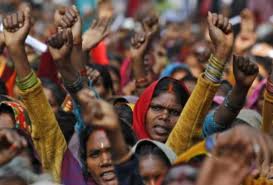

BPL


Comments

Add new comment

  • Coastaldigest.com reserves the right to delete or block any comments.
  • Coastaldigset.com is not responsible for its readers’ comments.
  • Comments that are abusive, incendiary or irrelevant are strictly prohibited.
  • Please use a genuine email ID and provide your name to avoid reject.
News Network
January 24,2020

Jan 24: India’s economy appears to be shaking off a slump, as activity in the services and manufacturing sectors expanded for a second straight month in December.

The needle on a gauge measuring so-called animal spirits signaled the economy may be taking a turn for the better, as five of the eight high-frequency indicators tracked by Bloomberg News came in stronger last month. The dial was last at the current position in August.

“Animal spirits” is a term coined by British economist John Maynard Keynes to refer to investors’ confidence in taking action, and the gauge uses the three-month weighted average to smooth out volatility in the single-month numbers.

The nascent recovery would need a helping hand, with expectations building that Finance Minister Nirmala Sitharaman will provide some stimulus when she presents the budget Feb. 1. Official forecasts show the economy is set to expand at 5% in the year ending March 2020 -- the weakest pace in more than a decade.

Here are the details of the dashboard:

Business Activity

The dominant services index rose to the highest level in five months in December as improving new work orders helped boost activity. The seasonally adjusted Markit India Services PMI index climbed to 53.3 from 52.7 in November, helping post a strong end to the calendar year.

India’s manufacturing PMI also rose -- to 52.7 from 51.2 a month ago -- boosted by the fastest increase in new orders since July. A reading above 50 means expansion while anything below that signals contraction.

The uptick in business confidence was accompanied by a rise in inflationary pressures, the survey showed. That trend may keep monetary policy makers from resuming interest-rate cuts anytime soon, leaving most of the heavy-lifting to boost growth with the government.

“The relative stability in macro indicators over the past two months suggests that the worst is behind, but the recovery is likely to be prolonged,” said Teresa John, an economist at Nirmal Bang Equities Pvt. in Mumbai. “Still, sluggish growth and rising inflation indicate that India may well remain in stagflation for most of 2020.”

Exports

Exports remained a laggard, falling 1.8% in December from a year ago. The drag was mainly because of a fall in export of engineering goods, which constitute a third of India’s non-oil exports.

Capital goods imports continued to contract and was lower by 16.5% year-on-year in December after a 22% drop in November. This was the seventh consecutive month of continuous decline, underscoring the weakness in the capex cycle, according to IDFC First Bank.

Consumer Activity

Weakness in demand for passenger vehicles persisted, with local sales falling 1.2% in December from a year ago, according to the Society of Indian Automobile Manufacturers. That capped the worst yearly passenger vehicle sales on record. A Nielsen study on demand for fast-moving consumer goods showed volume growth dropped to 3.5% in the last quarter of 2019 from 3.9% in the same period of 2018.

Funding conditions held out hope, showing considerable improvement in December, according to the Citi India Financial Conditions Index. Credit growth remained tardy though, with demand for loans rising at a slower 7.1% pace from a year ago compared with a nearly 8% growth in November.

Industrial Activity

Industrial output rose for the first time in four months in November. The pick up was broad-based, led by mining, manufacturing and electricity. Mining and manufacturing, in particular, posted a second month of sequential growth. Production of consumer goods also rose after a few months of contraction.

The index of eight core infrastructure industries, which feeds into the index of industrial production, however, declined 1.5% in November from a year ago -- the fourth straight month of contraction. That was on account of shrinking production of electricity, steel, coal, natural gas and crude oil. Both the core sector and industrial output numbers are reported with a one-month lag.

Comments

Add new comment

  • Coastaldigest.com reserves the right to delete or block any comments.
  • Coastaldigset.com is not responsible for its readers’ comments.
  • Comments that are abusive, incendiary or irrelevant are strictly prohibited.
  • Please use a genuine email ID and provide your name to avoid reject.
News Network
March 27,2020

Mumbai, Mar 27: Reserve Bank of India (RBI) Governor Shaktikanta Das on Friday said that Monetary Policy Committee (MPC) has taken note of the global economic activity coming to a near standstill due to the coronavirus pandemic and added that large parts of the world could slip into recession in the coming days to the coronavirus crisis.
"The MPC noted that global economic activity has come to a near stand-still as COVID-19 related lockdowns and social distancing are imposed across a widening swath of affected countries. Expectations of a shallow recovery in 2020, from 2019's decade low in global growth, have been dashed," Das said.
"The outlook is now heavily contingent upon the intensity, spread and duration of the pandemic. There is a rising probability that large parts of the world will slip into recession," he added.
The RBI Governor further added that "the implied GDP growth of 4.7 per cent in Quarter 4 of 2019-20, in the second advance estimates of the National Statistics Office which was released in February 2020, within the annual estimate of 5 per cent for the year as a whole is now at risk."
As per the outlook for the year 2020-21, Das said, "Apart from continuing resilience of agriculture and allied activities most other sectors of the economy will be adversely impacted by the pandemic depending upon, its intensity, spread and duration."
Das also announced a reduction in the repo and reverse repo rates for banks.
"The repo rate has been reduced by 75 basis points to 4.4 per cent. The reserve repo rate has been reduced by 90 basis points to 4 per cent," Das said addressing the media.
The decision for "a sizeable reduction" in the policy repo rate, according to the RBI Governor was taken to "revive growth and mitigate the impact of COVID-19 and ensure financial stability." 

Comments

Add new comment

  • Coastaldigest.com reserves the right to delete or block any comments.
  • Coastaldigset.com is not responsible for its readers’ comments.
  • Comments that are abusive, incendiary or irrelevant are strictly prohibited.
  • Please use a genuine email ID and provide your name to avoid reject.
News Network
April 11,2020

New Delhi, Apr 11: Congress leader Rahul Gandhi on hailed accredited social health activists, auxiliary nurse and midwives and anganwadi workers for their role in the fight against the coronavirus pandemic, saying they are "true patriots" who toil to keep communities safe in the midst of this grave crisis.

In an environment where fear and misinformation pose a bigger danger than the virus itself, community workers have a key role to play in educating people about the dangers of COVID-19 and the manner in which it is transmitted, Gandhi said.

In a message for Accredited Social Health Activists (ASHA), Auxiliary Nurse and Midwives (ANMs) and Anganwadi Workers, he said they are working with dedication and courage, putting their lives at risk, on the frontlines of the battle against the COVID-19 pandemic.

"The greatest form of patriotism is to serve our country in her hour of need. Our community workers are true patriots, our unsung heroes, who toil tirelessly away from the limelight, to keep our communities safe in the midst of this grave crisis," the former Congress chief said.

"As a nation, we owe them and their families a huge debt of gratitude for the tremendous personal sacrifices each of them is making. I hope that when this crisis is over their exemplary service will serve as a catalyst for deep-rooted change in their conditions of work," he said.

Gandhi said he salutes each and every community worker for their service to the nation and prays that they and their families will remain safe during this pandemic.

Comments

Add new comment

  • Coastaldigest.com reserves the right to delete or block any comments.
  • Coastaldigset.com is not responsible for its readers’ comments.
  • Comments that are abusive, incendiary or irrelevant are strictly prohibited.
  • Please use a genuine email ID and provide your name to avoid reject.