Has US sold India defence equipment with dud Chinese parts?

August 9, 2012

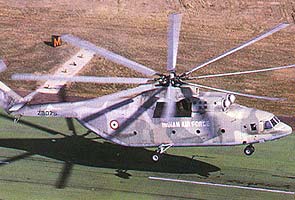
Mi-_chopper

New Delhi, August 9: The Ministry of Defence is investigating the possibility that crucial and expensive equipment bought from the US includes defective Chinese parts.

Defence Minister A K Antony today told the Rajya Sabha that the"Government is verifying reports" about this.

A US Senate investigation has concluded that between 2009 and 2010, 1800 incidents were detected in which more than a million fake parts had been sourced from China. The US Senate panel report that was released this May states that counterfeit electronic parts from China were used in the Air Force's C-130J cargo plane, helicopters for special operations and the Navy's Poseidon surveillance plane.

India has purchased six C-130J aircraft from the US manufacturer Lockheed Martin. The planes have joined the IAF fleet and are based at Hindon near Delhi. Also New Delhi has signed on to buy the Poseidon ( named P8I) surveillance plane from Boeing.

In the last five years, India has shopped extensively with the US for its defence needs. Its purchases include the Indian Naval Ship Jalashwa, UH-3H helicopters, Harpoon missiles, Long Range Acoustic Devices, and more.

In a related development, Mr Antony told the Parliament that the proposal for procurement of the Medium Multi-Role Combat Aircraft (MMRCA) is currently at the stage of commercial discussions." The first of these aircraft are expected to join the Indian Air Force in 2017.

French made Rafale aircrafts have been short listed from six competitors which included US made F- 16s, Swiss made Gripen's and Russian made MiG-35.

The purchase of 126 fighter aircraft - pegged at a cost of at least USD 10.4 bn, making it one the biggest-ever defence deals.


Comments

Add new comment

  • Coastaldigest.com reserves the right to delete or block any comments.
  • Coastaldigset.com is not responsible for its readers’ comments.
  • Comments that are abusive, incendiary or irrelevant are strictly prohibited.
  • Please use a genuine email ID and provide your name to avoid reject.
News Network
May 12,2020

Srinagar, May 12: Two paramilitary Central Reserve Police Force (CRPF) officers committed suicide after shooting themselves with their service rifles in Kashmir on Tuesday.

In the first incident, a CRPF sub-inspector on Tuesday committed suicide after shooting himself with his service rifle at Mattan area of south Kashmir’s Anantnag district. The deceased, identified as Fatah Singh of Jaisalmer in Rajasthan, had reportedly left behind a suicide note that read: “I am afraid, I may have Corona.”

Station House Officer (SHO) Akura, Mattan police station Jazib Ahmed said that they have followed the COVID-19 protocol while dealing with the body of the CRPF sub-inspector. “His samples have been taken and post-mortem conducted. Only results would confirm whether he was a COVID-19 positive,” he said.

CRPF spokesman in Srinagar Pankaj Singh said the officer had returned to his unit after performing a day-long duty. “As such, there is no evidence that he had caught COVID-19. Let’s wait for the final report. Details will be shared with the media,” Singh said.

Hours after the first incident, an assistant-sub-inspector of the CRPF posted in Srinagar also committed suicide by shooting himself dead with his service rifle.

Special Director General of CRPF, Zulfikar Hassan said they were trying to find out the reason for the two boys taking this extreme step.

Suicides and fratricide incidents are not uncommon among the CRPF and the Army personnel deployed in Kashmir. In 2006, recognising the rising fratricide and suicide cases among the armed forces, the then Defence Minister had constituted an expert group of psychiatrists under the Defence Institute of Psychological Research in order to suggest remedial measures to prevent suicide and fratricide incidents.

Over the last decade, incidents of fratricide have reportedly reduced in the Army as the force has taken measures to address the issue.

Comments

Add new comment

  • Coastaldigest.com reserves the right to delete or block any comments.
  • Coastaldigset.com is not responsible for its readers’ comments.
  • Comments that are abusive, incendiary or irrelevant are strictly prohibited.
  • Please use a genuine email ID and provide your name to avoid reject.
News Network
May 7,2020

May 7: India is projected to record the highest number of births in the 9 months since COVID-19 was declared a pandemic in March, with more than 20 million babies expected to be born in the country between March and December, according to top UN body.

The United Nations Children's Fund (UNICEF) warned that pregnant mothers and babies born during the pandemic across the world were threatened by strained health systems and disruptions in services.

An estimated 116 million babies will be born under the shadow of COVID-19 pandemic, UNICEF said on Wednesday, ahead of Mother's Day, observed on May 10.

These babies are projected to be born up to 40 weeks after COVID-19 was recognised as a pandemic on March 11.

The highest numbers of births in the 9 months since the pandemic was declared are expected to occur in India, where 20.1 million babies are projected to be born between March 11 and December 16. Other countries with the expected highest numbers of births during this period are China (13.5 million), Nigeria (6.4 million), Pakistan (5 million) and Indonesia (4 million), it said.

"Most of these countries had high neonatal mortality rates even before the pandemic and may see these levels increase with COVID-19 conditions," UNICEF said.

It is estimated that there will be 24.1 million births in India for the January-December 2020 period.

UNICEF warned that COVID-19 containment measures can disrupt life-saving health services such as childbirth care, putting millions of pregnant mothers and their babies at great risk.

Even wealthier countries are affected by this crisis. In the US, the sixth-highest country in terms of the expected number of births, over 3.3 million babies are projected to be born between March 11 and December 16.

"New mothers and newborns will be greeted by harsh realities," UNICEF said, adding they include global containment measures such as lockdowns and curfews; health centres overwhelmed with response efforts; supply and equipment shortages; and a lack of sufficient skilled birth attendants as health workers, including midwives, are redeployed to treat COVID-19 patients.

"Millions of mothers all over the world embarked on a journey of parenthood in the world as it was. They now must prepare to bring a life into the world as it has become – a world where expecting mothers are afraid to go to health centres for fear of getting infected, or missing out on emergency care due to strained health services and lockdowns," UNICEF Executive Director Henrietta Fore said.

"It is hard to imagine how much the coronavirus pandemic has recast motherhood" Fore said.

UNICEF said its analysis was based on data from World Population Prospects 2019 of the UN Population Division.

An average full-term pregnancy typically lasts a complete 9 months, or 39 to 40 weeks. For the purposes of this estimate, the number of births for a 40-week period in 2020 was calculated.

The 40-week period of March 11 to December 16 is used in this estimate based upon the WHO's March 11 assessment that COVID-19 can be characterised as a pandemic.

UNICEF warned that although evidence suggests that pregnant mothers are not more affected by COVID-19 than others, countries need to ensure they still have access to antenatal, delivery and postnatal services.

Similarly, sick newborns need emergency services as they are at high risk of death. New families require support to start breastfeeding, and to get medicines, vaccines and nutrition to keep their babies healthy, it said.

"This is a particularly poignant Mother's Day, as many families have been forced apart during the coronavirus pandemic, but it is also a time for unity, a time to bring everyone together in solidarity. We can help save lives by making sure that every pregnant mother receives the support she needs to give birth safely in the months to come," Fore said.

Issuing an urgent appeal to governments and health care providers to save lives in the coming months, UNICEF said efforts must be made to help pregnant women receive antenatal checkups, skilled delivery care, postnatal care services, and care related to COVID-19 as needed.

Ensure health workers are provided with the necessary personal protective equipment and get priority testing and vaccination once a COVID-19 vaccine becomes available so that can deliver high quality care to all pregnant women and newborn babies during the pandemic, it said.

While it is not yet known whether the virus is transmitted from a mother to her baby during pregnancy and delivery, UNICEF advised all pregnant women to follow precautions to protect themselves from exposure to the virus.

Closely monitor themselves for symptoms of COVID-19 and seek advice from the nearest designated facility if they have concerns or experience symptoms. Pregnant women should also take the same precautions to avoid COVID -19 infection as other people: practice physical distancing, avoid physical gatherings and use online health services, it said.

UNICEF said even before COVID-19 pandemic, an estimated 2.8 million pregnant women and newborns died every year, or 1 every 11 seconds, mostly of preventable causes.

The agency called for immediate investment in health workers with the right training, who are equipped with the right medicines to ensure every mother and newborn is cared for by a safe pair of hands to prevent and treat complications during pregnancy, delivery and birth.


Comments

Add new comment

  • Coastaldigest.com reserves the right to delete or block any comments.
  • Coastaldigset.com is not responsible for its readers’ comments.
  • Comments that are abusive, incendiary or irrelevant are strictly prohibited.
  • Please use a genuine email ID and provide your name to avoid reject.
News Network
February 29,2020

Thiruvananthapuram, Feb 29: Kerala Excise department has organized a Tik-Tok competition as part of its drug addiction-free mission.

The contest will be on the effects of drug addiction on people and society. The winner goes will go home with an I-Pad as a prize.

The competition is being organised as part of the Department's intensive campaign titled "Tomorrow's Kerala, Drug and Addiction-free Kerala".

"Those taking part should post the video from their profile with the hashtag #vimukthikerala. Each contestant can post more than one video. They can challenge friends with #vimukthichallenge. The last date of receiving them is March 5," said the spokesperson of the Excise Department.

The number of likes a video gets, its theme and presentation will be the criteria on which the video will be judged.

"As soon as a video is posted on Tik-Tok, it should also be sent on the WhatsApp number 9072588222," added the spokesperson of the Excise Department.

Comments

Add new comment

  • Coastaldigest.com reserves the right to delete or block any comments.
  • Coastaldigset.com is not responsible for its readers’ comments.
  • Comments that are abusive, incendiary or irrelevant are strictly prohibited.
  • Please use a genuine email ID and provide your name to avoid reject.