


Kerala heading towards zero-population growth rate

August 10, 2012
kerala-zero

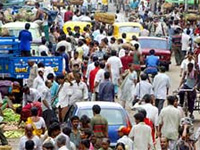
Thiruvanathapuram, August 10: Kerala is heading for a significant phase in its demographic transition with the state moving towards achieving zero population growth rate, which will result in an increase in scarcity of labour.

With a very low fertility rate and stabilising death rate, Kerala is expected to achieve zero population growth rate in 25 to 30 years, a stage indicating the incipient decline of the population, according to the State Urbanisation Report.

"Kerala is already experiencing negative population growth and with birth and death rate remaining at the same level, the state's population growth will reach zero level", Population Expert at the Centre for Development Studies, S Irudaya Rajan, told PTI here.The very low natural increase in population, low fertility rate, stablized death rate all leads to the third stage of demographic transition in Kerala -- zero population growth rate, he said.

There would be more old people, leading to health related problems. Also, there would be shortage of labour.

The report, prepared by the Department of Town and Country Planning, found that migration from the state and decline in fertility is a cause for low population growth.Interestingly there were regional variations in population growth. There was also a spatial shift in the region of high population growth rate in the last five decades.

While in the 1950s, the southern districts showed high population growth, at present the growth rate is in central and northern districts, the report said.

Presently Kerala's population is 3.34 crore, constituting about 2.7 per cent of the total population of India.The annual population growth rate is 0.5 per cent, lowest in the country. Kerala has a high population density with 859 persons per square kilometer.Historically Kerala has experienced a very low population growth rate compared to the national population growth rate.

Kerala has been considered an 'out-migration' state right from 1930.As per a study of city based Centre for Developmemnt Studies 22.8 lakh people from the state were living abroad in 2011 while the number of migrants living in other states is estimated at 9.31 lakh.

The report said Kerala, which already depends on workers from other states, especially West Bengal, Odisha and the North East for construction activities, would also face labour shortage in agriculture and related activities in future.

Kerala now has around three million immigrant labourers, mainly in the construction sector and other allied activities.

On population features in urban areas, the report said growth rate of urban population has always been higher than that of the total population, indicating the high pace of urbanisation experienced in Kerala.

"The state has undergone highest level of urbanisation in its history with a percentage increase of 83.82 during 2001-2011 over the previous decade," it said.

As per the present urbanisation pattern, environmentally sensitive high land is spared, but fetile agriculture land in the midlands is being converted for commercial and residential purposes, the report said.


Comments

Add new comment

  • Coastaldigest.com reserves the right to delete or block any comments.
  • Coastaldigset.com is not responsible for its readers’ comments.
  • Comments that are abusive, incendiary or irrelevant are strictly prohibited.
  • Please use a genuine email ID and provide your name to avoid reject.
News Network
February 14,2020

London, Feb 14: Liquor tycoon Vijay Mallya once again asked the Indian banks to take back 100 per cent of the principal amount owed to them at the end of his three-day British High Court appeal on Thursday against an extradition order to India.

The 64-year-old former Kingfisher Airlines boss, wanted in India on charges of fraud and money laundering amounting to an alleged Rs 9,000 crores in unpaid bank loans, said the Enforcement Directorate (ED) and the Central Bureau of Investigation (CBI) are fighting over the same assets and not treating him reasonably in the process.

“I request the banks with folded hands, take 100 per cent of your principal back, immediately,” he said outside the Royal Courts of Justice in London.

“The Enforcement Directorate attached the assets on the complaint by the banks that I was not paying them. I have not committed any offenses under the PMLA (Prevention of Money Laundering Act) that the Enforcement Directorate should suo moto attach my assets," he said.

"I am saying, please banks take your money. The ED is saying no, we have a claim over these assets. So, the ED on the one side and the banks on the other are fighting over the same assets,” he added.

Asked about heading back to India, he noted: “I should be where my family is, where my interests are.

"If the CBI and the ED are going to be reasonable, it’s a different story. What all they are doing to me for the last four years is totally unreasonable.”

Lord Justice Stephen Irwin and Justice Elisabeth Laing, the two-member bench presiding over the appeal, concluded hearing the arguments in the case and said they will be handing down their verdict at a later date after considering the oral as well as written submissions in the “very dense” case over the next few weeks.

On a day of heated arguments between Mallya’s barrister, Clare Montgomery, and Crown Prosecution Service (CPS) counsel Mark Summers, arguing on behalf of the Indian government, both sides clashed over the prima facie case of fraud and deception against Mallya.

“We submit that he lied to get the loans, then did something with the money he wasn’t supposed to and then refused to give back the money. All this could be perceived by a jury as patently dishonest conduct,” said Summers.

“What they [Kingfisher Airlines] were saying [to the banks] about profitability going forward was knowingly wrong,” he said, as he took the High Court through evidence to counter Mallya’s lawyers’ claims that Westminster Magistrates Court Judge Emma Arbuthnot had fallen into error when she found a case to answer in the Indian courts against Mallya.

Mallya, who remains on bail on an extradition warrant, is not required to attend the hearings but has been in court to observe the proceedings since the three-day appeal opened on Tuesday. A key defence to disprove a prima facie case of fraud and misrepresentation on his part has revolved around the fact that Kingfisher Airlines was the victim of economic misfortune alongside other Indian airlines.

However, the CPS has argued that “there is enough in the 32,000 pages of overall evidence to fulfil the [extradition] treaty obligations that there is a case to answer”. “There is not just a prima facie case but overwhelming evidence of dishonesty… and given the volume and depth of evidence the District Judge [Arbuthnot] had before her, the judgment is comprehensive and detailed with the odd error but nothing that impacts the prima facie case,” said Summers.

At the start of the appeal, Mallya’s counsel claimed Arbuthnot did not look at all of the evidence because if she had, she would not have fallen into the multiple errors that permeate her judgment. The High Court must establish if the magistrates’ court had in fact fallen short on a point of law in its verdict in favour of extradition.

Representatives from the Enforcement Directorate (ED) and Central Bureau of Investigation (CBI), as well as the Indian High Commission in London, have been present in court to take notes during the course of the appeal hearing.

Mallya had received permission to appeal against his extradition order signed off by former UK home secretary Sajid Javid last February only on one ground, which challenges the Indian government's prima facie case against him of fraudulent intentions in acquiring bank loans.

At the end of a year-long extradition trial at Westminster Magistrates’ Court in London in December 2018, Judge Arbuthnot had found “clear evidence of dispersal and misapplication of the loan funds” and accepted a prima facie case of fraud and a conspiracy to launder money against Mallya, as presented by the CPS on behalf of the Indian government.

Mallya remains on bail since his arrest on an extradition warrant in April 2017 involving a bond worth 650,000 pounds and other restrictions on his travel while he contests that ruling.

Comments

Add new comment

  • Coastaldigest.com reserves the right to delete or block any comments.
  • Coastaldigset.com is not responsible for its readers’ comments.
  • Comments that are abusive, incendiary or irrelevant are strictly prohibited.
  • Please use a genuine email ID and provide your name to avoid reject.
Agencies
February 11,2020

New Delhi, Feb 11: Delhi BJP chief Manoj Tiwari on Tuesday said the party will review why it failed to meet its own expectations in the Assembly polls and saw a moral victory in the fact that the party's vote share has increased since 2015.

"Delhi must have given mandate after careful thinking. Our vote percentage has increased from 32 per cent to around 38 per cent. Delhi did not reject us and the increase (in vote share) is a good sign for us," he told reporters.

He said the BJP hopes that there would be less blame game and more work in the national capital and congratulated Arvind Kejriwal on his party's victory in the polls.

After winning the Patparganj seat, AAP senior leader Manish Sisodia accused the BJP of indulging in the politics of hate.

"We indulge in politics of development not politics of hate. We're against the roadblock in Shaheen Bagh as we were earlier," he said.

Comments

Add new comment

  • Coastaldigest.com reserves the right to delete or block any comments.
  • Coastaldigset.com is not responsible for its readers’ comments.
  • Comments that are abusive, incendiary or irrelevant are strictly prohibited.
  • Please use a genuine email ID and provide your name to avoid reject.
News Network
April 25,2020

New Delhi, Apr 25: Neighbourhood and standalone shops, including those selling garments, mobile phones, hardware and stationery items have been allowed to open but those located in market places, malls and COVID-19 hotspots and containment zones, will continue to remain shut till May 3.

In rural areas, all shops, except those in single and multi-brand shopping malls, are allowed to open.

However, a Home Ministry official said the final decision of whether to allow the additional shops to open or not will be taken by the state governments and Union Territory administrations depending on their respective COVID-19 situation.
 
While allowing opening of more shops, a move seen as a relief to people who have been under lockdown since March 24, the government order issued on Friday night said the shops will be functioning with 50 per cent of workforce and after adhering strictly to precautions which include social distancing and wearing of masks.

The Union Home Ministry also said malls, liquor and cigarette shops, sale of non-essential items through e-commerce platforms continue to remain shut.

Restaurants, hair salons and barber shops will not be allowed to open as these render services and do not fall under the shop category.

Amending its April 15 order, Union Home Secretary Ajay Bhalla said in the Friday night order that "all shops, including neighbourhood shops and standalone shops, shops in residential complexes, within the limits of municipal corporations and municipalities, registered under the the Shops and Establishment Act of the respective State and UT" will be allowed to open during the lockdown.

The ministry also said shops located in registered markets located outside the municipal corporations and municipalities can open after following the drill of social distancing and wearing of masks but with 50 per cent of strength.

However, single and multi-brands shall continue to remain closed in these areas also.

"All shops registered under the the Shops and Establishment Act of the respective State/UT, including shops in residential complexes and market complexes, except shops in multi-brand and single brand malls, outside the limits of municipal corporations and municipalities, with 50 per cent strength of workers with wearing of masks and social distancing being mandatory" will be allowed to function, the order said.

In a statement on Saturday, the Home Ministry said the order implies that in rural areas, all shops, except those in shopping malls are allowed to open.

In urban areas, all standalone shops, neighbourhood shops and shops in residential complexes are allowed to open.

Shops in markets and market complexes and shopping malls are not allowed to open.

"It is clarified that sale by e-commerce companies will continue to be permitted for essential goods only," the order said and also added that sale of liquor and other items continues to be prohibited as specified in the national directives for COVID-19 management.

The ministry said that liquor shops were given licence under the Excise Act of the states and the establishments thrown open from Saturday were covered under the Shops and Establishment Act of the states.

Sale of cigarettes, gutka are continue to be prohibited during the lockdown.

"As specified in the consolidated revised guidelines, these shops will not be permitted to open in areas, whether rural or urban, which are declared as containment zones by respective States and Union Territories," the statement said.

The lockdown was first announced by Prime Minister Narendra Modi on March 24 in a bid to combat the coronavirus pandemic. It was further extended till May 3.

Comments

Add new comment

  • Coastaldigest.com reserves the right to delete or block any comments.
  • Coastaldigset.com is not responsible for its readers’ comments.
  • Comments that are abusive, incendiary or irrelevant are strictly prohibited.
  • Please use a genuine email ID and provide your name to avoid reject.