


Kerala heading towards zero-population growth rate

August 10, 2012
kerala-zero

Thiruvanathapuram, August 10: Kerala is heading for a significant phase in its demographic transition with the state moving towards achieving zero population growth rate, which will result in an increase in scarcity of labour.

With a very low fertility rate and stabilising death rate, Kerala is expected to achieve zero population growth rate in 25 to 30 years, a stage indicating the incipient decline of the population, according to the State Urbanisation Report.

"Kerala is already experiencing negative population growth and with birth and death rate remaining at the same level, the state's population growth will reach zero level", Population Expert at the Centre for Development Studies, S Irudaya Rajan, told PTI here.The very low natural increase in population, low fertility rate, stablized death rate all leads to the third stage of demographic transition in Kerala -- zero population growth rate, he said.

There would be more old people, leading to health related problems. Also, there would be shortage of labour.

The report, prepared by the Department of Town and Country Planning, found that migration from the state and decline in fertility is a cause for low population growth.Interestingly there were regional variations in population growth. There was also a spatial shift in the region of high population growth rate in the last five decades.

While in the 1950s, the southern districts showed high population growth, at present the growth rate is in central and northern districts, the report said.

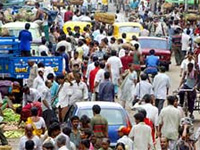
Presently Kerala's population is 3.34 crore, constituting about 2.7 per cent of the total population of India.The annual population growth rate is 0.5 per cent, lowest in the country. Kerala has a high population density with 859 persons per square kilometer.Historically Kerala has experienced a very low population growth rate compared to the national population growth rate.

Kerala has been considered an 'out-migration' state right from 1930.As per a study of city based Centre for Developmemnt Studies 22.8 lakh people from the state were living abroad in 2011 while the number of migrants living in other states is estimated at 9.31 lakh.

The report said Kerala, which already depends on workers from other states, especially West Bengal, Odisha and the North East for construction activities, would also face labour shortage in agriculture and related activities in future.

Kerala now has around three million immigrant labourers, mainly in the construction sector and other allied activities.

On population features in urban areas, the report said growth rate of urban population has always been higher than that of the total population, indicating the high pace of urbanisation experienced in Kerala.

"The state has undergone highest level of urbanisation in its history with a percentage increase of 83.82 during 2001-2011 over the previous decade," it said.

As per the present urbanisation pattern, environmentally sensitive high land is spared, but fetile agriculture land in the midlands is being converted for commercial and residential purposes, the report said.

Comments

Add new comment

  • Coastaldigest.com reserves the right to delete or block any comments.
  • Coastaldigset.com is not responsible for its readers’ comments.
  • Comments that are abusive, incendiary or irrelevant are strictly prohibited.
  • Please use a genuine email ID and provide your name to avoid reject.
News Network
May 11,2020

London, May 11: Fugitive diamond merchant Nirav Modi's five-day extradition trial over the nearly USD2 billion Punjab National Bank (PNB) fraud and money laundering case is set to begin in London's Westminster Magistrates' Court today.

The London High Court rejected Nirav Modi's bail plea in Punjab National Bank (PNB) bank fraud case for the fifth time in early March.

Modi, the prime accused in the PNB fraud case, is currently lodged at Wandsworth prison in south-west London and is wanted for his alleged role in the Rs 13,570 crore loss caused to the Punjab National Bank (PNB) along with his uncle, Mehul Choksi.

Modi, 48, was arrested in March last year by Scotland Yard in connection with the case.

Modi was remanded in custody till February 27, 2020, after he appeared before a UK court on Thursday via video link from his London prison.

The latest bail hearing followed further assurances by Modi, including an increase in the amount of security he had offered as a guarantee as well as stricter bail conditions.

On his last bail application, Modi offered USD 4 million as a security guarantee in return for bail, an offer that was rejected by judges who ruled that there was a real risk that Modi would flee the UK to a country which has no extradition treaty with India.

At the same hearing, the judge ruled that there was "strong evidence" that Modi had engaged in "witness intimidation" and destroying evidence.

Given the seriousness of such allegations, it was all but certain that the latest bail application would be rejected.

Modi's lawyers had contended that their client was being held in difficult conditions at Wandsworth prison and had also claimed that his mental health was deteriorating as a result of his incarceration.

However, ruling at the High Court today, Justice Ian Dove said there was a "clear need for this application to be refused in the present circumstances."

It comes just days after the second sale of assets belonging to Modi valued at millions of dollars.

The items include a luxury Rolls Royce car, a Patek Philippe watch and a painting by the renowned Indian artist Amrita Sher-Gil valued at USD 2.5 million but expected to fetch considerably more.

Meanwhile, Nirav's brother Neeshal Modi, who is also one of the co-conspirators in the PNB scam, has written to Enforcement Directorate, distancing himself from his brother's actions and said that he had no knowledge of it.

Comments

Add new comment

  • Coastaldigest.com reserves the right to delete or block any comments.
  • Coastaldigset.com is not responsible for its readers’ comments.
  • Comments that are abusive, incendiary or irrelevant are strictly prohibited.
  • Please use a genuine email ID and provide your name to avoid reject.
Agencies
August 3,2020

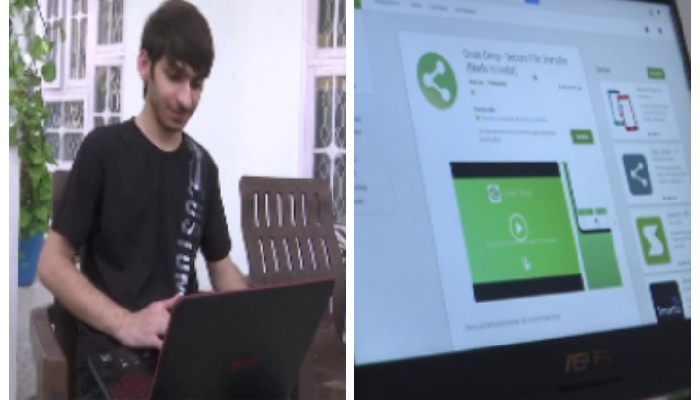
Rajouri, Aug 3: Ashfaq Mehmood Choudhary, a 17-year-old boy from Chattyear of Jammu and Kashmir's Rajouri district, has developed a file-sharing app 'Dodo Drop' which would enable users to share audios, videos, images, and texts between two devices without Internet access.

While speaking to media persons, Ashfaq Mehmood said that the 'Dodo Drop' application is an alternative to the Chinese 'SHAREit' app. "The Indian government has banned several Chinese apps due to data breaching, and among those apps was SHAREit which was used for sharing files.

Users faced a lot of problems due to the ban, and so I decided to make this file-sharing app. With 'Dodo Drop', users can share audios, videos, images, and even texts," he said.

Ashfaq said that it took him four weeks to develop the application, and it was launched on August 1 this year. The 'Dodo Drop' application has a transfer rate of up to 480 mbps, which is faster than the SHAREit app and is "quite easy" to use.

"Users can transfer data comprising photos, videos, audios, apps, texts, etc. between two devices with no Internet access. The transfers are fully encrypted and secure," he added.

"Our Prime Minister has always asserted the need for decreasing the dependency on foreign products and apps and to focus on the development of India-based apps. I tried to be part of the initiative of 'Aatmanirbhar Bharat' by developing an India-based file-sharing app. I want to develop global-standard apps for India," he added.

"We support and cooperate with him. He generates his own income by working on some projects and utilises it. We will continue to support him," said Parvez Ahmed Choudhary, Ashfaq's father.

In July, the Ministry of Electronics and Information Technology (MEITY) banned 47 apps, which were variants and cloned copies of the 59 apps banned earlier in June. These banned clones included SHAREit Lite, Tiktok Lite, Helo Lite, BIGO LIVE Lite, and VFY Lite.

The 59 apps had been banned by the Centre in June in view of the information available that they were engaged in activities which were "prejudicial to sovereignty and integrity and defence" of the country.

Almost all the apps banned had some preferential Chinese interest and the majority had parent Chinese companies.

The ban came amid border tensions with China in the Eastern Ladakh region.

Comments

Add new comment

  • Coastaldigest.com reserves the right to delete or block any comments.
  • Coastaldigset.com is not responsible for its readers’ comments.
  • Comments that are abusive, incendiary or irrelevant are strictly prohibited.
  • Please use a genuine email ID and provide your name to avoid reject.
News Network
January 1,2020

Kolkata, Jan 1: US-based Bangladeshi author and playwright Sharbari Zohra Ahmed feels that the people of the country of her origin are more alike than different from Indians as they were originally Hindus.

But Bangladeshis now want to forget their Hindu roots, said the author, who was born in Dhaka and moved to the United States when she was just three weeks old.

Ahmed, who is the co-writer of the Season 1 of 'Quantico', a popular American television drama thriller series starring Priyanka Chopra, rues that her identity as a Bengali is getting lost in Bangladesh due to the influence of right-wing religious groups.

"How can Bangladesh deny its Hindu heritage? We were originally Hindus. Islam came later," Ahmed said while speaking to PTI here recently.

"The British exploited us, stole from us and murdered us," she said about undivided India, adding that the colonialists destroyed the thriving Muslin industry in Dhaka.

Ahmed said the question of her belief and identity in Bangladesh, where the state religion is Islam, has prompted her to write her debut novel 'Dust Under Her Feet'.

The British exploitation of India and the country's partition based on religion has also featured in her novel in a big way.

Ahmed calls Winston Churchill, the British prime minister during World War II, a "racist".

"He took the rice from Bengal to feed his soldiers and didn't care when he was told about that.

"During my research, I learnt that two million Bengalis died in the artificial famine that was created by him. When people praise Churchill, it is like praising Hitler to the Jews. He was horrible," she said.

The author said her novel is an effort to tell the readers what actually happened.

"Great Britain owes us three trillion dollars. You have to put in inflation. Yet, they (the British) still have a colonial mentality and white colonisation is on the rise again," Ahmed, who was in the city to promote her novel, said.

The novel is based in Kolkata, then Calcutta, during World War II when American soldiers were coming to the city in large numbers.

The irony was that while these American soldiers were nice to the locals, they used to segregate the so-called "black" soldiers, the novelist said.

"Calcutta was a cosmopolitan and the rest of the world needs to know how the city's people were exploited, its treasures looted, people divided and hatred instilled in them," she said.

"Kolkata was my choice of place for my debut novel since my mother was born here. She witnessed the 'Direct Action Day' when she was a kid and was traumatised. She saw how a Hindu was killed by Muslims near her home in Park Circus area (in the city)," Ahmed said.

Direct Action Day, also known as the Great Calcutta Killings, was a massive communal riot in the city on August 16, 1946 that continued for the next few days.

Thousands of people were killed in the violence that ultimately paved the way for the partition of India.

'Dust Under Her Feet' is set in the Calcutta of the 1940s and Ahmed in her novel examines the inequities wrought by racism and colonialism.

The story is of young and lovely Yasmine Khan, a doyenne of the nightclub scene in Calcutta.

When the US sets up a large army base in the city to fight the Japanese in Burma, Yasmine spots an opportunity.

The nightclub is where Yasmine builds a family of singers, dancers, waifs and strays.

Every night, the smoke-filled club swarms with soldiers eager to watch her girls dance and sing.

Yasmine meets American soldier Lt Edward Lafaver in the club and for all her cynicism, finds herself falling helplessly for a married man who she is sure will never choose her over his wife.

Outside, the city lives in constant fear of Japanese bombardment at night. An attack and a betrayal test Yasmine's strength and sense of control and her relationship with Edward.

Ahmed teaches creative writing in the MFA program in Manhattanville College and is artist-in-residence in Sacred Heart University's graduate film and television programme.

Comments

abdullah
 - 
Wednesday, 1 Jan 2020

Is she trying to take over Shoorpanakhi Taslim Nasreen? 

Add new comment

  • Coastaldigest.com reserves the right to delete or block any comments.
  • Coastaldigset.com is not responsible for its readers’ comments.
  • Comments that are abusive, incendiary or irrelevant are strictly prohibited.
  • Please use a genuine email ID and provide your name to avoid reject.