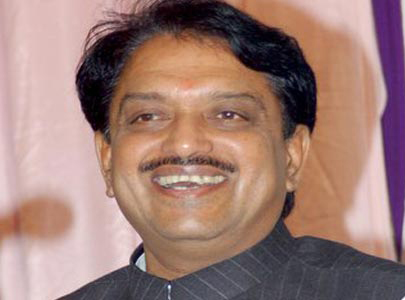
Vilasrao Deshmukh passes away

August 14, 2012

Deshmukh_passed_away

Chennai, August 14: Union minister and former Maharashtra chief minister Vilasrao Deshmukh, who has been battling liver cancer in a city hospital, died here on Tuesday afternoon. He was 67.

Having registered with the Tamil Nadu organ registry for a liver and a kidney, Vilasrao's case was cleared as a 'super ultra emergency'. He was to receive the organs from a 31-year-old man who was declared brain dead at the Government General Hospital, Chennai on Monday afternoon, but the prospective donor suffered a cardiac arrest in the early hours of Tuesday before his organs could be harvested.

Two more set of organs were available by Tuesday morning, one from Chennai GH, where a 20-year-old woman was declared brain dead, and another from Hinduja Hospital, Mumbai. But transplant surgeons at Global Hospitals found Vilasrao's condition was too unstable to undergo the procedure.

"His condition was getting worse from early morning," said a treating doctor. "Though a transplant was the only option, the chances of his surviving the long and complex procedure looked bleak."

Comments

Add new comment

  • Coastaldigest.com reserves the right to delete or block any comments.
  • Coastaldigset.com is not responsible for its readers’ comments.
  • Comments that are abusive, incendiary or irrelevant are strictly prohibited.
  • Please use a genuine email ID and provide your name to avoid reject.
News Network
July 3,2020

New Delhi, Jul 3: In a significant step, ICMR has partnered with Bharat Biotech International Limited (BBIL) to fast-track clinical trials of the indigenous COVID-19 vaccine (BBV152 COVID Vaccine). It is the first indigenous vaccine being developed by India and is one of the top priority projects which is being monitored at the topmost level of the Government, says ICMR in a statement.

The vaccine is derived from a strain of SARS-CoV-z isolated by ICMR-National Institute of Virology, Pune. ICMR and BBIL are jointly working for the preclinical as well as clinical development of this vaccine.

In a letter to the institutes that will be involved in the trails of the vaccine, ICMR has said

"It is envisaged to launch the vaccine for public health use latest by 15th August 2020 after completion of all clinical trials. BBIL is working expeditiously to meet the target. However, final outcome will depend on the cooperation of all clinical trial sites involved in this project. you have been chosen as a clinical trial site of the BBV152 COVID vaccine. ln view of the public health emergency due to COVID-19 pandemic and urgency to launch the vaccine, you are strictly advised to fast track all approvals related to initiation of the clinical trial and ensure that the subject enrollment is initiated no later than 7th July 2020."

The ICMR also asked the institutes to comply with the order, "Kindly note that non-compliance will be viewed very seriously. Therefore, you are advised to treat this project on the highest priority and meet the given timelines without any lapse."

The ICMR has selected 12 institutes, including one from Odisha, for the clinical trial of the country's first indigenous COVID-19 vaccine.

Comments

Add new comment

  • Coastaldigest.com reserves the right to delete or block any comments.
  • Coastaldigset.com is not responsible for its readers’ comments.
  • Comments that are abusive, incendiary or irrelevant are strictly prohibited.
  • Please use a genuine email ID and provide your name to avoid reject.
News Network
February 2,2020

Feb 2: Prime Minister Narendra Modi’s second budget in seven months disappointed investors who were hoping for big-bang stimulus to revive growth in Asia’s third-largest economy.

The fiscal plan -- delivered by Finance Minister Nirmala Sitharaman on Saturday -- proposed tax cuts for individuals and wider deficit targets but failed to provide specific steps to fix a struggling financial sector, improve infrastructure and create jobs. Stocks slumped as a proposal to scrap the dividend distribution tax for companies failed to impress investors.

"Far from being a game changer, the budget provides little in terms of short-term growth stimulus,” said Priyanka Kishore, head of India and South East Asia economics at Oxford Economics Ltd. in Singapore. “While income tax cuts will provide some relief on the consumption front, the multiplier effect is low and the overall stance of the budget is not expansionary."

India has gone from being the world’s fastest-growing major economy three years ago, expanding at 8%, to posting its weakest performance in more than a decade this fiscal year, estimated at 5%.

While the government has taken a number of steps in recent months to spur growth, they’ve fallen short of spurring demand in the consumption-driven economy. Saturday’s budget just added to the glum sentiment.

Okay Budget

“It’s an okay budget but not firing on all cylinders that the market was hoping for,” said Andrew Holland, chief executive officer at Avendus Capital Alternate Strategies in Mumbai.

The government had limited scope for a large stimulus given a huge shortfall in revenues in the current year. The slippage induced Sitharaman to invoke a never-used provision in fiscal laws, allowing the government to exceed the budget gap by 0.5 percentage points. The result: the deficit for the year ending March was widened to 3.8% of gross domestic product from a planned 3.3%.

On Friday, India’s chief economic adviser Krishnamurthy Subramanian said reviving economic growth was an “urgent priority” and deficit goals could be relaxed to achieve that. The adviser’s Economic Survey estimated growth will rebound to 6%-6.5% in the year starting April.

The fiscal gap will narrow to 3.5% next year, as the government budgeted for gross market borrowing to rise marginally to 7.8 trillion rupees from 7.1 trillion rupees in the current year. A plan to earn 2.1 trillion rupees by selling state-owned assets in the year starting April will also help plug the deficit.

Total spending in the coming fiscal year will increase to 30.4 trillion rupees, representing a 13% increase from the current year’s budget, according to latest data.

Key highlights from the budget:

* Tax on annual income up to 1.25 million rupees pared, with riders

* Dividend distribution tax to be levied on investors, instead of companies

* Farm sector budget raised 28%, transport infrastructure gets 7% more

* Spending on education raised 5%

* Fertilizer subsidy cut 10%

Analysts said the muted spending plan to keep the deficit in check will lead to more downside risks to growth in the coming months.

“It is very doubtful that the increase in expenditure will push demand much,” Chakravarthy Rangarajan, former governor at the Reserve Bank of India told BloombergQuint, adding that achieving next year’s budget deficit goal of 3.5% of GDP was doubtful.

With the government sticking to a conservative fiscal path, the focus will now turn to central bank, which is set to review monetary policy on Feb. 6. Given inflation has surged to a five-year high of 7.35%, the RBI is unlikely to lower interest rates.

What Bloomberg’s Economists Say:

The burden of recovery now falls solely on the Reserve Bank of India. With inflation breaching RBI’s target at present, any rate cuts by the central bank are likely to be delayed and contingent upon inflation falling below the upper end of its 2%-6% target range.

-- Abhishek Gupta, India economist

Governor Shaktikanta Das may instead focus on unconventional policy tools such as the Federal Reserve-style Operation Twist -- buying long-end debt while selling short-tenor bonds -- to keep borrowing costs down.


Comments

Add new comment

  • Coastaldigest.com reserves the right to delete or block any comments.
  • Coastaldigset.com is not responsible for its readers’ comments.
  • Comments that are abusive, incendiary or irrelevant are strictly prohibited.
  • Please use a genuine email ID and provide your name to avoid reject.
Agencies
March 14,2020

New Delhi, Mar 14: The number of novel coronavirus cases in India rose to 83 on Saturday, which includes one death each from Delhi and Karnataka, the Union Health Ministry said.

While a 76-year-old man from Kalaburagi who had recently returned from Saudi Arabia died on Thursday, a 68-year-old woman in Delhi who had tested positive for coronavirus passed away at Ram Manohar Lohia (RML) Hospital on Friday night.

The woman, whose son with a travel history abroad had tested positive, died because of co-morbidity (diabetes and hypertension), the Health Ministry said, adding that she had tested positive for COVID-19.

Delhi has reported seven positive cases and Uttar Pradesh 11 so far. Karnataka has six coronavirus patients while Maharashtra has 14 and Ladakh three.

Besides, Rajasthan, Tamil Nadu, Jammu and Kashmir, Andhra Pradesh and Punjab have reported one case each. Telangana has reported two.

Kerala has recorded 19 cases, including three patients who were discharged last month after they recovered from the contagious infection with flu-like symptoms.

The total number of 84 confirmed cases includes 17 foreigners -- 16 Italian tourists and a Canadian, the ministry officials said.

Amid rising coronavirus cases in India, the government has asked people not to panic, saying no community transmission of the virus has been observed and there has only been a few cases of local transmission so far and that is "not a health emergency" in India at present.

With the World Health Organisation (WHO) declaring COVID-19 a pandemic, a Health Ministry official said over 4,000 people who had come in contact with the 83 positive cases have been identified through contract tracing and were being tracked while 42,000 people across the country are under community surveillance.

He said all essential facilities like community surveillance, quarantine, isolation wards, adequate personal protective equipment (PPEs), trained manpower, rapid response teams are being strengthened further in all the states and union territories.

The Centre as part of its measures to contain the spread of the disease on Friday announced that people will be allowed to travel through 19 of 37 land border checkposts from Saturday midnight and services of the Indo-Bangladesh cross border passenger trains and buses will continue to remain suspended till April 15.

Only four Indo-Nepal border checkposts will remain operational, and for citizens of Bhutan and Nepal visa-free entry to the country will continue, Home Ministry Additional Secretary Anil Malik had said.

He said the decision on closing the Kartarpur Corridor is under consideration

The government on Wednesday suspended all visas, barring a few categories like diplomatic and employment, in an attempt to prevent the spread of coronavirus.

It has asked Indian nationals to avoid all non-essential travel abroad.

All incoming international passengers returning to India should self-monitor their health and follow the required do's and dont's as detailed by the government.

Comments

Add new comment

  • Coastaldigest.com reserves the right to delete or block any comments.
  • Coastaldigset.com is not responsible for its readers’ comments.
  • Comments that are abusive, incendiary or irrelevant are strictly prohibited.
  • Please use a genuine email ID and provide your name to avoid reject.