


It is Rs37,80,000,000,000 loss to the country

August 18, 2012
coal_block

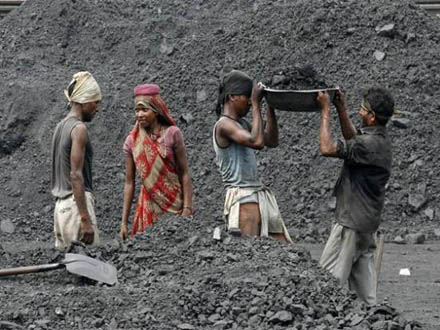
New Delhi, August 18: The CAG reports on allocation of coal blocks, ultra mega power projects and public private partnership in Indira Gandhi international airport have put the UPA government in a tight spot as the revenue loss from these projects amount to a whopping Rs3.78 lakh crore approximately.

Terming it the “biggest ever scam”, the Opposition immediately went for the government’s jugular. For the next few days, one can expect Parliament to witness pandemonium over this as the BJP-led NDA sharpens its claws and prepares to launch a frontal assault on the government.

To make the calculation simpler, let us look at the breakup: For coal allocation, the loss is Rs1.86 lakh crore, for the power projects it is 0.29 lakh crore and for the Indira Gandhi international airport 1.63 lakh crore (as quoted by the Delhi International Airport Limited). The CAG has a conservative figure of Rs24,000 crore.

For the government, this was a huge loss of face because it was prime minister Manmohan Singh who held charge of the coal portfolio when the coal blocks allocations were done. Going by the figures revealed by the CAG (Comptroller and Auditor General), the coal block allocation scam alone is the biggest ever and has caused the government a staggering loss of Rs 1.86 lakh crore. This surpasses the figure of the 2G scam, which hovered around Rs 1.76 lakh crore.

Even as the Opposition demanded Singh’s resignation, the Congress fielded Manish Tiwari to take the brunt of the NDA criticism. Tiwari was scathing in his attack on the CAG reports.

“When the coal blocks have been allotted for captive use and the coal is not for sale, how can the auditor arrive at any figure of the gain that would accrue to the allottees?” he asked.

Stressing that even in the 2G case, the Supreme Court had not endorsed the CAG’s concept of a presumptive loss, Tiwari said the CAG’s calculations have, in fact, no basis.

On the other hand, summarily dismissing the Opposition’s demand for Singh’s resignation, Union coal minister Sriprakash Jaiswal said, “The ministry does not agree with the assessments made by the auditor. There was nothing wrong with the process of finalising the allottees as it was done under the existing process.”

The BJP was unfazed by the Congress logic and its assertions against the CAG. The party made a simple point. It went on insisting that Singh should take moral responsibility and resign. After all, between 2004 and 2009, Singh was for the most part the minister for coal except for brief periods when Jharkhand Mukti Morcha leader Shibu Soren took charge of the portfolio.

BJP leaders Sushma Swaraj and Arun Jaitley came down heavily on the prime minister holding him directly responsible for the loss of Rs1.86 lakh crore to the exchequer. The BJP leaders pointed out that the CAG had shown how the government had not implemented its own decision to allow competitive bidding — a decision which was taken on June 18, 2004.

“He [Singh] has to seriously introspect, impose on himself the moral censure of quitting himself,” Jaitley said.

Swaraj said the party would go on demanding the resignation of the prime minister in Parliament.

In these politically impactful reports, the CAG has slammed the UPA government for delaying the competitive bidding process in the allocation of coal blocks. According to the report tabled in Parliament, 57 coal blocks were allocated to private sector companies that may have resulted in windfall profit for the companies while the government suffered heavy losses.

In another report on ultra mega power projects, the CAG has questioned the government’s decision to allow Reliance Power to use excess coal from the allocated blocks for its other projects.

According to the CAG report, Reliance Power, at the time the contract was awarded, had said the company would be able to use 20 million tonnes from the two blocks and there would be sufficient coal for the Sasan UMPP.

In the same report, the CAG has urged the government to review the award of the Chhatrasaal coal block to Reliance Power for providing level playing field to other power developers. The CAG has pegged the profit of the private power company to Rs29,033 crore.

These three critical reports meant yet another beating for Congress that already has a battered image. Already, the government, suffering from a policy stasis because of a lack of political consensus, has failed to defend itself in the face of huge and unprecedented corruption charges.

Now, the coal block allocation scam threatens to taint the Mr Clean persona of the prime minister. The Congress will require a lot of positive energy to emerge from this crisis with its head held high.


Comments

Add new comment

  • Coastaldigest.com reserves the right to delete or block any comments.
  • Coastaldigset.com is not responsible for its readers’ comments.
  • Comments that are abusive, incendiary or irrelevant are strictly prohibited.
  • Please use a genuine email ID and provide your name to avoid reject.
News Network
May 18,2020

The Centre on Sunday extended the COVID-19 lockdown for two more weeks till May 31 with more exemptions as the Centre allowed states more powers for profiling its zones, re-starting of inter-state and intra-state bus travel, plying of autos and taxis and opening of all shops, including in markets but barring those in malls.

Here are the answers to all your questions:

What is 'Lockdown 4.0'?

On March 24, 2020, Prime Minister Narendra Modi announced a 21-day nation-wide lockdown to prevent the spread of the coronavirus outbreak. India follows several countries in its measures to curb the pandemic, which was the first lockdown. Prime Minister then extended the coronavirus lockdown till May 3, which was dubbed as 'Lockdown 2.0'. This lockdown was further prolonged till May 17 which became 'Lockdown 3.0' and now, as the government aims at a staggered re-opening of the country while maintaining the norms such as social distancing, the fourth extension till May 31 is called 'Lockdown 4.0'.

Who issues the guidelines for the lockdown?

The Ministry of Home Affairs (MHA) issues the guidelines for the lockdown.

Are guidelines different during a lockdown compared to normal life?

Well, of course. Guidelines during a lockdown instruct people on all matters from whether you are allowed to leave your house, to whether an MNC is allowed to function and with what percentage of attendance.

Are masks compulsory even now?

Masks are made mandatory in all public places, by the Union Health Ministry. All the states and UTs are to strictly abide by this law. Not wearing masks will attract penalties which are specified by the state.

How would that be determined for an area?

By Lockdown 3.0, all areas of state districts were segregated into containment, red, orange and green zones. In the Lockdown 4.0, states will categorise the areas into red, orange and green zones.

Colourful... but what are red, orange and green zones?

According to the guidelines issued by the Ministry of Health and Family Welfare, states can categorise districts or municipal corporations as red or orange zones.

"States may, however, also choose to categorise a sub-division or ward or any other appropriate administrative unit as red/orange/green zone after detailed analysis at their end, duly taking into consideration the geographical spread of cases, contacts and their zone of influence in terms of disease spread," the ministry said.

With the commencement of the third phase of lockdown, the Union Health Ministry listed 130 districts across the country in the red zone, 284 in the orange zone and 319 in green zones based on the incidence of cases of COVID-19, doubling rate, the extent of testing and surveillance feedback.

Districts were earlier designated as hotspots/red-zones, orange zones and green zones primarily based on the cumulative cases reported and the doubling rate.

A district will be considered under green zone if there have been no confirmed cases of COVID-19 so far or there is no reported case since last 21 days in the district, according to the letter.

Now, what is a buffer zone?

A buffer zone is an area of spread in a 5-kilometre radius (7 Kms in rural areas) of a containment zone.

How do I find out the zone I am in?

You either look at your state or city's municipal corporation pages to avail the zone details. You can also look at your district magistrate's Twitter handle or Facebook account to find out the list of the zone under which your area falls.

Can I leave my home now?

That depends. If you are in a containment zone or a red zone, you may not be allowed to leave your residence. Otherwise, in the other zones, the state governments and the district magistrates will decide upon the level of movement within and outside the zones.

Can I shift from a red zone to an orange or green zone?

You cannot. The residents of a red or containment zone cannot move out of their zones, nobody may enter the zones as well.

What about my office?

The private offices can operate in non-containment zones. The guidelines for offices to work will be listed by the state governments and the DMs (district magistrates).

Will I be allowed to use my bike/car or any other personal vehicle?

There is a likely chance of you being allowed to take out your bike or car or other vehicles (not helicopters or aeroplanes), if you are not in a containment zone. You need to check the rules listed by your state government or DM. The number of people who can ride at one time will also be decided by the state.

Can my driver, house help or neighbour drive me to my office/destination? Will I be allowed to take them to my workplace?

Yes, provided they are not from a red zone which may be risky for the passenger. This facility is prohibited in a containment zone. Also, check with your workplace regarding the norms to follow within the office. For the details on travelling with others in the car, look into the info provided by your state government, DM and Resident Welfare Association (RWA).

Will be able to fill petrol or diesel for my vehicle?

Definitely, yes. All petrol pumps, LPG and oil agencies will continue to be open.

What if I need to take a cab, auto or book one via Ola/Uber?

The same rules apply to them as well. Unless you are in a containment zone, the restrictions for using cabs and autos will be eased.

What if I need to use public transport like buses?

Some states have allowed buses to run, such as in Tamil Nadu in certain areas. You will have to check with the state government or DM's regulations enlisted for knowing the routes and norms to follow inside a bus.

Can I use my city's Metro line?

Unfortunately, metro lines are not allowed to open and will remain closed until further notification from the Centre.

Can I walk around in my area?

Walking will be permitted under the guidelines issued by the state and DM. Walking in groups will be prohibited and social distancing norms are to be followed in public at all times. Movement is allowed between 7 am to 7 pm in any zone - containment, red, orange or green.

Can I take my grandparents/kids out for a walk?

People older than 65 years of age, or younger than 10, persons with co-morbidities, pregnant women are not allowed to venture out of their residences, as they are highly susceptible to the infection.

Can I go out with my friends?

A group of less than 5 people are allowed to walk together. If you are planning to use vehicles such as bikes, every induvial must have their own as more than one person on atwo-wheeler is not allowed in certain areas. Curfew timings are from 7 am to 7 pm as movent is prohibited beyond these timings. Check the regulations issued by your local DM or state government to know further details.

What if I need to see my friends, relatives or others?

The Resident Welfare Association (RWA) will make a decision about allowing visitors inside a zone, barring containment zones. Nobody is allowed within the containment zone or permitted to leave.

Can we now go to restaurants?

Restaurants are still closed irrespective of the zone. Take-away or delivery services will be available, nevertheless.

Can we go to malls?

Malls and restaurants and shops in the malls will remain closed irrespective of the zone, as these are crowd-pulling zones.

Does that mean multiplexes, theatres and drama/concert halls are closed as well?

Cinema halls, theatres, multiplexes and drama/concert halls will remain closed regardless of which zone they are in, till further instructions are sent by the Centre.

Can I go to the beach or a monument/heritage site?

Since such public places will attract a huge crowd that will be tough to control, beaches, monuments, heritage sites and such public places will be closed.

Can I go to coffee shops?

As coffee shops will fall under the category of restaurants, they will also be closed. Take-away and delivery services can be availed from the shops.

What about essentials?

Grocery shops, milk vendors, newspaper circulation are allowed to stay open. Proper sanitisation must be done from time-to-time to ensure customer and vendors’ safety.

I need to repair my phone. Will stand-alone non-essential services be open?

Such non-essential services are allowed to open in non-containment zones. Refer the state governments and DMs rules for knowing the type of shops and state and districts they are permitted in.

What about in-house repairs or services? Can I call a mechanic to my house?

Yes, provided your RWA has permitted to allow mechanics, workmen and labourers inside in non-containment zones.

Comments

Add new comment

  • Coastaldigest.com reserves the right to delete or block any comments.
  • Coastaldigset.com is not responsible for its readers’ comments.
  • Comments that are abusive, incendiary or irrelevant are strictly prohibited.
  • Please use a genuine email ID and provide your name to avoid reject.
News Network
June 12,2020

Jun 12: There have been complaints of non-availability of beds or denial of treatment to coronavirus patients in the national capital despite nearly 70 per cent of beds in five designated hospitals run by the Delhi government lying vacant, with experts attributing it to people''s aversion towards state-run facilities.

As per the latest information shared on the Delhi Corona app on Thursday afternoon, more than 3,000 beds are lying vacant in these five dedicated COVID-19 hospitals that have a total capacity of 4,344 beds.

However, almost all beds at several big private hospitals are shown to be occupied.

Families of many COVID-19 patients, confirmed or suspected, have alleged in the past few weeks that they have been denied admission at many facilities or have not been able to get a bed for their kin.

Medical and public health experts feel it may be because of the image associated with government hospitals, related to infrastructure and hygiene conditions, and perhaps shortage of staff.

According to the latest data available on Delhi Corona app on Thursday afternoon, a total of 9,444 beds are available in private facilities and hospitals run by the central and Delhi governments. Out of these, 4,371 are vacant.

The app shows that beds are available at Delhi government-run hospitals dedicated for COVID-19 treatment such as LNJP Hospital (1,219), GTB Hospital (1,314), Rajiv Gandhi Super Speciality Hospital or RGSSH (242).

However, almost all beds at several big private hospitals are shown to be occupied.

At LNJP Hospital, there are a total of 2,000 beds, out of these 781 are occupied. GTB Hospital has total 1,500 beds, only 186 of which are occupied. Even at RGSSH, 258 of the 500 beds are occupied.

Beds are available at other dedicated COVID-19 facilities in the national capital too, according to the app. Deep Chand Bandhu Hospital has 94 unoccupied beds out of a total 176 and Satyawadi Raja Harishchandra Hospital has 145 vacant beds out of a total 168.

This makes a total of 4,344 COVID-19 beds at these five dedicated Delhi government hospitals, out of which 3,014 or 69.38 per cent are vacant.

A senior doctor at the RGSSH said, "We are only admitting very serious COVID-19 patients in the hospital. Those with mild symptoms, or asymptomatic ones, are either being home quarantined or being sent to COVID Care Centres. Our beds are on stand-by also to accommodate serious patients in case there is a sudden rush."

Delhi Heath Minster Satyendar Jain had recently said that some private hospitals could have been denying admission, but the Delhi government-run hospitals have not denied beds to any needy COVID-19 patient.

He had also said that main private hospitals are almost full to their capacity in terms of number of COVID-19 beds.

According to the app, at prominent private hospitals like Indraprastha Apollo, Max Hospital in Shalimar Bagh, Fortis Hospital in Shalimar Bagh, BL Kapur Hospital are fully occupied.

Max Hospital in Saket has a total of 200 beds for COVID-19 patients, and only one is vacant.

On June 9, the Delhi government had directed 22 private hospitals in the national capital to dedicate a total of 2,015 extra beds for treatment of coronavirus patients, revising its earlier allocation limit of 20 per cent.

Lawyer and public heath activist Ashok Agarwal said infrastructure and hygiene are two main factors, and people still want to "avoid government facilities".

"I know of cases, where people were willing to be on waiting list of private hospitals but did not go to a government hospital, even though beds were available," he said.

Even those who went to a government hospital for COVID-19 treatment, complained of "dirty toilets, and these being used by multiple patients", Agarwal said.

"Also, as the cases erupted successively over the months, many people got scared and were in two minds to go to a government hospital, as admitted patients were making allegations in videos and on social media about lack of proper services. Besides, there is shortage of medical staff at various facilities, and each patient needs to be attended to," he argued.

Delhi government hospitals and private facilities were directed to prominently display information about the availability of beds on a flex board at their main gates.

Delhi Lt Governor Anil Baijal on Wednesday ordered Delhi hospitals to display the availability of COVID and non-COVID beds, charges for rooms or beds along with contact details on a LED board outside the hospital.

Max Hospital sources said they were already displaying the status of beds on LED screens near their reception area even before the government order.

A spokesperson from Fortis Hospital said, "We are in the process of arranging to put up the displays as per the prescribed format."

Delhi recorded 1,501 fresh coronavirus cases on Wednesday, taking the COVID-19 tally in the city to over 32,000, and the death toll due to the disease mounted to 984, authorities said.

Comments

Add new comment

  • Coastaldigest.com reserves the right to delete or block any comments.
  • Coastaldigset.com is not responsible for its readers’ comments.
  • Comments that are abusive, incendiary or irrelevant are strictly prohibited.
  • Please use a genuine email ID and provide your name to avoid reject.
News Network
June 3,2020

New Delhi, Jun 3: India registered its highest single-day spike in COVID-19 cases on Wednesday with 8,909 more cases reported in the last 24 hours, taking the country's tally to 2,07,615, while the death toll rose to 5,815 according to the Union Health and Family Welfare Ministry.

The number of active COVID-19 cases stood to 1,01,497 while 1,00,303 people have been cured/discharged/migrated.

According to the Union Health and Family Welfare Ministry, out of all the states, Maharashtra has recorded the highest number of coronavirus cases with 72,300 patients followed by Tamil Nadu with 24,586 cases.

Comments

Add new comment

  • Coastaldigest.com reserves the right to delete or block any comments.
  • Coastaldigset.com is not responsible for its readers’ comments.
  • Comments that are abusive, incendiary or irrelevant are strictly prohibited.
  • Please use a genuine email ID and provide your name to avoid reject.