


It is Rs37,80,000,000,000 loss to the country

August 18, 2012
coal_block

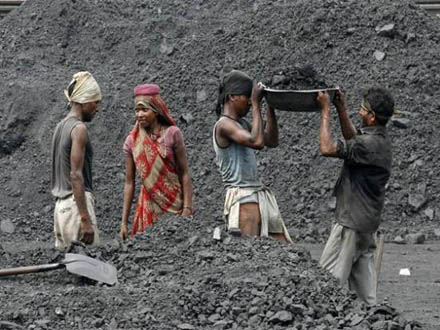
New Delhi, August 18: The CAG reports on allocation of coal blocks, ultra mega power projects and public private partnership in Indira Gandhi international airport have put the UPA government in a tight spot as the revenue loss from these projects amount to a whopping Rs3.78 lakh crore approximately.

Terming it the “biggest ever scam”, the Opposition immediately went for the government’s jugular. For the next few days, one can expect Parliament to witness pandemonium over this as the BJP-led NDA sharpens its claws and prepares to launch a frontal assault on the government.

To make the calculation simpler, let us look at the breakup: For coal allocation, the loss is Rs1.86 lakh crore, for the power projects it is 0.29 lakh crore and for the Indira Gandhi international airport 1.63 lakh crore (as quoted by the Delhi International Airport Limited). The CAG has a conservative figure of Rs24,000 crore.

For the government, this was a huge loss of face because it was prime minister Manmohan Singh who held charge of the coal portfolio when the coal blocks allocations were done. Going by the figures revealed by the CAG (Comptroller and Auditor General), the coal block allocation scam alone is the biggest ever and has caused the government a staggering loss of Rs 1.86 lakh crore. This surpasses the figure of the 2G scam, which hovered around Rs 1.76 lakh crore.

Even as the Opposition demanded Singh’s resignation, the Congress fielded Manish Tiwari to take the brunt of the NDA criticism. Tiwari was scathing in his attack on the CAG reports.

“When the coal blocks have been allotted for captive use and the coal is not for sale, how can the auditor arrive at any figure of the gain that would accrue to the allottees?” he asked.

Stressing that even in the 2G case, the Supreme Court had not endorsed the CAG’s concept of a presumptive loss, Tiwari said the CAG’s calculations have, in fact, no basis.

On the other hand, summarily dismissing the Opposition’s demand for Singh’s resignation, Union coal minister Sriprakash Jaiswal said, “The ministry does not agree with the assessments made by the auditor. There was nothing wrong with the process of finalising the allottees as it was done under the existing process.”

The BJP was unfazed by the Congress logic and its assertions against the CAG. The party made a simple point. It went on insisting that Singh should take moral responsibility and resign. After all, between 2004 and 2009, Singh was for the most part the minister for coal except for brief periods when Jharkhand Mukti Morcha leader Shibu Soren took charge of the portfolio.

BJP leaders Sushma Swaraj and Arun Jaitley came down heavily on the prime minister holding him directly responsible for the loss of Rs1.86 lakh crore to the exchequer. The BJP leaders pointed out that the CAG had shown how the government had not implemented its own decision to allow competitive bidding — a decision which was taken on June 18, 2004.

“He [Singh] has to seriously introspect, impose on himself the moral censure of quitting himself,” Jaitley said.

Swaraj said the party would go on demanding the resignation of the prime minister in Parliament.

In these politically impactful reports, the CAG has slammed the UPA government for delaying the competitive bidding process in the allocation of coal blocks. According to the report tabled in Parliament, 57 coal blocks were allocated to private sector companies that may have resulted in windfall profit for the companies while the government suffered heavy losses.

In another report on ultra mega power projects, the CAG has questioned the government’s decision to allow Reliance Power to use excess coal from the allocated blocks for its other projects.

According to the CAG report, Reliance Power, at the time the contract was awarded, had said the company would be able to use 20 million tonnes from the two blocks and there would be sufficient coal for the Sasan UMPP.

In the same report, the CAG has urged the government to review the award of the Chhatrasaal coal block to Reliance Power for providing level playing field to other power developers. The CAG has pegged the profit of the private power company to Rs29,033 crore.

These three critical reports meant yet another beating for Congress that already has a battered image. Already, the government, suffering from a policy stasis because of a lack of political consensus, has failed to defend itself in the face of huge and unprecedented corruption charges.

Now, the coal block allocation scam threatens to taint the Mr Clean persona of the prime minister. The Congress will require a lot of positive energy to emerge from this crisis with its head held high.


Comments

Add new comment

  • Coastaldigest.com reserves the right to delete or block any comments.
  • Coastaldigset.com is not responsible for its readers’ comments.
  • Comments that are abusive, incendiary or irrelevant are strictly prohibited.
  • Please use a genuine email ID and provide your name to avoid reject.
Agencies
February 20,2020

New Delhi, Feb 20: Hitting out at the Bharatiya Janata Party (BJP), Congress leader Sachin Sawant on Thursday said that the same BJP who tried to pressurise government lawyers so that the accused in the Malegaon bomb blast case, Samjhauta express case can be let off are now demanding that there should be a re-investigation in the 26/11 terror attacks, this is the biggest irony.

"By demanding that the case be re-investigated the BJP which gave a ticket to Pragya Thakur who was accused in the Malegaon blast case, has insulted all those brave police, the army who fought bravely. BJP should apologise to all those people," he said.

"If the BJP were serious about re-investigating the case why didn't they do it when they were in power in the state and the Centre? Was the government sleeping for the last five years? asked Maharashtra Congress committee's general secretary, Sachin Sawant.

"Rather than this, the BJP should ask for a fair inquiry in the incident where a Kashmir police officer Davindar Singh was caught in the company of terrorists and also, the role of the Sangh Parivar in the Malegaon Blasts," said Sawant.

Sawant said that BJP has crossed all limits while lying and it has stooped to the lowest levels of political discourse and is not thinking twice before defaming the Opposition.

In the book written by the retired police officer Rakesh Maria doesn't have anything other than what was there in the charge sheet on Ajmal Kasab. In his confession, Kasab has said that he was given an ID card with a Hindu name and also a red coloured thread by the Lashkar-e-taiba.

Because of this forged identity, they would be able to dodge the police. All these details have been clearly mentioned in the Kasab's confession.

Maria has mentioned in his book that if Kasab was not caught alive, the media would have declared him as a Hindu. Maria hasn't said that there was any kind of government pressure or any other conspiracy behind it. He was only talking about the media and also given all the details in the charge sheet. The BJP is only using this as a political tool in their low-class politics.

The leader added that, "The letter written by BJP MLA Atul Bhatkhalkar to CM Uddhav Thackeray has crossed all limits of lying. The Congress government in Maharashtra had formed a committee under retired home secretary Ram Pradhan to probe the 26/11 attack."

On the basis of an interview given by Ram Pradhan to a national daily on the 10th anniversary of the 26/11, he has levelled baseless allegations on former Central Home minister P Chidambaram, he added.

Bhatkhalkar in his letter has said that Chidambaram had asked Ram Pradhan to not to disclose the local connection that was found in the conspiracy. In fact, there is no such mention in the interview given by Ram Pradhan. Pradhan has said in the interview that Chidambaram wanted to see the report. Hence along with the report, some sensitive information was sent to the department separately and those were overlooked. After some time news related to David Headley had surfaced.

Ram Pradhan committee was not set up by the Centre but was set up by the state government and so it was not mandatory for the Centre to inform Ram Pradhan whether cognisance was taken regarding the sensitive information.

"In was during the Congress government that the first terrorist was caught alive due to the bravery of the police force and after following all the due procedures a verdict to hang him was given," said Sawant..

"Everyone has appreciated India's legal system in which even a terrorist was allowed to give his side," he added.

Comments

Add new comment

  • Coastaldigest.com reserves the right to delete or block any comments.
  • Coastaldigset.com is not responsible for its readers’ comments.
  • Comments that are abusive, incendiary or irrelevant are strictly prohibited.
  • Please use a genuine email ID and provide your name to avoid reject.
News Network
February 6,2020

Feb 6: India has been ranked 40th out of 53 countries on a global intellectual property index, even as the country has shown improvement in terms of scores when it comes to the protection of IP and copyright issues, a top American industry body said on Wednesday.

India was placed at 36th position among 50 countries in 2019.

India's score, however, increased from 36.04 per cent (16.22 out of 45) in 2019 to 38.46 per cent (19.23 out of 50) in 2020, a 2.42 per cent jump in an absolute score.

However, India's relative score increased by 6.71 per cent, according to the International IP Index released by Global Innovation Policy Center or GIPC of the US Chambers of Commerce.

This year, it finds itself on the 40th place among 53 countries. Two new Index economies (Greece and the Dominican Republic) scored ahead of India. The Philippines, and Ukraine leapfrogged India.

"Since the release of the 2016 National IPR Policy, the government of India has made a focused effort to support investments in innovation and creativity through increasingly robust IP protection and enforcement," the GIPC said.

Since 2016, India has improved the speed of processing for patent and trademark applications, increased awareness of IP rights among Indian innovators and creators, and facilitated the registration and enforcement of those rights, it added.

According to the eighth edition of the annual report, India's score on the Chamber's International IP Index demonstrates the country's growing investment in IP-driven innovation and creativity. The Index specifically highlights a number of reforms over the last year that strengthen India's overall IP ecosystem, it said.

"In 2019, the Delhi High Court used dynamic injunctions to disable access to copyright-infringing content online, resulting in an increase in India's score on two of the copyright-related indicators," it said.

"The use of these injunctions places India alongside global leaders in copyright enforcement, including Singapore and the UK. As a result, India scores ahead of 24 other economies in the copyright indicators," the report said.

The Delhi High Court also issued a series of judgements that provide clarity on existing statutes related to trademark protection online, resulting in a score increase on one of the trademark-related indicators, it added.

The courts issued two precedential rulings that raised the bar for the damages awarded in IP-infringement cases and may provide a deterrent for future infringement. This resulted in an increase in score on one of the trademark-related indicators, it said.

Global Innovation Policy Center or GIPC said India also continues to score well in the Systemic Efficiency indicator, scoring ahead of 28 other economies in these indicators.

"This is a result of a concerted effort by the Indian government to consult with stakeholders during IP policy formation and create greater awareness about the importance of IP protection,” it said adding that India also remains a leader in the use of targeted incentives and IP assets for small and medium-sized enterprises (SMEs).

“To continue this upward trajectory, much work remains to be done to introduce transformative changes to India’s overall IP framework and take serious steps to consistently implement strong IP standards," the report said.

GIPC has identified several challenges for India. Prominent among them being patentability requirements, patent enforcement, compulsory licensing, patent opposition, regulatory data protection, transparency in reporting seizures by customs, and Singapore Treaty of Law of TMs and Patent Law Treaty.

"We are encouraged that Indian policymakers seem to recognize this Index as a valuable resource in their efforts to strengthen the country’s promising innovation ecosystem and enhance its competitiveness in an increasingly knowledge-based global economy,” the report said.

Observing that no other economy stands to gain more from strong Indian IP than India itself, the report said for example, no industry has been hurt more by copyright violations in India than the country’s own Bollywood industry, which loses almost USD3 billion to piracy each year.

"The number one way the Modi administration can demonstrate its commitment to the success of the Atal Innovation Mission, Accelerating Growth for New India’s Innovations, Make in India, Digital India, and Startup India is to strengthen its IP framework in ways that promote the legal and regulatory certainty necessary for greater R&D investment, high-value jobs, and greater innovative and creative outputs,” it said.

"Strong IP standards can further solidify India's position as the world’s fastest-growing economy, bolstering its reputation as a destination for doing business, foreign businesses’ ability to invest and make in India, thereby supporting the growth of India’s own innovative and creative industries," the report said.

Comments

Add new comment

  • Coastaldigest.com reserves the right to delete or block any comments.
  • Coastaldigset.com is not responsible for its readers’ comments.
  • Comments that are abusive, incendiary or irrelevant are strictly prohibited.
  • Please use a genuine email ID and provide your name to avoid reject.
News Network
January 28,2020

Kolkata, Jan 28: West Bengal chief minister Mamata Banerjee Tuesday said she is ready for talks with Prime Minister Narendra Modi on the issue of Citizenship Amendment Act but the Centre has to first withdraw the contentious law.

Banerjee said protesting against the decisions of the centre doesn't make opposition parties anti-national and iterated that she will not implement CAA, NRC or NPR in the state.

"It is good that the prime minister is ready for talks but the Citizenship Amendment Act (CAA) must be revoked first. They (Centre) did not call an all-party meeting before taking a decision on Kashmir and CAA.

"We are ready for talks but first withdraw this Citizenship Amendment Act," Banerjee, a staunch critic of the BJP, said addressing a protest programme against CAA through paintings.

The West Bengal assembly had on Monday passed a resolution against the CAA to become the fourth state after Kerala, Punjab and Rajasthan, to do so. The state assembly had on September 6, 2019, passed a resolution against the NRC.

Comments

Add new comment

  • Coastaldigest.com reserves the right to delete or block any comments.
  • Coastaldigset.com is not responsible for its readers’ comments.
  • Comments that are abusive, incendiary or irrelevant are strictly prohibited.
  • Please use a genuine email ID and provide your name to avoid reject.