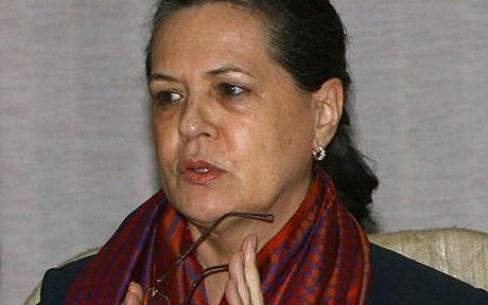
Sonia condemns Assam, NE violence; calls for strict action

August 20, 2012
sonia

New Delhi, August 20: Expressing her “deep pain” at the ethnic violence in Assam, Congress president Sonia Gandhi on Sunday condemned the subsequent mistreatment faced by people from north-east in some states and called for strict action against the guilty.

Speaking at the Rajiv Gandhi National Sadbhavna Award ceremony here, she said the present conditions prevailing in the country were linked to its unity and amity.

“Whatever happened in Assam, it is very painful and a matter of concern. Those responsible for the incidents, whoever they may be, should face legal action soon,” she said.

Gandhi also expressed concern over people from northeast leaving Bangalore and some other cities in large numbers due to rumours about their safety.

“The kind of treatment innocent people from northeast are facing, all of us should condemn it strongly and the centre and state governments should deal strictly with those trying to disrupt social harmony,” she said.

Gandhi said social harmony was not an issue for her late husband Rajiv Gandhi but a fundamental value which he lived all his life.

Rajiv Gandhi constantly struggled against social and communal tension, discord, violence, enmity, terrorism, illiteracy and poverty and sacrificed his life following the path, she said.

Prime Minister Manmohan Singh said Rajiv Gandhi wanted to build a strong and prosperous India. “He knew that India can make progress only if all countrymen live in peace, tolerance and harmony with each other,” he said.

Recalling contribution of the late prime minister towards improving technology, decentralisation and environmental protection, Manmohan Singh said that remembering the late leader “gives us inspiration for working in interest of people and the country.”

He complimented DR Mehta, who won the Rajiv Gandhi National Sadbhavna Award, for his long service to the physically challenged through the Bhagwan Mahaveer Viklang Sahayta Samiti (BMVSS).

The prime minister said social organisations can partner with the government to strengthen unity and democracy in the country and expressed happiness that a lot of young people were coming forward for social service.

“In a big and diverse country like India, there is need for the government and NGOs to cooperate to fulfil the needs and expectations of people. I am happy that under the leadership of wise citizens like Shri D.R. Mehta, a lot of youngsters are coming forward for social service,” he said.

Gandhi also complimented Mehta for his work for the physically challenged and said BMVSS, started in Jaipur, was an example in the whole world.

Mehta, a former Indian Administrative Service officer, in his acceptance speech said BMVSS started in 1975 by fitting 59 limbs and had grown to be the largest organisation for disabled in the world.

He said it has so far rehabilitated more than 1.3 million disabled people in India and abroad by providing artificial limbs, callipers, tricycles, wheelchairs and other aids.

Mehta said BMVSS is the main body for Jaipur Foot, the most widely used prosthetic in the world. BMVSS has held more than 50 on-the-spot-fitment camps in 26 countries in Asia, Africa and Latin America.


Comments

Add new comment

  • Coastaldigest.com reserves the right to delete or block any comments.
  • Coastaldigset.com is not responsible for its readers’ comments.
  • Comments that are abusive, incendiary or irrelevant are strictly prohibited.
  • Please use a genuine email ID and provide your name to avoid reject.
Agencies
July 21,2020

New Delhi, Jul 21: The Supreme Court has asked the Ministry of Finance to look into a plea which claimed a loss of hundreds of crore every day, as the public sector banks are not invoking personal guarantees of big corporates who have defaulted on loans.

A bench comprising Justice R. F. Nariman and Navin Sinha asked the petitioners, Saurabh Jain and Rahul Sharma, who filed the PIL, to move the Finance Ministry with a representation within two weeks. The top court observed that the issue is important and the ministry should respond after the petitioner has made the representation before it. The matter had come up for hearing on Monday.

"We are of the view that at page 115 of the Writ Petition it has been made clear that the Ministry of Finance itself has, by a Circular, directed personal guarantees issued by promoters/managerial personnel to be invoked. According to the petitioners, despite this Circular, Public Sector Undertakings continue not to invoke such guarantees resulting in huge loss not only to the public exchequer but also to the common man", said the bench in its order.

Senior advocate Manan Mishra and advocate Durga Dutt, represented the petitioners.

Mishra contended before the bench that the statistics establish the public sector banks incurred a loss of approximately Rs 1.85 lakh crore in a financial year, and the banks did not take action to invoke personal guarantees of the biggest corporate defaulters.

The bench observed that since the petitioners claim the public sector undertakings are not complying with this circular, "We think you should first go to the ministry," said the bench.

Mishra argued before the bench that the loans from a common man are recovered through a mechanism where officials go through even the minutest detail, but promoters, chairpersons and other senior level functionaries of the big corporates find it convenient to get away by defaulting on loans.

The bench told the petitioner's counsel that the Finance Ministry has already issued a notification on this matter, and the petitioners should seek response from the ministry, and then move the top court. Mishra submitted before the bench to issue a direction to the Finance Ministry to give a response on their representation.

The bench said, "We allow the petitioners, at this stage, to withdraw this Writ Petition and approach the Ministry of Finance with a representation in this behalf. The representation will be made within a period of two weeks from today. The Ministry of Finance is directed to reply to the said representation within a period of four weeks after receiving such representation. With these observations, the petition is allowed to be withdrawn to do the needful."

Mishra contended before the bench seeking liberty to come back after a reply from the Finance Ministry. Justice Nariman said this option is open for petitioners after a decision has been taken by the ministry. "We will hear you", added Justice Nariman.

Comments

Add new comment

  • Coastaldigest.com reserves the right to delete or block any comments.
  • Coastaldigset.com is not responsible for its readers’ comments.
  • Comments that are abusive, incendiary or irrelevant are strictly prohibited.
  • Please use a genuine email ID and provide your name to avoid reject.
News Network
January 23,2020

Mumbai, Jan 23: Rashmi Sahijwala never expected to start working at the age of 59, let alone join India’s gig economy—now she is part of an army of housewives turning their homes into “cloud kitchens” to feed time-starved millennials.

Asia’s third-largest economy is battling a slowdown so sharp it is creating a drag on global growth, the International Monetary Fund said Monday, but there are some bright spots.

The gig economy, aided by cheap mobile data and abundant labour, has flourished in India, opening up new markets across the vast nation.

Although Indian women have long battled for access to education and employment opportunities, the biggest hurdle for many is convincing conservative families to let them leave home.

But new apps like Curryful, Homefoodi, and Nanighar are tapping the skills of housewives to slice, dice and prepare meals for hungry urbanites from the comfort of their homes.

The so-called cloud kitchens—restaurants that have no physical presence and a delivery-only model—are rising in popularity as there is a boom in food delivery apps such as Swiggy and Zomato.

“We want to be the Uber of home-cooked food,” said Ben Mathew, who launched Curryful in 2018, convinced that housewives were a huge untapped resource.

His company—which employs five people for the app’s daily operations—works with 52 women and three men, and the 31-year-old web entrepreneur hopes to get one million female chefs on-board by 2022.

“We usually train them in processes of sanitisation, cooking, prep time and packaging... and then launch them on the platform,” Mathew told news agency.

One of the first housewives to join Curryful in November 2018 shortly after its launch, Sahijwala was initially apprehensive, despite having four decades of experience in the kitchen.

But backed by her children, including her son who gave her regular feedback about her proposed dishes, she took the plunge.

Since then, she’s undergone a crash course in how to run a business, from creating weekly menus to buying supplies from wholesale markets to cut costs.

The learning curve was steep and Sahijwala switched from cooking everything from scratch to preparing curries and batters for breads in advance to save time and limit leftovers.

She even bought a massive freezer to store fruits and vegetables despite her husband’s reservations about the cost.

“I told him that I am a professional now,” she told news agency.

‘Internet restaurants’

Kallol Banerjee, co-founder of Rebel Foods which runs 301 cloud kitchens backing up 2,200 “internet restaurants”, was among the first entrepreneurs to embrace the concept in 2012.

“We could do more brands from one kitchen and cater to different customer requirements at multiple price points,” Banerjee told AFP.

The chefs buy the ingredients, supply the cookware and pay the utility bills.

The apps—which make their money through charging commission, such as more than 18 percent per order for Curryful—offer training and supply the chefs with containers and bags to pack the food in.

Curryful chef Chand Vyas, 55, spent years trying to set up a lunch delivery business but finally gave up after failing to compete with dabbawalas, Mumbai’s famously efficient food porters.

Today Vyas works seven hours a day, five days a week in her kitchen, serving up a bevy of Indian vegetarian staples, from street food favourites to lentils and rice according to the app’s weekly set menus.

“I don’t understand marketing or how to run a business but I know how to cook. So, the current partnership helps me focus on just that while Curryful takes care of the rest,” Vyas told AFP.

She pockets up to $150 (Rs 10,000 approx) a month after accounting for the commissions and costs, but hopes to earn more as the orders increase.

In contrast, a chef at a bricks-and-mortar restaurant takes home a monthly wage of between $300 (Rs 20,000 approx) and $1,000 (Rs 70,000) approx for working six days a week.

With India’s cloud kitchen sector expected to reach $1.05 billion by 2023, according to data platform Inc42, other companies are also keen to get a slice of the action.

Swiggy, for example, has invested 2.5 billion rupees ($35.3 million) in opening 1,000 cloud kitchens across the nation.

Back in her Mumbai kitchen, Sahijwala is elated to have embarked on a career at an age when her contemporaries are eyeing retirement.

Over the past year, she has seen her profit grow to $200 (Rs 15,000 approx) a month, but more importantly, she said, “My passion has finally found an outlet.

“I am just glad life has given me this chance.”

Comments

Add new comment

  • Coastaldigest.com reserves the right to delete or block any comments.
  • Coastaldigset.com is not responsible for its readers’ comments.
  • Comments that are abusive, incendiary or irrelevant are strictly prohibited.
  • Please use a genuine email ID and provide your name to avoid reject.
News Network
February 1,2020

When it comes to the economy, dark days do loom large over India. May it be growth (lowest since 2008), inflation (highest in the last six years), or revenue collection (lowest in 10 years), the Indian economy is faltering. Hence, there is little leeway that can be assumed in the incumbent Union Budget 2020 (the first of the decade) if the economy needs to be boosted.

While presenting the decade's first Budget for India, finance minister Nirmala Sitharaman said on Saturday in Parliament:

Taxation

•             AADHAR based tax verification introduced

•             Review of customs duty exemptions in September 2020

•             GST refund process simplified

•             Electronic invoice implementation in phases

•             New digital scheme for tax litigation

•             PAN to be instantly allotted online against Aadhar

•             Vivaad se Vishwas Scheme: Defaulter to pay only disputed tax and no penalty or interest by 31 March 2020, post which additional amount can be paid till June 2020

•             Measure to promote affordable housing - tax holiday extended for developers

•             Concession on real estate transactions

•             Turnover threshold for audit raised to Rs 5 crore from 1 crore

•             Company audit requirements eased

•             Taxes on ESOPs (employee stock ownership) in start-ups deferred by 5 years

•             100% per cent tax exemption

•             Corporate Tax at 15%

•             Dividend Distribution Tax removed, dividend taxed only for recipients

•             No tax for 0-5 lakh

•             30% above 15 lakh

•             25% for income between Rs 12.5-15 lakh

•             20% for income between Rs 10-12.5 lakh

•             15% for income between Rs 7.5-10 lakh

•             10% for income between Rs 5-7.5 lakh, against the prevailing 20%

•             A new, optional simplified personal income tax regime for those not seeking exemptions


Major steps and initiatives taken by the government in finance

•             3.8 percent fiscal deficit estimated

•             GDP nominal growth expected at 10 per cent

•             Govt to sell part of holding LIC via IPO (initial public offering)- partial LIC disinvestment

•             Partial credit guarantee for NBFCs

•             New law for netting of financial contracts

•             Mechanism to end liquidity crisis

•             NRIs (non resident Indians) can invest in certain govt securities


Aspirational India: Caring society

•             App-based invoice financing loans for MSMEs

•             Amendment to Factoring Regulation Act to aid MSMEs

•             Pension Fund Regulatory and Development Authority (PFRDI) Act amendments

•             No criminal liabilities for civil acts

•             Auto-enrolment in universal pension scheme

•             5958 cr allocated for Ladakh

•             30757 cr allocated for J&K

•             Insurance for depositors raised to 5 lakh from 1 lakh

•             Robust mechanisms in place to monitor all PSU banks

•             Depositors’ money safe

•             100 cr for hosting G20 in 2022

•             National Recruitment Agency to be set up

•             Tax payers’ charter to be enshrined in statutes

•             Amendments for Companies Act

•             Tax payer charter proposed to free citizens from tax harassment

•             Businesses should have confidence that system is fair

•             4400 crore allocation for clean air and climate change policy

•             Aim to reduce carbon footprint - Warning to old thermal plants

•             Committed to preserve environment, tackle climate change

•             23150 crore for culture ministry

•             2500 crore for tourism sector

•             Institute of Heritage and Conservation to come up soon

•             Aim to set up more museums

•             5 archaeological sites to be made iconic

•             Proposal to end manual scavenging

•             53700 crore for welfare of STs

•             85000 crore for SCs and OBCs for 2021

•             35600 crore for nutritional schemes

•             Gross enrollment ratio of girls higher than boys in elementary level

•             Beti Bachao, Beti Padhao - tremendous results


Aspirational India: Infrastructure and economic development

•             Further reforms for transparent price discovery for natural gas

•             22000 crore for power sector

•             8000 crore for quantum technology in next 6 years

•             Two national level science schemes

•             Expand Jan Aushadhi Scheme

•             1 lakh gram panchayats to be connected via Bharat Net

•             6000 crore for Bharat Net

•             Data Centre parks to be set up across the country

•             National Gas Grid to be expanded

•             Reforms to help stressed DISCOMS (distribution companies)

•             Delhi-Mumbai Expressway by 2023

•             100 more airports by 2024

•             Plans to energise economic activity along river banks

•             Need to enhance sea ports

•             High Speed Mumbai-Ahmedabad train

•             More Tejas-type trains

•             4 station redevelopment projects under PP model

•             2000 km of strategic highways to be built, 11000 km of track electrification

•             Accelerated development of highways

•             National Logistics Policy to be released soon

•             Big push on infrastructure - 100 lakh crore

•             National Technical Textiles Mission to be set up

•             1480 crore outlay for textile sector

•             27300 crore for industrial development by 2021

•             Digital refund of duties for exporters

•             Boost domestic manufacturing - electronic equipment, mobile phone, medical devices

•             5 new smart cities in collaboration with states

•             Investment clearance cell to be set up for end to end facilitation

•             Entrepreneurship has been the strength of India


Aspirational India: Education and skills

•             High need for medical teachers and paramedics

•             Internships for engineers in panchayats

•             Rs 99300 cr for education sector

•             Large hospitals to be encouraged to start PG courses

•             Attach medical colleges to district hospitals

•             National police university to be set up

•             IND-SAT programme for overseas students for studying in India

•             New courses in 159 universities by 2026

•             Focus on education for jobs

•             Propose a fresh education policy

•             Urban local bodies should give opportunities to new engineers

•             Education needs more finances


Aspirational India: Healthcare

•             AI (artificial intelligence) to be used for Ayushman Bharat Scheme

•             69000 crore for health sector

•             Propose to set up more hospitals

•             Holistic vision for national healthcare


Aspirational India: Agriculture, Irrigation and rural development

•             Need to liberalise farm markets

•             108 million metric tonne milk production by 2021

•             2.83 lakh cr allocation for agriculture and irrigation

•             Propose raising fish production to 200 lakh tonne

•             Zero budget national farming

•             NABARD refinance scheme to be expanded

•             Village credit card scheme

•             Agriculture credit target for 2020 set at Rs 15 lakh crore

•             Village storage scheme for farmers, zero budget natural farming

•             Dhanya Lakshmi scheme for women in villages

•             Krishi Udaan by civil aviation ministry for air transport of such commodities over longer distances

•             Indian railways to set up 'kisan rail'

•             Govt to provide help to geo-tag warehouses

•             Financial inclusion has helped raise farm incomes

•             Plan for 100 water stressed districts

•             Scheme for 20 lakh farmers to set up solar pumps

•             Doubling farm income - model agricultural land leasing act, balanced use of fertilisers, solar pumps for 20 lakh farmers


Budget 2020 and its three focuses

•             Budget's first focus is 'Aspirational India'. Second focus: economic development for all. Third focus: building a caring society.

•             FDI at 284 billion dollars, achieved 7.84% growth

•             GST formalised the economy

•             Efficiency gained in logistics

•             16 lakh new tax payers added

•             Fundamentals of economy hold strong

•             Scaled up implementation of pro-poor schemes


Key challenges FM faces

•             India needs to grow by 9 per cent to 10 per cent a year to become the $5 trillion economy by 2024, as projected by the government. The government is now forecasting growth will come in at 5 per cent

•             The IMF, which had originally predicted 6.1 per cent growth for India in 2019, has revised that downwards to 4.8 per cent

•             The government’s likely to miss its fiscal deficit target for the current fiscal year of 3.3 per cent and hike its target to as much as 4 per cent for the next financial year

•             India will struggle to achieve 5 per cent GDP growth in 2020 - Economist Steve Hanke, Johns Hopkins University

•             Investment is forecast to grow at less than 1 per cent -- the lowest since 2004-05

•             India's unemployment rate rose to 7.5 per cent during September-December 2019 quarter, according to data released by think-tank Centre for Monitoring Indian Economy


 

Comments

Add new comment

  • Coastaldigest.com reserves the right to delete or block any comments.
  • Coastaldigset.com is not responsible for its readers’ comments.
  • Comments that are abusive, incendiary or irrelevant are strictly prohibited.
  • Please use a genuine email ID and provide your name to avoid reject.