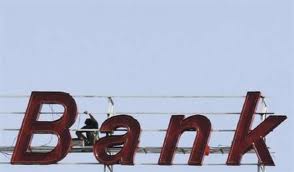
Two-day nationwide bank strike from today, volumes may be hit

August 22, 2012

bank

New Delhi, August 22: Unions at Indian banks representing about one million employees have called for a nationwide two-day strike beginning Wednesday to protest against reform proposals that would ease mergers and allow more foreign and private capital into the sector.

Trading volumes may be lower than usual as not all dealers are expected to report to work, although banks will ensure that basic market operations, including treasury volumes and settlements will continue, according to staff at lenders.

The strike call will affect 70,000 bank branches across state-run and some private and foreign banks including the country's largest lender State Bank of India.

The third-largest economy in Asia has been unable to pass key reforms and liberalise banking, retail and insurance sectors due to opposition from political parties.

The United Forum of Bank Unions, which heads all nine bank employees and officers unions, have called the strike to oppose government proposals that would make bank mergers easier.

Other major measures, which the unions are protesting, include increasing the voting rights of shareholders and allowing more foreign and private capital into the banking sector.

"There is no question of calling off or reducing the number of days of strike unless the finance minister says that he will defer tabling the Banking Law (amendment) Bill," Viswas Utagi, secretary of All India Bank Employees Association told Reuters.

Not all employees will adhere to the strike, according to Reuters checks with staff at some of the major private and public lenders.

A previous bank strike on August 5 had hit branch operations across India, but trading in bonds, stocks and foreign exchange were largely unaffected.

"Since cash transactions are automated, there will be no problem in settlement. There has been no impact in previous instances as well," said a banker.

Cheque clearing facilities and the availability of cash at ATMs could be most impacted.

Comments

Add new comment

  • Coastaldigest.com reserves the right to delete or block any comments.
  • Coastaldigset.com is not responsible for its readers’ comments.
  • Comments that are abusive, incendiary or irrelevant are strictly prohibited.
  • Please use a genuine email ID and provide your name to avoid reject.
News Network
July 10,2020

United Nations, Jul 10: India is a "good example" as solar auctions have seen popularity amidst the height of the COVID-19 pandemic, UN chief Antonio Guterres said on Thursday, underlining that renewable energy is the only energy source expected to grow in 2020 and offers more jobs than the fossil fuel industry.

In his remarks to the International Energy Agency "Clean Energy Transition Summit'', UN Secretary-General Guterres urged the international community to commit to further usage of coal and to end all external financing of coal in the developing world.

"Coal has no place in COVID-19 recovery plans. Nations must commit to net-zero emissions by 2050 and submit more ambitious national climate plans before COP-26 next year," he said.

"The seeds of change are there. Renewable energy is the only energy source expected to grow in 2020. Solar auctions have seen popularity amidst the height of the pandemic. India serves as a good example. Renewables offer three times more jobs than the fossil fuel industry," Mr Guterres said.

Last month, Adani Green Energy said it has bagged the first of its kind manufacturing-linked solar contract worth Rs 45,000 crore from the Solar Energy Corporation of India (SECI) to develop 8 GW electricity generation capacity and 2 GW equipment manufacturing facility in the country.

Mr Guterres said he has asked all countries to consider six climate positive actions as they rescue, rebuild and reset their economies.

"We need to make our societies more resilient. We need green jobs and sustainable growth," he said, adding that bailout support to sectors such as industry, aviation and shipping should be conditioned on alignment with the goals of the Paris Agreement.

Countries also need to stop wasting money on fossil fuel subsidies and place a price on carbon, he said, noting that countries need to consider climate risk in their decision making.

"Every financial decision must take account of environmental and social impacts. Overall, we need to work together," he said.

Comments

Add new comment

  • Coastaldigest.com reserves the right to delete or block any comments.
  • Coastaldigset.com is not responsible for its readers’ comments.
  • Comments that are abusive, incendiary or irrelevant are strictly prohibited.
  • Please use a genuine email ID and provide your name to avoid reject.
News Network
February 28,2020

Feb 28: The best economic tonic for the coronavirus shock is to contain its spread and worry about stimulus later, said Raghuram Rajan, former head of the Reserve Bank of India.

There’s little central banks can do, and while more government spending would help, the priority should be on convincing companies and households that the virus is under control, he said.

“People want to have a sense that there is a limit to the spread of this virus perhaps because of containment measures or because there is hope that some kind of viral solution can be found,” Rajan told Bloomberg Television’s Haidi Stroud Watts and Shery Ahn.

“At this point I would say the best thing that governments can do is to really fight the epidemic rather than worry about stimulus measures that comes later,” said Rajan, who is currently a professor at the Chicago Booth School of Business.

The spread of coronavirus is pushing the world economy toward its worst performance since the financial crisis more than a decade ago.

Bank of America Corp. economists warned clients Thursday that they now expect 2.8% global growth this year, the weakest since 2009.

“We have moved from extreme confidence in markets to extreme panic, all in the space of one week,” said Rajan, who previously was chief economist at the International Monetary Fund.

The virus outbreak will force companies to rethink supply chains and overseas production facilities, he said.

“I think we will see a lot of rethinking on this, coming on the back of the trade disruption, now we have this,” Rajan said. “Globalization in production is going to be hit quite badly.”

Comments

Add new comment

  • Coastaldigest.com reserves the right to delete or block any comments.
  • Coastaldigset.com is not responsible for its readers’ comments.
  • Comments that are abusive, incendiary or irrelevant are strictly prohibited.
  • Please use a genuine email ID and provide your name to avoid reject.
News Network
February 6,2020

Feb 6: India has been ranked 40th out of 53 countries on a global intellectual property index, even as the country has shown improvement in terms of scores when it comes to the protection of IP and copyright issues, a top American industry body said on Wednesday.

India was placed at 36th position among 50 countries in 2019.

India's score, however, increased from 36.04 per cent (16.22 out of 45) in 2019 to 38.46 per cent (19.23 out of 50) in 2020, a 2.42 per cent jump in an absolute score.

However, India's relative score increased by 6.71 per cent, according to the International IP Index released by Global Innovation Policy Center or GIPC of the US Chambers of Commerce.

This year, it finds itself on the 40th place among 53 countries. Two new Index economies (Greece and the Dominican Republic) scored ahead of India. The Philippines, and Ukraine leapfrogged India.

"Since the release of the 2016 National IPR Policy, the government of India has made a focused effort to support investments in innovation and creativity through increasingly robust IP protection and enforcement," the GIPC said.

Since 2016, India has improved the speed of processing for patent and trademark applications, increased awareness of IP rights among Indian innovators and creators, and facilitated the registration and enforcement of those rights, it added.

According to the eighth edition of the annual report, India's score on the Chamber's International IP Index demonstrates the country's growing investment in IP-driven innovation and creativity. The Index specifically highlights a number of reforms over the last year that strengthen India's overall IP ecosystem, it said.

"In 2019, the Delhi High Court used dynamic injunctions to disable access to copyright-infringing content online, resulting in an increase in India's score on two of the copyright-related indicators," it said.

"The use of these injunctions places India alongside global leaders in copyright enforcement, including Singapore and the UK. As a result, India scores ahead of 24 other economies in the copyright indicators," the report said.

The Delhi High Court also issued a series of judgements that provide clarity on existing statutes related to trademark protection online, resulting in a score increase on one of the trademark-related indicators, it added.

The courts issued two precedential rulings that raised the bar for the damages awarded in IP-infringement cases and may provide a deterrent for future infringement. This resulted in an increase in score on one of the trademark-related indicators, it said.

Global Innovation Policy Center or GIPC said India also continues to score well in the Systemic Efficiency indicator, scoring ahead of 28 other economies in these indicators.

"This is a result of a concerted effort by the Indian government to consult with stakeholders during IP policy formation and create greater awareness about the importance of IP protection,” it said adding that India also remains a leader in the use of targeted incentives and IP assets for small and medium-sized enterprises (SMEs).

“To continue this upward trajectory, much work remains to be done to introduce transformative changes to India’s overall IP framework and take serious steps to consistently implement strong IP standards," the report said.

GIPC has identified several challenges for India. Prominent among them being patentability requirements, patent enforcement, compulsory licensing, patent opposition, regulatory data protection, transparency in reporting seizures by customs, and Singapore Treaty of Law of TMs and Patent Law Treaty.

"We are encouraged that Indian policymakers seem to recognize this Index as a valuable resource in their efforts to strengthen the country’s promising innovation ecosystem and enhance its competitiveness in an increasingly knowledge-based global economy,” the report said.

Observing that no other economy stands to gain more from strong Indian IP than India itself, the report said for example, no industry has been hurt more by copyright violations in India than the country’s own Bollywood industry, which loses almost USD3 billion to piracy each year.

"The number one way the Modi administration can demonstrate its commitment to the success of the Atal Innovation Mission, Accelerating Growth for New India’s Innovations, Make in India, Digital India, and Startup India is to strengthen its IP framework in ways that promote the legal and regulatory certainty necessary for greater R&D investment, high-value jobs, and greater innovative and creative outputs,” it said.

"Strong IP standards can further solidify India's position as the world’s fastest-growing economy, bolstering its reputation as a destination for doing business, foreign businesses’ ability to invest and make in India, thereby supporting the growth of India’s own innovative and creative industries," the report said.


Comments

Add new comment

  • Coastaldigest.com reserves the right to delete or block any comments.
  • Coastaldigset.com is not responsible for its readers’ comments.
  • Comments that are abusive, incendiary or irrelevant are strictly prohibited.
  • Please use a genuine email ID and provide your name to avoid reject.