



CAG report is clearly disputable, flawed: PM

August 27, 2012
mohan_copy

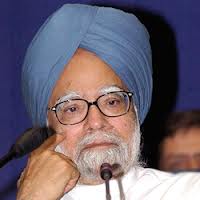
New Delhi, August 28: Declaring that allegations of impropriety in coal block allocations were baseless and unsupported by facts, Prime Minister Manmohan Singh Monday said the official auditor's report was "clearly disputable" and "flawed" because of its assumptions and computations.

Making a statement in the Lok Sabha and the Rajya Sabha on the Comptroller and Auditor General's (CAG) report that irregularities in coal block allocation resulted in presumptive losses of Rs.1.86 lakh crore ($37 billion), Manmohan Singh defended himself and his government.

"I want to assure the members that as the minister in charge, I take full responsibility for the decisions of the ministry. I wish to say that any allegations of impropriety are without basis and unsupported by the facts," he said.

He sought to read out his statement on the floor of both houses -- when they reassembled at noon after being adjourned as the Bharatiya Janata Party (BJP) kept up its demand for his resignation -- but was shouted down. Finally, he laid the statement on the table.

"The facts speak for themselves and show that the CAG's findings are flawed on multiple counts," Manmohan Singh said, tracking the history of successive governments' policies on coal blocks allocations since 1993.

The CAG had earlier this month said in its report that lack of transparency in the allocation of coal blocks to private players resulted in a loss of a whopping Rs.1.86 lakh crore ($37 billion) to the exchequer as on March 11 last year.

The prime minister noted that the CAG report was critical of the allocations mainly on three counts.

The report, he said, had stated that the screening committee that decided on allotments did not follow a transparent and objective method while making recommendations for allocation of coal blocks.

It also observed that competitive bidding could have been introduced in 2006 by amending administrative instructions instead of through a prolonged legal examination of issues, which delayed decision making.

"This premise of the CAG is flawed," he said. Finally, the CAG report mentioned the delay in introduction of competitive bidding rendered the existing process beneficial to a large number of private companies.

"According to the assumptions and computations made by the CAG, there is a financial gain of about Rs.1.86 lakh crore to private parties. The observations of the CAG are clearly disputable," he added.

Later, speaking to the media outside parliament, Manmohan Singh said he was "sorry the two houses are not (being) allowed to function and BJP is determined to disrupt normal functioning of parliament".

"I wish to assure the country that we have a strong and credible case. The observations of the CAG are disputable and they will be challenged when the matter comes before the PAC (Public Accounts Committee)," he said.

Taking credit for the UPA government conceiving competitive bidding way back in June 2004, the prime minister, in his statement, also indirectly attacked the BJP, which has been vociferously demanding his resignation.

He noted that successive governments since 1993 had followed the process of allocation of coal blocks through recommendations of inter-ministerial screening committee. The BJP-led National Democratic Alliance (NDA) under Atal Bihari Vajpayee's prime ministership was in power between 1998 and 2004.

Referring to the CAG criticism of his government for not introducing competitive bidding speedily enough, Manmohan Singh said it was "easier said than done."

"In retrospect, I would readily agree that in a world where things can be done by fiat, we could have done it faster. But, given the complexities of the process or consensus building in our parliamentary system, this is easier said than done."

"The implicit suggestion of the CAG that the government should have circumvented the legislative process through administrative instructions, over the registered objections of several state governments including those ruled by the opposition parties, if implemented would have been undemocratic and contrary to the spirit of the functioning of our federal polity," he added.

Countering the CAG report point-wise, Manmohan Singh said: "Even if we accept CAG's contention that benefits accrued to private companies, their computations can be questioned on a number of technical points."

Now that the CAG report was before the parliament and remitted to the PAC, appropriate action on the recommendations and observations contained in the report will "follow through the established parliamentary procedures", he noted.

Comments

Add new comment

  • Coastaldigest.com reserves the right to delete or block any comments.
  • Coastaldigset.com is not responsible for its readers’ comments.
  • Comments that are abusive, incendiary or irrelevant are strictly prohibited.
  • Please use a genuine email ID and provide your name to avoid reject.
Agencies
August 3,2020

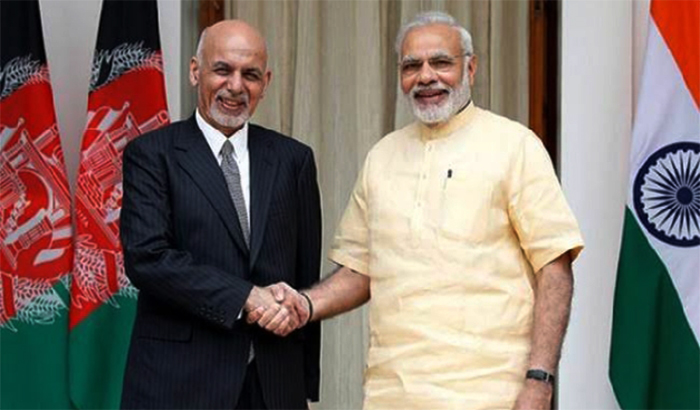
New Delhi, Aug 3: Afghanistan President Ashraf Ghani on Monday thanked Prime Minister Narendra Modi for the timely supply of food and medical assistance to meet the requirement in Afghanistan.

During their telephonic conversation, PM Modi also reiterated India's commitment to the people of Afghanistan in their quest for a peaceful, prosperous and inclusive Afghanistan, the Prime Minister's Office said in a statement on Monday.

The two leaders also exchanged views on the evolving security situation in the region and other areas of mutual bilateral interest.
Both leaders also exchanged greetings on Eid-Al-Adha. 

Comments

Add new comment

  • Coastaldigest.com reserves the right to delete or block any comments.
  • Coastaldigset.com is not responsible for its readers’ comments.
  • Comments that are abusive, incendiary or irrelevant are strictly prohibited.
  • Please use a genuine email ID and provide your name to avoid reject.
News Network
July 18,2020

Washington, Jul 18: The Foreign Direct Investment (FDI) from the US to India has crossed the $40 billion mark so far this year, reflecting the growing confidence of American companies in the country, the head of an India-centric business advocacy group has said.

The American companies, during the Covid-19 pandemic, which has battered the world economy, have shown great confidence in India and its leadership, said Mukesh Aghi, president of the US-India Strategic and Partnership Forum (USISPF), which keeps a track of the major US FDIs in India.

“Year to date investment from the US, including the recent ones, is over $40 billion,” Aghi said.

In recent weeks alone, the announcement of the FDI into India has been over $20 billion, he said, referring to the announcements made by some of the top companies like Google, Facebook and Walmart.

“Investors’ confidence in India is high. India still remains a very promising market for global investors. If you look at the $20 billion… not just the US, but (investment) has also come from other geographies such as the Middle East and the Far East.

“So, India still remains a very, very bullish market for the investor community,” Aghi said in response to a question.

The USISPF has been working with New Delhi to bring in FDI into India… playing a key role in encouraging American companies planning to move their bases out of China, he said, adding that the move was going on in the last three years of the Trump administration, but gained momentum during the coronavirus pandemic.

“We feel that Prime Minister (Narendra Modi’s) intention is very high. The challenges lie on the execution side. Efforts are being made to encourage manufacturing… I've never seen it so better. The policy framework is moving in the right direction,” he said.

Early this week, Larry Kudlow, the White House Economic Advisor, told reporters that the US tech giants like Google and Facebook announcing big investments in India shows that people are losing trust in China and India is emerging as a big competitor.

At the same time, he rued that India continues to be a protectionist country.

“The question is how do you define protectionism... the administration here is saying America first and India is saying vocal for local…,” Aghi added.

Comments

Add new comment

  • Coastaldigest.com reserves the right to delete or block any comments.
  • Coastaldigset.com is not responsible for its readers’ comments.
  • Comments that are abusive, incendiary or irrelevant are strictly prohibited.
  • Please use a genuine email ID and provide your name to avoid reject.
News Network
May 18,2020

The Centre on Sunday extended the COVID-19 lockdown for two more weeks till May 31 with more exemptions as the Centre allowed states more powers for profiling its zones, re-starting of inter-state and intra-state bus travel, plying of autos and taxis and opening of all shops, including in markets but barring those in malls.

Here are the answers to all your questions:

What is 'Lockdown 4.0'?

On March 24, 2020, Prime Minister Narendra Modi announced a 21-day nation-wide lockdown to prevent the spread of the coronavirus outbreak. India follows several countries in its measures to curb the pandemic, which was the first lockdown. Prime Minister then extended the coronavirus lockdown till May 3, which was dubbed as 'Lockdown 2.0'. This lockdown was further prolonged till May 17 which became 'Lockdown 3.0' and now, as the government aims at a staggered re-opening of the country while maintaining the norms such as social distancing, the fourth extension till May 31 is called 'Lockdown 4.0'.

Who issues the guidelines for the lockdown?

The Ministry of Home Affairs (MHA) issues the guidelines for the lockdown.

Are guidelines different during a lockdown compared to normal life?

Well, of course. Guidelines during a lockdown instruct people on all matters from whether you are allowed to leave your house, to whether an MNC is allowed to function and with what percentage of attendance.

Are masks compulsory even now?

Masks are made mandatory in all public places, by the Union Health Ministry. All the states and UTs are to strictly abide by this law. Not wearing masks will attract penalties which are specified by the state.

How would that be determined for an area?

By Lockdown 3.0, all areas of state districts were segregated into containment, red, orange and green zones. In the Lockdown 4.0, states will categorise the areas into red, orange and green zones.

Colourful... but what are red, orange and green zones?

According to the guidelines issued by the Ministry of Health and Family Welfare, states can categorise districts or municipal corporations as red or orange zones.

"States may, however, also choose to categorise a sub-division or ward or any other appropriate administrative unit as red/orange/green zone after detailed analysis at their end, duly taking into consideration the geographical spread of cases, contacts and their zone of influence in terms of disease spread," the ministry said.

With the commencement of the third phase of lockdown, the Union Health Ministry listed 130 districts across the country in the red zone, 284 in the orange zone and 319 in green zones based on the incidence of cases of COVID-19, doubling rate, the extent of testing and surveillance feedback.

Districts were earlier designated as hotspots/red-zones, orange zones and green zones primarily based on the cumulative cases reported and the doubling rate.

A district will be considered under green zone if there have been no confirmed cases of COVID-19 so far or there is no reported case since last 21 days in the district, according to the letter.

Now, what is a buffer zone?

A buffer zone is an area of spread in a 5-kilometre radius (7 Kms in rural areas) of a containment zone.

How do I find out the zone I am in?

You either look at your state or city's municipal corporation pages to avail the zone details. You can also look at your district magistrate's Twitter handle or Facebook account to find out the list of the zone under which your area falls.

Can I leave my home now?

That depends. If you are in a containment zone or a red zone, you may not be allowed to leave your residence. Otherwise, in the other zones, the state governments and the district magistrates will decide upon the level of movement within and outside the zones.

Can I shift from a red zone to an orange or green zone?

You cannot. The residents of a red or containment zone cannot move out of their zones, nobody may enter the zones as well.

What about my office?

The private offices can operate in non-containment zones. The guidelines for offices to work will be listed by the state governments and the DMs (district magistrates).

Will I be allowed to use my bike/car or any other personal vehicle?

There is a likely chance of you being allowed to take out your bike or car or other vehicles (not helicopters or aeroplanes), if you are not in a containment zone. You need to check the rules listed by your state government or DM. The number of people who can ride at one time will also be decided by the state.

Can my driver, house help or neighbour drive me to my office/destination? Will I be allowed to take them to my workplace?

Yes, provided they are not from a red zone which may be risky for the passenger. This facility is prohibited in a containment zone. Also, check with your workplace regarding the norms to follow within the office. For the details on travelling with others in the car, look into the info provided by your state government, DM and Resident Welfare Association (RWA).

Will be able to fill petrol or diesel for my vehicle?

Definitely, yes. All petrol pumps, LPG and oil agencies will continue to be open.

What if I need to take a cab, auto or book one via Ola/Uber?

The same rules apply to them as well. Unless you are in a containment zone, the restrictions for using cabs and autos will be eased.

What if I need to use public transport like buses?

Some states have allowed buses to run, such as in Tamil Nadu in certain areas. You will have to check with the state government or DM's regulations enlisted for knowing the routes and norms to follow inside a bus.

Can I use my city's Metro line?

Unfortunately, metro lines are not allowed to open and will remain closed until further notification from the Centre.

Can I walk around in my area?

Walking will be permitted under the guidelines issued by the state and DM. Walking in groups will be prohibited and social distancing norms are to be followed in public at all times. Movement is allowed between 7 am to 7 pm in any zone - containment, red, orange or green.

Can I take my grandparents/kids out for a walk?

People older than 65 years of age, or younger than 10, persons with co-morbidities, pregnant women are not allowed to venture out of their residences, as they are highly susceptible to the infection.

Can I go out with my friends?

A group of less than 5 people are allowed to walk together. If you are planning to use vehicles such as bikes, every induvial must have their own as more than one person on atwo-wheeler is not allowed in certain areas. Curfew timings are from 7 am to 7 pm as movent is prohibited beyond these timings. Check the regulations issued by your local DM or state government to know further details.

What if I need to see my friends, relatives or others?

The Resident Welfare Association (RWA) will make a decision about allowing visitors inside a zone, barring containment zones. Nobody is allowed within the containment zone or permitted to leave.

Can we now go to restaurants?

Restaurants are still closed irrespective of the zone. Take-away or delivery services will be available, nevertheless.

Can we go to malls?

Malls and restaurants and shops in the malls will remain closed irrespective of the zone, as these are crowd-pulling zones.

Does that mean multiplexes, theatres and drama/concert halls are closed as well?

Cinema halls, theatres, multiplexes and drama/concert halls will remain closed regardless of which zone they are in, till further instructions are sent by the Centre.

Can I go to the beach or a monument/heritage site?

Since such public places will attract a huge crowd that will be tough to control, beaches, monuments, heritage sites and such public places will be closed.

Can I go to coffee shops?

As coffee shops will fall under the category of restaurants, they will also be closed. Take-away and delivery services can be availed from the shops.

What about essentials?

Grocery shops, milk vendors, newspaper circulation are allowed to stay open. Proper sanitisation must be done from time-to-time to ensure customer and vendors’ safety.

I need to repair my phone. Will stand-alone non-essential services be open?

Such non-essential services are allowed to open in non-containment zones. Refer the state governments and DMs rules for knowing the type of shops and state and districts they are permitted in.

What about in-house repairs or services? Can I call a mechanic to my house?

Yes, provided your RWA has permitted to allow mechanics, workmen and labourers inside in non-containment zones.

Comments

Add new comment

  • Coastaldigest.com reserves the right to delete or block any comments.
  • Coastaldigset.com is not responsible for its readers’ comments.
  • Comments that are abusive, incendiary or irrelevant are strictly prohibited.
  • Please use a genuine email ID and provide your name to avoid reject.