


CAG report is clearly disputable, flawed: PM

August 27, 2012
mohan_copy

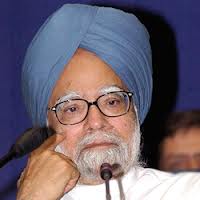
New Delhi, August 28: Declaring that allegations of impropriety in coal block allocations were baseless and unsupported by facts, Prime Minister Manmohan Singh Monday said the official auditor's report was "clearly disputable" and "flawed" because of its assumptions and computations.

Making a statement in the Lok Sabha and the Rajya Sabha on the Comptroller and Auditor General's (CAG) report that irregularities in coal block allocation resulted in presumptive losses of Rs.1.86 lakh crore ($37 billion), Manmohan Singh defended himself and his government.

"I want to assure the members that as the minister in charge, I take full responsibility for the decisions of the ministry. I wish to say that any allegations of impropriety are without basis and unsupported by the facts," he said.

He sought to read out his statement on the floor of both houses -- when they reassembled at noon after being adjourned as the Bharatiya Janata Party (BJP) kept up its demand for his resignation -- but was shouted down. Finally, he laid the statement on the table.

"The facts speak for themselves and show that the CAG's findings are flawed on multiple counts," Manmohan Singh said, tracking the history of successive governments' policies on coal blocks allocations since 1993.

The CAG had earlier this month said in its report that lack of transparency in the allocation of coal blocks to private players resulted in a loss of a whopping Rs.1.86 lakh crore ($37 billion) to the exchequer as on March 11 last year.

The prime minister noted that the CAG report was critical of the allocations mainly on three counts.

The report, he said, had stated that the screening committee that decided on allotments did not follow a transparent and objective method while making recommendations for allocation of coal blocks.

It also observed that competitive bidding could have been introduced in 2006 by amending administrative instructions instead of through a prolonged legal examination of issues, which delayed decision making.

"This premise of the CAG is flawed," he said. Finally, the CAG report mentioned the delay in introduction of competitive bidding rendered the existing process beneficial to a large number of private companies.

"According to the assumptions and computations made by the CAG, there is a financial gain of about Rs.1.86 lakh crore to private parties. The observations of the CAG are clearly disputable," he added.

Later, speaking to the media outside parliament, Manmohan Singh said he was "sorry the two houses are not (being) allowed to function and BJP is determined to disrupt normal functioning of parliament".

"I wish to assure the country that we have a strong and credible case. The observations of the CAG are disputable and they will be challenged when the matter comes before the PAC (Public Accounts Committee)," he said.

Taking credit for the UPA government conceiving competitive bidding way back in June 2004, the prime minister, in his statement, also indirectly attacked the BJP, which has been vociferously demanding his resignation.

He noted that successive governments since 1993 had followed the process of allocation of coal blocks through recommendations of inter-ministerial screening committee. The BJP-led National Democratic Alliance (NDA) under Atal Bihari Vajpayee's prime ministership was in power between 1998 and 2004.

Referring to the CAG criticism of his government for not introducing competitive bidding speedily enough, Manmohan Singh said it was "easier said than done."

"In retrospect, I would readily agree that in a world where things can be done by fiat, we could have done it faster. But, given the complexities of the process or consensus building in our parliamentary system, this is easier said than done."

"The implicit suggestion of the CAG that the government should have circumvented the legislative process through administrative instructions, over the registered objections of several state governments including those ruled by the opposition parties, if implemented would have been undemocratic and contrary to the spirit of the functioning of our federal polity," he added.

Countering the CAG report point-wise, Manmohan Singh said: "Even if we accept CAG's contention that benefits accrued to private companies, their computations can be questioned on a number of technical points."

Now that the CAG report was before the parliament and remitted to the PAC, appropriate action on the recommendations and observations contained in the report will "follow through the established parliamentary procedures", he noted.


Comments

Add new comment

  • Coastaldigest.com reserves the right to delete or block any comments.
  • Coastaldigset.com is not responsible for its readers’ comments.
  • Comments that are abusive, incendiary or irrelevant are strictly prohibited.
  • Please use a genuine email ID and provide your name to avoid reject.
Agencies
March 15,2020

Ahmedabad, Mar 15: Four Congress MLAs in Gujarat have tendered their resignation to Assembly Speaker Rajendra Trivedi ahead of the election to the four Rajya Sabha seats in the state to be held on March 26.

The four Congress legislators tendered their resignation on Saturday, which Trivedi has accepted.

Trivedi told this to PTI on Sunday.

He said he will announce the names of the legislators in the Legislative Assembly on Monday.

"Four Congress MLAs tendered their resignation to me on Saturday, and I will announce their names in the Assembly tomorrow," he said.

With this, the strength of the Congress party in the 182-member Gujarat Assembly has come down to 69 from 73.

The Congress had on Saturday shifted its 14 MLAs to Jaipur fearing horse-trading by the ruling BJP ahead of the Rajya Sabha polls.

The BJP has fielded Abhay Bhardwaj, Ramila Bara and Narhari Amin for the election.

Given its number in the Assembly, the ruling party can only win two seats unless it manages cross-voting from the opposition camp or ensures defection of Congress MLAs to win the third seat.

The Congress has fielded senior leaders Shaktisinh Gohil and Bharatsinh Solanki.

Comments

Add new comment

  • Coastaldigest.com reserves the right to delete or block any comments.
  • Coastaldigset.com is not responsible for its readers’ comments.
  • Comments that are abusive, incendiary or irrelevant are strictly prohibited.
  • Please use a genuine email ID and provide your name to avoid reject.
News Network
April 23,2020

Washington, Apr 23: Air pollution over northern India has plummeted to a 20-year-low for this time of the year, according to satellite data published by US space agency National Aeronautics and Space Administration (NASA).
The US space agency's satellite sensors observed aerosol levels at a 20-year low post the countrywide lockdown, implemented to slow the spread of the novel coronavirus.

"We knew we would see changes in atmospheric composition in many places during the lockdown," said Pawan Gupta, a Universities Space Research Association (USRA) scientist at NASA''s Marshall Space Flight Center. "But I have never seen aerosol values so low in the Indo-Gangetic Plain at this time of year," added Mr Gupta.

Acting Assistant Secretary of State for South and Central Asia Alice G Wells tweeted, "These images from NASA were taken each spring starting in 2016 and show a 20-year low in airborne particle levels over India. When India and the world are ready to work and travel again, let's not forget that collaborative action can result in cleaner air."

The data published with maps show aerosol optical depth (AOD) in 2020 compared to the average for 2016-2019. Aerosol optical depth is a measure of how light is absorbed or reflected by airborne particles as it travels through the atmosphere.

If aerosols are concentrated near the surface, an optical depth of 1 or above indicates very hazy conditions. An optical depth, or thickness, of less than 0.1 over the entire atmospheric vertical column is considered "clean." The data were retrieved by the Moderate Resolution Imaging Spectroradiometer (MODIS) on NASA's Terra satellite.

In the first few days of the lockdown, it was difficult to observe a change in the pollution signature. "We saw an aerosol decrease in the first week of the shutdown, but that was due to a combination of rain and the lockdown," said Mr Gupta.

Around March 27, heavy rain poured over vast areas of northern India and helped clear the air of aerosols. Aerosol concentrations usually increase again after such heavy precipitation.

"After the rainfall, I was really impressed that aerosol levels did not go up and return to normal. We saw a gradual decrease and things have been staying at the level we might expect without anthropogenic emissions," Mr Gupta said.

On March 25, the Indian government placed its 1.3 billion citizens under a strict lockdown to reduce the spread of COVID-19. The countrywide mandate decreased activity at factories and severely reduced car, bus, truck and airplane traffic. Every year, aerosols from anthropogenic (human-made) sources contribute to unhealthy levels of air pollution in many Indian cities.

Aerosols are tiny solid and liquid particles suspended in the air that reduce visibility and can damage the human lungs and heart.

In southern India though, the story is a little hazier. Satellite data show aerosol levels have not yet decreased to the same extent. In fact, levels seem to be slightly higher than in the past four years. The reasons are unclear but could be related to recent weather patterns, agricultural fires, winds or other factors.

"This a model scientific experiment," Robert Levy, program leader for NASA's MODIS aerosol products, said about the lockdown and its effects on pollution.

"We have a unique opportunity to learn how the atmosphere reacts to sharp and sudden reductions in emissions from certain sectors. This can help us separate how natural and human sources of aerosols affect the atmosphere," Mr Levy added.

Comments

Add new comment

  • Coastaldigest.com reserves the right to delete or block any comments.
  • Coastaldigset.com is not responsible for its readers’ comments.
  • Comments that are abusive, incendiary or irrelevant are strictly prohibited.
  • Please use a genuine email ID and provide your name to avoid reject.
News Network
March 31,2020

Thiruvananthapuram, Mar 31: Kerala Chief

Minister Pinarayi Vijayan on Tuesday said the government has collected the details of those who took part from the state in recent religious congregations in Nizamuddin and Malaysia and it needs to be examined if they have any health issues.

"Police have already made detailed examination in this regard. Thelist of participants have been given through respectivedistrictcollectors. Necessary precautions will be made in the concerned districts in this regard," Vijayan told reporters here.

The government has the exact number of participants and thedetails of the districts they are hailing from, he said.

Meanwhile, Pathananthitta police said they have identified 6 persons in the district in connection with the Nizamuddin congregation.

"Three persons had taken part in the congregation, of them one hadalready died. One person is in quarantine in the district while theother is located now in Thiruvananrhapuram," a senior police officialtold PTI.

The others are not participants but had travelled to Delhi along with them, he said.

In the nearby Alappuzha district, three persons have been identified in connection with the congregation, police said.

"They have been in quarantine and under the surveillance of thehealth department since they have reached back the state from Delhi," another official said.

Several people, who had attended the religious congregation at Nizamuddin in the national capital are suspected to be having symptoms of Covid19, even as at least 24 have tested positive.

Comments

Add new comment

  • Coastaldigest.com reserves the right to delete or block any comments.
  • Coastaldigset.com is not responsible for its readers’ comments.
  • Comments that are abusive, incendiary or irrelevant are strictly prohibited.
  • Please use a genuine email ID and provide your name to avoid reject.