


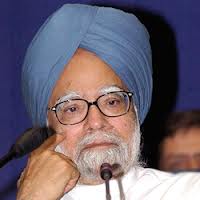
CAG report is clearly disputable, flawed: PM

August 27, 2012
mohan_copy

New Delhi, August 28: Declaring that allegations of impropriety in coal block allocations were baseless and unsupported by facts, Prime Minister Manmohan Singh Monday said the official auditor's report was "clearly disputable" and "flawed" because of its assumptions and computations.

Making a statement in the Lok Sabha and the Rajya Sabha on the Comptroller and Auditor General's (CAG) report that irregularities in coal block allocation resulted in presumptive losses of Rs.1.86 lakh crore ($37 billion), Manmohan Singh defended himself and his government.

"I want to assure the members that as the minister in charge, I take full responsibility for the decisions of the ministry. I wish to say that any allegations of impropriety are without basis and unsupported by the facts," he said.

He sought to read out his statement on the floor of both houses -- when they reassembled at noon after being adjourned as the Bharatiya Janata Party (BJP) kept up its demand for his resignation -- but was shouted down. Finally, he laid the statement on the table.

"The facts speak for themselves and show that the CAG's findings are flawed on multiple counts," Manmohan Singh said, tracking the history of successive governments' policies on coal blocks allocations since 1993.

The CAG had earlier this month said in its report that lack of transparency in the allocation of coal blocks to private players resulted in a loss of a whopping Rs.1.86 lakh crore ($37 billion) to the exchequer as on March 11 last year.

The prime minister noted that the CAG report was critical of the allocations mainly on three counts.

The report, he said, had stated that the screening committee that decided on allotments did not follow a transparent and objective method while making recommendations for allocation of coal blocks.

It also observed that competitive bidding could have been introduced in 2006 by amending administrative instructions instead of through a prolonged legal examination of issues, which delayed decision making.

"This premise of the CAG is flawed," he said. Finally, the CAG report mentioned the delay in introduction of competitive bidding rendered the existing process beneficial to a large number of private companies.

"According to the assumptions and computations made by the CAG, there is a financial gain of about Rs.1.86 lakh crore to private parties. The observations of the CAG are clearly disputable," he added.

Later, speaking to the media outside parliament, Manmohan Singh said he was "sorry the two houses are not (being) allowed to function and BJP is determined to disrupt normal functioning of parliament".

"I wish to assure the country that we have a strong and credible case. The observations of the CAG are disputable and they will be challenged when the matter comes before the PAC (Public Accounts Committee)," he said.

Taking credit for the UPA government conceiving competitive bidding way back in June 2004, the prime minister, in his statement, also indirectly attacked the BJP, which has been vociferously demanding his resignation.

He noted that successive governments since 1993 had followed the process of allocation of coal blocks through recommendations of inter-ministerial screening committee. The BJP-led National Democratic Alliance (NDA) under Atal Bihari Vajpayee's prime ministership was in power between 1998 and 2004.

Referring to the CAG criticism of his government for not introducing competitive bidding speedily enough, Manmohan Singh said it was "easier said than done."

"In retrospect, I would readily agree that in a world where things can be done by fiat, we could have done it faster. But, given the complexities of the process or consensus building in our parliamentary system, this is easier said than done."

"The implicit suggestion of the CAG that the government should have circumvented the legislative process through administrative instructions, over the registered objections of several state governments including those ruled by the opposition parties, if implemented would have been undemocratic and contrary to the spirit of the functioning of our federal polity," he added.

Countering the CAG report point-wise, Manmohan Singh said: "Even if we accept CAG's contention that benefits accrued to private companies, their computations can be questioned on a number of technical points."

Now that the CAG report was before the parliament and remitted to the PAC, appropriate action on the recommendations and observations contained in the report will "follow through the established parliamentary procedures", he noted.


Comments

Add new comment

  • Coastaldigest.com reserves the right to delete or block any comments.
  • Coastaldigset.com is not responsible for its readers’ comments.
  • Comments that are abusive, incendiary or irrelevant are strictly prohibited.
  • Please use a genuine email ID and provide your name to avoid reject.
News Network
January 21,2020

Jan 21: Indian policymakers may make it easier for companies to tap foreign funding, as a prolonged cash squeeze makes it tough for firms to borrow at home.

Investors are speculating about potential steps Finance Minister Nirmala Sitharaman could unveil when she presents the nation’s budget on Feb. 1. These measures may include freeing up firms to borrow at higher rates and offering tax breaks to global funds.

“The government will need to relax local rules to make it easier for Indian companies to raise debt overseas and tide over the funding crunch in the onshore market,” said Raj Kothari, London-based head of trading at Jay Capital Ltd. “At the same time, they need to ensure that the borrowers tapping offshore markets abide with stricter corporate governance so as to avoid further defaults.”

A prolonged crisis in India’s shadow bank sector and a pile of bad loans at traditional lenders is making it expensive for Indian companies, other than the best-rated firms, to access funding. The government has tried a series of measures to spur domestic credit, including providing so-called credit enhancement and allowing tiny firms to restructure debt.

Here are some steps Sitharaman may consider to spur foreign borrowing:

• She could raise the cap of 450 basis points above Libor, which limits overall foreign debt costs for Indian companies

• This could help lower-rated firms sell bonds abroad. Indian companies rated BBB currently borrow at more than 10%, about 3.8 percentage points more than their top-rated peers;

• Sitharaman could waive the withholding tax foreign investors need to pay on holdings of rupee-denominated debt sold by Indian companies abroad

• The waiver was offered between September 2018 to March 2019, but wasn’t extended as the highest global interest rates since the financial crisis deterred Indian borrowers. Since then, the three-month Libor has dropped by about 1 percentage point

• She could permit Indian property developers and housing finance lenders to sell overseas bonds for reasons beyond affordable housing projects

• New funding lines to the real estate sector, arguably ground zero of India’s economic slowdown, could help kickstart consumption and investment as the industry is the nation’s biggest job-creator.

Comments

Add new comment

  • Coastaldigest.com reserves the right to delete or block any comments.
  • Coastaldigset.com is not responsible for its readers’ comments.
  • Comments that are abusive, incendiary or irrelevant are strictly prohibited.
  • Please use a genuine email ID and provide your name to avoid reject.
News Network
April 11,2020

New Delhi, Apr 11: Calling upon chief ministers to popularise Aarogya Setu app, Prime Minister Narendra Modi on Saturday said it will an essential tool in India's fight against coronavirus and referred to the possibility of the app being an "e-pass which could subsequently facilitate travel from one place to other".

Interacting with chief ministers through video conference, the Prime Minister mentioned how South Korea and Singapore had got success in contact tracing and said India has made its own effort through the app amid efforts to contain the spread of coronavirus.

A PMO release said that the Prime Minister spoke about popularizing the Aarogya Setu app to ensure downloads in greater numbers.

"He referred to how South Korea and Singapore got success in contact tracing. Based on those experiences, India has made its own effort through the app which will be an essential tool in India's fight against the pandemic, he said. He also referred to the possibility of the app being an e-pass which could subsequently facilitate travel from one place to another," the release said.

The Prime Minister had earlier this week urged people to download the app saying it is an important step in the fight against COVID-19 and its effectiveness will increase as more people use it.

"Aarogya Setu is an important step in our fight against COVID-19. By leveraging technology, it provides important information. As more and more people use it, it's effectiveness will increase. I urge you all to download it," he had said in a tweet.

The app launched earlier this month in public-private partnership enables people to themselves assess the risk for their catching the coronavirus infection.

The app makes its calculations based on a person's interaction with others, using Bluetooth technology, algorithms and artificial intelligence.

Comments

Add new comment

  • Coastaldigest.com reserves the right to delete or block any comments.
  • Coastaldigset.com is not responsible for its readers’ comments.
  • Comments that are abusive, incendiary or irrelevant are strictly prohibited.
  • Please use a genuine email ID and provide your name to avoid reject.
News Network
June 25,2020

New Delhi, Jun 25: Diesel price in the national capital crossed the Rs 80 per litre-mark for the first time ever on Thursday as oil companies raised prices for the 19th day, taking the cumulative rate to Rs 10.63 a litre.

Petrol price, after a day's hiatus, was hiked by 16 paise and the increase in less than three weeks now totals Rs 8.66 per litre.

Petrol price in Delhi was hiked to Rs 79.92 per litre from Rs 79.76, while diesel rates were increased to Rs 80.02 a litre from Rs 79.88, according to a price notification of state oil marketing companies.

Diesel had for the first time become costlier than petrol in Delhi on Wednesday and has now crossed the Rs 80 per litre-mark.

Rates differ from state to state depending on the incidence of value-added tax (VAT).

However, diesel is costlier than petrol only in the national capital where the state government had raised local sales tax or VAT on the fuel sharply last month. It costs less than petrol in other cities.

The 19th daily increase in rates since oil companies on June 7 restarted revising prices in line with costs after ending an 82-day hiatus in rate revision, has taken diesel prices to fresh highs.

In 19 straight days, diesel price has gone up by Rs 10.63 per litre. Petrol price has been hiked on 18 occasions since June 7 and now totals to Rs 8.66 a litre.

Comments

Add new comment

  • Coastaldigest.com reserves the right to delete or block any comments.
  • Coastaldigset.com is not responsible for its readers’ comments.
  • Comments that are abusive, incendiary or irrelevant are strictly prohibited.
  • Please use a genuine email ID and provide your name to avoid reject.