


CAG report is clearly disputable, flawed: PM

August 27, 2012
mohan_copy

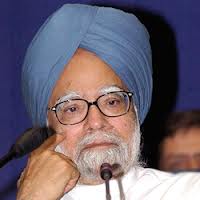
New Delhi, August 28: Declaring that allegations of impropriety in coal block allocations were baseless and unsupported by facts, Prime Minister Manmohan Singh Monday said the official auditor's report was "clearly disputable" and "flawed" because of its assumptions and computations.

Making a statement in the Lok Sabha and the Rajya Sabha on the Comptroller and Auditor General's (CAG) report that irregularities in coal block allocation resulted in presumptive losses of Rs.1.86 lakh crore ($37 billion), Manmohan Singh defended himself and his government.

"I want to assure the members that as the minister in charge, I take full responsibility for the decisions of the ministry. I wish to say that any allegations of impropriety are without basis and unsupported by the facts," he said.

He sought to read out his statement on the floor of both houses -- when they reassembled at noon after being adjourned as the Bharatiya Janata Party (BJP) kept up its demand for his resignation -- but was shouted down. Finally, he laid the statement on the table.

"The facts speak for themselves and show that the CAG's findings are flawed on multiple counts," Manmohan Singh said, tracking the history of successive governments' policies on coal blocks allocations since 1993.

The CAG had earlier this month said in its report that lack of transparency in the allocation of coal blocks to private players resulted in a loss of a whopping Rs.1.86 lakh crore ($37 billion) to the exchequer as on March 11 last year.

The prime minister noted that the CAG report was critical of the allocations mainly on three counts.

The report, he said, had stated that the screening committee that decided on allotments did not follow a transparent and objective method while making recommendations for allocation of coal blocks.

It also observed that competitive bidding could have been introduced in 2006 by amending administrative instructions instead of through a prolonged legal examination of issues, which delayed decision making.

"This premise of the CAG is flawed," he said. Finally, the CAG report mentioned the delay in introduction of competitive bidding rendered the existing process beneficial to a large number of private companies.

"According to the assumptions and computations made by the CAG, there is a financial gain of about Rs.1.86 lakh crore to private parties. The observations of the CAG are clearly disputable," he added.

Later, speaking to the media outside parliament, Manmohan Singh said he was "sorry the two houses are not (being) allowed to function and BJP is determined to disrupt normal functioning of parliament".

"I wish to assure the country that we have a strong and credible case. The observations of the CAG are disputable and they will be challenged when the matter comes before the PAC (Public Accounts Committee)," he said.

Taking credit for the UPA government conceiving competitive bidding way back in June 2004, the prime minister, in his statement, also indirectly attacked the BJP, which has been vociferously demanding his resignation.

He noted that successive governments since 1993 had followed the process of allocation of coal blocks through recommendations of inter-ministerial screening committee. The BJP-led National Democratic Alliance (NDA) under Atal Bihari Vajpayee's prime ministership was in power between 1998 and 2004.

Referring to the CAG criticism of his government for not introducing competitive bidding speedily enough, Manmohan Singh said it was "easier said than done."

"In retrospect, I would readily agree that in a world where things can be done by fiat, we could have done it faster. But, given the complexities of the process or consensus building in our parliamentary system, this is easier said than done."

"The implicit suggestion of the CAG that the government should have circumvented the legislative process through administrative instructions, over the registered objections of several state governments including those ruled by the opposition parties, if implemented would have been undemocratic and contrary to the spirit of the functioning of our federal polity," he added.

Countering the CAG report point-wise, Manmohan Singh said: "Even if we accept CAG's contention that benefits accrued to private companies, their computations can be questioned on a number of technical points."

Now that the CAG report was before the parliament and remitted to the PAC, appropriate action on the recommendations and observations contained in the report will "follow through the established parliamentary procedures", he noted.


Comments

Add new comment

  • Coastaldigest.com reserves the right to delete or block any comments.
  • Coastaldigset.com is not responsible for its readers’ comments.
  • Comments that are abusive, incendiary or irrelevant are strictly prohibited.
  • Please use a genuine email ID and provide your name to avoid reject.
Agencies
May 14,2020

New Delhi, May 14: India may witness the death of additional 1.2-6 lakh children over the next one year from preventable causes as a consequence to the disruption in regular health services due to the COVID-19 pandemic, UNICEF has warned.

The warning comes from a new study that brackets India with nine other nations from Asia and Africa that could potentially have the largest number of additional child deaths as a consequence to the pandemic.

These potential child deaths will be in addition to the 2.5 million children who already die before their fifth birthday every six months in the 118 countries included in the study.

The estimate is based on an analysis by researchers from the Johns Hopkins Bloomberg School of Public Health published in the Lancet.  

This means the global mortality rate of children dying before their fifth birthday, one of the key progress indicators in all of the global development, could potentially increase for the first time since 1960 when the data was first collected.

There were 1.04 million under-5 deaths in India in 2017, of which nearly 50% (0.57 million) were neonatal deaths. The highest number of under-5 deaths was in Uttar Pradesh (312,800 which included 165,800 neonatal deaths) and Bihar (141,500 which included 75,300 neonatal deaths).

The researchers looked at three scenarios, factoring in parameters like reduction in workforce, supplies and access to healthcare for services like family planning, antenatal care, childbirth care, postnatal care, vaccination and preventive care for early childhood. The effects are modelled for a period of three months, six months and 12 months.  

In scenario-1 marked by 10-18% reduction of coverage of all the services, the number of additional children deaths could be in the range of 30,000 plus over three months, more than 60,000 over six months and above 120,000 over the next 12 months.

Coronavirus India update: State-wise total number of confirmed cases, deaths on May 13

The numbers sharply rose to nearly 55,000; 109,000 and 219,000 respectively for scenario-2, which was associated with an 18-28% drop in all the regular services.

But in the worst-case scenario in which 40-50% of the services are not available, the number of additional deaths ballooned to 1.5 lakhs in the three months in the short-range to nearly six lakhs over a year.

The ten countries that could potentially have the largest number of additional child deaths are Bangladesh, Brazil, Congo, Ethiopia, India, Indonesia, Nigeria, Pakistan, Uganda and Tanzania.

In countries with already weak health systems, COVID-19 is causing disruptions in medical supply chains and straining financial and human resources.

Visits to health care centres are declining due to lockdowns, curfews and transport disruptions, and due to the fear of infection among the communities. Such disruptions could result in potentially devastating increases in maternal and child deaths, the UN agency warned.

Comments

Add new comment

  • Coastaldigest.com reserves the right to delete or block any comments.
  • Coastaldigset.com is not responsible for its readers’ comments.
  • Comments that are abusive, incendiary or irrelevant are strictly prohibited.
  • Please use a genuine email ID and provide your name to avoid reject.
News Network
May 11,2020

New Delhi, May 11: Prime Minister Narendra Modi on Monday chaired a fresh round of consultation with chief ministers on ways to strengthen the COVID-19 containment strategy and stepping up of economic activities in a calibrated manner as the 54-day nationwide lockdown nears an end.

Large-scale movement of migrant workers from urban to rural India and the problems their return to home states may cause in restarting the economy will also be among the focus areas during the fifth virtual interaction between the prime minister and chief ministers since the outbreak of the deadly virus in the country.

There will be an effort to ensure that all participating chief ministers get an opportunity to air their views during the interaction, as some of the CMs had complaint that they were not allowed to put forth their views during the last interaction on April 27.

At a meeting on Sunday with Cabinet Secretary Rajiv Gauba, state chief secretaries told him that "while protection is required from COVID-19, economic activities also need to be stepped up in a calibrated manner", according to an official statement.       

With thousands of migrant workers taking special trains to go back to their home states, the restarting of industrial activities will prove to be a challenge for states though several relaxations have been made in labour laws to increase factory output.    

The meet is also likely to discuss efforts to convert 'red' zones with high COVID-19 case load into 'orange' or 'green' zones.       The prime minister interacted with the chief ministers last on April 27. Days after the meeting, the central government had extended the lockdown by two more weeks till May 17 to arrest the spread of the virus, but gave several relaxations in economic activities and movement of people.

The nationwide lockdown has been in force since March 25 to contain the spread of the virus, which has killed more than 2200 people, and afflicted more than 67,000 in the country.

Comments

Add new comment

  • Coastaldigest.com reserves the right to delete or block any comments.
  • Coastaldigset.com is not responsible for its readers’ comments.
  • Comments that are abusive, incendiary or irrelevant are strictly prohibited.
  • Please use a genuine email ID and provide your name to avoid reject.
Agencies
January 12,2020

Mumbai, Jan 12: Thousands of citizens on Sunday congregated in Mumbai's suburban Jogeshwari to oppose the new citizenship law, the proposed NRC and NPR.

They also condemned last Sunday's violence on the JNU campus in Delhi, where masked men ran riot and attacked students. Leftist organisations had claimed RSS-affiliated ABVP's role in the attack, a charge denied by the students' body.

Former Tata Institute of Social Science (TISS) general secretary Fahad Ahmed told PTI that they assembled under the aegis of 'Hum Bharat Ke Log' in Millat Nagar area.

"Prime minister Narendra Modi should call 56 students from across the country to debate on the CAA, NRC and NPR," Ahmed said in an apparent jibe at Modi's "56 inch chest" remark, which the latter had made ahead of the 2014 Lok Sabha polls.

"Why the PM is not talking to us? Why is he not communicating? Even the Britishers used to talk to Indians whom they ruled, but our PM is not talking to poor people," he alleged.

Bollywood actor Sushasht Singh also spoke on the occasion.

"We are people of this country and such acts (CAA) are tarnishing the image of our country," he said.

At the gathering, people waved banners with slogans like "I Am From Gujarat, My Documents Burned in 2002", "No CAA, Boycott NRC, Stop Dividing India, Don't Divide us", "Save Constitution", written on them.

A large number of police personnel were present at the venue.

The Citizenship Amendment Act (CAA), which was notified on January 10, grants Indian citizenship to non-Muslim minorities migrated to India from Afghanistan, Pakistan and Bangladesh till December 31, 2014, following persecution over their faith.

Massive protests were witnessed against the CAA, mainly by the student community, since its passage by Parliament in December last year.

Opposition parties have been dubbing the CAA an "anti-Muslim" legislation, a charge being debunked by the government.

The Congress and other parties like the TMC have also opposed the proposed National Register of Citizens (NRC) and the National Population Register (NPR).

Union home minister Amit Shah has said that the government won't rest until persecuted refugees are granted Indian citizenship.

Comments

Add new comment

  • Coastaldigest.com reserves the right to delete or block any comments.
  • Coastaldigset.com is not responsible for its readers’ comments.
  • Comments that are abusive, incendiary or irrelevant are strictly prohibited.
  • Please use a genuine email ID and provide your name to avoid reject.