Sohrabuddin case: SC wants trial to be shifted to Maharashtra

August 28, 2012

Supreme_Court

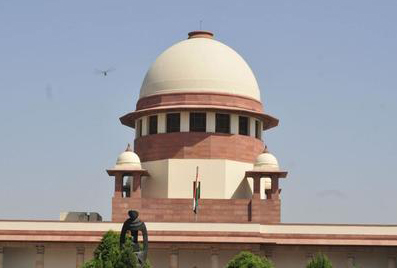
New Delhi, August 28: The Supreme Court today said it would consider allowing former Gujarat Minister Amit Shah, an accused in the Sohrabuddin Sheikh fake encounter case, to enter the state in view of the upcoming assembly polls but would like the trial of the case to be shifted to Maharashtra.

"That is one aspect. That must come to an end (keeping him outside the state)," a bench comprising justices Aftab Alam and Ranjana Prakash Desai said.

However, the bench said it has strong reservation over holding the trial of the case in the state.

"We have strong reservation about the trial to be conducted in the state. Trial has to go to Maharashtra," the bench said.

The bench posted the matter for September 4 after senior advocate Ram Jethmalani said he would like to make short oral arguments and will also place written submissions on the issue of bail and transfer of case of the BJP leader.

Jethmalani had submitted that the court should lift the condition imposed on Shah, when he was granted bail, that he would keep himself out of Gujarat.

Jethmalani submitted that Shah should be permitted to be in Gujarat under the surveillance of CBI officials in view of the upcoming assembly elections.

"Don't keep him away from political activities," he submitted. Meanwhile, the court also asked the CBI to take a decision within couple of days on its probe relating to the killing of Tulsiram Prajapati, who was one of the key witness in the killing of Sohrabuddin Sheikh.

The bench stated this after CBI counsel Vivek Tankha said that the CBI probe in Prajapati killing case was complete and the agency would file the charge sheet within a week or so.


Comments

Add new comment

  • Coastaldigest.com reserves the right to delete or block any comments.
  • Coastaldigset.com is not responsible for its readers’ comments.
  • Comments that are abusive, incendiary or irrelevant are strictly prohibited.
  • Please use a genuine email ID and provide your name to avoid reject.
News Network
February 1,2020

When it comes to the economy, dark days do loom large over India. May it be growth (lowest since 2008), inflation (highest in the last six years), or revenue collection (lowest in 10 years), the Indian economy is faltering. Hence, there is little leeway that can be assumed in the incumbent Union Budget 2020 (the first of the decade) if the economy needs to be boosted.

While presenting the decade's first Budget for India, finance minister Nirmala Sitharaman said on Saturday in Parliament:

Taxation

•             AADHAR based tax verification introduced

•             Review of customs duty exemptions in September 2020

•             GST refund process simplified

•             Electronic invoice implementation in phases

•             New digital scheme for tax litigation

•             PAN to be instantly allotted online against Aadhar

•             Vivaad se Vishwas Scheme: Defaulter to pay only disputed tax and no penalty or interest by 31 March 2020, post which additional amount can be paid till June 2020

•             Measure to promote affordable housing - tax holiday extended for developers

•             Concession on real estate transactions

•             Turnover threshold for audit raised to Rs 5 crore from 1 crore

•             Company audit requirements eased

•             Taxes on ESOPs (employee stock ownership) in start-ups deferred by 5 years

•             100% per cent tax exemption

•             Corporate Tax at 15%

•             Dividend Distribution Tax removed, dividend taxed only for recipients

•             No tax for 0-5 lakh

•             30% above 15 lakh

•             25% for income between Rs 12.5-15 lakh

•             20% for income between Rs 10-12.5 lakh

•             15% for income between Rs 7.5-10 lakh

•             10% for income between Rs 5-7.5 lakh, against the prevailing 20%

•             A new, optional simplified personal income tax regime for those not seeking exemptions


Major steps and initiatives taken by the government in finance

•             3.8 percent fiscal deficit estimated

•             GDP nominal growth expected at 10 per cent

•             Govt to sell part of holding LIC via IPO (initial public offering)- partial LIC disinvestment

•             Partial credit guarantee for NBFCs

•             New law for netting of financial contracts

•             Mechanism to end liquidity crisis

•             NRIs (non resident Indians) can invest in certain govt securities


Aspirational India: Caring society

•             App-based invoice financing loans for MSMEs

•             Amendment to Factoring Regulation Act to aid MSMEs

•             Pension Fund Regulatory and Development Authority (PFRDI) Act amendments

•             No criminal liabilities for civil acts

•             Auto-enrolment in universal pension scheme

•             5958 cr allocated for Ladakh

•             30757 cr allocated for J&K

•             Insurance for depositors raised to 5 lakh from 1 lakh

•             Robust mechanisms in place to monitor all PSU banks

•             Depositors’ money safe

•             100 cr for hosting G20 in 2022

•             National Recruitment Agency to be set up

•             Tax payers’ charter to be enshrined in statutes

•             Amendments for Companies Act

•             Tax payer charter proposed to free citizens from tax harassment

•             Businesses should have confidence that system is fair

•             4400 crore allocation for clean air and climate change policy

•             Aim to reduce carbon footprint - Warning to old thermal plants

•             Committed to preserve environment, tackle climate change

•             23150 crore for culture ministry

•             2500 crore for tourism sector

•             Institute of Heritage and Conservation to come up soon

•             Aim to set up more museums

•             5 archaeological sites to be made iconic

•             Proposal to end manual scavenging

•             53700 crore for welfare of STs

•             85000 crore for SCs and OBCs for 2021

•             35600 crore for nutritional schemes

•             Gross enrollment ratio of girls higher than boys in elementary level

•             Beti Bachao, Beti Padhao - tremendous results


Aspirational India: Infrastructure and economic development

•             Further reforms for transparent price discovery for natural gas

•             22000 crore for power sector

•             8000 crore for quantum technology in next 6 years

•             Two national level science schemes

•             Expand Jan Aushadhi Scheme

•             1 lakh gram panchayats to be connected via Bharat Net

•             6000 crore for Bharat Net

•             Data Centre parks to be set up across the country

•             National Gas Grid to be expanded

•             Reforms to help stressed DISCOMS (distribution companies)

•             Delhi-Mumbai Expressway by 2023

•             100 more airports by 2024

•             Plans to energise economic activity along river banks

•             Need to enhance sea ports

•             High Speed Mumbai-Ahmedabad train

•             More Tejas-type trains

•             4 station redevelopment projects under PP model

•             2000 km of strategic highways to be built, 11000 km of track electrification

•             Accelerated development of highways

•             National Logistics Policy to be released soon

•             Big push on infrastructure - 100 lakh crore

•             National Technical Textiles Mission to be set up

•             1480 crore outlay for textile sector

•             27300 crore for industrial development by 2021

•             Digital refund of duties for exporters

•             Boost domestic manufacturing - electronic equipment, mobile phone, medical devices

•             5 new smart cities in collaboration with states

•             Investment clearance cell to be set up for end to end facilitation

•             Entrepreneurship has been the strength of India


Aspirational India: Education and skills

•             High need for medical teachers and paramedics

•             Internships for engineers in panchayats

•             Rs 99300 cr for education sector

•             Large hospitals to be encouraged to start PG courses

•             Attach medical colleges to district hospitals

•             National police university to be set up

•             IND-SAT programme for overseas students for studying in India

•             New courses in 159 universities by 2026

•             Focus on education for jobs

•             Propose a fresh education policy

•             Urban local bodies should give opportunities to new engineers

•             Education needs more finances


Aspirational India: Healthcare

•             AI (artificial intelligence) to be used for Ayushman Bharat Scheme

•             69000 crore for health sector

•             Propose to set up more hospitals

•             Holistic vision for national healthcare


Aspirational India: Agriculture, Irrigation and rural development

•             Need to liberalise farm markets

•             108 million metric tonne milk production by 2021

•             2.83 lakh cr allocation for agriculture and irrigation

•             Propose raising fish production to 200 lakh tonne

•             Zero budget national farming

•             NABARD refinance scheme to be expanded

•             Village credit card scheme

•             Agriculture credit target for 2020 set at Rs 15 lakh crore

•             Village storage scheme for farmers, zero budget natural farming

•             Dhanya Lakshmi scheme for women in villages

•             Krishi Udaan by civil aviation ministry for air transport of such commodities over longer distances

•             Indian railways to set up 'kisan rail'

•             Govt to provide help to geo-tag warehouses

•             Financial inclusion has helped raise farm incomes

•             Plan for 100 water stressed districts

•             Scheme for 20 lakh farmers to set up solar pumps

•             Doubling farm income - model agricultural land leasing act, balanced use of fertilisers, solar pumps for 20 lakh farmers


Budget 2020 and its three focuses

•             Budget's first focus is 'Aspirational India'. Second focus: economic development for all. Third focus: building a caring society.

•             FDI at 284 billion dollars, achieved 7.84% growth

•             GST formalised the economy

•             Efficiency gained in logistics

•             16 lakh new tax payers added

•             Fundamentals of economy hold strong

•             Scaled up implementation of pro-poor schemes


Key challenges FM faces

•             India needs to grow by 9 per cent to 10 per cent a year to become the $5 trillion economy by 2024, as projected by the government. The government is now forecasting growth will come in at 5 per cent

•             The IMF, which had originally predicted 6.1 per cent growth for India in 2019, has revised that downwards to 4.8 per cent

•             The government’s likely to miss its fiscal deficit target for the current fiscal year of 3.3 per cent and hike its target to as much as 4 per cent for the next financial year

•             India will struggle to achieve 5 per cent GDP growth in 2020 - Economist Steve Hanke, Johns Hopkins University

•             Investment is forecast to grow at less than 1 per cent -- the lowest since 2004-05

•             India's unemployment rate rose to 7.5 per cent during September-December 2019 quarter, according to data released by think-tank Centre for Monitoring Indian Economy


 

Comments

Add new comment

  • Coastaldigest.com reserves the right to delete or block any comments.
  • Coastaldigset.com is not responsible for its readers’ comments.
  • Comments that are abusive, incendiary or irrelevant are strictly prohibited.
  • Please use a genuine email ID and provide your name to avoid reject.
Agencies
August 2,2020

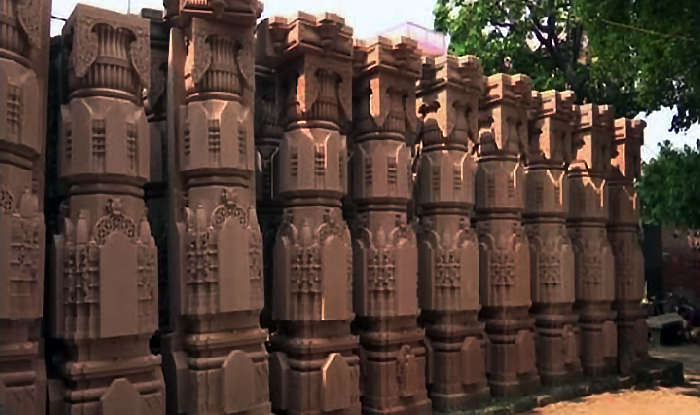
Ayodhya, Aug 2: With the foundation laying ceremony of the grand Ram temple around the corner, the work at the stone-carving workshop of Ram Janambhoomi in Ayodhya has reached its final stage.

Speaking to news agency, caretaker of Ram temple stone workshop Hanuman Yadav said, "Stonework is ready for the construction work till the first floor of the temple. Cleaning work is almost done but some work is still left which will be done soon after the trust's meeting."

Talking about the characteristics of the sandstone chosen work the construction, he said, "It was chosen for the construction as it can withstand rigours for thousands of years. These designated stones are minutely carved according to the need of the temple."

The stone-carving workshop for the Ram temple construction was established in Ayodhya by the Vishwa Hindu Parishad (VHP) in 1990.

On August 5 when Prime Minister Narendra Modi will visit Ayodhya for rituals that will mark the beginning of Ram temple construction, Hanumangarhi is the first stop he would be visiting.

The construction of Ram temple will begin in Ayodhya after the ceremony to lay the foundation stone in which various dignitaries from the political and religious fields are likely to participate apart from RSS chief Mohan Bhagwat. 

Comments

Add new comment

  • Coastaldigest.com reserves the right to delete or block any comments.
  • Coastaldigset.com is not responsible for its readers’ comments.
  • Comments that are abusive, incendiary or irrelevant are strictly prohibited.
  • Please use a genuine email ID and provide your name to avoid reject.
News Network
May 17,2020

New Delhi, May 17: Spelling out the government’s fourth tranche of initiatives towards achieving Prime Minister Narendra Modi’s vision of ‘Atmanirbhar Bharat’, Union Finance Minister Nirmala Sitharaman on Saturday announced significant structural reforms in eight sectors of the economy — coal, minerals, defense production, aviation, power distribution in Union territories, space and atomic energy.

Addressing her fourth and the second-last press conference, Sitharaman said crucial sectors such as coal production and exploration, defence production and space would see an increased participation from private entities.

Coal sector:

In the realm of coal exploration, the government has decided to liberalise the entry norms for private entities, which would mean that any interested party could bid for a coal block and sell it in the open market. The minister said that the government would do away with all the eligibility conditions at the time of bidding for a coal block, except requiring an “upfront payment with a ceiling.”

Nearly 50 coal blocks would be offered to private players immediately, revealed Sitharaman.

She further said that Rs 50,000 crore would be spent by Centre in creating ‘coal evacuation’ infrastructure, which would expedite the transport of mined product to the destination.

Defence sector:

In defence production, Sitharaman revealed that the government would raise the foreign direct investment (FDI) limit in the sector from current 49 per cent to 74 per cent. Further, the government would also work towards corporatising the ordnance factory boards. “Corporatising doesn’t amount to privatization,” added Sitharaman.

In a bid to boost indigenous production of defence products and gave an impetus to Make in India, Sitharaman said that the government was in a process of notifying a list of weapons/platforms for an import ban with year-wise timelines.

These decisions would also help in reducing huge import bills, the finance minister said.

Privatisation of electricity:

In another announcement that could have an effect on electricity charges in the union territories, Union Finance Minister Nirmala Sitharaman announced on Saturday that power departments and utilities in all the centrally administered territories would be privatised.

Sitharaman said that the proposed move would lead to better service to consumers and improvement in operational and financial efficiency in distribution.

The finance minister said that decision was guided by 'sub-optimal' utilisation of performance of power distribution and supply'.

She said that the move to that effect would provide a model for emulation by other utilities across the country, in what could be an indicator of what's in the pipeline for utilities in other states as well.

Sitharaman said that the privation reform was in line with the tariff policy reforms and would help in enhancing consumer rights, promote industry and improve the overall sustainability of the sector.

Space sector:

Sitharaman also announced the opening up of the space exploration sector for private players. Till date, the government-run Indian Space Research Organisation (ISRO) has held a monopoly on all activities concerning space exploration and satellite launches.

The Indian private sector will be a co-traveller in India's space sector journey, said Sitharaman, while announcing a series of structural reforms in eight crucial areas of the economy. The Union Finance Minister was addressing her fourth press conference in as many days, as a follow-up towards realising Prime Minister Narendra Modi's vision of 'atmanirbhar Bharat', which was spelled out in his video address on May 12.

Sitharaman said that the reforms in the space sector will provide a level-playing field for private companies in satellite launches and space-based services.

She said that the private sector would be allowed to use ISRO facilities and other assets to improve their capacities. Stating that the government would provide predictable policy and regulatory environment to private players, Sitharaman also disclosed that future projects for planetary exploration and outer space travel among others would be opened up for private entities.

Comments

Add new comment

  • Coastaldigest.com reserves the right to delete or block any comments.
  • Coastaldigset.com is not responsible for its readers’ comments.
  • Comments that are abusive, incendiary or irrelevant are strictly prohibited.
  • Please use a genuine email ID and provide your name to avoid reject.