Probe report on Radia tape leakage hardly satisfactory: SC

August 28, 2012

niirarada

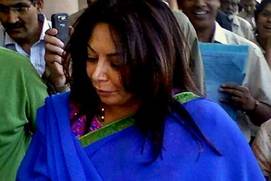
New Delhi, August 28: The Supreme Court on Tuesday pulled up the Centre over leakage of its tapped conversation of former corporate lobbyist Niira Radia saying its probe report is hardly satisfactory.

A bench of justice GS Singhvi and justice SJ Mukhopadhaya also took strong exception to the Centre's failure to put in place a proper mechanism to prevent such leakage in future.

"Those probe reports are hardly satisfactory. The less said the better. Somebody must be made accountable for the leakage," the bench said after the Centre submitted to it that the leakage has not been done on its part or by its officials.

"There is no reply on how to prevent such leakages in future. In future it will again happen. If you are not able to protect, then why you go for tapping," the bench observed.

It also said the probe report submitted by the government does not specifically give clean chit to any department.

Tata Group chairman Ratan Tata had moved the apex court on November 29, 2010 for action against those involved in the leakage of the tapes saying that the leakage amounted to infringement of his fundamental right to life, which includes right to privacy under Article 21 of the Constitution.

The conversations were recorded by the government as part of surveillance of Radia's phone, ordered by the Directorate General of Income Tax (Investigation) on a complaint received by the finance minister on November 16, 2007 alleging that within a span of nine years, she had built up a business empire worth Rs.300 crore.

The government had recorded 180 days of Radia's conversations -- first from August 20, 2008 onwards for 60 days and then from October 19 for another 60 days. Later on May 11, 2009, her phone was again put on surveillance for another 60 days following a fresh order given on May 8.


Comments

Add new comment

  • Coastaldigest.com reserves the right to delete or block any comments.
  • Coastaldigset.com is not responsible for its readers’ comments.
  • Comments that are abusive, incendiary or irrelevant are strictly prohibited.
  • Please use a genuine email ID and provide your name to avoid reject.
News Network
April 29,2020

New Delhi, Apr 29: India's tally of COVID-19 cases has reached 31,332, said the Union Ministry of Health and Family Welfare on Wednesday. With 73 more deaths reported, the number of deaths due to coronavirus in the country breached the 1,000 mark and stood at 1,007.

The tally is inclusive of 22,629 active coronavirus cases, 7,695 patients who have been cured/discharged and one patient migrated.

According to the Ministry, Maharashtra has the most number of COVID-19 cases with 9,318 cases of which, 1,388 patients have been cured/discharged while 400 patients have succumbed to the virus.

Gujarat has the second-highest number of positive cases in the country with 3744 cases including 434 patients cured/discharged and 181 deaths.

Delhi's tally stands at 3314 cases of which, 1078 patients have recovered while 54 patients have succumbed to the virus.

Madhya Pradesh has a total of 2387 positive cases including 377 patients recovered/discharged and 120 fatalities.

Meanwhile, Goa (seven cases; all seven recovered), Arunachal Pradesh (one case; now recovered), Manipur (two cases; both recovered), Tripura (two cases; both recovered) have reported no new cases of COVID-19.

Comments

Add new comment

  • Coastaldigest.com reserves the right to delete or block any comments.
  • Coastaldigset.com is not responsible for its readers’ comments.
  • Comments that are abusive, incendiary or irrelevant are strictly prohibited.
  • Please use a genuine email ID and provide your name to avoid reject.
News Network
January 2,2020

United Nations, Jan 2: Nearly 400,000 babies were born around the world on New Year's Day with India recording the highest number of these births worldwide at 67,385, the UN children's agency said.

An estimated 392,078 babies were born around the world on New Year's Day, according to UNICEF. Of this, an estimated 67,385 babies were born in India, the most globally. China comes in second with 46,299 births.

The beginning of a new year and a new decade is an opportunity to reflect on our hopes and aspirations not only for our future, but the future of those who will come after us,” UNICEF Executive Director Henrietta Fore said.

As the calendar flips each January, we are reminded of all the possibility and potential of each child embarking on her or his life's journey—if they are just given that chance.”

Fiji in the Pacific most likely delivered 2020's first baby, while the US, the last of the New Year's Day. Globally, over half of these births were estimated to have taken place in eight countries - India (67,385), China (46,299), Nigeria (26,039), Pakistan (16,787), Indonesia (13,020), United States of America (10,452), Democratic Republic of Congo (10,247) and Ethiopia (8,493).

Each January, UNICEF celebrates babies born on New Year's Day, an auspicious day for child birth around the world, it said. However, for millions of newborns around the world, the day of their birth is far less auspicious.

In 2018, 2.5 million newborns died in just their first month of life; about a third of them on the first day of life. Among those children, most died from preventable causes such as premature birth, complications during delivery, and infections like sepsis. In addition, more than 2.5 million babies are born dead each year.

UNICEF said over the past three decades, the world has seen remarkable progress in child survival, cutting the number of children worldwide who die before their fifth birthday by more than half. But there has been slower progress for newborns. Babies dying in the first month accounted for 47 per cent of all deaths among children under five in 2018, up from 40 per cent in 1990.

UNICEF's Every Child Alive campaign calls for immediate investment in health workers with the right training, who are equipped with the right medicines to ensure every mother and newborn is cared for by a safe pair of hands to prevent and treat complications during pregnancy, delivery and birth.

Too many mothers and newborns are not being cared for by a trained and equipped midwife or nurse, and the results are devastating,” said Fore. “We can ensure that millions of babies survive their first day and live into this decade and beyond if every one of them is born into a safe pair of hands.”

India is projected to surpass China as the world's most populous country around 2027. According to UN estimates, India is expected to add nearly 273 million people between 2019 and 2050, while the population of Nigeria is projected to grow by 200 million. Together, these two countries could account for 23 per cent of the global population increase to 2050.

China, with 1.43 billion people in 2019, and India, with 1.37 billion, have long been the two most populous countries of the world, comprising 19 and 18 per cent, respectively, of the global total in 2019. Through the end of the century, India is estimated to remain the world's most populous country with nearly 1.5 billion inhabitants, followed by China with just under 1.1 billion, Nigeria with 733 million, the US with 434 million, and Pakistan with 403 million inhabitants.

Comments

Add new comment

  • Coastaldigest.com reserves the right to delete or block any comments.
  • Coastaldigset.com is not responsible for its readers’ comments.
  • Comments that are abusive, incendiary or irrelevant are strictly prohibited.
  • Please use a genuine email ID and provide your name to avoid reject.
News Network
February 24,2020

New Delhi, Feb 24: They hail from vastly different backgrounds — Donald Trump is the son of a property tycoon while Narendra Modi is a descendant of a poor tea-seller.

Yet the two teetotallers, loved by right-wing nationalists in their home countries, share striking similarities that have seen them forge a close personal bond, analysts say.

Ahead of the American leader's first official visit to India, which begins in Modi's home state of Gujarat on Monday, the world's biggest democracy has gone out of its way to showcase the chemistry between them.

In Gujarat's capital Ahmedabad, large billboards with the words "two dynamic personalities, one momentous occasion" and "two strong nations, one great friendship" have gone up across the city.

"There's a lot that Trump and Modi share in common, and not surprisingly these convergences have translated into a warm chemistry between the two," Michael Kugelman of the Washington-based Wilson Center said.

"Personality politics are a major part of international diplomacy today. The idea of closed-door dialogue between top leaders has often taken a backseat to very public and spectacle-laden summitry."

Since assuming the top political office in their respective countries — Modi in 2014 and Trump in 2017 — the two men have been regularly compared to each other.

Trump, 73, and Modi, 69, both command crowds of adoring flag-waving supporters at rallies. A virtual cult of personality has emerged around them, with their faces and names at the centre of their political parties' campaigns.

A focus of Trump's administration has been his crackdown on migrants, including a travel ban that affects several Muslim-majority nations, among others, while critics charge that Modi has sought to differentiate Muslims from other immigrants through a contentious citizenship law that has sparked protests.

Both promote their countries' nationalist and trade protectionist movements — Trump with his "America First" clarion call and Modi with his "Make in India" mantra.

And while they head the world's largest democracies, critics have described the pair as part of a global club of strongmen that includes Russia's Vladimir Putin and Brazil's Jair Bolsonaro.

"There are many qualities that Trump and Modi share — a love for political grandstanding and an unshakable conviction that they can achieve the best solutions or deals," former Indian diplomat Rakesh Sood said.

Modi and Trump have sought to use their friendship to forge closer bonds between the two nations, even as they grapple with ongoing tensions over trade and defence.

Despite sharing many similarities in style and substance, analysts say there are some notable differences between the pair.

Modi is an insider who rose through the ranks of the Bharatiya Janata Party after starting out as a cadre in Rashtriya Swayamsevak Sangh.

Trump is a businessman and a political outsider who has in some sense taken over the Republican Party.

"Modi is a more conventional leader than is Trump in that he hasn't sought to revolutionise the office he holds in the way that Trump has," said Kugelman, a longtime observer of South Asian politics.

He added that genuine personal connections between leaders of both countries have helped to grow the partnership.

"George Bush and Manmohan Singh, Barack Obama and Singh, Obama and Modi, now Modi and Trump — there has been a strong chemistry in all these pairings that has clearly helped the relationship move forward," he added.

Trump has also stood by the Indian leader during controversial decisions, including his revocation of autonomy for Kashmir and his order for jets to enter Pakistani territory following a suicide bombing.

Analysts said the leaders would use the visit to bolster their image with voters.

A mega "Namaste Trump" rally in Ahmedabad on Monday will be modelled after the "Howdy, Modi" Houston extravaganza last year when the Indian leader visited the US and the two leaders appeared before tens of thousands of Indian-Americans at a football stadium.

"The success of this visit... will have a positive impact on his (Trump's) re-election campaign and the people of Indian origin who are voters in the US — a majority of them are from Gujarat," former Indian diplomat Surendra Kumar said.

"On the Indian side, the fact that Prime Minister Modi... (shares) such warmth, bonhomie and informality with the most powerful man on Earth adds to his stature... as well as with hardcore supporters."


Comments

Add new comment

  • Coastaldigest.com reserves the right to delete or block any comments.
  • Coastaldigset.com is not responsible for its readers’ comments.
  • Comments that are abusive, incendiary or irrelevant are strictly prohibited.
  • Please use a genuine email ID and provide your name to avoid reject.