Probe report on Radia tape leakage hardly satisfactory: SC

August 28, 2012

niirarada

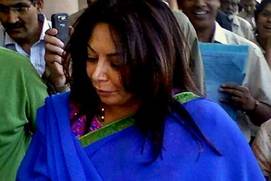
New Delhi, August 28: The Supreme Court on Tuesday pulled up the Centre over leakage of its tapped conversation of former corporate lobbyist Niira Radia saying its probe report is hardly satisfactory.

A bench of justice GS Singhvi and justice SJ Mukhopadhaya also took strong exception to the Centre's failure to put in place a proper mechanism to prevent such leakage in future.

"Those probe reports are hardly satisfactory. The less said the better. Somebody must be made accountable for the leakage," the bench said after the Centre submitted to it that the leakage has not been done on its part or by its officials.

"There is no reply on how to prevent such leakages in future. In future it will again happen. If you are not able to protect, then why you go for tapping," the bench observed.

It also said the probe report submitted by the government does not specifically give clean chit to any department.

Tata Group chairman Ratan Tata had moved the apex court on November 29, 2010 for action against those involved in the leakage of the tapes saying that the leakage amounted to infringement of his fundamental right to life, which includes right to privacy under Article 21 of the Constitution.

The conversations were recorded by the government as part of surveillance of Radia's phone, ordered by the Directorate General of Income Tax (Investigation) on a complaint received by the finance minister on November 16, 2007 alleging that within a span of nine years, she had built up a business empire worth Rs.300 crore.

The government had recorded 180 days of Radia's conversations -- first from August 20, 2008 onwards for 60 days and then from October 19 for another 60 days. Later on May 11, 2009, her phone was again put on surveillance for another 60 days following a fresh order given on May 8.


Comments

Add new comment

  • Coastaldigest.com reserves the right to delete or block any comments.
  • Coastaldigset.com is not responsible for its readers’ comments.
  • Comments that are abusive, incendiary or irrelevant are strictly prohibited.
  • Please use a genuine email ID and provide your name to avoid reject.
News Network
April 16,2020

United Nations, Apr 16: WHO chief Tedros Adhanom Ghebreyesus has welcomed the world health body's cooperation with India to leverage strategies that helped the country win its war against polio into the response to COVID-19 outbreak, saying such joint efforts will help defeat the pandemic.

The World Health Organization (WHO) has said it will work with India's Ministry of Health and Family Welfare to leverage the strategies that helped the country eradicate polio to fight the pandemic.

Migrants who returned to UP and Bihar were hurriedly housed in schools and panchayat buildings, which were turned into quarantine centres. However, unhygienic conditions and people running away have proved to be a problem

The WHO's national polio surveillance network will be engaged to strengthen COVID-19 surveillance and its field staff will continue to support immunization and elimination of tuberculosis and other diseases.

“Great news: @MoHFW_INDIA & @WHOSEARO initiated a systematic engagement of @WHO's national polio surveillance network, and other field staff, for India's #COVID19 response, tapping into the best practices & resources that helped win its war against polio,” the WHO director-general tweeted, referring to India's Ministry of Health and Family Welfare and World Health Organization Regional Office for South-East Asia.

According to the Johns Hopkins University data, over 2 million people are infected by the virus and more than 136,000 people have died of the disease globally.

Ghebreyesus expressed gratitude to Health and Family Welfare Minister Harsh Vardhan “for his leadership and collaboration” with WHO. “Through these joint efforts we can defeat the #coronavirus and save lives. Together!”

India eliminated polio in 2014.
According to a WHO press release, Vardhan said in New Delhi that “time and again the Government of India and WHO together have shown our ability, competence and prowess to the whole world. With our combined meticulous work, done with full sincerity and dedication, we were able to get rid of polio.”

“All of you in the field – IDSP (Integrated Disease Surveillance Project), state rapid response teams and WHO - are our ‘surveillance corona warriors'. With your joint efforts we can defeat the coronavirus and save lives,” Vardhan added.

WHO South-East Asia Regional Director Poonam Khetrapal Singh said the National Polio Surveillance Project (WHO-NPSP) played a critical role in strengthening surveillance for polio that generated useful, timely and accurate data to guide policies, strategies and interventions until transmission of the poliovirus was interrupted in the country,” adding that the other WHO field staff involved with elimination of tuberculosis and neglected tropical diseases and hypertension control initiative were also significant resources.

Singh added that “it is now time to use all your experience, knowledge and skills, with the same rigor and discipline that you showed while monitoring polio activities, to support districts with surveillance, contact tracing and containment activities.”

The WHO release said strengths of the NPSP team – surveillance, data management, monitoring and supervision, and responding to local situations and challenges – will be utilized to supplement efforts of National Centre for Disease Control, IDSP and Indian Council of Medical Research to strengthen COVID-19 surveillance.

The NPSP team will also support in sharing information and best practices and help states and districts calibrate their response based on transmission scenarios and local capacities.

The WHO field staff will continue to support immunization and surveillance and elimination of Tuberculosis and Neglected Tropical Diseases, Singh said, adding, “disease outbreaks can negatively impact progress in a range of areas, from maternal and child mortality to vaccine-preventable diseases and other treatable conditions. India had been making stupendous progress in these areas and we cannot afford for India's remarkable progress to be set back or reversed.”


Comments

Add new comment

  • Coastaldigest.com reserves the right to delete or block any comments.
  • Coastaldigset.com is not responsible for its readers’ comments.
  • Comments that are abusive, incendiary or irrelevant are strictly prohibited.
  • Please use a genuine email ID and provide your name to avoid reject.
News Network
January 17,2020

Mumbai, Jan 17: A 68-year-old convict of the 1993 Mumbai serial blasts case, Jalees Ansari, went missing on Thursday morning while being on parole, officials said.

Ansari, a resident of Mominpura in Agripada here who is serving a life term, is suspected to be involved in many bomb blast cases across the country, an official said.

He was on parole for 21 days from the Ajmer Central Prison, Rajasthan, and was expected to surrender before prison authorities on Friday, he said.

During the parole period, he was ordered to visit the Agripada Police Station everyday between 10.30 am and 12 pm to mark his attendance, he said.

However, Ansari did not visit the police station on Thursday during the designated time, the official said.

In the afternoon, his 35-year-old son Jaid Ansari approached the police station with a complaint about his “missing” father, he said.

According to the complaint, Jalees Ansari woke up in the early hoursand told family members he is going to offer namaz, but did not return home.

On his complaint, the Agripada Police registered a missing case, he said.

The Crime Branch of the Mumbai Police and the Maharashtra ATS have launched a massive manhunt to trace him, he said.

Jalees, who is known as Doctor Bomb, was allegedly connected with terror outfits like SIMI and Indian Mujahidin and taught terror groups how to make bombs, he said.

He was also questioned by the NIA in 2011 in connection with the 2008 bomb blast in Mumbai, he said.

Comments

Add new comment

  • Coastaldigest.com reserves the right to delete or block any comments.
  • Coastaldigset.com is not responsible for its readers’ comments.
  • Comments that are abusive, incendiary or irrelevant are strictly prohibited.
  • Please use a genuine email ID and provide your name to avoid reject.
Agencies
June 8,2020

New Delhi, Jun 8: Abortion access to around 1.85 million women was compromised across the country due to the nationwide restrictions imposed in response to the COVID-19 outbreak, a study conducted by Ipas Development Foundation (IDF) revealed.

These abortions were compromised at all points of care, including public and private sector facilities and chemist outlets during 68-day lockdown and the first week of Unlock 0.1 period. The study assesses the near-term impact of COVID-19 on abortion access in India since March 25 when the lockdown was imposed across the country with the announcement of Prime Minister Narendra Modi to contain the spread of novel coronavirus of COVID-19 pandemic.

It also highlights the need for a specially designed and integrated recovery plan for improving abortion services at facilities. The study estimates that access to abortion was highly compromised during lockdown 1 and 2 ( between March 25 and May 3) in which around 59 per cent of women seeking an abortion could not access the services.

However, with the Unlock phase or the recovery period as mentioned in the study starting on June 1, the situation is expected to improve - with 33 per cent abortions being compromised in 24 days. A huge number of women could not access safe abortion services during the lockdown, therefore it is extremely important that the healthcare system, public and private, is prepared to meet the needs of these women, the Ipas foundation says.

The model of the study strives to quantify the reduced access to abortions across three different points of care -public health facilities, private health facilities, and chemist outlets, said Vinoj Manning, CEO, Ipas Development Foundation in a statement.

"Majority of public health facilities and their staff are now focused on COVID-19 treatments and closures of private health facilities have compromised the access to safe abortions, which is a time-sensitive procedure."

He said that the study conducted by his foundation was to get a clearer picture of how COVID-19 restrictions have affected women seeking safe abortion services and what are the areas that would need focused efforts in the days to come.

Speaking on the methodology, Dr Sushanta Kumar Banerjee from Ipas Development Foundation said: "We conducted telephonic surveys and consulted with several experts from FOGSI leadership and social marketing organizations like PSI India Private Limited."

"After careful analysis of the data received from them, we have concluded that of the 3.9 million abortions that would have taken place in 3 months, access to around 1.85 million was compromised due to COVID-19 restrictions."

To facilitate the process Ipas Development Foundation has issued some initial recommendations which include: rapid mapping of facilities for first and second trimester abortions, assessing facilities' preparedness especially for second-trimester abortions, improving referral linkage and spread the word about the availability of the service, streamlining the supply chain for medical abortion drugs, and lastly including mechanisms to offset additional travel and out of pocket expenditures.

Ipas Development Foundation will be holding consultations with other partners and key stakeholders to facilitate meaningful collaborations to ensure access to safe abortions and ensure that no woman suffers long-term harm to her health due to lack of services.

Comments

Add new comment

  • Coastaldigest.com reserves the right to delete or block any comments.
  • Coastaldigset.com is not responsible for its readers’ comments.
  • Comments that are abusive, incendiary or irrelevant are strictly prohibited.
  • Please use a genuine email ID and provide your name to avoid reject.