


Decision on oil price hike put off

September 11, 2012

ministr

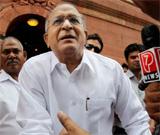
New Delhi, September 11: A meeting of the Cabinet Committee on Political Affairs (CCPA), which could have decided on raising diesel and cooking fuel prices, was today postponed even as Oil Minister S Jaipal Reddy said the price increase was "unavoidable".

CCPA, which is headed by Prime Minister Manmohan Singh and includes ministers from allies of the UPA alliance, was scheduled to meet this evening but it was postponed without assigning any reason or fixing a new date.

Reddy said although the increase in diesel, cooking gas (LPG) and kerosene prices was not listed on the agenda, CCPA could have discussed the issue based on the revised note on the subject that his ministry had circulated to its members yesterday.

"As I said before, however painful and difficult the increase in price of oil product may be, increase is unavoidable. (To) what extent can consumer take (it) is another matter," he told reporters after meeting Finance Minister P Chidambaram before the announcement of CCPA meeting being postponed was made.

The double whammy of rising input cost (crude oil prices) and fall in value of rupee, which has made imports costlier, would mean that oil PSUs would end the fiscal with a huge Rs 1.88 lakh crore revenue loss on selling fuel below cost, he said.

"If it (price hike) is not taken up today, decisions may have to postpone by few days.

However I would like to tell the people (that) the increase in price is unavoidable. We will have to perform our unpleasant duty," Reddy said.

Diesel and cooking fuel rates have not been revised since June last year even as oil firms also sell deregulated petrol at a price which is almost Rs 6 a litre less than its cost.

"I can't say to what extent price rise will be. If I had the power it would had been done yesterday. I don't know if it will happen today or tomorrow or a week later," he said.

Reddy said he had yesterday circulated an updated version of a note detailing the crisis created by the rise in crude oil prices and fall in value of rupee against the US dollar to members of the CCPA.

Besides the Prime Minister and Chidambaram, the CCPA includes Home Minister Sushilkumar Shinde, Defence Minister A K Antony, NCP leader and Agriculture Minister Sharad Pawar, Telecom Minister Kabil Sibal and Railway Minister Mukum Roy.

"We had circulated a note to all members of CCPA about the problem of increasing under-recoveries (revenue loss on fuel sales)... the under-recoveries will exceed Rs 1.88 lakh crore (this fiscal)," he said. "And prices (are) going up further at the global level; rupee is not softening."

On his meeting with Chidambaram, Reddy said he had "routine interactions" on various proposals but declined to elaborate.

"We discussed the figures relating to under-recoveries," he added. PSU oil firms are losing a record Rs 560 crore per day on the sale of regulated diesel and cooking fuels, and another Rs 16 crore a day on petrol.

They are losing about Rs 6 per litre on sale of petrol, a commodity which was freed from government control in June 2010 but whose rates haven't moved in tandem with the cost.

They sell diesel at a loss of Rs 19.26 a litre, kerosene at Rs 34.34 per litre and domestic LPG at Rs 347 per 14.2-kg cylinder.

"I can't take decision (on raising prices) only on the basis of economic facts. We are operating in a political economy. We will have to take a balanced view," he said.

Comments

Add new comment

  • Coastaldigest.com reserves the right to delete or block any comments.
  • Coastaldigset.com is not responsible for its readers’ comments.
  • Comments that are abusive, incendiary or irrelevant are strictly prohibited.
  • Please use a genuine email ID and provide your name to avoid reject.
News Network
January 24,2020

Jan 24: India’s economy appears to be shaking off a slump, as activity in the services and manufacturing sectors expanded for a second straight month in December.

The needle on a gauge measuring so-called animal spirits signaled the economy may be taking a turn for the better, as five of the eight high-frequency indicators tracked by Bloomberg News came in stronger last month. The dial was last at the current position in August.

“Animal spirits” is a term coined by British economist John Maynard Keynes to refer to investors’ confidence in taking action, and the gauge uses the three-month weighted average to smooth out volatility in the single-month numbers.

The nascent recovery would need a helping hand, with expectations building that Finance Minister Nirmala Sitharaman will provide some stimulus when she presents the budget Feb. 1. Official forecasts show the economy is set to expand at 5% in the year ending March 2020 -- the weakest pace in more than a decade.

Here are the details of the dashboard:

Business Activity

The dominant services index rose to the highest level in five months in December as improving new work orders helped boost activity. The seasonally adjusted Markit India Services PMI index climbed to 53.3 from 52.7 in November, helping post a strong end to the calendar year.

India’s manufacturing PMI also rose -- to 52.7 from 51.2 a month ago -- boosted by the fastest increase in new orders since July. A reading above 50 means expansion while anything below that signals contraction.

The uptick in business confidence was accompanied by a rise in inflationary pressures, the survey showed. That trend may keep monetary policy makers from resuming interest-rate cuts anytime soon, leaving most of the heavy-lifting to boost growth with the government.

“The relative stability in macro indicators over the past two months suggests that the worst is behind, but the recovery is likely to be prolonged,” said Teresa John, an economist at Nirmal Bang Equities Pvt. in Mumbai. “Still, sluggish growth and rising inflation indicate that India may well remain in stagflation for most of 2020.”

Exports

Exports remained a laggard, falling 1.8% in December from a year ago. The drag was mainly because of a fall in export of engineering goods, which constitute a third of India’s non-oil exports.

Capital goods imports continued to contract and was lower by 16.5% year-on-year in December after a 22% drop in November. This was the seventh consecutive month of continuous decline, underscoring the weakness in the capex cycle, according to IDFC First Bank.

Consumer Activity

Weakness in demand for passenger vehicles persisted, with local sales falling 1.2% in December from a year ago, according to the Society of Indian Automobile Manufacturers. That capped the worst yearly passenger vehicle sales on record. A Nielsen study on demand for fast-moving consumer goods showed volume growth dropped to 3.5% in the last quarter of 2019 from 3.9% in the same period of 2018.

Funding conditions held out hope, showing considerable improvement in December, according to the Citi India Financial Conditions Index. Credit growth remained tardy though, with demand for loans rising at a slower 7.1% pace from a year ago compared with a nearly 8% growth in November.

Industrial Activity

Industrial output rose for the first time in four months in November. The pick up was broad-based, led by mining, manufacturing and electricity. Mining and manufacturing, in particular, posted a second month of sequential growth. Production of consumer goods also rose after a few months of contraction.

The index of eight core infrastructure industries, which feeds into the index of industrial production, however, declined 1.5% in November from a year ago -- the fourth straight month of contraction. That was on account of shrinking production of electricity, steel, coal, natural gas and crude oil. Both the core sector and industrial output numbers are reported with a one-month lag.

Comments

Add new comment

  • Coastaldigest.com reserves the right to delete or block any comments.
  • Coastaldigset.com is not responsible for its readers’ comments.
  • Comments that are abusive, incendiary or irrelevant are strictly prohibited.
  • Please use a genuine email ID and provide your name to avoid reject.
News Network
February 24,2020

New Delhi, Feb 24: They hail from vastly different backgrounds — Donald Trump is the son of a property tycoon while Narendra Modi is a descendant of a poor tea-seller.

Yet the two teetotallers, loved by right-wing nationalists in their home countries, share striking similarities that have seen them forge a close personal bond, analysts say.

Ahead of the American leader's first official visit to India, which begins in Modi's home state of Gujarat on Monday, the world's biggest democracy has gone out of its way to showcase the chemistry between them.

In Gujarat's capital Ahmedabad, large billboards with the words "two dynamic personalities, one momentous occasion" and "two strong nations, one great friendship" have gone up across the city.

"There's a lot that Trump and Modi share in common, and not surprisingly these convergences have translated into a warm chemistry between the two," Michael Kugelman of the Washington-based Wilson Center said.

"Personality politics are a major part of international diplomacy today. The idea of closed-door dialogue between top leaders has often taken a backseat to very public and spectacle-laden summitry."

Since assuming the top political office in their respective countries — Modi in 2014 and Trump in 2017 — the two men have been regularly compared to each other.

Trump, 73, and Modi, 69, both command crowds of adoring flag-waving supporters at rallies. A virtual cult of personality has emerged around them, with their faces and names at the centre of their political parties' campaigns.

A focus of Trump's administration has been his crackdown on migrants, including a travel ban that affects several Muslim-majority nations, among others, while critics charge that Modi has sought to differentiate Muslims from other immigrants through a contentious citizenship law that has sparked protests.

Both promote their countries' nationalist and trade protectionist movements — Trump with his "America First" clarion call and Modi with his "Make in India" mantra.

And while they head the world's largest democracies, critics have described the pair as part of a global club of strongmen that includes Russia's Vladimir Putin and Brazil's Jair Bolsonaro.

"There are many qualities that Trump and Modi share — a love for political grandstanding and an unshakable conviction that they can achieve the best solutions or deals," former Indian diplomat Rakesh Sood said.

Modi and Trump have sought to use their friendship to forge closer bonds between the two nations, even as they grapple with ongoing tensions over trade and defence.

Despite sharing many similarities in style and substance, analysts say there are some notable differences between the pair.

Modi is an insider who rose through the ranks of the Bharatiya Janata Party after starting out as a cadre in Rashtriya Swayamsevak Sangh.

Trump is a businessman and a political outsider who has in some sense taken over the Republican Party.

"Modi is a more conventional leader than is Trump in that he hasn't sought to revolutionise the office he holds in the way that Trump has," said Kugelman, a longtime observer of South Asian politics.

He added that genuine personal connections between leaders of both countries have helped to grow the partnership.

"George Bush and Manmohan Singh, Barack Obama and Singh, Obama and Modi, now Modi and Trump — there has been a strong chemistry in all these pairings that has clearly helped the relationship move forward," he added.

Trump has also stood by the Indian leader during controversial decisions, including his revocation of autonomy for Kashmir and his order for jets to enter Pakistani territory following a suicide bombing.

Analysts said the leaders would use the visit to bolster their image with voters.

A mega "Namaste Trump" rally in Ahmedabad on Monday will be modelled after the "Howdy, Modi" Houston extravaganza last year when the Indian leader visited the US and the two leaders appeared before tens of thousands of Indian-Americans at a football stadium.

"The success of this visit... will have a positive impact on his (Trump's) re-election campaign and the people of Indian origin who are voters in the US — a majority of them are from Gujarat," former Indian diplomat Surendra Kumar said.

"On the Indian side, the fact that Prime Minister Modi... (shares) such warmth, bonhomie and informality with the most powerful man on Earth adds to his stature... as well as with hardcore supporters."

Comments

Add new comment

  • Coastaldigest.com reserves the right to delete or block any comments.
  • Coastaldigset.com is not responsible for its readers’ comments.
  • Comments that are abusive, incendiary or irrelevant are strictly prohibited.
  • Please use a genuine email ID and provide your name to avoid reject.
News Network
February 16,2020

New Delhi, Feb 16: RSS chief Mohan Bhagwat on Saturday said everyone is unhappy in the society and constantly agitating notwithstanding a "many-fold rise" in materialistic comforts and pleasures.

Addressing a gathering of Sangh workers and intellectuals here in Gujarat, Mr Bhagwat also said that even political parties who are not in power are also agitating.

"Inspite of increase in comforts and materialistic pleasures, everyone is unhappy and is staging agitations. Be it owner or servant, a party in opposition, the common man students, teachers, everyone is unhappy and dissatisfied," the Rashtriya Swayamsewak Sangh (RSS) chief said.

He was speaking on the topic "India's Role in the Present World Context".

Mr Bhagwat further said that bigotry, violence and terrorism are on the rise in the present world.

"India has to give 'dharma'  (wisdom) to the world so that knowledge spreads but humans do not become robotic. We have always talked about the concept of global family but not global market," he said.

The lecture was organised by "Madhav Smruti Nyas", an organisation backed by the RSS.

"To think that we are living in a better world is a half truth. Facilities are not evenly distributed. Rule of Jungle is prevailing. A capable person is crushing the weak to climb up. Knowledge is used more for the destruction of the world," the Sangh chief said.

Mr Bhagwat said people are also misusing social media by spreading "false information" to create controversies.

He also stated that trying to put "everyone into one uniform" is also a form of bigotry.

"US and Russia are super powers. China would become a super power too. Now, what super power nations did to others? They just took control of other countries for their own selfish agenda. These super powers gave it back only when they were asked to do so. Otherwise, they never gave anything to others," said Mr Bhagwat.

Comments

Add new comment

  • Coastaldigest.com reserves the right to delete or block any comments.
  • Coastaldigset.com is not responsible for its readers’ comments.
  • Comments that are abusive, incendiary or irrelevant are strictly prohibited.
  • Please use a genuine email ID and provide your name to avoid reject.